
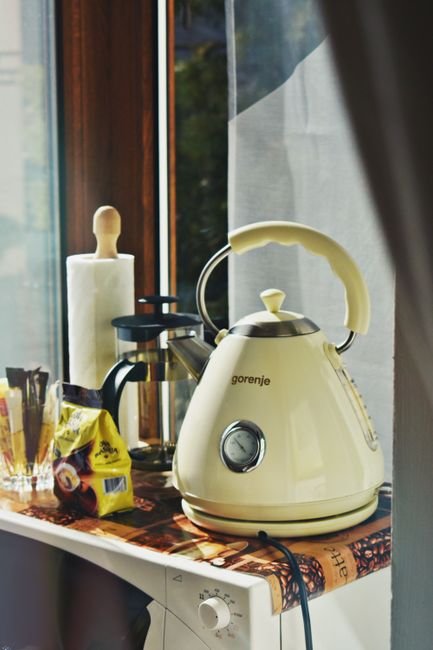
Mastering Cold Brew: The Electric Kettle Advantage
The art of cold brew coffee has captivated coffee enthusiasts worldwide, offering a smoother, less acidic, and often sweeter alternative to traditional hot brewing methods. While the fundamental principle of steeping coffee grounds in cold water for an extended period remains constant, the tools and techniques employed can significantly elevate the final cup. For those seeking consistency, convenience, and a sophisticated approach to their cold brew, the electric kettle emerges not just as a brewing accessory, but as a transformative advantage.
Gone are the days of meticulously measuring and heating water on a stovetop, then waiting for it to cool. The electric kettle, with its precise temperature control and rapid heating capabilities, revolutionizes the cold brew process by introducing a crucial, yet often overlooked, element: controlled temperature infusion. While “cold” brew traditionally implies room temperature water, a nuanced understanding reveals that a slightly warmed, yet still cool, infusion can unlock a deeper spectrum of flavor compounds.
The Science Behind the Cold Brew Advantage
Cold brew’s appeal lies in its extraction process. Unlike hot brewing, which rapidly extracts oils and acids, cold water extracts these compounds more slowly and selectively. This results in a less bitter, less acidic, and often richer flavor profile. However, the efficiency of this extraction is still influenced by temperature. While sub-zero temperatures hinder extraction, and boiling temperatures accelerate it to the point of bitterness, a gentle warmth can act as a catalyst for flavor development without compromising the core characteristics of cold brew.
This is where the electric kettle shines. Many modern electric kettles offer precise temperature settings, allowing you to heat water to specific degrees, often in increments as low as one degree Celsius or Fahrenheit. For cold brew, this translates to the ability to experiment with temperatures between 40°F (4°C) and 80°F (27°C), a range that can unlock nuanced flavor profiles often missed at strict room temperature.
Unlocking Deeper Flavors: The Warm Infusion Technique
The “warm infusion” technique, facilitated by an electric kettle, involves using water that is slightly above typical room temperature but still well below what would be considered hot for brewing. A common starting point is around 60-70°F (15-21°C). This gentle warmth encourages the solubilization of desirable aromatic compounds and sugars without aggressively extracting tannins and bitter acids.
Consider the difference in solubility. Water, at a slightly elevated temperature, can dissolve certain flavor molecules more readily than ice-cold water. This means that even a few degrees of warmth can help extract a more complex and rounded flavor from your coffee grounds. The electric kettle allows for this precise control, ensuring you’re not guessing or relying on ambient room temperature, which can fluctuate significantly.
The Electric Kettle as a Cold Brew Catalyst: Key Benefits
-
Precise Temperature Control: This is the paramount advantage. The ability to set and maintain a specific water temperature, even a slightly elevated one, is game-changing. It removes the guesswork and provides a repeatable process. No more relying on the fickle temperature of your kitchen tap or the ambient room temperature.
-
Consistency and Reproducibility: By controlling the water temperature, you eliminate a significant variable in the cold brew equation. This means you can reliably replicate your favorite cold brew results, batch after batch. For home baristas striving for perfection, this consistency is invaluable.
-
Accelerated Flavor Development (Subtle): As discussed, a gentle warmth can subtly accelerate the extraction of desirable flavor compounds. This doesn’t mean you’re brewing hot coffee; it means you’re optimizing the cold brew extraction process for a more nuanced and complete flavor profile.
-
Efficiency and Speed: While cold brew is inherently a slow process, the initial step of preparing your infusion water is significantly faster with an electric kettle. Instead of waiting for water to cool, you heat it to your desired temperature in minutes.
-
Versatility: Beyond cold brew, the electric kettle is a staple for any coffee lover. Its precision temperature settings are also ideal for pour-over, French press, and other brewing methods, making it a multi-functional kitchen appliance.
-
Safety and Convenience: Electric kettles are designed with safety features like auto-shutoff and boil-dry protection. They are also incredibly easy to use, requiring minimal effort.
Mastering the Technique: Practical Application
1. Choose Your Beans Wisely: The foundation of any great cold brew is high-quality, freshly roasted coffee beans. For cold brew, medium to dark roasts often perform exceptionally well, as their inherent sweetness and chocolatey notes are amplified by the cold brewing process. Consider single-origin beans for a unique flavor experience.
2. Grind Size is Crucial: For cold brew, a coarse grind is paramount. Think the consistency of breadcrumbs or coarse sea salt. A fine grind will lead to over-extraction, a muddy brew, and difficulty in filtering. Invest in a good burr grinder for consistent particle size.
3. The Golden Ratio: A common starting point for cold brew concentrate is a 1:4 ratio of coffee grounds to water by weight. For example, 100 grams of coffee to 400 grams (or ml) of water. This will yield a concentrate that can be diluted with water or milk to your preference.
4. The Electric Kettle Infusion:
- Grind your coffee beans to a coarse consistency.
- Fill your electric kettle with filtered water.
- Set your electric kettle to your desired infusion temperature. A good starting point is 60°F (15°C) for a more traditional cold brew, or experiment with slightly warmer temperatures like 70°F (21°C) for a more nuanced flavor.
- Once the water reaches the target temperature, pour it over your coffee grounds in your brewing vessel (e.g., a large jar, a French press, or a dedicated cold brew maker). Ensure all grounds are saturated.
- Stir gently to ensure even saturation.
5. The Bloom (Optional but Recommended): For those using slightly warmer infusion temperatures, a brief “bloom” can still be beneficial. Pour a small amount of the heated water over the grounds, just enough to saturate them, and let it sit for 30 seconds. This allows trapped CO2 to escape, leading to a more even extraction.
6. The Steep: Cover your brewing vessel and let the coffee steep for 12-24 hours. The longer the steep, the stronger the flavor. Experiment to find your preferred extraction time. Store the brew in the refrigerator during this period.
7. Filtration is Key: After steeping, it’s time to separate the grounds from the liquid. Use a fine-mesh sieve lined with cheesecloth, a paper coffee filter, or a dedicated cold brew filter. For an exceptionally clean brew, a multi-stage filtration process can be employed.
8. Dilution and Enjoyment: The resulting liquid is a cold brew concentrate. Dilute it with cold water, milk, or your preferred creamer to achieve your desired strength. Serve over ice for a refreshing beverage.
Beyond the Basics: Advanced Electric Kettle Cold Brew
- Temperature Profiling: Experiment with different temperature points within the 40-80°F (4-27°C) range. A slightly lower temperature might emphasize brighter, more delicate notes, while a slightly higher temperature could bring out richer, chocolatey undertones.
- Hybrid Brewing: Consider a hybrid approach. Start with a slightly warmed infusion for the initial few hours, then transition to room temperature water for the remainder of the steep. This can offer a balance of rapid flavor development and the characteristic smoothness of cold brew.
- Water Quality: Always use filtered water. The quality of your water directly impacts the taste of your coffee.
- Roast Level Exploration: Don’t be afraid to experiment with lighter roasts. With careful temperature control, you can extract complex fruity and floral notes from lighter roasts that might otherwise be lost in a traditional cold brew.
The electric kettle, once relegated to tea drinkers, has found a powerful new role in the world of coffee. Its ability to precisely control water temperature transforms the cold brew experience from a passive waiting game into an active exploration of flavor. By embracing the electric kettle advantage, home baristas can unlock a new level of mastery in their cold brew journey, consistently producing smooth, nuanced, and exceptionally delicious coffee. This simple appliance empowers you to refine your technique, experiment with your beans, and ultimately, to craft the perfect cold brew, tailored precisely to your palate.