
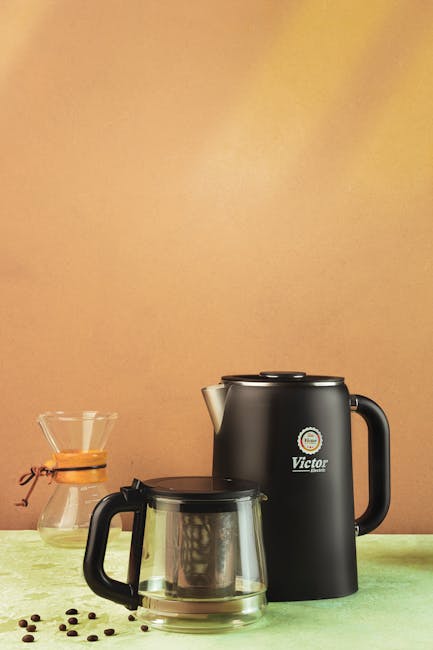
The Electric Kettle: Your Secret Weapon for Perfect Cold Coffee
For many, the day begins with coffee, and while the aroma of a hot brew is undeniably comforting, the appeal of a chilled, invigorating cold coffee is equally potent, especially during warmer months or when seeking a refreshing pick-me-up. Traditionally, achieving that perfect cold coffee often involved a multi-step process: brewing hot coffee, letting it cool, and then adding ice. This can be time-consuming and, frankly, can dilute the flavor. However, a surprisingly effective and often overlooked tool in the modern kitchen can revolutionize your cold coffee game: the electric kettle. This guide delves deep into how your humble electric kettle can become your ultimate weapon for crafting delicious, perfectly chilled coffee with remarkable ease.
Beyond Boiling Water: The Electric Kettle’s Versatility for Coffee
While its primary function is to rapidly boil water, the electric kettle’s capabilities extend far beyond that. Modern electric kettles, particularly those with variable temperature control, offer a level of precision that can be leveraged to create the ideal base for cold coffee. The key lies in understanding how different temperatures affect coffee extraction and how to manipulate this to your advantage.
The Science of Cold Coffee and the Electric Kettle’s Role:
Cold coffee, at its core, is about extracting flavor from coffee grounds without excessive heat. Traditional brewing methods for hot coffee rely on hot water to dissolve soluble compounds in the coffee grounds. For cold coffee, the goal is to achieve a similar extraction, but at a much lower temperature, or to create a concentrated hot brew that can then be rapidly chilled. This is where the electric kettle shines.
Method 1: The “Flash Brew” or “Japanese-Style” Cold Coffee
This popular method involves brewing hot coffee directly over ice. The rapid chilling prevents over-extraction and dilution, resulting in a bright, flavorful, and smooth cold coffee. Your electric kettle is indispensable here.
- Step 1: Precise Water Temperature: This is where variable temperature control is a game-changer. For flash brewing, you’ll want water that’s hot enough to extract flavor but not so hot that it burns the coffee grounds or creates an overly bitter taste. Aim for a temperature between 195°F and 205°F (90°C – 96°C). Many electric kettles allow you to set these specific temperatures, eliminating guesswork. If your kettle doesn’t have this feature, a standard boil (212°F/100°C) will suffice, but be mindful of pouring slightly slower to mitigate excessive heat.
- Step 2: The Ratio: A common starting point for flash brewing is a 1:1 ratio of coffee grounds to hot water, but you’ll use only half the amount of water you normally would for hot coffee, as the other half will be ice. For example, if you typically use 30 grams of coffee for 500ml of hot coffee, you’d use 30 grams of coffee and 250ml of hot water brewed with your electric kettle, and 250 grams of ice.
- Step 3: Brewing Over Ice: Place your brewing device (pour-over cone, AeroPress, etc.) over a carafe or pitcher filled with your measured ice.
- Step 4: The Pour: Once your electric kettle reaches the desired temperature, pour the hot water over your coffee grounds in a slow, controlled manner, allowing the brewed coffee to drip directly onto the ice. The hot liquid will melt the ice, chilling the coffee instantly.
- Step 5: Stir and Serve: Once all the water has passed through the grounds, give the cold coffee a gentle stir to ensure even chilling. Serve immediately over fresh ice.
Benefits of Using an Electric Kettle for Flash Brew:
- Speed: Significantly faster than waiting for hot coffee to cool.
- Flavor Preservation: Rapid chilling minimizes the oxidation and degradation of delicate coffee flavors.
- Reduced Dilution: By brewing directly over ice, you minimize the amount of ice needed to chill, thus reducing dilution compared to pouring hot coffee over a full glass of ice.
- Consistency: Precise temperature control ensures repeatable results.
Method 2: The “Cold Brew Concentrate” Shortcut
While traditional cold brew steeps for 12-24 hours, your electric kettle can help you create a delicious cold brew concentrate much faster, albeit with a slightly different flavor profile.
- Step 1: Hot Water Extraction: Use your electric kettle to heat water to approximately 185°F (85°C). This is hotter than ideal for traditional cold brew but hot enough to extract flavor quickly.
- Step 2: The Ratio: Opt for a higher coffee-to-water ratio, similar to traditional cold brew, but with less water. A 1:4 or 1:5 ratio of coffee to hot water is a good starting point. For example, 50 grams of coffee to 200-250ml of hot water.
- Step 3: Immersion Brewing: Combine your coffee grounds and hot water in a French press, a jar, or any vessel that allows for immersion. Stir to ensure all grounds are saturated.
- Step 4: Steep Time: Let the mixture steep for a shorter period, typically 15-30 minutes. You’ll notice the color deepening and the aroma intensifying.
- Step 5: Strain and Chill: Strain the concentrate through a fine-mesh sieve or cheesecloth. This concentrate can then be stored in the refrigerator.
- Step 6: Serving: To serve, dilute the concentrate with cold water or milk (to your taste) and serve over ice.
Benefits of Using an Electric Kettle for Cold Brew Concentrate:
- Speed: A significant time saver compared to traditional cold brew.
- Convenience: Allows for a quick cold coffee fix without overnight planning.
- Customization: The concentrate can be diluted to your preferred strength.
Choosing the Right Electric Kettle for Your Cold Coffee Needs:
Not all electric kettles are created equal when it comes to optimizing for cold coffee. Here’s what to look for:
- Variable Temperature Control: This is the most crucial feature for achieving precise brewing temperatures, especially for flash brewing. Look for models that allow you to set specific temperatures in increments of 1-5 degrees.
- Keep Warm Function: Some kettles allow you to maintain a set temperature for a period, which can be useful if you’re preparing multiple servings or want to ensure your water stays at the ideal temperature for a bit longer.
- Capacity: Consider how much cold coffee you typically make. Kettles range from small personal-sized units to larger family-sized options.
- Material: Stainless steel kettles are durable and easy to clean. Glass kettles offer a visually appealing brewing process.
- Pour Spout Design: A gooseneck spout, common on pour-over specific kettles, offers greater control over the pour, which is beneficial for flash brewing.
Beyond the Basic Brew: Elevating Your Electric Kettle Cold Coffee
Once you’ve mastered the basic techniques, your electric kettle can be a springboard for further cold coffee experimentation:
- Infused Water Bases: Heat water to a lower temperature (around 175°F/80°C) in your electric kettle and steep tea bags or fruit slices for a flavored water base before brewing your coffee.
- Spiced Coffee: Add cinnamon sticks, star anise, or cardamom pods to your coffee grounds before brewing with hot water from your electric kettle for a spiced cold coffee.
- Creamy Cold Coffee: Experiment with different milk and cream ratios, and use your precisely heated water to create a richer, more decadent cold coffee.
Troubleshooting Common Cold Coffee Issues with Your Electric Kettle:
- Bitter Cold Coffee: This often indicates over-extraction. Ensure you’re using the correct water temperature for flash brewing (not too hot) and a suitable coffee-to-water ratio. For the concentrate method, reduce the steeping time.
- Weak or Diluted Cold Coffee: For flash brewing, ensure you’re using the correct ratio of coffee to water and ice. For the concentrate method, you might need a higher coffee-to-water ratio or a slightly longer steeping time.
- Gritty Cold Coffee: Ensure your coffee grounds are filtered properly. For immersion methods, a finer mesh filter or multiple straining steps might be necessary.
SEO Keywords: electric kettle, cold coffee, iced coffee, flash brew, Japanese cold coffee, cold brew concentrate, variable temperature kettle, coffee brewing, coffee recipes, kitchen appliances, home barista, coffee maker, optimal water temperature, coffee extraction, quick cold coffee, easy cold coffee.