
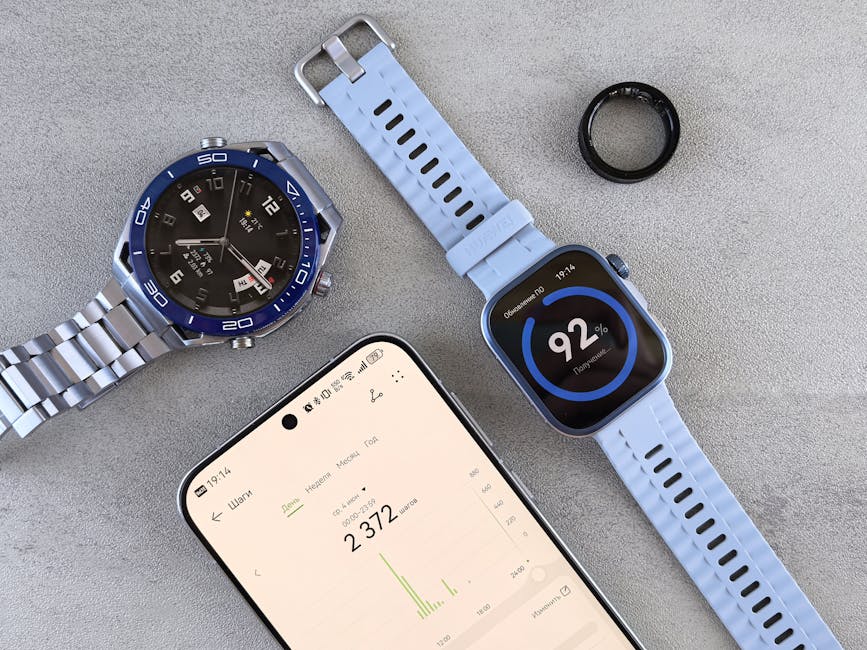
The Algorithmic Pulse: AI’s Transformative Role in Smartwatch Health Monitoring
The unassuming smartwatch, once primarily a timekeeping device with nascent fitness tracking capabilities, has evolved into a sophisticated personal health hub. At the core of this transformation lies the burgeoning integration of Artificial Intelligence (AI). AI is no longer a futuristic concept; it’s the algorithmic pulse that breathes intelligence into our wrist-worn companions, enabling them to go beyond simple data collection and offer profound insights into our well-being. This article delves into the multifaceted role of AI in smartwatch health monitoring, exploring its current capabilities, underlying mechanisms, and the exciting future it promises.
From Raw Data to Actionable Insights: The AI Engine
Smartwatches are equipped with an array of sensors – accelerometers, gyroscopes, optical heart rate sensors, ECG electrodes, and increasingly, blood oxygen sensors and skin temperature monitors. These sensors generate a torrent of raw data. Without AI, this data would remain largely inert, a collection of numbers and graphs. AI acts as the intelligent interpreter, transforming this raw data into meaningful and actionable health insights.
Heart Health: A Deeper Beat Under AI’s Gaze
Perhaps the most prominent application of AI in smartwatch health monitoring is in cardiovascular health. Traditional heart rate monitoring, while useful, offers a snapshot. AI elevates this by analyzing continuous heart rate data for patterns and anomalies.
- Arrhythmia Detection: AI algorithms are trained on vast datasets of ECG (electrocardiogram) readings to identify subtle deviations from normal heart rhythms, such as atrial fibrillation (AFib). By analyzing the timing and regularity of heartbeats, AI can flag potential arrhythmias that might otherwise go unnoticed, prompting users to seek medical attention. This proactive approach can significantly reduce the risk of stroke and other cardiovascular complications.
- Heart Rate Variability (HRV) Analysis: HRV, the variation in time between heartbeats, is a crucial indicator of autonomic nervous system function and stress levels. AI can analyze complex HRV patterns to assess a user’s recovery status, stress resilience, and even predict potential overtraining in athletes. This allows for personalized rest and training recommendations, optimizing performance and preventing burnout.
- Blood Pressure Estimation: While not yet as accurate as clinical-grade devices, AI is making strides in estimating blood pressure trends using a combination of heart rate, pulse wave velocity, and other physiological signals. This offers a convenient way for users to monitor their blood pressure fluctuations over time, aiding in early detection of hypertension.
Sleep: Unraveling the Mysteries of Rest
Sleep is a cornerstone of health, and AI is revolutionizing how we understand and improve our sleep patterns.
- Sleep Stage Analysis: Smartwatches, powered by AI, can accurately distinguish between different sleep stages – light sleep, deep sleep, and REM (Rapid Eye Movement) sleep – by analyzing movement, heart rate, and breathing patterns. AI models learn to correlate these sensor readings with the physiological characteristics of each sleep stage.
- Sleep Quality Scoring: Beyond simply identifying stages, AI synthesizes this data to provide a comprehensive sleep quality score, highlighting factors like duration, efficiency, and disturbances. This allows users to identify patterns associated with poor sleep and make informed adjustments to their bedtime routines.
- Sleep Apnea Detection: AI can analyze breathing irregularities during sleep, such as pauses in breathing or shallow breaths, to identify potential signs of sleep apnea. This early detection can encourage users to undergo further medical evaluation for this serious condition.
Activity and Fitness: Beyond Step Counting
AI transforms fitness tracking from simple step counting into a nuanced analysis of movement and energy expenditure.
- Automatic Activity Recognition: AI algorithms can automatically detect and classify various physical activities, from walking and running to cycling and swimming, without manual input. This is achieved by analyzing the unique patterns of motion and intensity associated with each activity.
- Calorie Expenditure Accuracy: By integrating activity type, duration, intensity, and individual physiological data (like heart rate), AI provides more accurate calorie burn estimations, essential for weight management and training.
- Personalized Training Recommendations: AI can analyze an individual’s fitness level, recovery status, and training goals to generate personalized workout plans and suggest optimal intensity levels. This moves beyond generic advice to tailored guidance that maximizes effectiveness and minimizes injury risk.
Metabolic Health and Beyond: Emerging Frontiers
The application of AI in smartwatch health monitoring is continuously expanding, venturing into more complex physiological markers.
- Blood Oxygen (SpO2) Monitoring: AI analyzes fluctuations in blood oxygen saturation, which can indicate respiratory issues, altitude sickness, or even early signs of certain diseases.
- Skin Temperature Sensing: AI can interpret subtle changes in skin temperature, which can be indicative of fever, ovulation cycles, or even early signs of illness. By correlating these changes with other physiological data, AI can provide more context.
- Stress Detection and Management: AI-powered stress detection goes beyond simply measuring heart rate. It analyzes a combination of HRV, sleep patterns, and activity levels to provide a holistic view of a user’s stress burden. This enables the smartwatch to offer guided breathing exercises or mindfulness prompts at opportune moments.
The Power of Machine Learning: The Engine Room of AI
At the heart of these AI capabilities lies machine learning (ML), a subset of AI that allows systems to learn from data without explicit programming.
- Supervised Learning: In many cases, ML models are trained on large, labeled datasets. For example, ECG data labeled as “normal rhythm” or “AFib” is used to train algorithms to recognize these patterns.
- Unsupervised Learning: AI can also employ unsupervised learning techniques to identify novel patterns and anomalies in user data that may not have been pre-defined. This can lead to the discovery of previously unknown health correlations.
- Deep Learning: Deep learning, a more advanced form of ML, utilizes complex neural networks to process and learn from intricate data structures, leading to increasingly sophisticated pattern recognition and prediction.
Ethical Considerations and Future Trajectory
While the potential of AI in smartwatch health monitoring is immense, ethical considerations are paramount. Data privacy, security, and the responsible interpretation of AI-generated insights are crucial. Users must understand that smartwatches are not medical devices and AI-driven alerts should be discussed with healthcare professionals.
The future promises even more advanced AI integration. We can anticipate:
- Predictive Health Analytics: AI will become even more adept at predicting the onset of certain conditions based on subtle, long-term physiological trends.
- Personalized Nutritional Guidance: AI could analyze activity levels, sleep, and even glucose trends to offer tailored dietary recommendations.
- Integration with Healthcare Systems: Seamless integration of smartwatch data with electronic health records could empower physicians with a more comprehensive view of their patients’ health.
- AI-Powered Wearable Diagnostics: The development of more advanced sensors and AI algorithms could lead to wearables capable of performing basic diagnostic tests.
The algorithmic pulse of AI is undeniably transforming smartwatch health monitoring, empowering individuals with unprecedented insights into their well-being and ushering in a new era of proactive, personalized healthcare.
