
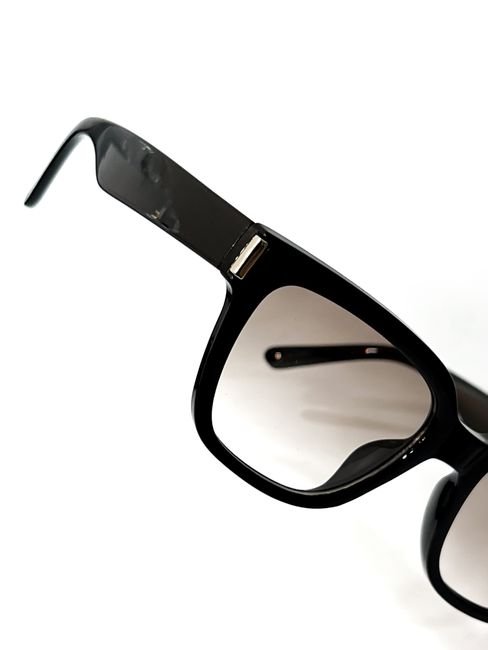
Future Tech: AR Smart Glasses and Their Transformative Impact
The horizon of personal technology is rapidly shifting, and at its forefront stands Augmented Reality (AR) smart glasses. These sophisticated wearable devices, seamlessly blending digital information with the physical world, are poised to revolutionize how we interact with information, communicate, and navigate our daily lives. Beyond mere novelty, AR smart glasses represent a profound technological leap with the potential to reshape industries, enhance human capabilities, and fundamentally alter our perception of reality.
At their core, AR smart glasses are sophisticated optical devices equipped with micro-displays, sensors, cameras, and processors. They project digital overlays onto the wearer’s field of vision, creating an augmented reality experience. Unlike Virtual Reality (VR) which fully immerses users in a digital environment, AR enhances the existing world, adding layers of context, data, and interactivity. This distinction is crucial, as it allows for a more integrated and less isolating technological experience.
The underlying technology powering these devices is a marvel of miniaturization and computational power. High-resolution micro-displays, often employing waveguide technology or direct retinal projection, deliver crisp and vibrant visuals without obstructing the wearer’s view of their surroundings. Advanced sensors, including gyroscopes, accelerometers, and depth sensors, accurately track head movements and map the environment, enabling precise placement and interaction with digital elements. Powerful, yet energy-efficient processors handle complex AR rendering and real-time data processing. Connectivity, typically via Wi-Fi and Bluetooth, allows for seamless integration with smartphones, cloud services, and other smart devices.
The potential applications of AR smart glasses are vast and span across numerous sectors. In the enterprise sector, the impact is already being felt. For field service technicians, these glasses provide hands-free access to repair manuals, schematics, and remote expert assistance, significantly reducing downtime and improving first-time fix rates. Imagine a technician troubleshooting complex machinery, with the AR glasses overlaying step-by-step instructions and highlighting specific components, while a remote engineer can see exactly what the technician sees and provide guidance in real-time.
In manufacturing and logistics, AR smart glasses can streamline assembly processes by guiding workers through intricate tasks, reducing errors and increasing efficiency. Warehouse workers can receive optimized pick lists and navigation directions overlaid on their vision, making inventory management faster and more accurate. The ability to visualize product designs in real-world scale before physical prototyping also offers significant cost and time savings in the design and engineering fields.
Healthcare stands to be profoundly transformed. Surgeons can benefit from real-time patient data, anatomical overlays, and navigation guidance during complex procedures. Medical students can engage in immersive, hands-on training simulations without risk to actual patients. For rehabilitation, AR can create engaging exercises tailored to individual needs, motivating patients and tracking their progress with unprecedented detail.
The consumer market is also on the cusp of a significant shift. Navigation will become intuitive, with directions seamlessly projected onto the street ahead, eliminating the need to constantly glance at a phone. Shopping could be revolutionized, with product information, reviews, and virtual try-ons appearing as you browse physical stores. Social interaction might evolve, with the ability to see digital tags or information about people you meet (with their consent, of course), or share real-time AR experiences with friends.
Education and training will become more engaging and effective. Students can explore historical sites with overlaid reconstructions, dissect virtual frogs, or visualize complex scientific concepts in three dimensions. The immersive nature of AR can foster deeper understanding and retention.
However, the widespread adoption of AR smart glasses is not without its challenges. Form factor and comfort remain significant hurdles. Current prototypes can be bulky and heavy, limiting prolonged wear. The battery life of these power-intensive devices also needs substantial improvement to support all-day usage. Cost is another barrier, with early-generation devices often priced out of reach for the average consumer.
User interface and interaction design are critical for intuitive and seamless AR experiences. Developing natural and efficient ways to control and interact with digital overlays, without requiring constant physical input, is an ongoing area of research and development. Privacy and security concerns are paramount. The ability of AR glasses to capture video and sensor data raises questions about surveillance and the ethical use of personal information. Robust data protection measures and clear user consent protocols will be essential.
The ethical implications of pervasive AR also warrant careful consideration. The potential for information overload, the blurring of lines between the real and digital, and the impact on social dynamics require thoughtful discussion and proactive solutions. Ensuring equitable access and preventing a digital divide will also be crucial as this technology matures.
Despite these challenges, the trajectory of AR smart glasses is undeniably upward. As the technology matures, costs decrease, and form factors become more streamlined, their integration into our daily lives will accelerate. The future promises a world where digital information is not confined to screens but is seamlessly woven into the fabric of our physical existence, enhancing our capabilities, enriching our experiences, and fundamentally redefining our relationship with technology and the world around us. The era of AR smart glasses is not a distant dream; it is a rapidly approaching reality, and its impact will be profound and far-reaching.