
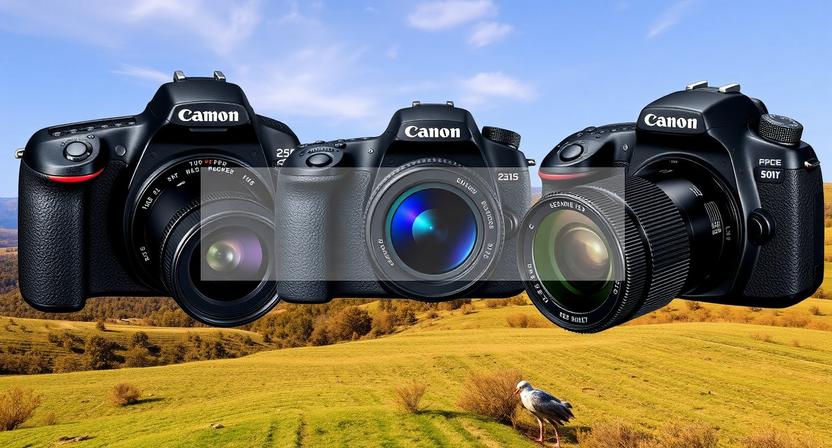
The world of photography beckons, and for aspiring creators on a budget, a DSLR camera offers the perfect blend of manual control, image quality, and versatility. Navigating the market for your first interchangeable-lens camera can feel overwhelming, especially when aiming for under ₹50,000. Fear not! This guide dives deep into the best DSLR options available, empowering you to make an informed decision and start your photographic journey with confidence. We’ve meticulously researched and evaluated models based on image sensor size, autofocus performance, video capabilities, ease of use, lens ecosystem, and overall value for money, ensuring you get the most bang for your buck.
Understanding the DSLR Advantage for Beginners:
DSLRs (Digital Single-Lens Reflex) cameras utilize a mirror system to reflect light from the lens into the optical viewfinder. This provides a direct, real-time view of your scene, a significant advantage over point-and-shoot or mirrorless cameras for learning composition and focus. Furthermore, DSLRs typically boast larger image sensors (APS-C is common in this price range) which translate to better low-light performance, shallower depth of field for artistic blur, and superior overall image quality compared to smaller sensors. The vast array of interchangeable lenses available for DSLRs also allows for incredible creative flexibility as your skills grow.
Key Features to Consider Under ₹50,000:
When evaluating DSLRs in this price bracket, prioritize these features:
- Image Sensor: Aim for an APS-C sensor. It’s a considerable upgrade over compact cameras and offers excellent image quality for most beginner needs.
- Megapixels: While not the sole determinant of image quality, 20-24 megapixels is a sweet spot, offering enough detail for printing and cropping without overwhelming file sizes.
- Autofocus (AF) System: A reliable AF system is crucial. Look for cameras with at least 9-11 AF points, especially if they are cross-type for better performance in low light and tracking moving subjects.
- ISO Range: A wider native ISO range (e.g., 100-12800 or higher, expandable) indicates better performance in low-light conditions.
- Video Recording: Most DSLRs in this range offer Full HD (1080p) video. Consider frame rates (24fps, 30fps, 60fps) for smoother motion.
- Tilting/Articulating Screen: A vari-angle or tilting screen is invaluable for shooting at awkward angles, vlogging, or self-portraits.
- Connectivity: Wi-Fi and Bluetooth are increasingly standard, allowing for easy image transfer to your smartphone and remote camera control.
- Lens Kit: Most beginner kits come with a standard zoom lens (e.g., 18-55mm). Evaluate if this lens suits your initial needs or if you might want to invest in a prime lens later.
Top DSLR Contenders Under ₹50,000:
Here are our top picks, meticulously chosen for their beginner-friendliness and excellent value:
1. Canon EOS 200D Mark II (Rebel SL3): The Compact Powerhouse
- Sensor: 24.1MP APS-C CMOS
- Processor: DIGIC 8
- Autofocus: Dual Pixel CMOS AF (excellent for live view and video), 9 AF points
- ISO: 100-25600 (expandable to 51200)
- Video: 4K (cropped), Full HD 60p
- Screen: 3.0-inch Vari-angle Touchscreen
- Connectivity: Wi-Fi, Bluetooth
The Canon EOS 200D Mark II, also known as the Rebel SL3 in some markets, is a standout choice for its incredibly compact and lightweight design, making it perfect for everyday carry. Despite its small size, it packs a punch with its 24.1MP APS-C sensor and the superb Dual Pixel CMOS AF system, which is a game-changer for smooth, accurate focusing during live view shooting and video recording. The vari-angle touchscreen is a joy to use, offering flexibility for various shooting scenarios. While its 4K video recording is cropped, its Full HD at 60p is more than sufficient for most beginner video projects. The DIGIC 8 image processor ensures excellent image quality with good detail and color rendition. The intuitive user interface and guided shooting modes make it exceptionally easy for beginners to grasp photographic concepts. The Canon EF-S lens mount offers access to a vast and affordable ecosystem of lenses.
2. Nikon D3500: The Simplicity Champion
- Sensor: 24.2MP APS-C CMOS
- Processor: EXPEED 4
- Autofocus: 11 AF points (1 cross-type)
- ISO: 100-25600
- Video: Full HD 60p
- Screen: 3.0-inch Fixed LCD
- Connectivity: Bluetooth (SnapBridge)
The Nikon D3500 has long been lauded as one of the best entry-level DSLRs, and for good reason. Its ergonomic design feels comfortable in hand, and its simplified button layout prioritizes ease of use. The 24.2MP sensor delivers stunning image quality with excellent detail and dynamic range. While its AF system is a step down from the Canon 200D Mark II in terms of live view performance, its viewfinder AF is reliable for stills. The EXPEED 4 processor handles image processing efficiently. The D3500 excels in its guided shooting mode, which walks beginners through various photographic techniques step-by-step, making it an invaluable learning tool. The SnapBridge connectivity via Bluetooth allows for seamless image transfer to your smartphone. The main drawback is the fixed LCD screen, which limits flexibility for certain shooting angles. However, for pure stills photography and learning the fundamentals, the D3500 remains a top-tier option.
3. Canon EOS 4000D (Rebel T100): The Budget-Friendly Entry Point
- Sensor: 18MP APS-C CMOS
- Processor: DIGIC 4+
- Autofocus: 9 AF points (1 cross-type)
- ISO: 100-6400 (expandable to 12800)
- Video: Full HD 30p
- Screen: 2.7-inch Fixed LCD
- Connectivity: None
For those with a tighter budget who still want to experience the DSLR advantage, the Canon EOS 4000D (often bundled with an 18-55mm lens) offers incredible value. While its 18MP sensor and DIGIC 4+ processor are a generation older, they still produce respectable image quality, especially in good lighting. The 9-point AF system is functional for basic photography. The guided shooting modes are present, making it approachable for absolute beginners. The main compromises are the lower megapixel count, limited ISO range, and the absence of Wi-Fi/Bluetooth connectivity. The smaller, fixed LCD screen is also a consideration. However, if your primary goal is to learn the basics of aperture, shutter speed, and ISO with an interchangeable lens camera, and you’re not overly concerned with advanced features or connectivity, the 4000D provides a solid entry point without breaking the bank.
4. Nikon D5600: The Feature-Rich Enthusiast’s Choice
- Sensor: 24.2MP APS-C CMOS
- Processor: EXPEED 4
- Autofocus: 39 AF points (9 cross-type)
- ISO: 100-25600
- Video: Full HD 60p
- Screen: 3.2-inch Vari-angle Touchscreen
- Connectivity: Wi-Fi, Bluetooth, NFC
The Nikon D5600, while sometimes nudging the upper limit of the ₹50,000 budget depending on kit lens and current deals, offers a compelling package for beginners looking for more advanced features. Its 24.2MP sensor delivers superb image quality. The standout feature is its sophisticated 39-point autofocus system, providing significantly better subject tracking and coverage compared to the D3500. The fully articulating vari-angle touchscreen is a massive plus for creative framing and vlogging. The inclusion of Wi-Fi, Bluetooth, and NFC makes connectivity effortless. The D5600 strikes an excellent balance between user-friendliness and advanced capabilities, offering room for growth as your photographic journey progresses. Its image quality is consistently excellent, and the vast Nikon F-mount lens selection ensures future expansion.
Choosing the Right Kit Lens:
Most beginner DSLRs are sold in kits with a standard zoom lens, typically an 18-55mm f/3.5-5.6. This lens is a versatile starting point, covering wide-angle to short telephoto focal lengths, making it suitable for landscapes, general everyday shots, and even some portraits. As you progress, you might consider adding a prime lens.
Kodak PIXPRO AZ425 Astro Zoom 20MP Digital Camera with 42x Optical Zoom (Red) Bundle with 64GB SD Card and Accessory Kit (3 Items)
Now retrieving the price.
(as of October 16, 2026 01:13 GMT +05:30 - More infoProduct prices and availability are accurate as of the date/time indicated and are subject to change. Any price and availability information displayed on [relevant Amazon Site(s), as applicable] at the time of purchase will apply to the purchase of this product.)
Nikon D7500 DX-Format Digital SLR Body (Black)
Now retrieving the price.
(as of October 16, 2026 01:13 GMT +05:30 - More infoProduct prices and availability are accurate as of the date/time indicated and are subject to change. Any price and availability information displayed on [relevant Amazon Site(s), as applicable] at the time of purchase will apply to the purchase of this product.)
50MP 4K High Definition Compact DSLR Camera 16X Digital Zoom 2.4 Inch Screen Anti Shake Selfie Camera for Photography Enthusiasts (64GB)
Now retrieving the price.
(as of October 16, 2026 01:13 GMT +05:30 - More infoProduct prices and availability are accurate as of the date/time indicated and are subject to change. Any price and availability information displayed on [relevant Amazon Site(s), as applicable] at the time of purchase will apply to the purchase of this product.)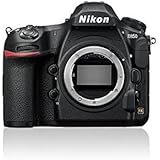
Nikon D850 45.7MP DSLR Camera Body only, 3X Optical Zoom, Black
₹1,51,399.00 (as of October 16, 2026 01:13 GMT +05:30 - More infoProduct prices and availability are accurate as of the date/time indicated and are subject to change. Any price and availability information displayed on [relevant Amazon Site(s), as applicable] at the time of purchase will apply to the purchase of this product.)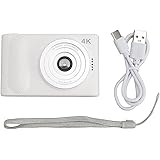
CHICIRIS 4K Digital Camera 48MP HD 16X Digital Zoom Auto Focus Micro SLR Camera Camera with Dual with 2.4 Inch TFT Screen for Travel Photography Vlogging (White)
Now retrieving the price.
(as of October 16, 2026 01:13 GMT +05:30 - More infoProduct prices and availability are accurate as of the date/time indicated and are subject to change. Any price and availability information displayed on [relevant Amazon Site(s), as applicable] at the time of purchase will apply to the purchase of this product.)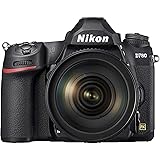
Nikon D780 DSLR Body with 24-120mm VR Lens, 3x Optical Zoom, Black
Now retrieving the price.
(as of October 16, 2026 01:13 GMT +05:30 - More infoProduct prices and availability are accurate as of the date/time indicated and are subject to change. Any price and availability information displayed on [relevant Amazon Site(s), as applicable] at the time of purchase will apply to the purchase of this product.)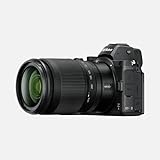
NIKON Digital Camera Z5II KIT with 24-200MM F/4-6.3 Lens with EN-EL15C & MH-25A
₹1,92,990.00 (as of October 16, 2026 01:13 GMT +05:30 - More infoProduct prices and availability are accurate as of the date/time indicated and are subject to change. Any price and availability information displayed on [relevant Amazon Site(s), as applicable] at the time of purchase will apply to the purchase of this product.)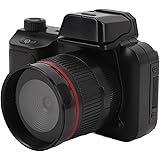
GOWENIC Digital SLR Camera, 1080P HD Micro SLR, 180° Flip Screen, 4X Zoom, Retro Design, Anti Shake, Filter Functions
Now retrieving the price.
(as of October 16, 2026 01:13 GMT +05:30 - More infoProduct prices and availability are accurate as of the date/time indicated and are subject to change. Any price and availability information displayed on [relevant Amazon Site(s), as applicable] at the time of purchase will apply to the purchase of this product.)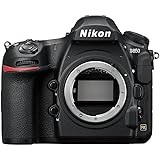
Nikon Store D850 45.7 MP Camera with 1 X Optical Zoom - Black
₹2,11,455.00 (as of October 16, 2026 01:13 GMT +05:30 - More infoProduct prices and availability are accurate as of the date/time indicated and are subject to change. Any price and availability information displayed on [relevant Amazon Site(s), as applicable] at the time of purchase will apply to the purchase of this product.)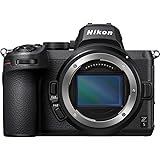
Nikon Z5 Kit 24-70 Camera Optical Zoom (Black)
₹1,21,990.00 (as of October 16, 2026 01:13 GMT +05:30 - More infoProduct prices and availability are accurate as of the date/time indicated and are subject to change. Any price and availability information displayed on [relevant Amazon Site(s), as applicable] at the time of purchase will apply to the purchase of this product.)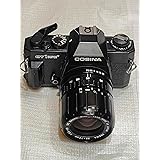
Used Camera CT 1 Super SLR Camera Working Condition
₹14,500.00 (as of October 16, 2026 01:13 GMT +05:30 - More infoProduct prices and availability are accurate as of the date/time indicated and are subject to change. Any price and availability information displayed on [relevant Amazon Site(s), as applicable] at the time of purchase will apply to the purchase of this product.)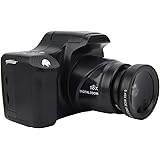
Ubervia Digital Camera – 24MP HD Photos, 18X Zoom, 3" LCD, 32GB Card, Built-in Flash, USB Charging, 1500mAh Battery – Standard Edition
₹12,136.00 (as of October 16, 2026 01:13 GMT +05:30 - More infoProduct prices and availability are accurate as of the date/time indicated and are subject to change. Any price and availability information displayed on [relevant Amazon Site(s), as applicable] at the time of purchase will apply to the purchase of this product.)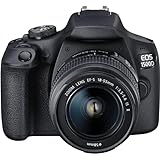
𝗖𝗮𝗻𝗼𝗻EOS 1500D 24.1MP | Digital SLR Camera (Black) with EF S18-55 is II Lens - Wi-Fi/NFC Supported | A+ Condition | Seller Warranty |
Now retrieving the price.
(as of October 16, 2026 01:13 GMT +05:30 - More infoProduct prices and availability are accurate as of the date/time indicated and are subject to change. Any price and availability information displayed on [relevant Amazon Site(s), as applicable] at the time of purchase will apply to the purchase of this product.)
CHICHIYANG High Performance Rear Back Cover Button Flex Cable for Nikon D5300 Camera Replacing
Now retrieving the price.
(as of October 16, 2026 01:13 GMT +05:30 - More infoProduct prices and availability are accurate as of the date/time indicated and are subject to change. Any price and availability information displayed on [relevant Amazon Site(s), as applicable] at the time of purchase will apply to the purchase of this product.)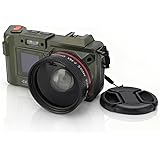
Gugxiom FHD 4K 70MP Digital Camera with Dual Screens, Autococus F1.8 DSLR Camera with WiFi Instant Instant 50x Digital Zoom, Fill Light (Green)
₹18,899.00 (as of October 16, 2026 01:13 GMT +05:30 - More infoProduct prices and availability are accurate as of the date/time indicated and are subject to change. Any price and availability information displayed on [relevant Amazon Site(s), as applicable] at the time of purchase will apply to the purchase of this product.)
Canon Eos 2000D (Rebel T7) Dslr Camera + 24.1 MP+ 16 GB, 18-55Mm Iii Kit (International Model)
Now retrieving the price.
(as of October 16, 2026 01:13 GMT +05:30 - More infoProduct prices and availability are accurate as of the date/time indicated and are subject to change. Any price and availability information displayed on [relevant Amazon Site(s), as applicable] at the time of purchase will apply to the purchase of this product.)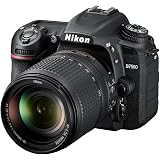
Nikon D7500 20.9MP Digital SLR Camera (Black) with AF-S DX NIKKOR 18-140mm f/3.5-5.6G ED VR Lens
₹79,990.00 (as of October 16, 2026 01:13 GMT +05:30 - More infoProduct prices and availability are accurate as of the date/time indicated and are subject to change. Any price and availability information displayed on [relevant Amazon Site(s), as applicable] at the time of purchase will apply to the purchase of this product.)
MIPPO® 18X Digital Zoom Rechargeable SLR Camera Digital Video Camera
Now retrieving the price.
(as of October 16, 2026 01:13 GMT +05:30 - More infoProduct prices and availability are accurate as of the date/time indicated and are subject to change. Any price and availability information displayed on [relevant Amazon Site(s), as applicable] at the time of purchase will apply to the purchase of this product.)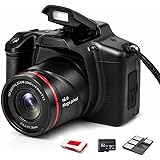
Acuvar 16MP Digital Camera Mini SLR Style Compact Camera with 32GB SD Card, Card Reader, Card Holder 2.4” LCD 16X Zoom CMOS Sensor – Point and Shoot Vlogging Camera for Photography YouTube Camera
Now retrieving the price.
(as of October 16, 2026 01:13 GMT +05:30 - More infoProduct prices and availability are accurate as of the date/time indicated and are subject to change. Any price and availability information displayed on [relevant Amazon Site(s), as applicable] at the time of purchase will apply to the purchase of this product.)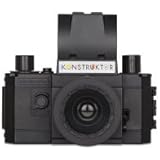
Lomography Konstrutor Do-it-Yourself 35mm Film SLR Camera Kit
Now retrieving the price.
(as of October 16, 2026 01:13 GMT +05:30 - More infoProduct prices and availability are accurate as of the date/time indicated and are subject to change. Any price and availability information displayed on [relevant Amazon Site(s), as applicable] at the time of purchase will apply to the purchase of this product.)