
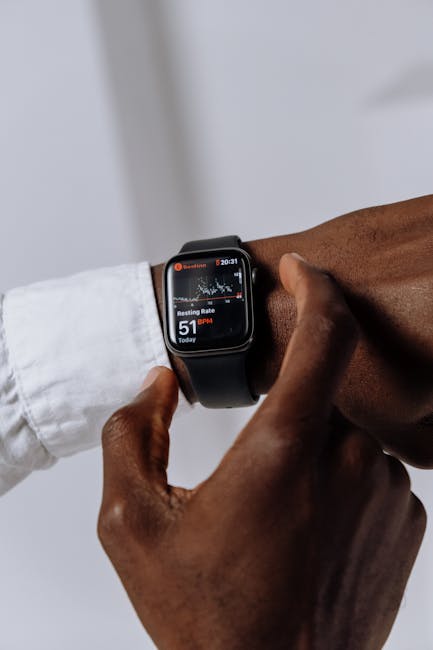
Your Health, Elevated: The AI Smartwatch Advantage
The future of personal well-being is no longer confined to sterile doctor’s offices or complex medical equipment. It’s now accessible, personalized, and remarkably insightful, all thanks to the burgeoning power of AI-driven smartwatches. These sophisticated wearable devices are rapidly transforming from mere timekeepers and notification hubs into indispensable companions on our journey to a healthier, more informed life. The integration of Artificial Intelligence elevates the smartwatch experience from a convenience to a critical tool for proactive health management, offering an unprecedented advantage in understanding and optimizing our bodies.
At the core of this revolution lies AI’s ability to process vast amounts of biometric data with unparalleled speed and accuracy. Traditional health tracking, while useful, often relied on manual input or rudimentary algorithms. AI, however, can continuously monitor a multitude of physiological signals – heart rate, blood oxygen saturation (SpO2), sleep patterns, activity levels, and even electrocardiograms (ECG) – and identify subtle trends and anomalies that a human eye might miss. This continuous, passive data collection forms the foundation for personalized health insights.
Consider the realm of cardiovascular health. AI-powered smartwatches can detect irregular heart rhythms, such as atrial fibrillation (AFib), with remarkable precision. By analyzing variations in heart rate and rhythm over time, these devices can alert users to potential issues, prompting them to seek medical attention sooner. This early detection can be life-saving, preventing serious complications like strokes. Beyond detecting acute events, AI algorithms can also track heart rate variability (HRV), a key indicator of stress and recovery. By understanding an individual’s baseline HRV and how it fluctuates with daily activities, users can gain valuable insights into their body’s resilience and make informed decisions about rest and exertion.
Sleep tracking has also undergone a significant metamorphosis with AI. Instead of simply categorizing sleep as light, deep, or REM, AI can delve deeper into the nuances of sleep architecture. It can identify patterns of disrupted sleep, pinpoint potential causes like sleep apnea indicators (e.g., drops in SpO2 during sleep), and offer personalized recommendations for improvement. This could involve adjusting bedtime routines, optimizing bedroom environment, or even suggesting lifestyle changes to promote more restorative sleep. The impact of quality sleep on overall health – from cognitive function and mood to immune system strength and metabolic health – cannot be overstated, and AI smartwatches are making this vital aspect of well-being more understandable and actionable.
The advantage of AI extends to fitness and activity tracking as well. While basic step counting has been a staple of wearables for years, AI takes this to a new level. It can intelligently recognize different types of exercises – running, cycling, swimming, strength training – and provide detailed metrics like pace, distance, calories burned, and even form analysis for certain activities. Furthermore, AI can personalize workout recommendations based on an individual’s fitness level, recovery status, and stated goals. It can suggest rest days when the body needs it, push users when they are ready for a challenge, and adapt training plans in real-time, ensuring optimal progress and minimizing the risk of overtraining or injury.
Beyond direct physiological monitoring, AI smartwatches are becoming increasingly adept at interpreting the interplay of various health factors. For example, they can correlate sleep quality with daytime energy levels, or exercise intensity with post-workout recovery. This holistic view allows users to understand how different aspects of their lifestyle influence each other, fostering a more comprehensive approach to health. Imagine a smartwatch that not only tells you you had a poor night’s sleep but also explains how that sleep deficit might impact your performance during your planned workout and suggests a modified, less strenuous routine.
The personalized nature of AI-driven insights is a significant differentiator. Instead of generic health advice, AI analyzes your data to provide recommendations tailored to your unique physiology and lifestyle. This leads to greater adherence and more effective outcomes. Users feel more engaged and motivated when they see how specific changes positively impact their personal metrics. This data-driven approach empowers individuals to become active participants in their own health journey, moving away from a reactive model to a proactive one.
The development of AI in smartwatches is also paving the way for remote patient monitoring and early disease detection. For individuals managing chronic conditions, these devices can provide a continuous stream of data to their healthcare providers, enabling more timely interventions and personalized treatment adjustments. This is particularly valuable for conditions like diabetes, where blood glucose monitoring can be integrated, or for individuals at high risk for cardiovascular events.
The ongoing advancements in AI are constantly expanding the capabilities of these smartwatches. Future iterations are expected to incorporate more sophisticated sensors for detecting biomarkers in sweat, analyzing stress hormones, and even predicting the onset of illnesses like influenza based on subtle changes in body temperature and heart rate. The potential for preventative healthcare is immense, with AI smartwatches acting as an early warning system, alerting users and their medical professionals to potential health concerns long before symptoms become severe.
However, it is crucial to acknowledge the importance of data privacy and security. As smartwatches collect increasingly sensitive health information, robust security measures and transparent data handling policies are paramount. Users must have confidence that their personal health data is protected and used responsibly. Reputable manufacturers are investing heavily in these areas, understanding that trust is fundamental to the widespread adoption of AI-powered health technology.
The accessibility of AI smartwatches is also democratizing health monitoring. Previously, advanced health tracking required specialized equipment or regular doctor visits. Now, a sophisticated health monitoring device is available on virtually every wrist. This widespread availability has the potential to significantly improve public health outcomes by empowering a larger population with the tools and insights needed to make healthier choices and detect potential issues early.
The AI smartwatch is more than just a gadget; it’s a paradigm shift in personal health management. It transforms raw data into actionable intelligence, offering users a profound understanding of their bodies. By leveraging the power of artificial intelligence, these devices are elevating our health, empowering us with knowledge, and enabling us to take proactive control of our well-being, making the pursuit of a healthier life more attainable and effective than ever before. The continuous evolution of AI promises even more groundbreaking capabilities, solidifying the AI smartwatch’s position as an indispensable tool for the modern, health-conscious individual.