
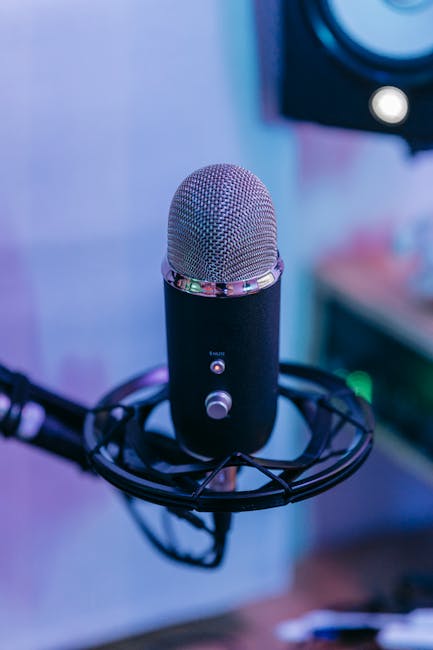
Elevate Your Audio: Top Condenser Microphones for YouTube Content Creators
In the competitive landscape of YouTube, where visuals often take center stage, the importance of pristine audio cannot be overstated. Viewers are increasingly discerning, and a crisp, clear voiceover or engaging podcast segment can be the difference between a subscriber and a bounce. While built-in microphones on cameras and even many USB microphones offer basic functionality, for creators serious about their sound, a high-quality condenser microphone is an essential upgrade. These microphones, known for their sensitivity and ability to capture nuanced detail, can transform your audio from amateur to professional.
Choosing the right condenser microphone involves understanding your needs, budget, and recording environment. Factors like polar patterns, connectivity (XLR vs. USB), and specific sonic characteristics play a crucial role. This guide delves into some of the top condenser microphones that have earned acclaim among YouTubers and audio professionals alike, offering a range of options to suit diverse requirements.
Understanding Condenser Microphones for YouTube
Condenser microphones operate on the principle of capacitance. They feature a diaphragm that vibrates in response to sound waves, altering the capacitance between it and a backplate. This change in capacitance is then converted into an electrical signal. This design allows them to be highly sensitive, capturing subtle nuances and a wider frequency response compared to dynamic microphones. This makes them ideal for voiceovers, acoustic instruments, and any situation where capturing detail is paramount.
However, this sensitivity also means they are more prone to picking up ambient noise, requiring a quieter recording space or effective sound treatment. Most condenser microphones also require phantom power (typically +48V) to operate, which is usually supplied by an audio interface or mixer.
Key Considerations for YouTubers:
- Polar Pattern: This refers to the microphone’s directional sensitivity.
- Cardioid: Picks up sound primarily from the front, rejecting sound from the sides and rear. This is the most common and versatile pattern for YouTubers, effectively isolating your voice from background noise.
- Omnidirectional: Picks up sound equally from all directions. Useful for capturing room ambience or multiple speakers in a single mic setup, but generally not ideal for solo voiceovers in untreated rooms.
- Bidirectional (Figure-8): Picks up sound from the front and rear, rejecting sound from the sides. Useful for interviews with two people facing each other, but less common for typical YouTube content.
- Connectivity:
- XLR: The professional standard, offering superior audio quality and flexibility. Requires an audio interface or mixer.
- USB: Offers plug-and-play convenience, directly connecting to your computer. Ideal for beginners and those prioritizing simplicity.
- Frequency Response: A flatter frequency response generally means a more natural and accurate reproduction of sound. Some microphones have a “presence boost” to enhance vocal clarity.
- Self-Noise: The inherent noise generated by the microphone’s electronics. Lower self-noise is always preferable for clean recordings, especially in quiet environments.
- Diaphragm Size:
- Large-diaphragm: Generally offer a warmer, richer sound with more detail and sensitivity.
- Small-diaphragm: Tend to be more accurate and transient-responsive, often used for instruments but can also be excellent for vocals.
Top Condenser Microphones for YouTube Creators:
Here are some of the most highly-regarded condenser microphones that consistently deliver exceptional results for YouTube content creation:
1. Rode NT-USB+:
The Rode NT-USB+ is a fantastic all-rounder, particularly for those looking for a high-quality USB microphone. Building on the success of its predecessor, the NT-USB+, this microphone offers a cardioid polar pattern, making it excellent for isolating your voice. It boasts a broadcast-quality sound with a smooth, rich tone that flatters most voices. The built-in headphone jack allows for zero-latency monitoring, crucial for ensuring your audio is on point during recording. It also includes a pop filter and a sturdy desk stand, making it a comprehensive package for beginners and intermediate users. Its plug-and-play simplicity means you can be up and running in minutes, making it an incredibly accessible upgrade. The NT-USB+ excels at capturing clear dialogue for vlogs, tutorials, and voiceovers, providing a noticeable step up from your webcam or laptop microphone.
2. Audio-Technica AT2020:
A perennial favorite in the budget-friendly condenser microphone market, the Audio-Technica AT2020 offers exceptional value. This is an XLR microphone, requiring an audio interface, but its price point makes it an attainable entry into professional audio. The AT2020 features a cardioid polar pattern and a wide frequency response, delivering clear and articulate sound. It’s known for its robust build quality and its ability to handle high sound pressure levels, meaning it won’t distort even with loud vocals or instruments. While it might not have the absolute finest detail of more expensive options, it provides a significant improvement in clarity and presence for spoken word content. It’s a workhorse that can serve you well for years as your YouTube channel grows.
3. Blue Yeti X:
The Blue Yeti X is a multi-pattern USB microphone that offers incredible versatility. While it can operate in cardioid mode for typical voiceovers, it also features omnidirectional, bidirectional, and stereo patterns, allowing you to adapt to various recording scenarios. This makes it a great choice for YouTubers who might also want to record interviews, podcasts with multiple guests, or even ambient sounds. The Yeti X boasts excellent sound quality with a clear, present tone. It features a dedicated gain knob, a mute button, and a headphone volume control directly on the microphone, providing intuitive control over your audio. The integrated LED meter helps you visualize your audio levels, preventing clipping. Its ease of use and flexibility make it a top pick for many content creators.
4. Shure SM7B (with caveats):
While not strictly a condenser microphone (it’s a dynamic microphone), the Shure SM7B is so ubiquitous and highly regarded for broadcast and voiceover work that it warrants mention. Its legendary status comes from its ability to reject background noise, its smooth, warm vocal tone, and its incredible durability. However, it’s important to note that the SM7B requires a significant amount of gain from your audio interface or a dedicated preamplifier (like a Cloudlifter or Fethead) to reach optimal levels. This makes it a more advanced setup but the results are often unparalleled for vocal clarity and isolation in less-than-perfect recording environments. For YouTubers prioritizing a broadcast-quality voice with minimal background intrusion, the SM7B is a worthy, albeit more involved, investment.
5. Neumann TLM 102:
Stepping into a higher price bracket, the Neumann TLM 102 represents a significant leap in audio fidelity. Neumann is a name synonymous with world-class microphones, and the TLM 102 carries that legacy. This large-diaphragm condenser microphone offers a beautifully smooth and detailed sound with a natural warmth. Its cardioid polar pattern is exceptionally well-controlled, providing excellent rejection of off-axis sound. The TLM 102 excels at capturing the subtle nuances of the human voice, making it perfect for high-end narration, ASMR content, or any creator aiming for the absolute best vocal presentation. It requires phantom power and an XLR connection, paired with a quality audio interface. While a substantial investment, the sonic difference is palpable and can elevate your content to a professional broadcast level.
6. AKG P120:
For those on a tighter budget but still seeking an XLR condenser microphone, the AKG P120 is a compelling option. This small-diaphragm condenser microphone offers a bright and clear sound, which can be very flattering for vocals. It features a switchable bass cut filter, which is useful for reducing low-frequency rumble from HVAC systems or handling noise. It also has a switchable attenuation pad, allowing it to handle high sound pressure levels without distortion. The P120 is a robust and reliable microphone that provides a significant upgrade over built-in options, offering a crisp and detailed vocal presentation for aspiring YouTubers.
7. Electro-Voice RE20 (another dynamic, but essential):
Similar to the Shure SM7B, the Electro-Voice RE20 is a dynamic microphone that has become a staple in broadcast studios and for voiceover artists. Its claim to fame is its “Variable-D” technology, which significantly reduces the proximity effect (the bass boost that occurs when a microphone is placed very close to a sound source). This means you can get your mouth very close to the RE20 for a natural, intimate vocal sound without boomy bass. It also has excellent off-axis rejection. Like the SM7B, it requires a good amount of gain. For YouTubers who want a consistent, professional vocal sound that is less susceptible to room acoustics and proximity issues, the RE20 is a top-tier choice, even if it’s not a condenser.
Setting Up for Success:
Beyond choosing the right microphone, proper setup is crucial for optimal sound quality.
- Acoustic Treatment: Even the best microphone will struggle in a reverberant room. Consider using acoustic foam panels, bass traps, or even simple solutions like blankets and soft furnishings to absorb reflections.
- Pop Filter/Windscreen: Essential for reducing plosives (harsh “p” and “b” sounds) and sibilance.
- Shock Mount: Isolates the microphone from vibrations transmitted through the microphone stand, preventing rumble and handling noise.