
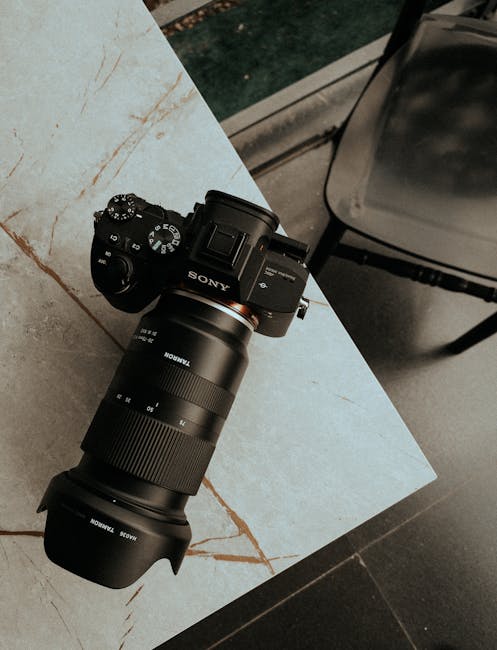
Unlock Your Creative Vision: The Ultimate DSLR Camera Buying Guide for Beginners
Stepping into the world of DSLR photography can feel exhilarating, yet the sheer volume of options can quickly become overwhelming. This guide is meticulously crafted to demystify the process, empowering you to make an informed decision and capture your world with confidence. We’ll delve into the essential features, key considerations, and offer practical advice to help you find the perfect DSLR to ignite your photographic journey.
Understanding the DSLR Advantage: Why Choose a DSLR?
DSLRs (Digital Single-Lens Reflex) offer a distinct advantage for aspiring photographers due to their interchangeable lenses, optical viewfinders, and superior image quality compared to most compact cameras. The optical viewfinder provides a direct, real-time view through the lens, crucial for precise framing and understanding depth of field. The ability to swap lenses opens up a universe of creative possibilities, from expansive landscapes to intimate portraits. Furthermore, DSLRs typically boast larger sensors, resulting in better low-light performance, richer detail, and more pleasing background blur (bokeh).
Key Features to Consider: Navigating the Technical Landscape
1. Sensor Size: The Heart of Image Quality
The sensor is the digital equivalent of film in traditional cameras. For beginners, two primary sensor sizes are prevalent:
- APS-C: The most common sensor size in entry-level and mid-range DSLRs. APS-C sensors offer an excellent balance of image quality, size, and cost. They generally provide good low-light performance and allow for a “crop factor,” meaning a telephoto lens will appear to have a longer reach than on a full-frame camera.
- Full-Frame: Found in higher-end DSLRs, full-frame sensors are larger and capture more light, leading to exceptional low-light performance, wider dynamic range, and shallower depth of field. While offering superior image quality, they also come with a higher price tag and larger, heavier equipment. For most beginners, an APS-C sensor is more than sufficient and a more budget-friendly starting point.
2. Megapixels: More Isn’t Always Better, But It Matters
Megapixels (MP) refer to the number of pixels on the image sensor. While higher megapixels allow for larger prints and more cropping flexibility, they are not the sole determinant of image quality. A camera with 18-24 MP is generally ample for everyday photography and most online sharing. Focus more on sensor size, lens quality, and the camera’s processing capabilities. Excessive megapixels on a small sensor can sometimes lead to increased noise in low light.
3. Autofocus System: Sharp Images, Effortlessly
A robust autofocus (AF) system is crucial for capturing sharp images, especially of moving subjects. Look for DSLRs with:
- Multiple Autofocus Points: More AF points provide greater flexibility in choosing where to focus.
- Cross-Type AF Points: These are more sensitive and accurate, particularly in low light or with low-contrast subjects.
- Continuous Autofocus (AI Servo/AF-C): Essential for tracking moving subjects, ensuring they remain in focus as they move.
- Face/Eye Detection: A convenient feature that automatically locks focus on faces or eyes, ideal for portraits.
4. ISO Sensitivity: Conquering Low Light
ISO controls the camera’s sensitivity to light. Higher ISO values allow you to shoot in darker conditions but can introduce digital noise (grain). For beginners, a camera with a decent native ISO range (e.g., up to 6400 or 12800) will provide flexibility. Pay attention to how well the camera handles noise at higher ISO settings, often referred to as “high ISO performance.”
5. Continuous Shooting Speed (Burst Rate): Capturing Action
Measured in frames per second (fps), continuous shooting allows you to capture a rapid sequence of images. This is invaluable for sports, wildlife, or capturing fleeting moments. For general photography, 3-5 fps is adequate, while 7 fps or higher is beneficial for action-oriented shooting.
6. Video Capabilities: Beyond Stills
Many DSLRs now offer impressive video recording features. If you plan to shoot video, consider:
- Resolution: Full HD (1080p) is standard, while 4K offers significantly higher detail for future-proofing and cropping.
- Frame Rates: 24p (cinematic look), 30p, and 60p (smoother motion) are common. Higher frame rates can enable slow-motion effects.
- Autofocus in Video: Smooth and reliable autofocus during video recording is a significant advantage.
- Microphone Input: For improved audio quality, an external microphone input is highly recommended.
7. Ergonomics and Build Quality: Comfort and Durability
A camera should feel comfortable in your hands. Consider:
- Grip: A deep, textured grip provides stability.
- Button Layout: Intuitive placement of frequently used controls minimizes fumbling.
- Weather Sealing: While not essential for all beginners, it offers peace of mind for shooting in challenging conditions.
- Weight: DSLRs can be heavy, so try to handle different models to gauge comfort.
8. Connectivity: Sharing Your Masterpieces
- Wi-Fi and Bluetooth: Built-in Wi-Fi allows for easy transfer of images to your smartphone or tablet and remote camera control via an app. Bluetooth offers a low-power connection for constant image sharing.
- HDMI Output: Useful for connecting to an external monitor or TV for reviewing images or displaying your work.
Choosing Your First Lens: The Gateway to Creativity
The kit lens that often comes bundled with a DSLR is a good starting point, but investing in a better lens will dramatically improve your image quality. For beginners, consider:
- Standard Zoom Lens (e.g., 18-55mm): This versatile lens covers a wide range of focal lengths, suitable for everyday shooting, landscapes, and casual portraits.
- Prime Lens (e.g., 50mm f/1.8): Often referred to as a “nifty fifty,” these lenses have a fixed focal length and a wide aperture. They excel in low light, produce beautiful bokeh, and encourage you to move your feet to compose your shot, fostering photographic discipline.
Budgeting for Your DSLR Kit:
Remember that the camera body is only one part of the equation. Factor in the cost of:
- Lenses: As mentioned, lenses are crucial.
- Memory Cards: High-speed SD cards are essential for fast burst shooting and video.
- Camera Bag: To protect your investment.
- Extra Battery: For extended shooting sessions.
- Tripod: For stable shots and long exposures.
- Editing Software: To enhance your images.
Top DSLR Brands and Their Strengths:
- Canon: Renowned for their user-friendly interfaces, excellent color science, and a vast range of lenses. Their entry-level DSLRs are often praised for their intuitive menus and comfortable ergonomics.
- Nikon: Known for their robust build quality, excellent image processing, and strong performance in low light. Nikon DSLRs often appeal to those who prioritize professional-grade features and ruggedness.
- Sony (Alpha Mount): While Sony is more dominant in the mirrorless market, they still offer a selection of DSLRs that are well-regarded for their image quality and advanced features.
Demystifying Camera Modes: From Auto to Manual
- Auto Mode: The camera makes all the decisions. Great for absolute beginners, but limits creative control.
- Program Auto (P): The camera sets aperture and shutter speed, but you can adjust other settings like ISO and exposure compensation.
- Aperture Priority (Av/A): You control the aperture (depth of field), and the camera sets the shutter speed. Ideal for controlling background blur.
- Shutter Priority (Tv/S): You control the shutter speed (motion blur), and the camera sets the aperture. Useful for freezing action or creating motion blur.
- Manual Mode (M): You have complete control over aperture, shutter speed, and ISO. This is where true creative control lies, and mastering it is a rewarding journey.
Tips for Your First DSLR Purchase:
- Read Reviews: Consult reputable photography websites and YouTube channels for in-depth reviews of specific models.
- Handle Cameras in Person: If possible, visit a local camera store to feel the ergonomics and test the controls of different cameras.
- Consider Refurbished or Used: You can often find excellent deals on slightly older but still capable DSLR bodies and lenses.
- Start Simple: Don’t get bogged down by the most advanced features. Focus on a camera that meets your current needs and budget, with room to grow.
- Prioritize Lenses: A good lens can elevate the performance of even a budget-friendly camera body.
By understanding these core concepts and carefully considering your needs, you’ll be well-equipped to select a DSLR that not only fits your budget but also empowers you to capture the world as you see it, one stunning photograph at a time.