
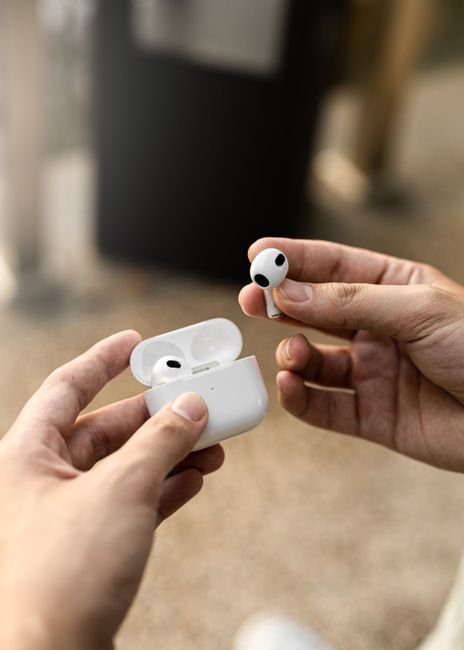
The Unplugged Revolution: How Original Apple AirPods Rewrote the Rules of Wireless Audio
The year 2016 marked a seismic shift in the audio landscape, a moment where a seemingly simple accessory, devoid of wires, sparked a global phenomenon. Apple’s original AirPods, launched in December of that year, were more than just a pair of earbuds; they were a bold declaration of intent, a catalyst for a wireless revolution that continues to shape how we consume audio today. Their impact reverberated far beyond the realm of personal listening, influencing design, user experience, and the very definition of convenience in consumer electronics.
Before the AirPods, wireless earbuds existed, but they were largely niche products. Often tethered by a connecting cable, they suffered from clunky designs, unreliable connectivity, and a perception of being less premium. Apple, with its characteristic penchant for simplification and elegant execution, saw an opportunity to redefine this nascent market. The original AirPods, with their minimalist white aesthetic and compact charging case, immediately stood out. They were designed to be effortlessly integrated into users’ lives, a seamless extension of their Apple devices.
The true genius of the original AirPods lay in their unparalleled ease of use. Pairing was a revelation. Simply opening the charging case near an iPhone, iPad, or Apple Watch initiated a pop-up window, a single tap, and the connection was established. This friction-free onboarding process, dubbed “magic” by many, was a stark contrast to the often-frustrating Bluetooth pairing rituals of the past. This simplicity democratized wireless audio, making it accessible and appealing to a much broader audience, including those who weren’t necessarily tech enthusiasts.
Beyond the initial pairing, the seamless switching between Apple devices was another game-changer. Imagine listening to music on your iPhone, then receiving a call on your iPad. The AirPods would intelligently switch the audio source with minimal interruption, a feat that felt futuristic at the time. This interoperability, deeply embedded within the Apple ecosystem, fostered a sense of effortless convenience that few other products could replicate.
The design itself was a bold statement. Inspired by the iconic EarPods but stripped of their lightning connector, the AirPods embraced a truly wireless form factor. This complete liberation from wires was not just aesthetically pleasing; it offered unparalleled freedom of movement. Whether commuting, exercising, or simply moving around the house, the absence of dangling cables eliminated a significant point of frustration and snagging. The small, pocketable charging case also ensured that users could easily keep their AirPods powered throughout the day, addressing a common concern with early wireless audio devices.
The integrated Apple W1 chip was the unsung hero behind this seamless experience. This custom-designed chip was responsible for the AirPods’ efficient wireless communication, exceptional battery life, and the aforementioned effortless pairing and switching. It allowed for a more stable Bluetooth connection, reduced audio latency, and intelligently managed power consumption, contributing to the impressive listening times users experienced.
The audio quality, while not audiophile-grade, was remarkably good for its time and for its intended use case. It delivered clear, balanced sound suitable for casual listening, podcasts, and phone calls. The built-in microphones also performed admirably, facilitating clear conversations even in moderately noisy environments. The touch-sensitive controls, allowing for play/pause, track skipping, and Siri activation with a double-tap, further enhanced the user experience, providing intuitive command over audio playback without needing to reach for your device.
The impact of the original AirPods on the broader tech industry was profound and undeniable. They legitimized the truly wireless earbud category. Competitors, both established audio brands and emerging startups, were quick to follow Apple’s lead, releasing their own iterations of the true wireless form factor. This spurred innovation across the board, leading to rapid advancements in battery technology, audio codecs, noise cancellation, and smart features within earbuds. The market, once dominated by wired headphones, rapidly shifted towards wireless, with AirPods consistently leading the charge in sales and mindshare.
Furthermore, the AirPods influenced product design aesthetics. Their minimalist, unadorned look became a benchmark for many consumer electronics. The white color palette, once a distinct Apple signature, was widely adopted, and the emphasis on compact, portable charging solutions became a standard expectation.
The “AirPods moment” – the act of pulling them out of their case and instantly being connected – became a cultural touchstone. It represented a new era of personal technology, one where devices were designed to be intuitive, integrated, and almost invisible in their operation. This shift towards seamless user experiences became a key differentiator for many tech products.
The original AirPods also played a significant role in the growing importance of voice assistants. The easy access to Siri via the AirPods encouraged users to interact with their devices hands-free, further normalizing the use of voice commands for everyday tasks. This paved the way for the proliferation of smart speakers and other voice-enabled devices.
While subsequent generations of AirPods have introduced more advanced features like active noise cancellation and spatial audio, the original AirPods laid the foundational groundwork. They proved that a truly wireless, user-friendly, and stylish earbud could be a mass-market success. They didn’t just sell a product; they sold a vision of a more connected, convenient, and wire-free future. Their impact is evident in the crowded market of wireless earbuds today, a testament to the power of their initial vision and execution. The original AirPods didn’t just enter the market; they redefined it, leaving an indelible mark on the evolution of wireless audio and personal technology.