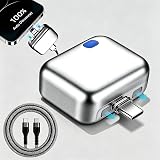
In today’s hyper-connected world, a dwindling battery life can be more than just an inconvenience; it can be a significant impediment to productivity, communication, and entertainment. The advent and rapid evolution of fast charging technology have revolutionized how we power our devices, transforming hours of waiting into mere minutes of charging. This comprehensive guide delves into the intricate workings of fast charging, demystifying its core principles, exploring various standards, and highlighting the benefits and considerations for consumers.
At its heart, fast charging is an enhancement of the conventional charging process, designed to deliver significantly more power to a device’s battery in a shorter period. Traditional charging typically operates at lower voltages and amperages, a cautious approach to preserve battery health. Fast charging, however, employs higher power delivery, achieved through a combination of optimized hardware and intelligent software protocols.
The fundamental principle behind faster charging lies in the relationship between power, voltage, and amperage. Power (measured in Watts) is the product of voltage (Volts) and amperage (Amperes). To increase power delivery, manufacturers can either increase the voltage, the amperage, or both. Fast charging predominantly focuses on increasing both, but the method and extent of these increases are governed by specific standards and protocols.
One of the most prevalent fast charging technologies is Qualcomm Quick Charge. This proprietary standard has seen numerous iterations, with each generation offering progressively faster charging speeds. Quick Charge works by enabling a two-way communication between the charger and the device. The charger negotiates the optimal voltage and amperage required by the device, allowing for dynamic adjustments during the charging cycle. For instance, Quick Charge 3.0 introduced “Intelligent Negotiation for Optimum Voltage” (INOV), a technology that allows the device to request voltage in granular increments, ranging from 3.2V to 20V. This intelligent negotiation prevents overcharging and overheating, ensuring a balance between speed and battery longevity. Subsequent versions like Quick Charge 4 and 4+ further enhance efficiency and safety, often incorporating USB Power Delivery (USB PD) compatibility.
USB Power Delivery (USB PD) is an open standard that has gained widespread adoption, particularly with the USB-C connector. Unlike proprietary standards, USB PD is designed to be universal, allowing a single charger to power a wide range of devices, from smartphones and tablets to laptops and even some monitors. USB PD employs a higher voltage range, typically up to 20V, and can deliver power up to 100W (and even higher in newer specifications). Its key feature is its bidirectional power flow capability, meaning a device can both receive power and supply power. This makes it incredibly versatile. USB PD also uses a negotiation process to determine the optimal power profile between the charger and the device, ensuring compatibility and safety. The introduction of Programmable Power Supply (PPS) within USB PD further refines this negotiation, allowing for even more precise control over voltage and current, thereby minimizing heat generation and maximizing charging efficiency.
Another significant player in the fast charging arena is MediaTek Pump Express. Similar to Qualcomm’s approach, Pump Express utilizes intelligent control to deliver higher power. It dynamically adjusts voltage and current based on the device’s needs, aiming to reduce charging times significantly. Newer versions of Pump Express also integrate USB PD compatibility for broader device support.
Beyond these major standards, various manufacturers have developed their own proprietary fast charging technologies. Samsung’s Adaptive Fast Charging and OnePlus’s Warp Charge/SuperVOOC are prime examples. Warp Charge, for instance, is renowned for its exceptionally fast charging speeds, achieved by delivering high wattage directly to the battery, bypassing some of the device’s internal charging circuitry to reduce heat. SuperVOOC, developed by Oppo (and shared with OnePlus), also focuses on high wattage charging with advanced heat management systems. These proprietary solutions, while incredibly effective for their respective device ecosystems, often require specific chargers and cables to achieve their full potential.
The technology enabling these rapid power transfers relies on several key components. Chargers designed for fast charging incorporate more robust power conversion circuitry, capable of handling higher voltages and amperages. They also feature advanced microcontrollers to manage the communication protocols with the device. Cables are equally crucial. Standard USB cables might not be able to handle the increased current without overheating or experiencing significant voltage drop, which negates the benefits of fast charging. Therefore, fast charging necessitates cables made with thicker gauge wires and high-quality connectors capable of safely and efficiently transmitting the higher power.
Device batteries themselves have also evolved to accommodate faster charging. Lithium-ion batteries, the dominant technology in modern electronics, have internal resistance. As more current flows, this resistance generates heat, which can degrade the battery over time. Fast charging technologies incorporate sophisticated battery management systems (BMS) within the device. These BMS constantly monitor the battery’s temperature, voltage, and state of charge. They dynamically adjust the charging rate to prevent overheating and minimize stress on the battery. This often involves a multi-stage charging process: a high-power initial phase, followed by a tapering phase as the battery approaches full capacity, and a trickle charge to maintain the charge.
The benefits of fast charging are undeniable. The most apparent is the dramatic reduction in charging time. A smartphone that might have taken two hours to charge with a standard charger can often reach 50-80% capacity in under 30 minutes with a fast charger. This is invaluable for individuals on the go, those with busy schedules, or anyone who experiences frequent battery drain. Furthermore, the standardization of technologies like USB PD means a single charger can potentially power multiple devices, reducing clutter and the need for numerous charging bricks.
However, there are considerations associated with fast charging. The primary concern is battery degradation. While manufacturers have made significant strides in mitigating this, consistently using the fastest charging speeds can, in theory, accelerate the aging process of the battery compared to slower charging. This is due to increased heat generation and higher electrical stress. Fortunately, most modern devices and chargers employ intelligent algorithms to balance speed with battery health. Users can often choose charging modes that prioritize battery longevity over raw speed.
Compatibility is another crucial factor. Not all devices support all fast charging standards. Using a fast charger with a device that doesn’t support it will simply result in standard charging speeds. Conversely, using a standard charger with a device designed for fast charging will also limit the charging speed. It’s essential to check the specifications of both your device and your charger to ensure they are compatible with the same fast charging protocols for optimal performance.
The cost of fast chargers and compatible cables can also be higher than their standard counterparts, reflecting the more advanced components and technology involved. However, the convenience and time saved often justify the investment for many users.
In conclusion, fast charging technology has moved beyond a niche feature to become an integral part of the modern mobile experience. By understanding the underlying principles of power delivery, the various standards like Quick Charge and USB PD, and the sophisticated hardware and software involved, consumers can make informed decisions about how to best power their devices, enjoying the unparalleled convenience of rapid charging without compromising battery longevity.
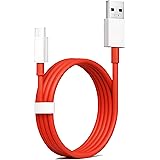
CROSSVOLT 80W Fast Compatible USB Type C Data Sync Fast Charging Cable for One plus 15,15r, 13,13s,13r,12,12r,11,11r,10,10r,10t,10pro,9,9rt,9r,9pro,8,8t,7t,7pro,Nord 5,CE5,CE4,CE3,CE2lite,4,3,2
₹260.00 (as of September 19, 2026 15:27 GMT +05:30 - More infoProduct prices and availability are accurate as of the date/time indicated and are subject to change. Any price and availability information displayed on [relevant Amazon Site(s), as applicable] at the time of purchase will apply to the purchase of this product.)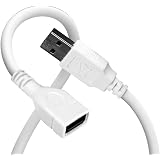
Zebronics USB Extension Cable, 1.5 Meter Length, 480Mbps Data Transfer, Full Copper Core, Nickel-Plated Connectors, Durable Build, For TV, Laptop, PC, Hard Drive, Gamepad (UEC15)
₹129.00 (as of September 19, 2026 15:27 GMT +05:30 - More infoProduct prices and availability are accurate as of the date/time indicated and are subject to change. Any price and availability information displayed on [relevant Amazon Site(s), as applicable] at the time of purchase will apply to the purchase of this product.)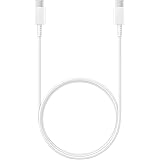
Samsung Original Type C to C Cable - 3.28 Feet (1 Meter), White
₹376.00 (as of September 19, 2026 15:27 GMT +05:30 - More infoProduct prices and availability are accurate as of the date/time indicated and are subject to change. Any price and availability information displayed on [relevant Amazon Site(s), as applicable] at the time of purchase will apply to the purchase of this product.)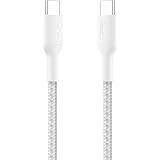
Belkin Apple Certified USB-C to USB-C Braided Nylon Cable 1M | Fast Charging Cable | Type C Charger Cable for iPhone 17, 16, Galaxy S25, Pixel 9, MacBook, iPad Pro | 2 Years Warranty | White
₹799.00 (as of September 19, 2026 15:27 GMT +05:30 - More infoProduct prices and availability are accurate as of the date/time indicated and are subject to change. Any price and availability information displayed on [relevant Amazon Site(s), as applicable] at the time of purchase will apply to the purchase of this product.)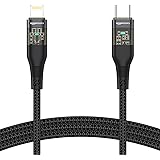
Amazon Basics Type-C to Lightning iPhone Cable | 30W Fast Charging, 480Mbps Data Sync, Car AirPlay, LED Indicator | Compatible with iPhone 14/13/12/11/10/8/7/6/6, iPad, AirPods | 1.2m | Black
₹232.00 (as of September 19, 2026 15:27 GMT +05:30 - More infoProduct prices and availability are accurate as of the date/time indicated and are subject to change. Any price and availability information displayed on [relevant Amazon Site(s), as applicable] at the time of purchase will apply to the purchase of this product.)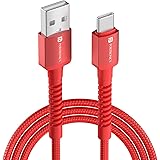
Portronics Konnect X 60W 6A USB-A to Type C Fast Charging Cable With WARP/DASH/VOOC/SuperVOOC/FLASH Charging Support, Compatible with OnePlus, Oppo, iPhone 15 & other Type C Smartphone & Devices(Red)
₹194.00 (as of September 19, 2026 15:27 GMT +05:30 - More infoProduct prices and availability are accurate as of the date/time indicated and are subject to change. Any price and availability information displayed on [relevant Amazon Site(s), as applicable] at the time of purchase will apply to the purchase of this product.)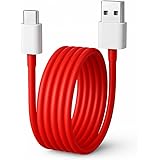
MYVN 100W Ultra Fast Charging Cable for OnePlus | USB-A to Type-C | WARP/Dash Compatible | Compatible with OnePlus 13/13R/13S/12R/11R/10R/10T/10/10 Pro/9/9 Pro/8/8 Pro/7 Pro/7T Pro/Nord/CE 3 Lite |1M
₹128.00 (as of September 19, 2026 15:27 GMT +05:30 - More infoProduct prices and availability are accurate as of the date/time indicated and are subject to change. Any price and availability information displayed on [relevant Amazon Site(s), as applicable] at the time of purchase will apply to the purchase of this product.)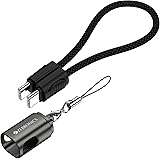
Zebronics Wattz 60CC4 Type-C to Type-C Braided Cable, PD 60W, Upto 480Mbps Data Sync, 20 cm, Durable, Charge & Sync, Rapid Charging, Compact with Keychain Case, For Laptops, Tablets, Mobiles (Black)
₹199.00 (as of September 19, 2026 15:27 GMT +05:30 - More infoProduct prices and availability are accurate as of the date/time indicated and are subject to change. Any price and availability information displayed on [relevant Amazon Site(s), as applicable] at the time of purchase will apply to the purchase of this product.)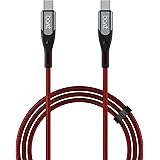
boAt Type C to C 65W Fast Charging Cable with 480 Mbps Data Transfer, Tangle-Free Cable in Premium Nylon Braided Design (Martian Red)
₹199.00 (as of September 19, 2026 15:27 GMT +05:30 - More infoProduct prices and availability are accurate as of the date/time indicated and are subject to change. Any price and availability information displayed on [relevant Amazon Site(s), as applicable] at the time of purchase will apply to the purchase of this product.)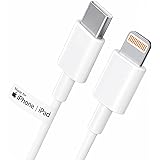
UNBREAKcable USB C to Lightning Cable (1M) | MFi Certified Fast Charging PD Cable Compatible for iPhone 15/14/13/12/11/X/8, iPad | Durable Braided Type C to Lightning Charger Cord (White)
₹369.00 (as of September 19, 2026 15:27 GMT +05:30 - More infoProduct prices and availability are accurate as of the date/time indicated and are subject to change. Any price and availability information displayed on [relevant Amazon Site(s), as applicable] at the time of purchase will apply to the purchase of this product.)
Portronics Konnect L POR-1081 Fast Charging 3A Type-C Cable 1.2Meter with Charge & Sync Function for All Type-C Devices (Grey)
₹159.00 (as of September 19, 2026 15:27 GMT +05:30 - More infoProduct prices and availability are accurate as of the date/time indicated and are subject to change. Any price and availability information displayed on [relevant Amazon Site(s), as applicable] at the time of purchase will apply to the purchase of this product.)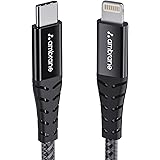
Ambrane Type-C to Lightning USB Cable, 22.5W Fast Charging, 480Mbps Data Sync Cable Compatible with iPhone, iPad, Macbook, iMac, AirPods, 1.25m (ABTL-125 Black)
₹159.00 (as of September 19, 2026 15:27 GMT +05:30 - More infoProduct prices and availability are accurate as of the date/time indicated and are subject to change. Any price and availability information displayed on [relevant Amazon Site(s), as applicable] at the time of purchase will apply to the purchase of this product.)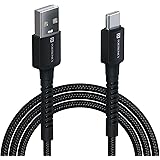
Portronics Konnect X USB to Type C Cable with 3A Output, Fast Charging & Data Transfer, Nylon Braided, Aluminium Alloy Shell, 1M Length compatible with Type C Smartphones(Black)
₹150.00 (as of September 19, 2026 15:27 GMT +05:30 - More infoProduct prices and availability are accurate as of the date/time indicated and are subject to change. Any price and availability information displayed on [relevant Amazon Site(s), as applicable] at the time of purchase will apply to the purchase of this product.)
HAMMER Unbreakable Type C to Type C Cable 60W Braided, PD Fast Charging, Data Sync, 1.2 Meter Tangle Free Wire, Compatible with all C-Type Enabled Devices (Black)
₹149.00 (as of September 19, 2026 15:27 GMT +05:30 - More infoProduct prices and availability are accurate as of the date/time indicated and are subject to change. Any price and availability information displayed on [relevant Amazon Site(s), as applicable] at the time of purchase will apply to the purchase of this product.)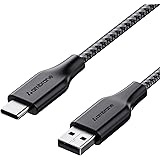
Ambrane Unbreakable 3A Fast Charging 1.5m Braided Type C Cable for Smartphones, Tablets & other Type C devices, 480Mbps Data Sync, Quick Charge 3.0 (RCT15A, Black)
₹179.00 (as of September 19, 2026 15:27 GMT +05:30 - More infoProduct prices and availability are accurate as of the date/time indicated and are subject to change. Any price and availability information displayed on [relevant Amazon Site(s), as applicable] at the time of purchase will apply to the purchase of this product.)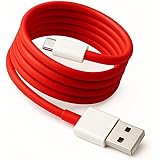
One Plus 80W Fast Charging USB-A to Type-C Cable|Ultra Fast Charging|WARP/Dash Compatible|Compatible with OnePlus 13/13S/13R/12/12R/11/11R/10/10R/10T/10 Pro/9/9R/9 Pro/Nord 5/CE 5/CE 4/CE 3/CE 2 Lite
₹269.00 (as of September 19, 2026 15:27 GMT +05:30 - More infoProduct prices and availability are accurate as of the date/time indicated and are subject to change. Any price and availability information displayed on [relevant Amazon Site(s), as applicable] at the time of purchase will apply to the purchase of this product.)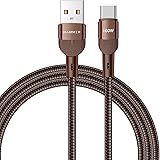
HAMMER 100W 5A USB to Type-C for OnePlus with WARP/VOOC/FLASH support, Super Fast Charging Cable,1.2M Nylon Braided,Tangle free,480Mbps Data Transfer, supports OPPO (Brown)
₹199.00 (as of September 19, 2026 15:27 GMT +05:30 - More infoProduct prices and availability are accurate as of the date/time indicated and are subject to change. Any price and availability information displayed on [relevant Amazon Site(s), as applicable] at the time of purchase will apply to the purchase of this product.)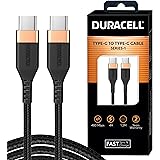
Duracell Usb Type C To Type C USB Cable 4A(60W) Braided Sync& Charging Cable,Compatible With Mobile,Laptop,Tablets&Macbook,3.9 Feet(1.2M) Supports Power Delivery(Pd) With Rapid Data Transmission,Black
₹398.00 (as of September 19, 2026 15:27 GMT +05:30 - More infoProduct prices and availability are accurate as of the date/time indicated and are subject to change. Any price and availability information displayed on [relevant Amazon Site(s), as applicable] at the time of purchase will apply to the purchase of this product.)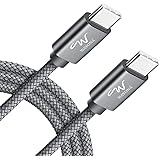
Wayona Type C to Type C 6FT/2M 65W Long Fast Charging Cable Compatible with iPhone 17, Air, iPhone 16,15 Pro/Max Series Macbook Air/Pro Samsung Galaxy S25, Ultra/S24/ S23 Flip Fold OnePlus (2M, Grey)
₹358.99 (as of September 19, 2026 15:27 GMT +05:30 - More infoProduct prices and availability are accurate as of the date/time indicated and are subject to change. Any price and availability information displayed on [relevant Amazon Site(s), as applicable] at the time of purchase will apply to the purchase of this product.)
One Plus Fast 80W Original USB Type C Data Sync Fast Charging Charger Cable for One Plus 13,13s,13r,12,12r,11,11r,10,10r,10t,10pro,9,9rt,9r,9pro,8,8t,7t,7pro,Nord 5,CE5,CE4,CE3,CE2lite,4,3,2,2T
₹199.00 (as of September 19, 2026 15:27 GMT +05:30 - More infoProduct prices and availability are accurate as of the date/time indicated and are subject to change. Any price and availability information displayed on [relevant Amazon Site(s), as applicable] at the time of purchase will apply to the purchase of this product.)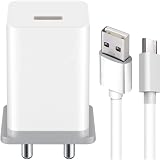
Type-C Charger for Samsung Galaxy Tab S6 Lite (2022) Original QC Adapter Type C 3.0A High Speed Fast Turbo Charge QC 3.0 Smart with 1m Type-C Charging & Sync Cable (White, Op, SE.AL4)
₹399.00 (as of September 19, 2026 15:34 GMT +05:30 - More infoProduct prices and availability are accurate as of the date/time indicated and are subject to change. Any price and availability information displayed on [relevant Amazon Site(s), as applicable] at the time of purchase will apply to the purchase of this product.)
GRIPPIE AI Auto Charge Disconnect Adapter | 100W PD Fast Charging Type-C Auto Cut-Off Device | Full Charge Auto Unplug for iPhone, Android, Tablets, Earbuds & Laptops
₹800.00 (as of September 19, 2026 15:34 GMT +05:30 - More infoProduct prices and availability are accurate as of the date/time indicated and are subject to change. Any price and availability information displayed on [relevant Amazon Site(s), as applicable] at the time of purchase will apply to the purchase of this product.)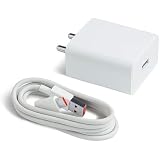
18W Charger For Vivo T1x 4G Original QC Adapter Type C 3.0A High Speed Fast Turbo Charge QC 3.0 Smart with 1m Type-C Charging & Sync Cable (WHT..SE.4amps)
₹349.00 (as of September 19, 2026 15:34 GMT +05:30 - More infoProduct prices and availability are accurate as of the date/time indicated and are subject to change. Any price and availability information displayed on [relevant Amazon Site(s), as applicable] at the time of purchase will apply to the purchase of this product.)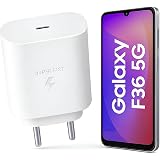
25W USB-C Super-Fast Charger Adapter | Compatible with Samsung Galaxy F36, M35, M06, A55, M16, F05, F55, S25, S24, S23, Z Fold/Flip 7/6/5/4, Tab Series | Type-C PD Charging Adapter - White
Now retrieving the price.
(as of September 19, 2026 15:34 GMT +05:30 - More infoProduct prices and availability are accurate as of the date/time indicated and are subject to change. Any price and availability information displayed on [relevant Amazon Site(s), as applicable] at the time of purchase will apply to the purchase of this product.)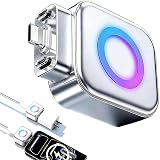
TWIMAL Smart Charger Adapter Auto Power Disconnector |140W USB-C Fast Charging Adapter with LED Indicator | Auto Power Cut-Off Adapter for Android, iPhone, iPad & Compatible Devices
₹999.00 (as of September 19, 2026 15:34 GMT +05:30 - More infoProduct prices and availability are accurate as of the date/time indicated and are subject to change. Any price and availability information displayed on [relevant Amazon Site(s), as applicable] at the time of purchase will apply to the purchase of this product.)
140W AI Smart Auto Stop Charging Adapter, USB C Auto Power-Off Fast Charger with AI Full-Charge Disconnect,Plug and Play for Laptop, Pad, 1Phone, Tablet – Overnight Safe,Prevent Battery Aging
₹949.00 (as of September 19, 2026 15:34 GMT +05:30 - More infoProduct prices and availability are accurate as of the date/time indicated and are subject to change. Any price and availability information displayed on [relevant Amazon Site(s), as applicable] at the time of purchase will apply to the purchase of this product.)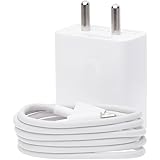
Type-C Charger for Samsung Galaxy Tab A9 Original QC Adapter Type C 3.0A High Speed Fast Turbo Charge QC 3.0 Smart with 1m Type-C Charging & Sync Cable (White, SE.AL10)
₹499.00 (as of September 19, 2026 15:34 GMT +05:30 - More infoProduct prices and availability are accurate as of the date/time indicated and are subject to change. Any price and availability information displayed on [relevant Amazon Site(s), as applicable] at the time of purchase will apply to the purchase of this product.)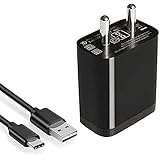
18W Charger for Lenovo Tab M10 Original QC Adapter Type C 3.0A High Speed Fast Turbo Charge QC 3.0 Smart with 1m Type-C Charging & Sync Cable (Black, SE.AK4)
₹399.00 (as of September 19, 2026 15:34 GMT +05:30 - More infoProduct prices and availability are accurate as of the date/time indicated and are subject to change. Any price and availability information displayed on [relevant Amazon Site(s), as applicable] at the time of purchase will apply to the purchase of this product.)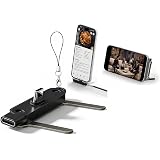
REDWIND 2in1 Type-C Male to USB C Female PD 15W/240W Fast Charging Adapter with 360° Invisible Phone Holder Soft Silicone Folding Stand for iPhone Smartphones Laptops & Tablets(Black)
₹289.00 (as of September 19, 2026 15:34 GMT +05:30 - More infoProduct prices and availability are accurate as of the date/time indicated and are subject to change. Any price and availability information displayed on [relevant Amazon Site(s), as applicable] at the time of purchase will apply to the purchase of this product.)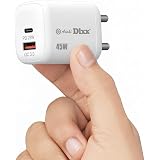
Aashi DLX | 45W Dual Port Fast Charger Adapter | Type C Pd and USB A Qc Fast Charging | Compatible with Samsung,Oppo,Vivo,Realme,Redmi
₹599.00 (as of September 19, 2026 15:34 GMT +05:30 - More infoProduct prices and availability are accurate as of the date/time indicated and are subject to change. Any price and availability information displayed on [relevant Amazon Site(s), as applicable] at the time of purchase will apply to the purchase of this product.)
ONWAY'S 18W Charger For Tecno Camon 18T Original QC Adapter Type C 3.0A High Speed Fast Turbo Charge QC 3.0 Smart with 1m Type-C Charging & Sync Cable (WHT..SE.5amps)
₹349.00 (as of September 19, 2026 15:34 GMT +05:30 - More infoProduct prices and availability are accurate as of the date/time indicated and are subject to change. Any price and availability information displayed on [relevant Amazon Site(s), as applicable] at the time of purchase will apply to the purchase of this product.)
KUWAJIA Smart Charger Adapter Auto Power Disconnector Guard Every Mobile Android|Tablet|Switch| No Touch Mobile Screen in 5 Minit Automatically Pops Open When Fully Charged (Type-C Cable)
₹1,489.00 (as of September 19, 2026 15:34 GMT +05:30 - More infoProduct prices and availability are accurate as of the date/time indicated and are subject to change. Any price and availability information displayed on [relevant Amazon Site(s), as applicable] at the time of purchase will apply to the purchase of this product.)
ONWAY'S 18W Charger For Realme 9 5G Original QC Adapter Type C 3.0A High Speed Fast Turbo Charge QC 3.0 Smart with 1m Type-C Charging & Sync Cable (WHT..SE.5amps)
₹349.00 (as of September 19, 2026 15:34 GMT +05:30 - More infoProduct prices and availability are accurate as of the date/time indicated and are subject to change. Any price and availability information displayed on [relevant Amazon Site(s), as applicable] at the time of purchase will apply to the purchase of this product.)
18W Charger For Vivo S1 Pro Original QC Adapter Type C 3.0A High Speed Fast Turbo Charge QC 3.0 Smart with 1m Type-C Charging & Sync Cable (WHT..SE.6amps)
₹349.00 (as of September 19, 2026 15:34 GMT +05:30 - More infoProduct prices and availability are accurate as of the date/time indicated and are subject to change. Any price and availability information displayed on [relevant Amazon Site(s), as applicable] at the time of purchase will apply to the purchase of this product.)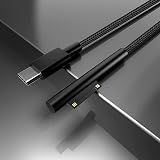
MERISHOPP for Microsoft Surface Pro 3 Tablet Power Charger Charging Adapter Cable | Computers/Tablets & Networking | Tablet & eBook Reader Accs | Chargers & Sync Cables
₹986.00 (as of September 19, 2026 15:34 GMT +05:30 - More infoProduct prices and availability are accurate as of the date/time indicated and are subject to change. Any price and availability information displayed on [relevant Amazon Site(s), as applicable] at the time of purchase will apply to the purchase of this product.)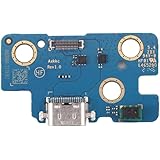
REOTEL USB Charging PCB Board Flex Cable Charging Connector Compatible for Samsung Galaxy Tab A8 10.5 2021 SM-X200/X205 (with Fast Charging & Strong Network IC)
₹999.00 (as of September 19, 2026 15:34 GMT +05:30 - More infoProduct prices and availability are accurate as of the date/time indicated and are subject to change. Any price and availability information displayed on [relevant Amazon Site(s), as applicable] at the time of purchase will apply to the purchase of this product.)
18W Charger For vivo Y56 Original QC Adapter Type C 3.0A High Speed Fast Turbo Charge QC 3.0 Smart with 1m Type-C Charging & Sync Cable (WHT..SE.4amps)
₹349.00 (as of September 19, 2026 15:34 GMT +05:30 - More infoProduct prices and availability are accurate as of the date/time indicated and are subject to change. Any price and availability information displayed on [relevant Amazon Site(s), as applicable] at the time of purchase will apply to the purchase of this product.)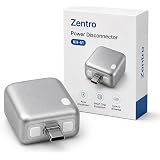
USB-C Smart Auto Disconnect Charging Adapter with Auto Eject Function, LED Charging Indicator, Intelligent Power Cut Control, Up to 140W Support for Compatible Phones, Tablets and Laptops
₹949.00 (as of September 19, 2026 15:34 GMT +05:30 - More infoProduct prices and availability are accurate as of the date/time indicated and are subject to change. Any price and availability information displayed on [relevant Amazon Site(s), as applicable] at the time of purchase will apply to the purchase of this product.)
18W Charger For Samsung Galaxy A22 Original QC Adapter Type C 3.0A High Speed Fast Turbo Charge QC 3.0 Smart with 1m Type-C Charging & Sync Cable (WHT..SE.6amps)
₹349.00 (as of September 19, 2026 15:34 GMT +05:30 - More infoProduct prices and availability are accurate as of the date/time indicated and are subject to change. Any price and availability information displayed on [relevant Amazon Site(s), as applicable] at the time of purchase will apply to the purchase of this product.)
Nixnine Table Desk Grommet 2.5 Inch/Stainless Steel Desk Cord Cable Hole/Computer Wire Cable Organiser Manager, Office Desk, Computer Table, TV Cabinet & Furniture Pack of 1, (Silver)
₹210.00 (as of September 19, 2026 15:34 GMT +05:30 - More infoProduct prices and availability are accurate as of the date/time indicated and are subject to change. Any price and availability information displayed on [relevant Amazon Site(s), as applicable] at the time of purchase will apply to the purchase of this product.)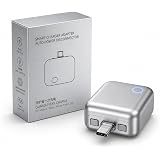
Elebase Smart Charger Adapter with Auto Power Disconnector & Physical Auto Pop-Out – 140W Fast Charging USB Type-C Safety Protector for Laptops, Smartphones, Tablets, and Switch
₹999.00 (as of September 19, 2026 15:34 GMT +05:30 - More infoProduct prices and availability are accurate as of the date/time indicated and are subject to change. Any price and availability information displayed on [relevant Amazon Site(s), as applicable] at the time of purchase will apply to the purchase of this product.)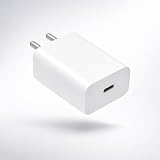
Google 30W Original Type C Fast Charging Power Adapter for Google 11/10/10 Pro/9A/ 9 Pro XL/9 Pro/8 Pro/8/8A,7 Pro/7/7A,Tablet/Chrome Books & Other USB C Devices Quick Charger Support-30 Watt,White
Now retrieving the price.
(as of September 19, 2026 15:34 GMT +05:30 - More infoProduct prices and availability are accurate as of the date/time indicated and are subject to change. Any price and availability information displayed on [relevant Amazon Site(s), as applicable] at the time of purchase will apply to the purchase of this product.)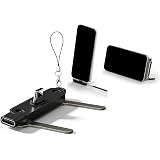
REDWIND 2 in 1 Type C Charging Adapter, 240W USB C Fast Charging Adapter with Phone Stand, Supports 480Mbps Data Sync, USB C Adapter with Angled Zinc Alloy Connectors
₹289.00 (as of September 19, 2026 15:34 GMT +05:30 - More infoProduct prices and availability are accurate as of the date/time indicated and are subject to change. Any price and availability information displayed on [relevant Amazon Site(s), as applicable] at the time of purchase will apply to the purchase of this product.)
Futopia 140W USB-C Full Charge Auto Disconnect Adapter | Smart Charging Separator with Auto Power Cut-Off, Prevents Overcharging & Overheating
₹799.00 (as of September 19, 2026 15:34 GMT +05:30 - More infoProduct prices and availability are accurate as of the date/time indicated and are subject to change. Any price and availability information displayed on [relevant Amazon Site(s), as applicable] at the time of purchase will apply to the purchase of this product.)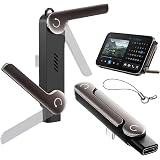
HINIXIA 2-in-1 USB-C Adapter with Foldable Phone Stand, 240W Fast Charging, 480Mbps Data Sync, Zinc Alloy Angled Connector for Smartphones Laptops Tablets (Black)
₹383.00 (as of September 19, 2026 15:34 GMT +05:30 - More infoProduct prices and availability are accurate as of the date/time indicated and are subject to change. Any price and availability information displayed on [relevant Amazon Site(s), as applicable] at the time of purchase will apply to the purchase of this product.)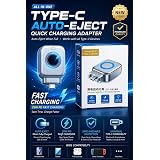
Type-C Auto-Eject Charging Separator, Universal Compatibility | Auto Cut on Full Charge, Multi-Protection Safety, Works with All Type-C, Overcharge Protection, Wide Device Compatibility
₹699.00 (as of September 19, 2026 15:34 GMT +05:30 - More infoProduct prices and availability are accurate as of the date/time indicated and are subject to change. Any price and availability information displayed on [relevant Amazon Site(s), as applicable] at the time of purchase will apply to the purchase of this product.)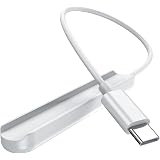
DuHeSin Stylus Pen Charging Cable Pencil Charger Compatible with Pencil 2nd Generation Only Stylus Charging Cord Save Your Ipad Battery
₹699.00 (as of September 19, 2026 15:34 GMT +05:30 - More infoProduct prices and availability are accurate as of the date/time indicated and are subject to change. Any price and availability information displayed on [relevant Amazon Site(s), as applicable] at the time of purchase will apply to the purchase of this product.)
USB-C Smart Auto Eject Charging Adapter with LED Indicator, Automatic Power Cut-Off & Intelligent Charging Control, Up to 140 W for Smartphones, Tablets, Laptops & USB-C Devices
₹949.00 (as of September 19, 2026 15:34 GMT +05:30 - More infoProduct prices and availability are accurate as of the date/time indicated and are subject to change. Any price and availability information displayed on [relevant Amazon Site(s), as applicable] at the time of purchase will apply to the purchase of this product.)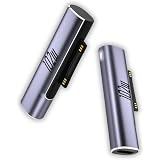
MillionHz USB-C Connector | 102W PD | Compatible for Microsoft Surface | Solid Metal Build | Use with 45Watt - 15Volt - 3Amp USB-C Charger & Compatible Cable
₹599.00 (as of September 19, 2026 15:34 GMT +05:30 - More infoProduct prices and availability are accurate as of the date/time indicated and are subject to change. Any price and availability information displayed on [relevant Amazon Site(s), as applicable] at the time of purchase will apply to the purchase of this product.)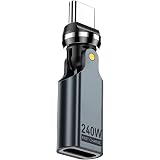
ZORBES USB C Male to Female Right Angle Adapter 240W Power Meter Digital Di | Power Monitoring for Charging, Clear Readout, Aluminum Alloy Housing, 540° Rotation, Compact Cable Access
₹793.00 (as of September 19, 2026 15:34 GMT +05:30 - More infoProduct prices and availability are accurate as of the date/time indicated and are subject to change. Any price and availability information displayed on [relevant Amazon Site(s), as applicable] at the time of purchase will apply to the purchase of this product.)
Zorviking Smart Auto-Disconnect Charger 140W PD3.1 | Fast Charger, Auto Shut-Off & Full-Charge Disconnector, For Phones, Tablets & Laptops
₹699.00 (as of September 19, 2026 15:34 GMT +05:30 - More infoProduct prices and availability are accurate as of the date/time indicated and are subject to change. Any price and availability information displayed on [relevant Amazon Site(s), as applicable] at the time of purchase will apply to the purchase of this product.)
BYJU’S Learn Station Tablet 5V - 3Amp Specifically Designed to Support BYJU’S Proper fit, Reliable Charging, and Safe Operation Long Cable 1.7meter and L pin comfteble
₹950.00 (as of September 19, 2026 15:34 GMT +05:30 - More infoProduct prices and availability are accurate as of the date/time indicated and are subject to change. Any price and availability information displayed on [relevant Amazon Site(s), as applicable] at the time of purchase will apply to the purchase of this product.)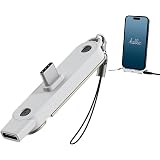
Portronics 240W Dockpin Type C to Type C Adapter with in Built Stand, Smart E-Marker Chipset, Pocket-Sized Connector, Compact Cable-Free Design, Compatible with Laptops, Smartphones, Tablets(White)
₹299.00 (as of September 19, 2026 15:34 GMT +05:30 - More infoProduct prices and availability are accurate as of the date/time indicated and are subject to change. Any price and availability information displayed on [relevant Amazon Site(s), as applicable] at the time of purchase will apply to the purchase of this product.)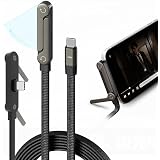
CERLINK 240W USB-C to USB-C Fast Charging Cable (1.5M) with Adjustable Foldable Phone Stand | Multi-Angle Type-C Charger Cable for Smartphone, Tablet & Laptop | High-Speed Data Sync & Charge
₹259.00 (as of September 19, 2026 15:34 GMT +05:30 - More infoProduct prices and availability are accurate as of the date/time indicated and are subject to change. Any price and availability information displayed on [relevant Amazon Site(s), as applicable] at the time of purchase will apply to the purchase of this product.)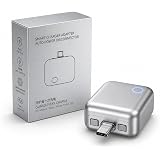
CERLINK Smart Charger Adapter Auto Power Disconnector | Automatically Pops Out After Full Charge | No Touch Mobile Screen in 5 Minutes | Type-C Cable | Compatible with Android, Tablet, Apple & Switch
₹1,299.00 (as of September 19, 2026 15:34 GMT +05:30 - More infoProduct prices and availability are accurate as of the date/time indicated and are subject to change. Any price and availability information displayed on [relevant Amazon Site(s), as applicable] at the time of purchase will apply to the purchase of this product.)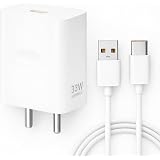
33W Flash Charger for Realme Pad 2 Original QC Adapter Type C 3.0A High Speed Fast Turbo Charge QC 3.0 Smart SinglePort with 1m Type-C Charging & Sync Cable (White, FZ.A2)
₹799.00 (as of September 19, 2026 15:34 GMT +05:30 - More infoProduct prices and availability are accurate as of the date/time indicated and are subject to change. Any price and availability information displayed on [relevant Amazon Site(s), as applicable] at the time of purchase will apply to the purchase of this product.)
BYJU'S Power Adapter Charger for BYJU'S Learn Station Tablet | 5V 3A Output, Fast Charging, 100-240V Input, Indoor Use Only, DC Barrel Connector
₹999.00 (as of September 19, 2026 15:34 GMT +05:30 - More infoProduct prices and availability are accurate as of the date/time indicated and are subject to change. Any price and availability information displayed on [relevant Amazon Site(s), as applicable] at the time of purchase will apply to the purchase of this product.)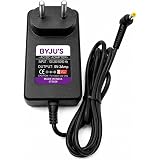
Compatible with BYJU’S Learn Station Tablet 5V - 3Amp Specifically Designed to Support BYJU’S Proper fit, Reliable Charging, and Safe Operation Long Cable 1.7meter and L pin comfteble
₹989.00 (as of September 19, 2026 15:34 GMT +05:30 - More infoProduct prices and availability are accurate as of the date/time indicated and are subject to change. Any price and availability information displayed on [relevant Amazon Site(s), as applicable] at the time of purchase will apply to the purchase of this product.)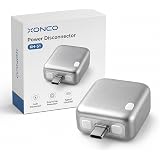
USB-C Smart Auto Eject Charging Adapter with LED Indicator, Intelligent Power Control, Automatic Power Cut & Overcharge Protection for Phones, Tablets and USB-C Laptops
₹949.00 (as of September 19, 2026 15:34 GMT +05:30 - More infoProduct prices and availability are accurate as of the date/time indicated and are subject to change. Any price and availability information displayed on [relevant Amazon Site(s), as applicable] at the time of purchase will apply to the purchase of this product.)