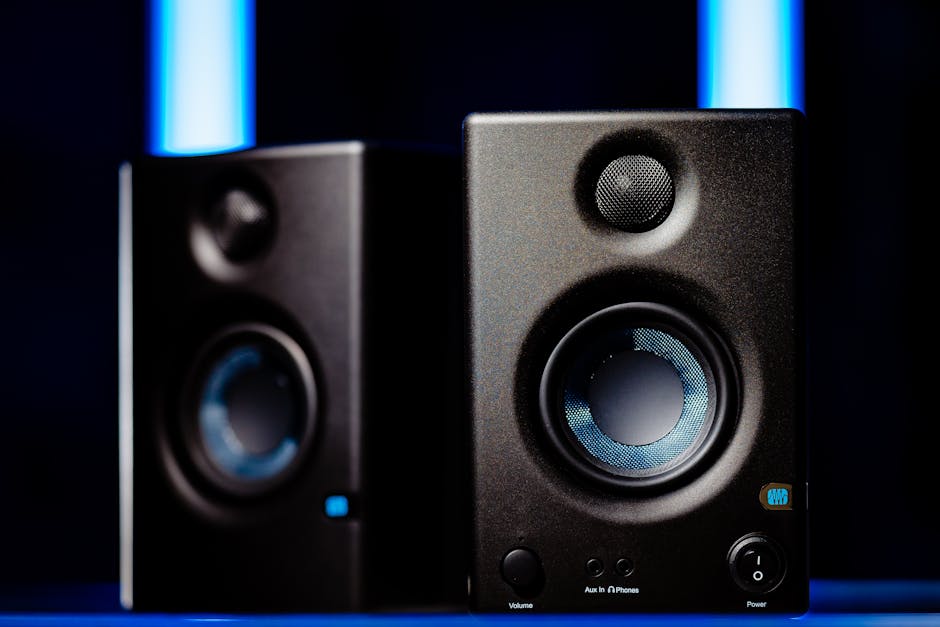
Choosing the right studio monitor speakers is paramount for any audio professional, from budding bedroom producers to seasoned mixing engineers. These specialized loudspeakers are designed for accuracy, revealing the true sonic character of your audio without embellishment. Unlike consumer Hi-Fi speakers, studio monitors prioritize a flat frequency response, ensuring that what you hear is an uncolored representation of your mix. This guide delves into the critical factors to consider and highlights some of the best studio monitor speakers available, empowering you to make an informed purchase that will elevate your audio production workflow.
Understanding the Fundamentals: What Makes a Great Studio Monitor?
The core principle of a studio monitor is accuracy. This translates to a flat frequency response, meaning the speaker reproduces sound at all audible frequencies (typically 20Hz to 20kHz) with minimal deviation. This allows you to identify subtle nuances, imbalances, and artifacts in your recordings and mixes. Several key components contribute to this accuracy:
- Driver Quality: The quality of the woofer (for low frequencies) and tweeter (for high frequencies) significantly impacts sound reproduction. High-quality drivers are constructed from rigid yet lightweight materials, minimizing distortion and resonance. Common materials include paper, Kevlar, carbon fiber, and various composite blends.
- Cabinet Design and Construction: The enclosure plays a crucial role in preventing unwanted resonances and reflections. Dense MDF (Medium-Density Fiberboard) is a popular choice for its acoustic properties. Port design (bass reflex) also influences low-frequency extension and accuracy; front-ported designs are often preferred in smaller studios to minimize boundary effects.
- Amplification: Studio monitors are typically active, meaning they have built-in amplifiers. The amplifier’s power output and design directly affect the speaker’s headroom, clarity, and ability to reproduce transient sounds accurately. Bi-amplification, where separate amplifiers power the woofer and tweeter, is a common feature, offering greater control and efficiency.
- Frequency Response: Look for monitors with a broad and flat frequency response. While the ideal is perfectly flat, minor dips and peaks are inevitable. The specified range should cover the full spectrum of human hearing, and the tolerance (e.g., +/- 1.5dB) indicates how closely it adheres to flatness.
- Dispersion: This refers to how consistently the speaker reproduces sound across a wider listening area. Good dispersion ensures that your mix sounds consistent whether you’re sitting directly in front of the monitors or slightly off-axis.
- SPL (Sound Pressure Level): This indicates the maximum volume the speaker can produce without significant distortion. For most home studios, moderate SPL capabilities are sufficient. However, if you work in larger spaces or frequently mix at higher volumes, higher SPL ratings become more important.
Key Considerations for Your Studio Environment:
The effectiveness of your studio monitors is heavily influenced by your listening environment.
- Room Size and Acoustics: Smaller rooms can exaggerate bass frequencies, while larger rooms might sound anechoic. The acoustics of your room (reflections, absorption, diffusion) will color the sound. Even the best monitors will struggle in a poorly treated room. Consider acoustic treatment solutions like bass traps, acoustic panels, and diffusers to optimize your listening space.
- Listening Position: The “sweet spot” is the ideal listening position where the stereo image is most accurate and the frequency balance is optimal. Aim for an equilateral triangle formation with your monitors and your head.
- Nearfield vs. Midfield vs. Farfield:
- Nearfield monitors are designed for close-range listening (typically 3-5 feet). They are ideal for smaller studios and detail-oriented mixing.
- Midfield monitors are larger and designed for slightly further listening distances, offering a broader soundstage and more power.
- Farfield monitors are large, powerful speakers intended for larger control rooms, providing a more immersive and less fatiguing listening experience over extended periods. Most home and project studios will utilize nearfield monitors.
Navigating the Market: Types of Studio Monitors
Studio monitors can be broadly categorized by their driver configuration and size.
- Two-Way Monitors: These are the most common type, featuring a woofer for low-mid frequencies and a tweeter for high frequencies. They offer a good balance of performance and affordability.
- Three-Way Monitors: These incorporate an additional driver, typically a dedicated midrange driver, between the woofer and tweeter. This can lead to improved clarity and accuracy in the crucial midrange frequencies, often found in higher-end monitors.
- Coaxial Monitors: In coaxial designs, the tweeter is mounted within the woofer cone. This arrangement offers excellent phase coherence and a consistent dispersion pattern, often resulting in a very cohesive soundstage.
Top Studio Monitor Recommendations (Categorized by Price Point and Use Case):
This section highlights some of the most respected and popular studio monitor speakers, catering to various budgets and needs.
Entry-Level (Under $500 per pair): Ideal for beginners and budget-conscious producers.
- PreSonus Eris E5 XT / E8 XT: These popular monitors offer impressive value for their price. The XT models feature a larger woofer and an extended high-frequency response. They boast a balanced sound profile, making them versatile for various genres. The Eris E8 XT provides a more powerful low-end extension suitable for larger rooms.
- Kali Audio LP-6 V2 / LP-8 V2: Kali Audio has quickly established a reputation for delivering accurate and well-engineered monitors at accessible price points. The LP-series features a unique waveguide design that provides excellent directivity and a wide sweet spot. They are known for their clarity and detailed sound. The V2 versions offer subtle improvements over their predecessors.
- JBL 305P MkII / 306P MkII / 308P MkII: JBL’s 3 Series are workhorses in many project studios. They offer a clean and detailed sound with a surprisingly wide sweet spot thanks to their Image Control Waveguide. The different sizes (5″, 6″, 8″) cater to varying room sizes and bass requirements. These are known for their reliability and punchy sound.
Mid-Range ($500 – $1000 per pair): For serious hobbyists and semi-professional studios.
- KRK Rokit RP7 G4 / RP8 G4: KRK Rokits are instantly recognizable by their yellow woofers and have been a staple in studios for years. The G4 generation offers significant improvements in sound quality, with a flatter frequency response and DSP-driven room correction. They are known for their punchy bass and forward midrange, which can be great for identifying rhythmic elements.
- Yamaha HS5 / HS7 / HS8: The Yamaha HS series are legendary for their neutral and accurate sound. Inspired by the classic NS-10M, these monitors are designed to reveal flaws in your mix, forcing you to make better decisions. They are characterized by their crisp highs and detailed midrange, though their low-end can be less pronounced than some competitors, encouraging careful bass management.
- Adam Audio T7V / T8V: Adam Audio’s T-Series monitors offer a high level of detail and clarity, particularly in the high frequencies thanks to their U-ART ribbon tweeter. They provide a wide and deep soundstage, allowing for precise stereo imaging. The T7V is a great all-rounder, while the T8V offers more low-end extension for larger spaces.
High-End ($1000+ per pair): For professional studios and discerning audio engineers.
- Genelec 8030C / 8040B: Genelec is synonymous with professional studio monitoring. Their 8000 series offers exceptional accuracy, tight bass response, and incredible detail. They feature intelligent signal detection (ISS) to conserve energy and robust build quality. Genelec monitors are known for their transparency and ability to translate mixes across different playback systems.
- Focal Shape 50 / Shape 65: Focal’s Shape monitors are designed for nearfield monitoring with a focus on neutrality and detail. They feature a unique “flax sandwich” cone for the woofer, offering excellent rigidity and damping. The integrated passive radiator helps extend bass response without the port noise associated with bass reflex designs.
- Neumann KH 120 A / KH 150: Neumann, renowned for its microphones, also produces exceptional studio monitors. The KH 120 A is a compact, highly accurate monitor with a very flat frequency response and excellent transient response. The newer KH 150 offers even greater performance with extended low-frequency capabilities and advanced features. These are designed for critical listening and demanding professional environments.
Essential Accessories for Studio Monitors:
- Monitor Stands: Crucial for positioning your monitors at the correct height and angle, and for decoupling them from your desk to prevent resonance. Isolation pads or stands can further improve accuracy.
- Acoustic Treatment: As mentioned earlier, this is non-negotiable for achieving the full potential of your monitors.
- Cables: Use high-quality balanced XLR or TRS cables to connect your monitors to your audio interface, ensuring a clean and noise-free signal path.
Making Your Final Decision:
The “best” studio monitor is subjective and depends on your individual needs, budget, and listening environment. Here’s a final thought process:
- Assess your budget: Determine how much you can realistically spend.
- Consider your room: Measure your
ZEBRONICS Party Fyre 650 Party Speaker, 180W RMS, Dual 16.51cm Full Range Drivers, 7h Playback, Dual Wireless Mics, Karaoke, TWS, BT v5.0, USB, mSD, AUX, Music & Mic Controls, RGB Modes, LED Display
₹10,999.00 (as of October 10, 2026 16:56 GMT +05:30 - More infoProduct prices and availability are accurate as of the date/time indicated and are subject to change. Any price and availability information displayed on [relevant Amazon Site(s), as applicable] at the time of purchase will apply to the purchase of this product.)
Portronics Apollo One 20W Wireless Bluetooth Portable Speaker with Wireless Karaoke Mic, 5 Hour Playtime, RGB LED Light, Bluetooth V5.3, Easy Grab Handle, USB/AUX in/TF Card, Type C Charging(Black)
₹1,099.00 (as of October 10, 2026 16:56 GMT +05:30 - More infoProduct prices and availability are accurate as of the date/time indicated and are subject to change. Any price and availability information displayed on [relevant Amazon Site(s), as applicable] at the time of purchase will apply to the purchase of this product.)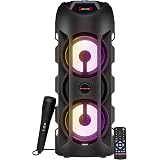
E GATE Thor 306 42W Party Speaker | Dual Driver Deep Bass | Splash Proof | RGB Lights | TWS | BT 5.2 | USB AUX TF FM | Type-C Charging | Portable Bluetooth Speaker for Home Outdoor Party
Now retrieving the price.
(as of October 10, 2026 16:56 GMT +05:30 - More infoProduct prices and availability are accurate as of the date/time indicated and are subject to change. Any price and availability information displayed on [relevant Amazon Site(s), as applicable] at the time of purchase will apply to the purchase of this product.)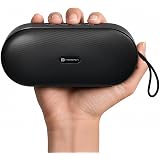
Portronics Spark X 5W HD Bluetooth Speaker with Built-in FM, TWS Mode, Bluetooth 5.3v, Micro SD Card Slot, Up to 5 Hours Playtime, Type-C Fast Charging, Portable Design (Black)
₹649.00 (as of October 10, 2026 16:56 GMT +05:30 - More infoProduct prices and availability are accurate as of the date/time indicated and are subject to change. Any price and availability information displayed on [relevant Amazon Site(s), as applicable] at the time of purchase will apply to the purchase of this product.)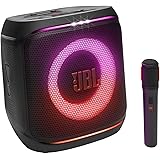
JBL Partybox Encore 2 with Mic, Wireless Bluetooth Party Speaker, AI Sound Boost, Dynamic Light Show, Upto 15Hrs Playtime, Replaceable Battery, Multi-Speaker Connection by Auracast, PartyBox App-Black
₹19,999.00 (as of October 10, 2026 16:56 GMT +05:30 - More infoProduct prices and availability are accurate as of the date/time indicated and are subject to change. Any price and availability information displayed on [relevant Amazon Site(s), as applicable] at the time of purchase will apply to the purchase of this product.)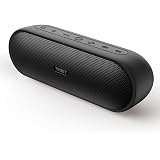
Tribit XSound Plus 2 Bluetooth Speaker, 30W, IPX7, 24H Playtime | XBass, Bluetooth 5.3, Custom EQ, Built-in Mic, Stereo TWS Pairing, for Outdoor, Home, Type-C Charging
₹4,669.00 (as of October 10, 2026 16:56 GMT +05:30 - More infoProduct prices and availability are accurate as of the date/time indicated and are subject to change. Any price and availability information displayed on [relevant Amazon Site(s), as applicable] at the time of purchase will apply to the purchase of this product.)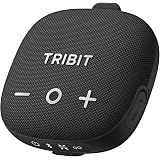
Tribit StormBox Micro 3 Bluetooth Speaker, 13W, IP68, 24H Playtime, Black | XBass, Carry Strap, Magnetic Mount, Bluetooth 6.0, Custom EQ, Built-in Mic, Stereo TWS Pairing, Outdoor, Cycling, Type-C
₹6,099.00 (as of October 10, 2026 16:56 GMT +05:30 - More infoProduct prices and availability are accurate as of the date/time indicated and are subject to change. Any price and availability information displayed on [relevant Amazon Site(s), as applicable] at the time of purchase will apply to the purchase of this product.)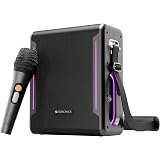
ZEBRONICS Axon 150 Portable Bluetooth Speaker, 100W RMS, Built-in Power Bank, Zeb AcoustiMax DSP, Dual Passive Radiators, Up to 7h Playback, RGB Lights, BT v5.3, USB, mSD, AUX, Wireless Mic (Black)
₹5,799.00 (as of October 10, 2026 16:56 GMT +05:30 - More infoProduct prices and availability are accurate as of the date/time indicated and are subject to change. Any price and availability information displayed on [relevant Amazon Site(s), as applicable] at the time of purchase will apply to the purchase of this product.)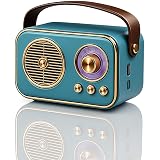
Fire turtle Vintage Bluetooth Wireless Speaker | 10W RMS Loud Sound | Retro Design with Type-C Charging, 8H Battery Backup, USB & AUX Input, Portable Home & Outdoor Speaker 636 Blue
₹569.00 (as of October 10, 2026 16:56 GMT +05:30 - More infoProduct prices and availability are accurate as of the date/time indicated and are subject to change. Any price and availability information displayed on [relevant Amazon Site(s), as applicable] at the time of purchase will apply to the purchase of this product.)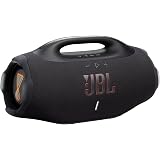
JBL Boombox 4, Wireless Portable Bluetooth Speaker, 34H Playtime Black
₹44,999.00 (as of October 10, 2026 16:56 GMT +05:30 - More infoProduct prices and availability are accurate as of the date/time indicated and are subject to change. Any price and availability information displayed on [relevant Amazon Site(s), as applicable] at the time of purchase will apply to the purchase of this product.)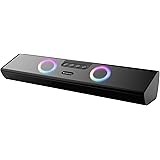
ZEBRONICS Astra 35, Portable Bluetooth Speaker, 16 Watts, Upto 8h Backup, Dual Drivers + Dual Passive Radiators, Call Function, Bluetooth v5.3 | USB | mSD| AUX, TWS, RGB LED
₹699.00 (as of October 10, 2026 16:56 GMT +05:30 - More infoProduct prices and availability are accurate as of the date/time indicated and are subject to change. Any price and availability information displayed on [relevant Amazon Site(s), as applicable] at the time of purchase will apply to the purchase of this product.)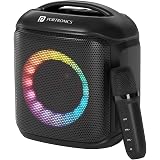
Portronics Apollo Prime 20W Bluetooth Speaker with Wireless Karaoke Mic, RGB LED Lights, Bluetooth 5.3, Up to 5 Hours Playtime, Type-C Charging, USB, AUX & SD Card Support, Easy Grip Handle (Black)
₹1,799.00 (as of October 10, 2026 16:56 GMT +05:30 - More infoProduct prices and availability are accurate as of the date/time indicated and are subject to change. Any price and availability information displayed on [relevant Amazon Site(s), as applicable] at the time of purchase will apply to the purchase of this product.)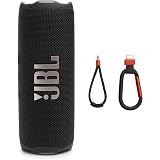
JBL Flip 7 Wireless Portable Bluetooth Speaker, Bold Pro Sound with AI Sound Boost, 16Hrs of Playtime, IP68 Water & Dustproof, Multi-Speaker Connection by Auracast, Personalization App (Black)
₹9,999.00 (as of October 10, 2026 16:56 GMT +05:30 - More infoProduct prices and availability are accurate as of the date/time indicated and are subject to change. Any price and availability information displayed on [relevant Amazon Site(s), as applicable] at the time of purchase will apply to the purchase of this product.)
Pillow Speaker for Sleeping, Ultra-Thin Bluetooth Sleep Speaker Under Pillow for Side Sleepers, 7-Day Battery Life, Private Bedtime Audio with Auto-Off Timer, Blue
₹269.00 (as of October 10, 2026 16:56 GMT +05:30 - More infoProduct prices and availability are accurate as of the date/time indicated and are subject to change. Any price and availability information displayed on [relevant Amazon Site(s), as applicable] at the time of purchase will apply to the purchase of this product.)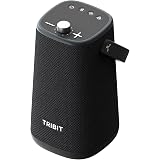
Tribit StormBox Max Portable Bluetooth Speaker, 60W, 360° Sound, Black | IP68 Waterproof, XBass 2.0, BT6.0, 20H Playtime, Wireless, Custom EQ, Built-in Mic, TWS Pairing, Courtyard, Travel, Outdoor
₹11,999.00 (as of October 10, 2026 16:56 GMT +05:30 - More infoProduct prices and availability are accurate as of the date/time indicated and are subject to change. Any price and availability information displayed on [relevant Amazon Site(s), as applicable] at the time of purchase will apply to the purchase of this product.)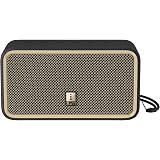
iBall Dhun 120 Portable Bluetooth Speaker, 60W RMS, Upto 6h Playtime, Dual Drivers, Racetrack Neodymium Woofer, Dynamic Bass, TWS, Dual EQ Modes, BT v5.3, Type-C Rechargeable, Metal Mesh Grill (Black)
₹2,999.00 (as of October 10, 2026 16:56 GMT +05:30 - More infoProduct prices and availability are accurate as of the date/time indicated and are subject to change. Any price and availability information displayed on [relevant Amazon Site(s), as applicable] at the time of purchase will apply to the purchase of this product.)
boAt Stone 900 w/ 80W Signature Sound, Up to 15 Hours Playtime, IPX5 Resistant, Type-C Charging, TWS Feature, Built-in Mic, Voice Assistant Portable Wireless Bluetooth Speaker (Graphite Black)
₹4,299.00 (as of October 10, 2026 16:56 GMT +05:30 - More infoProduct prices and availability are accurate as of the date/time indicated and are subject to change. Any price and availability information displayed on [relevant Amazon Site(s), as applicable] at the time of purchase will apply to the purchase of this product.)
heetipuk Mini Wireless Bluetooth Speaker with Heavy Metal Electroplating | Round Mini Speaker, Power Button Controlled, Long Battery Backup & Quick Charge Thunder Eagle (Black)
₹270.00 (as of October 10, 2026 16:56 GMT +05:30 - More infoProduct prices and availability are accurate as of the date/time indicated and are subject to change. Any price and availability information displayed on [relevant Amazon Site(s), as applicable] at the time of purchase will apply to the purchase of this product.)
AGLAUROS Bluetooth Pillow Speaker for Sleeping with White Noise Machine & Timer - Ultra-Thin Wireless Under Pillow Sleep Speaker, Portable Mini Music Speaker with Soft Fabric Design
₹399.00 (as of October 10, 2026 16:56 GMT +05:30 - More infoProduct prices and availability are accurate as of the date/time indicated and are subject to change. Any price and availability information displayed on [relevant Amazon Site(s), as applicable] at the time of purchase will apply to the purchase of this product.)