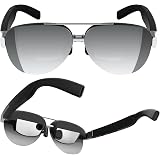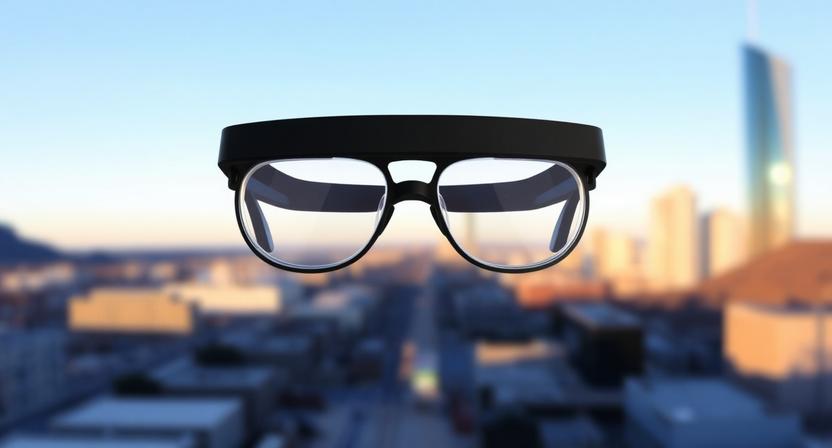
Augmented Reality (AR) glasses are poised to revolutionize how we interact with the digital and physical worlds, seamlessly blending them into a single, intuitive experience. Forget bulky headsets and disconnected screens; AR glasses represent the next evolutionary leap in personal computing and information access. This technology promises to transform industries, enhance daily life, and unlock unprecedented levels of productivity and entertainment.
At its core, AR glasses work by overlaying digital information – graphics, text, audio, and even haptic feedback – onto the user’s real-world view. This is achieved through a sophisticated combination of hardware and software. Miniature displays, often micro-OLED or waveguide technology, project computer-generated imagery directly into the wearer’s line of sight. Advanced sensors, including cameras, depth sensors, accelerometers, and gyroscopes, constantly scan the environment, capturing data about the user’s surroundings. This spatial awareness allows the AR system to accurately anchor digital objects to specific locations in the real world, making them appear as if they are truly present.
The processing power required for such complex tasks is either housed within the glasses themselves or offloaded to a connected smartphone or external computing unit. This allows for real-time rendering of detailed graphics and responsive interactions. The user interface typically involves a combination of eye-tracking, voice commands, and subtle hand gestures, creating a hands-free and natural way to engage with the augmented environment.
The potential applications of AR glasses are vast and far-reaching. In the enterprise sector, they are already making significant inroads. For field service technicians, AR glasses can provide real-time access to repair manuals, schematics, and remote expert assistance. Imagine a technician troubleshooting a complex piece of machinery, with an AR overlay guiding them through each step, highlighting specific components, and even allowing a remote supervisor to virtually point out issues. This drastically reduces downtime, improves accuracy, and enhances safety.
Manufacturing and assembly lines are another prime area for AR adoption. Workers can receive step-by-step assembly instructions directly in their field of view, reducing the need for printed manuals and minimizing errors. Quality control can be revolutionized with AR systems that highlight defects or deviations from design specifications. Furthermore, training new employees becomes more efficient and immersive, allowing them to learn by doing in a simulated environment.
The healthcare industry stands to benefit immensely. Surgeons can access patient scans, vital signs, and procedural guidance directly during operations, improving precision and outcomes. Medical students can practice complex procedures on virtual anatomical models overlaid on mannequins, gaining valuable experience without risk. Remote diagnostics and consultations can be enhanced, with doctors able to see and guide patients through examinations from afar.
Logistics and warehousing are also ripe for AR disruption. Warehouse workers can use AR glasses to quickly identify the location of items, optimize picking routes, and verify shipments, leading to increased efficiency and reduced picking errors. Imagine a worker looking at a shelf and having the AR system highlight the exact product they need and the fastest path to retrieve it.
Beyond the professional realm, AR glasses promise to transform consumer experiences. Education can become more engaging and interactive. Students can explore historical sites virtually, dissect 3D models of the human body, or conduct complex science experiments without physical limitations. Learning becomes a dynamic, hands-on adventure.
Navigation will be fundamentally altered. Instead of glancing down at a phone, users will see directional arrows and points of interest overlaid directly onto their view of the street. This offers a more intuitive and safer way to navigate unfamiliar environments.
Entertainment and gaming will reach new heights of immersion. Imagine playing a game where virtual characters interact with your living room, or experiencing a concert with virtual performers appearing on your stage. Social interactions could also be augmented, with users seeing shared virtual spaces or receiving contextual information about people they meet.
Retail will see a significant shift. Shoppers can virtually try on clothes without physically touching them, visualize furniture in their homes before purchasing, or receive personalized product recommendations as they browse. This blend of online convenience and offline experience could redefine the shopping journey.
However, the widespread adoption of AR glasses is not without its challenges. Form factor and comfort remain critical. Early devices were often bulky and heavy, resembling ski goggles. Future generations must be as lightweight and unobtrusive as regular eyeglasses to achieve mainstream acceptance. Battery life is another significant hurdle, as powering complex displays and sensors requires substantial energy. Miniaturization and improved battery technology are essential.
Field of view (FOV) is also a key consideration. Current AR glasses often have a limited FOV, meaning the digital overlay is only visible in a small portion of the user’s vision. A wider FOV is crucial for a truly immersive and seamless experience. Display resolution and brightness are also important for clarity and visibility in various lighting conditions.
Software development and content creation are still in their nascent stages. A robust ecosystem of applications and experiences needs to be built to unlock the full potential of AR glasses. Developers require user-friendly tools and platforms to create compelling AR content.
Privacy and security are paramount concerns. AR glasses equipped with cameras and sensors can capture vast amounts of data about users and their surroundings. Robust privacy safeguards and ethical guidelines are necessary to ensure responsible data collection and usage. Public perception and trust will be vital for widespread adoption.
Despite these challenges, the trajectory of AR glasses is undeniably upward. Companies like Apple, Meta, Google, Microsoft, and numerous startups are investing heavily in research and development, pushing the boundaries of what’s possible. The convergence of advancements in microelectronics, optics, artificial intelligence, and sensor technology is accelerating progress.
The future of AR glasses is not just about overlaying information; it’s about creating a new paradigm of interaction. It’s about making technology disappear into the background, becoming an intuitive extension of ourselves. Imagine a world where you can instantly access the knowledge you need, communicate seamlessly with others across distances, and experience entertainment in entirely new dimensions. AR glasses are not merely a gadget; they are a glimpse into a future where the lines between the digital and physical blur, opening up a universe of possibilities. This technology has the potential to reshape our lives, our work, and our understanding of reality itself.
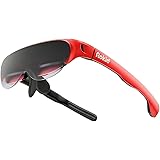
Rokid Max AR Glasses, 120" Full HD Virtual Screen, Lightweight Smart Glasses, Compatible with iPhone 15 pro, Steam Deck/Gaming Consoles/PC/Android, Nearsightedness Adjustment, Portable Monitor
Now retrieving the price.
(as of October 25, 2026 12:39 GMT +05:30 - More infoProduct prices and availability are accurate as of the date/time indicated and are subject to change. Any price and availability information displayed on [relevant Amazon Site(s), as applicable] at the time of purchase will apply to the purchase of this product.)
Aeoss RayNeo GT Max XR Glasses – 3D Dolby Vision, 59° Ultra-Wide FOV, Micro-OLED 267" Giant Screen Display, Native 3DoF Anti-Shake Tracking, Universal Plug and Play, Cinematic Audio By Bang & Olufsen
Now retrieving the price.
(as of October 25, 2026 12:39 GMT +05:30 - More infoProduct prices and availability are accurate as of the date/time indicated and are subject to change. Any price and availability information displayed on [relevant Amazon Site(s), as applicable] at the time of purchase will apply to the purchase of this product.)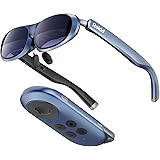
Rokid Joy Pack AR Glasses — Android TV Smart Glasses with 360" Micro-OLED Display | Support for Google Play, Media Streaming and Cloud Gaming | Compatible with All Console, Android, iOS and Windows.
Now retrieving the price.
(as of October 25, 2026 12:39 GMT +05:30 - More infoProduct prices and availability are accurate as of the date/time indicated and are subject to change. Any price and availability information displayed on [relevant Amazon Site(s), as applicable] at the time of purchase will apply to the purchase of this product.)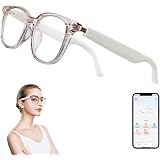
Tulbeys AI Smart Glasses for Women, Real-Time Translation Bluetooth Glasses | 165+ Languages translate, Open-Ear, Blue Light Filtering Lenses, Touch Control, Hands-Free Calls, Travel Trade Business
₹3,749.43 (as of October 25, 2026 12:39 GMT +05:30 - More infoProduct prices and availability are accurate as of the date/time indicated and are subject to change. Any price and availability information displayed on [relevant Amazon Site(s), as applicable] at the time of purchase will apply to the purchase of this product.)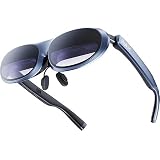
Rokid Max Ar Glasses - Usbc To Usbc
Now retrieving the price.
(as of October 25, 2026 12:39 GMT +05:30 - More infoProduct prices and availability are accurate as of the date/time indicated and are subject to change. Any price and availability information displayed on [relevant Amazon Site(s), as applicable] at the time of purchase will apply to the purchase of this product.)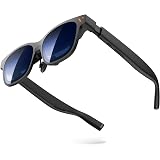
VITURE Pro XR/AR Glasses, 135" 120Hz 1000Nits Display, Harman Audio,Electrochromic Film,Myopia Adjustments,for iPhone 17/16/15/Android/Mac/PC/Steam Deck-Used Like New
Now retrieving the price.
(as of October 25, 2026 12:39 GMT +05:30 - More infoProduct prices and availability are accurate as of the date/time indicated and are subject to change. Any price and availability information displayed on [relevant Amazon Site(s), as applicable] at the time of purchase will apply to the purchase of this product.)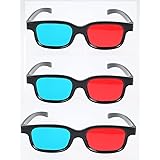
Jambar Red & Cyan/Anaglyph 3D Video Glasses (3 Pcs. Pack)
₹339.00 (as of October 25, 2026 12:39 GMT +05:30 - More infoProduct prices and availability are accurate as of the date/time indicated and are subject to change. Any price and availability information displayed on [relevant Amazon Site(s), as applicable] at the time of purchase will apply to the purchase of this product.)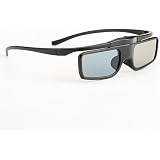
HEAVENGLOW 3D Bluetooth Active Glasses for 3D Signal TV TW5210/5400 TW5600/8200 TW9300
₹4,049.00 (as of October 25, 2026 12:39 GMT +05:30 - More infoProduct prices and availability are accurate as of the date/time indicated and are subject to change. Any price and availability information displayed on [relevant Amazon Site(s), as applicable] at the time of purchase will apply to the purchase of this product.)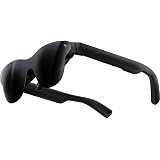
Aeoss RayNeo Air 4 Pro AR Glasses - 1200 Nits Ultra Brightness, 201" Giant Screen Display, HDR10 Support, AI Real-Time SDR to HDR, 98% DCI-P3 Color Gamut, 3840Hz Eye-Care Dimming (Black)
₹49,999.00 (as of October 25, 2026 12:39 GMT +05:30 - More infoProduct prices and availability are accurate as of the date/time indicated and are subject to change. Any price and availability information displayed on [relevant Amazon Site(s), as applicable] at the time of purchase will apply to the purchase of this product.)
Aeoss RayNeo Air 4 Pro AR Glasses - 1200 Nits Ultra Brightness, 201" Giant Screen Display, HDR10 Support, Plug-and-Play, AI Real-Time SDR to HDR, Cinematic Sound by Bang & Olufsen
₹49,999.00 (as of October 25, 2026 12:39 GMT +05:30 - More infoProduct prices and availability are accurate as of the date/time indicated and are subject to change. Any price and availability information displayed on [relevant Amazon Site(s), as applicable] at the time of purchase will apply to the purchase of this product.)
Echoshow Gift Hamper – Customized for Corporate
Now retrieving the price.
(as of October 25, 2026 12:39 GMT +05:30 - More infoProduct prices and availability are accurate as of the date/time indicated and are subject to change. Any price and availability information displayed on [relevant Amazon Site(s), as applicable] at the time of purchase will apply to the purchase of this product.)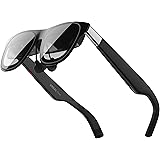
XREAL One AR Glasses | Native 3DoF with X1 Chip, 147 Inch 50° Field of View, 120Hz Micro-OLED Display, Room Sound, USB-C DP for iPhone 15/16 (Except e-Series), Android, PC, Steam Deck, ROG
Now retrieving the price.
(as of October 25, 2026 12:39 GMT +05:30 - More infoProduct prices and availability are accurate as of the date/time indicated and are subject to change. Any price and availability information displayed on [relevant Amazon Site(s), as applicable] at the time of purchase will apply to the purchase of this product.)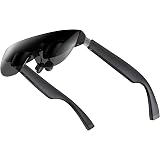
THIИKAЯ THINKAR AiRA XR/AR Glasses, 160" 45°FOV 120Hz 4K Display, Myopia Adjustments, AI Agent, Smart Glasses for iPhone 16/15, Steam Deck, ROG, Switch, Mac, PC, Android & iOS (Black)
₹32,261.00 (as of October 25, 2026 12:39 GMT +05:30 - More infoProduct prices and availability are accurate as of the date/time indicated and are subject to change. Any price and availability information displayed on [relevant Amazon Site(s), as applicable] at the time of purchase will apply to the purchase of this product.)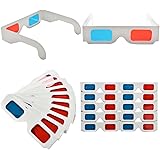
AGMITRAKA 3D Glasses, Set of 20, Red and Blue Lenses, Paper Frame, Compatible with Movies, TV, Gaming, Educational Content
Now retrieving the price.
(as of October 25, 2026 12:39 GMT +05:30 - More infoProduct prices and availability are accurate as of the date/time indicated and are subject to change. Any price and availability information displayed on [relevant Amazon Site(s), as applicable] at the time of purchase will apply to the purchase of this product.)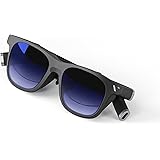
VITURE One Lite XR Glasses, 120" Full HD, Harman Sound, AR Glasses fits iPhone 16/15 (Spatial Video Supported), Steam Deck/ROG Ally/Gaming Consoles/PC/Android, Myopia Adjustments
Now retrieving the price.
(as of October 25, 2026 12:39 GMT +05:30 - More infoProduct prices and availability are accurate as of the date/time indicated and are subject to change. Any price and availability information displayed on [relevant Amazon Site(s), as applicable] at the time of purchase will apply to the purchase of this product.)
VayuSrot 20 Pack 3D Glasses for 3D Movies, Red and Blue Anaglyph 3D Glasses, Compatible with Theater, 3D Games and Educational Content
Now retrieving the price.
(as of October 25, 2026 12:39 GMT +05:30 - More infoProduct prices and availability are accurate as of the date/time indicated and are subject to change. Any price and availability information displayed on [relevant Amazon Site(s), as applicable] at the time of purchase will apply to the purchase of this product.)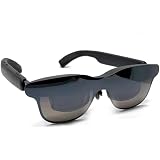
Aeoss RayNeo GT AR Glasses – 46° Ultra-Wide FOV, Micro-OLED 201" Giant Screen Display, Native 3DoF Anti-Shake Tracking, Universal Plug and Play, Cinematic Audio By Bang & Olufsen
Now retrieving the price.
(as of October 25, 2026 12:39 GMT +05:30 - More infoProduct prices and availability are accurate as of the date/time indicated and are subject to change. Any price and availability information displayed on [relevant Amazon Site(s), as applicable] at the time of purchase will apply to the purchase of this product.)