
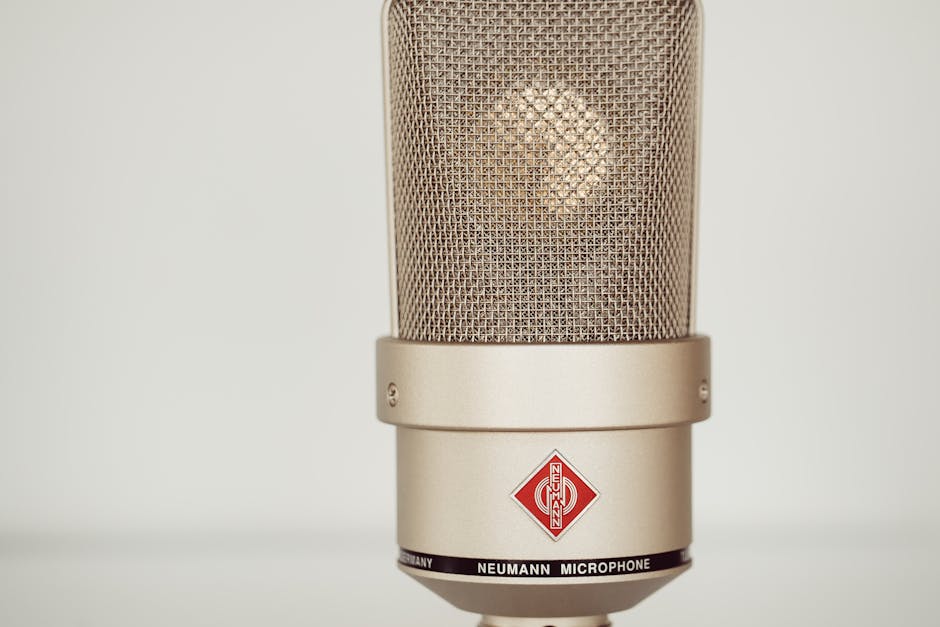
Capturing Your Voice: Finding the Perfect Condenser Mic for Your YouTube Setup
In the vibrant world of YouTube, where content creators vie for attention, audio quality is no longer a secondary concern; it’s a cornerstone of professionalism and viewer engagement. While captivating visuals draw viewers in, it’s the clarity, richness, and presence of your audio that keeps them hooked. For many aspiring and established YouTubers, a condenser microphone stands out as the go-to choice for achieving that broadcast-quality sound. But with a bewildering array of options on the market, how do you navigate the technical jargon and find the perfect condenser mic to elevate your YouTube setup? This guide delves deep into the essential factors, popular choices, and crucial considerations to help you make an informed decision.
Understanding Condenser Microphones: The Heart of Your Audio
Condenser microphones, also known as capacitor microphones, operate on a different principle than their dynamic counterparts. They utilize a diaphragm that vibrates in close proximity to a fixed backplate, forming a capacitor. As sound waves cause the diaphragm to move, the capacitance changes, generating an electrical signal. This inherent sensitivity and detailed response are precisely why condensers are favored for capturing the nuances of voice and acoustic instruments. However, this sensitivity also means they require phantom power (typically +48V), usually supplied by your audio interface or mixer, and are generally more delicate than dynamic mics.
Key Features to Consider for Your YouTube Mic:
When evaluating condenser microphones for your YouTube channel, several critical features demand your attention:
-
Polar Patterns: This refers to the microphone’s directional sensitivity. For most YouTubers, the cardioid pattern is the most practical. It primarily picks up sound from the front, effectively rejecting ambient noise from the sides and rear, which is crucial for minimizing room echo and background distractions. Other patterns like omnidirectional (picks up sound equally from all directions) and bidirectional (picks up sound from the front and rear) have specific applications but are less common for general YouTube vocal recording.
-
Diaphragm Size: Condenser mics come with large-diaphragm (typically 1 inch or larger) and small-diaphragm options. Large-diaphragm condensers (LDCs) are renowned for their warm, rich, and full-bodied sound, often described as having a “larger-than-life” quality. They excel at capturing vocal presence and detail. Small-diaphragm condensers (SDCs) are generally more accurate and linear in their frequency response, often preferred for capturing transient detail and natural sound. For spoken word and vocal performances on YouTube, LDCs are usually the preferred choice.
-
Frequency Response: This graph illustrates how a microphone amplifies or attenuates different frequencies. A relatively flat frequency response indicates a more natural and uncolored sound. However, for vocals, a slight boost in the presence range (around 3-6 kHz) can enhance intelligibility and cut through a mix. A gentle roll-off in the low frequencies can also help reduce unwanted rumble and plosives.
-
Sensitivity: This metric indicates how much electrical output the microphone produces for a given sound pressure level. Higher sensitivity means the microphone will pick up quieter sounds more readily. For YouTube, where you might be speaking at moderate volumes, a good sensitivity is important for capturing your voice with adequate signal strength without excessive gain.
-
Self-Noise (Equivalent Noise Level): All microphones produce a small amount of internal noise. This is measured in dBA. Lower self-noise is always better, as it means less hiss or background noise will be present in your recordings, especially when you’re not speaking. For YouTube, aiming for a self-noise rating below 15 dBA is generally considered excellent.
-
Connectivity: The most common connection for condenser mics is XLR. This professional standard offers balanced audio transmission, reducing interference. You’ll need an XLR cable and an audio interface or mixer with an XLR input and phantom power to connect an XLR microphone to your computer. USB microphones, on the other hand, offer a simpler plug-and-play solution, as they have a built-in audio interface and phantom power. While convenient, they often offer less flexibility and upgradeability than XLR setups.
Popular Condenser Mic Categories for YouTubers:
The condenser microphone market can be broadly categorized to help narrow down your choices:
-
Entry-Level/Budget-Friendly Condensers (Under $150): These microphones offer a significant upgrade over built-in laptop or webcam mics and are an excellent starting point for new YouTubers. They often provide a respectable sound quality for the price, with many featuring cardioid patterns and decent sensitivity. Examples include the Audio-Technica AT2020 (often available in both XLR and USB versions), the Behringer C-1, and the MXL 990. These are great for podcasts, voiceovers, and general talking-head content.
-
Mid-Range Condensers ($150 – $400): Stepping into this price bracket opens up options with improved build quality, lower self-noise, and more refined sound characteristics. You’ll find microphones that offer a warmer, more polished tone, making your voice sound more professional. Popular choices here include the Rode NT-USB+ (a highly regarded USB option), the Shure SM7B (though technically a dynamic mic, its popularity for vocals makes it worth mentioning as a benchmark for vocal clarity and often used in broadcast), and the AKG P220. These are ideal for creators who want to invest in a more significant audio upgrade.
-
Professional/High-End Condensers ($400+): For those seeking the pinnacle of audio fidelity, this category offers microphones used in professional studios. These boast exceptional detail, clarity, low self-noise, and often feature multiple polar patterns for greater versatility. While overkill for many YouTube setups, if you’re aiming for a truly cinematic or broadcast-quality sound, consider options like the Neumann TLM 102, Sennheiser MK 4, or higher-end Rode and AKG models.
USB vs. XLR: The Connectivity Conundrum:
The choice between a USB and an XLR microphone is a pivotal decision for your YouTube setup:
-
USB Microphones:
- Pros: Extremely user-friendly, plug-and-play, no external audio interface required, often more affordable as a complete solution.
- Cons: Limited upgradeability, sound quality can be less refined than comparable XLR setups, fewer customization options, can’t easily integrate with other XLR gear.
- Best For: Beginners, those prioritizing simplicity, creators with limited budgets, and those solely focused on vocal recording.
-
XLR Microphones:
- Pros: Superior sound quality and flexibility, wider range of microphone choices, allows for future upgrades to audio interfaces and preamps, professional standard.
- Cons: Requires an audio interface or mixer, additional cables and potentially phantom power, can be a steeper learning curve.
- Best For: Creators serious about audio quality, those planning to expand their audio setup, musicians, and those who want maximum control over their sound.
Essential Accessories for Your Condenser Mic:
Beyond the microphone itself, a few crucial accessories will significantly enhance your audio recording experience:
-
Pop Filter/Windscreen: Essential for mitigating “plosives” (harsh ‘p’ and ‘b’ sounds) and “sibilance” (sharp ‘s’ sounds). A pop filter is a screen that sits in front of the mic, while a windscreen is a foam cover that fits over the mic capsule.
-
Shock Mount: This suspension system isolates the microphone from vibrations transmitted through your desk or mic stand. This is particularly important for condenser mics, which can be sensitive to even minor disturbances.
-
Mic Stand: A sturdy mic stand is crucial for positioning your microphone correctly and preventing handling noise. Options range from desktop stands to boom stands.
-
Audio Interface/Mixer (for XLR mics): This device connects your XLR microphone to your computer, provides phantom power, and often includes preamps to boost the mic signal.
Choosing the Right Microphone for Your YouTube Niche:
The ideal condenser mic for your YouTube setup can also depend on the type of content you create:
-
Talking Heads/Vlogs: A good cardioid LDC with a warm tonality will provide a clear, present, and engaging voice. The Rode NT-USB+ is a fantastic all-around choice for this.
-
Podcasts/Interviews: Clarity and intelligibility are paramount. A mic with a well-defined midrange and minimal background noise is ideal. The Audio-Technica AT2020 or a mid-range XLR mic like the AKG P220 would be excellent.
-
Gaming/Streaming: While often done with headsets, a dedicated condenser mic offers a significant audio upgrade. A cardioid LDC that captures your voice with energy and presence is recommended.
-
Music/Singing: For vocalists, a more sensitive condenser with a smooth frequency response and excellent transient detail is crucial. Higher-end LDCs often shine here.
Testing and Placement: The Final Touches:
Once you’ve chosen your microphone, remember that proper placement and testing are vital. Position the microphone slightly off-axis from your mouth (about a fist’s distance) to further reduce plosives. Experiment with different distances and angles to find