
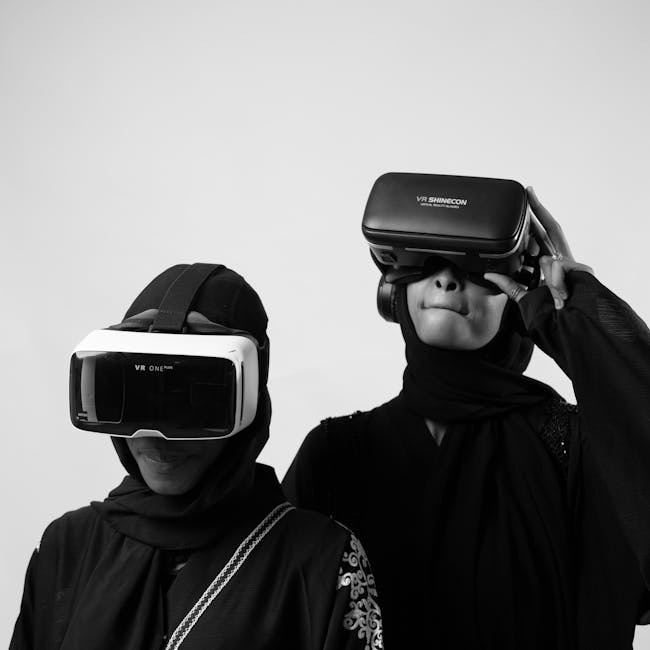
Beyond the Pixelated Arena: Unlocking Creative Potential with Your VR Headset
Your virtual reality headset, often associated with adrenaline-pumping games and immersive digital worlds, holds a universe of creative potential far beyond the realm of gaming. This powerful technology, once a niche curiosity, is rapidly evolving, offering artists, designers, educators, and even everyday enthusiasts unprecedented tools for expression and innovation. Moving beyond the thrill of virtual combat or exploration, let’s delve into the diverse and transformative creative applications that your VR headset can unlock.
Sculpting in Three Dimensions: Virtual Artistry Takes Flight
The most intuitive and rapidly expanding creative frontier for VR is undoubtedly 3D art and sculpting. Traditional 3D modeling software, while powerful, often relies on complex interfaces and a steep learning curve. VR sculpting applications like Tilt Brush (now Open Brush), Medium by Adobe, and Gravity Sketch revolutionize this process. Instead of manipulating abstract polygons on a 2D screen, you wield virtual brushes and tools within a boundless 3D space.
Imagine holding a glowing ember in your virtual hand and painting strokes of light that solidify into tangible forms. With Tilt Brush, you can literally paint with light, fire, and even starry nebulae, creating breathtaking, immersive artworks that viewers can walk around and through. Medium by Adobe offers a more robust sculpting experience, akin to working with digital clay. Its intuitive gesture-based controls allow for organic shaping, detailing, and even texturing, empowering artists to create intricate characters, fantastical creatures, and detailed environments with remarkable ease. Gravity Sketch focuses on industrial design and product prototyping, providing precise tools for creating functional 3D models that can be directly exported for 3D printing or further refinement in traditional CAD software.
The tactile nature of VR sculpting fosters an intuitive understanding of form and space. Artists can step inside their creations, experiencing them from every angle, leading to more dynamic and impactful designs. This accessibility democratizes 3D art, making it approachable for individuals without extensive technical backgrounds. The resulting artworks are not just digital files; they are experiences, inviting viewers to explore and interact with the artist’s vision in a profound way.
Designing the Future: Architecture, Interior Design, and Product Visualization
The ability to inhabit and interact with virtual spaces makes VR an invaluable tool for architects, interior designers, and product developers. Gone are the days of static blueprints and 2D renderings. With VR, clients can step into an unbuilt home, walk through its rooms, and experience the flow and scale before a single brick is laid.
Applications like SketchUp for VR, IrisVR, and Enscape allow for real-time visualization and manipulation of architectural models. Architects can experiment with different layouts, materials, and lighting conditions, making informed design decisions on the fly. Interior designers can place furniture, test color palettes, and visualize the impact of different décor choices within a realistic, to-scale environment. This immersive preview process significantly reduces the risk of costly revisions and ensures client satisfaction.
For product designers, VR offers a revolutionary way to prototype and test. Imagine a car designer sitting in a virtual cockpit, assessing ergonomics and dashboard layout, or an industrial designer holding a virtual prototype of a new appliance, evaluating its form and functionality. This “try before you buy” approach, at the conceptual stage, accelerates the design cycle and leads to more user-centric products. The ability to collaborate remotely within these virtual design spaces further enhances efficiency, allowing teams to iterate and refine designs together regardless of their physical location.
Educational Immersion: Learning Through Experience
The power of VR to create engaging and memorable experiences translates directly into revolutionary educational applications. Traditional learning methods often struggle to convey complex concepts or provide hands-on experience. VR breaks down these barriers, offering unparalleled opportunities for immersive learning.
Imagine a history lesson where students can walk through ancient Rome, interact with historical figures, and witness pivotal events firsthand. Or a biology class where students can shrink down to explore the intricate workings of a human cell or dissect a virtual frog without any ethical or practical limitations. Platforms like Google Expeditions (though now largely superseded by other VR education tools) pioneered this concept, and the field continues to evolve with specialized educational software for STEM, arts, and humanities.
Medical students can practice surgical procedures in a risk-free virtual environment, honing their skills before operating on real patients. Engineering students can explore complex machinery, understand intricate mechanisms, and even participate in simulated disaster response scenarios. The kinesthetic and visual nature of VR learning significantly enhances retention and comprehension, making education more engaging, accessible, and effective for learners of all ages. The ability to revisit these virtual experiences also provides a valuable resource for self-paced learning and revision.
Collaborative Creation and Communication: Building Worlds Together
VR is not just a solitary creative pursuit; it’s a powerful platform for collaboration. In virtual environments, individuals from different geographical locations can come together, interact as avatars, and work on projects in real-time. This fosters a sense of presence and shared experience that is difficult to replicate with traditional remote collaboration tools.
Platforms like Mozilla Hubs and Spatial provide virtual meeting spaces where teams can brainstorm, present ideas, and even collaboratively build 3D models or design presentations. Imagine a group of musicians jamming together in a virtual studio, each playing their instrument from their own home, their sounds blending seamlessly in the shared space. Or a team of game developers working on a new level, each contributing their expertise within the virtual game world itself.
This enhanced collaboration extends beyond professional settings. Friends and families can gather in virtual spaces to chat, play games, or even attend virtual events together, fostering social connection and shared experiences in a way that feels more personal and engaging than a simple video call. The ability to share and manipulate digital assets within these collaborative spaces further streamlines creative workflows and fosters a dynamic exchange of ideas.
Bringing Ideas to Life: 3D Printing and Prototyping
The creative cycle doesn’t end with digital creation; it often extends to physical manifestation. VR sculpting and design tools are increasingly integrated with 3D printing workflows. Models created in VR can be exported as STL files, ready to be sent to a 3D printer. This allows for rapid prototyping and the creation of tangible objects from purely virtual designs.
Imagine designing a custom piece of jewelry in Tilt Brush, then sending that design to a 3D printer to create a physical replica. Or an architect designing a unique building component in Gravity Sketch and then 3D printing a scaled-down model for presentation. This direct link between virtual creation and physical output democratizes manufacturing and allows individuals to bring their unique ideas into the real world with unprecedented ease. The iterative nature of VR design, combined with the speed of 3D printing, allows for rapid experimentation and refinement of physical products.
Immersive Storytelling and Performance: The Next Frontier
VR is poised to revolutionize storytelling and performance art. Beyond passive viewing, audiences can become active participants within narratives. Imagine stepping into a film, interacting with characters, and influencing the plot’s direction. This level of immersion creates a deeply personal and unforgettable storytelling experience.
Interactive VR films and narrative experiences are emerging, allowing creators to craft stories that adapt to the viewer’s choices and movements. Performance artists can create virtual stages, engaging audiences in entirely new ways. Musicians can host virtual concerts where attendees can experience the performance from various vantage points, even interacting with the virtual environment. The potential for live, interactive VR theater and immersive storytelling is immense, pushing the boundaries of how we consume and participate in artistic expression.
Beyond the Obvious: Niche Creative Applications
The versatility of VR extends to numerous niche creative applications.
- Virtual Tourism and Exploration: While not strictly “creation,” VR allows for the creation of immersive virtual tours of historical sites, museums, and even inaccessible natural wonders, fostering cultural appreciation and educational outreach.
- Therapeutic Art: VR environments can be used for art therapy, providing safe and controlled spaces for individuals to express emotions, explore anxieties, and engage in healing creative processes.
- Virtual Fashion Design: Designers can create and showcase virtual clothing collections, allowing for experimentation with materials, textures, and forms that might be impossible or cost-prohibitive in the physical world.
- Interactive Installations: Artists can create dynamic, responsive VR installations that react to audience presence and interaction, blurring the lines between viewer and creator.
As VR technology continues to mature, its creative applications will undoubtedly expand in ways we can only begin to imagine. The barrier to entry is lowering, the tools are becoming more sophisticated, and the potential for human expression within these digital realms is limitless. Your VR headset is more than just a portal to games; it’s a powerful canvas, a boundless studio, and a collaborative space waiting to be explored by your creative spirit.