
The relentless march of technological innovation has brought us to the precipice of a new era, one defined by unprecedented connectivity and intelligent infrastructure. At the heart of this transformation lies 5G mobile technology, a revolutionary leap forward poised to redefine urban living and usher in the age of the smart city. Beyond simply faster download speeds, 5G’s ultra-low latency, massive capacity, and enhanced reliability are the foundational pillars upon which intelligent urban ecosystems will be built, promising a future of enhanced efficiency, sustainability, and citizen well-being.
The concept of a “smart city” is not new, but its realization has been constrained by the limitations of previous mobile generations. Older networks struggled to handle the sheer volume of data generated by interconnected devices, often suffered from lag that rendered real-time applications impractical, and lacked the capacity to support the exponential growth of IoT (Internet of Things) devices. 5G shatters these barriers. Its ability to support millions of devices per square kilometer, coupled with latency measured in milliseconds, unlocks a universe of possibilities for urban management and citizen services.
One of the most immediate and impactful applications of 5G in smart cities is in intelligent transportation systems. Imagine traffic lights that dynamically adjust their timing based on real-time traffic flow, reducing congestion and travel times significantly. Autonomous vehicles, a cornerstone of future mobility, depend on 5G’s low latency for instantaneous communication with other vehicles, infrastructure, and traffic management centers, ensuring safety and efficiency. Real-time public transport tracking, predictive maintenance for public transit fleets, and optimized ride-sharing services all become feasible and significantly enhanced by 5G’s capabilities. Furthermore, smart parking solutions, guided by sensors and connected to mobile apps via 5G, can alleviate a major source of urban frustration and pollution.
Beyond mobility, 5G is instrumental in optimizing public services and resource management. Smart grids, powered by 5G, allow for real-time monitoring of energy consumption, enabling utilities to balance supply and demand more effectively, reduce waste, and integrate renewable energy sources seamlessly. Water management systems can leverage 5G-connected sensors to detect leaks, monitor water quality, and optimize distribution, conserving this precious resource. Waste management can be revolutionized with smart bins that signal when they are full, optimizing collection routes and reducing operational costs and environmental impact. Public safety is also dramatically enhanced. High-definition surveillance cameras, powered by 5G, can transmit crystal-clear video in real-time, aiding law enforcement in crime prevention and response. Drones equipped with 5G can be deployed for rapid assessment of emergency situations, delivering critical information to first responders.
The healthcare sector within smart cities will also undergo a profound transformation. Remote patient monitoring, enabled by 5G, allows healthcare professionals to track vital signs and health metrics of patients in their homes, reducing hospital readmissions and improving chronic disease management. Telemedicine consultations, offering expert medical advice without the need for physical travel, become more robust and accessible. In emergency situations, 5G can facilitate the transmission of high-resolution medical imaging and real-time data from ambulances to hospitals, allowing medical teams to prepare for incoming patients more effectively. The potential for remote robotic surgery, though still in its nascent stages, is also heavily reliant on the ultra-low latency and reliability that 5G provides.
Environmental monitoring and sustainability are further amplified by 5G. Air and water quality sensors deployed across the city can feed data in real-time to a central platform, providing granular insights into pollution levels and enabling prompt intervention. Smart buildings, equipped with 5G-connected sensors, can optimize energy consumption for lighting, heating, and cooling based on occupancy and environmental conditions, leading to significant energy savings and a reduced carbon footprint. 5G can also support sophisticated urban farming initiatives, enabling precise control of environmental factors for optimized crop yields in vertical farms and other urban agricultural settings, contributing to local food security and reducing transportation emissions.
The economic implications of 5G-enabled smart cities are equally significant. Increased efficiency in logistics and transportation translates to reduced operational costs for businesses. The proliferation of new IoT applications and services will spur innovation and create new job opportunities. Enhanced data analytics, enabled by the massive data streams from 5G networks, will provide city planners and businesses with invaluable insights for better decision-making, fostering economic growth and competitiveness. The ability to attract and retain talent will also be boosted by the improved quality of life, convenience, and access to advanced services that smart cities offer.
However, the realization of this connected future is not without its challenges. Cybersecurity is paramount. The vast interconnectedness of smart city infrastructure creates a larger attack surface, necessitating robust security protocols and continuous vigilance to protect sensitive data and critical services from malicious actors. Data privacy concerns also need careful consideration, with clear regulations and ethical frameworks required to govern the collection, use, and storage of citizen data. Digital inclusion is another critical aspect; ensuring that all citizens, regardless of socioeconomic status or technical proficiency, can benefit from smart city initiatives is vital to avoid creating a digital divide. Investments in digital literacy programs and accessible public Wi-Fi are crucial. Finally, the infrastructure deployment of 5G networks, while progressing rapidly, requires significant investment and careful planning to ensure equitable coverage across urban areas.
The journey towards fully realized smart cities powered by 5G is a complex but ultimately rewarding one. It represents a paradigm shift in how we design, manage, and experience our urban environments. From seamless transportation and efficient resource management to advanced healthcare and a more sustainable future, 5G is the critical enabler, weaving together the disparate threads of urban life into a cohesive, intelligent, and responsive whole. The connected future is not a distant dream; it is being built, bit by bit, byte by byte, on the foundation of 5G technology, promising a more liveable, sustainable, and prosperous urban landscape for generations to come.

Zeno 100 Lite | UNISOC Octa-Core Processor | 2GB + 4GB RAM 64GB Storage | 5000mAh Battery | 6.6" HD+ 90Hz Display | DTS Sound | Pure Black
₹7,999.00 (as of September 21, 2026 01:27 GMT +05:30 - More infoProduct prices and availability are accurate as of the date/time indicated and are subject to change. Any price and availability information displayed on [relevant Amazon Site(s), as applicable] at the time of purchase will apply to the purchase of this product.)
iQOO Z10 Lite 5G (Titanium Blue 2026, 4GB RAM, 64GB Storage) | Dimensity 6300 5G Processor | 50MP Sony AI Camera | 6000 mAh Battery | IP64 Rated & Military Grade Shock-Resistance*
₹16,999.00 (as of September 21, 2026 01:27 GMT +05:30 - More infoProduct prices and availability are accurate as of the date/time indicated and are subject to change. Any price and availability information displayed on [relevant Amazon Site(s), as applicable] at the time of purchase will apply to the purchase of this product.)
iQOO Z11 5G (Aurora Green, 6GB RAM, 128GB Storage) | India's 1st MediaTek Dimensity 7500 Turbo Processor* | 3D Curved Display- Brightest Display in the Segment* | AI Captions- Record & Recap*
₹34,999.00 (as of September 21, 2026 01:27 GMT +05:30 - More infoProduct prices and availability are accurate as of the date/time indicated and are subject to change. Any price and availability information displayed on [relevant Amazon Site(s), as applicable] at the time of purchase will apply to the purchase of this product.)
OnePlus N6x | 4GB+128GB | Burgundy Red | 7000mAh Battery | Power for Days | 48-Months Smoothness | Smooth 120Hz Display | Largest 5300mm2 Cooling System | Military-Grade Durability
₹22,999.00 (as of September 21, 2026 01:27 GMT +05:30 - More infoProduct prices and availability are accurate as of the date/time indicated and are subject to change. Any price and availability information displayed on [relevant Amazon Site(s), as applicable] at the time of purchase will apply to the purchase of this product.)
Samsung Galaxy F07 (Green, 64 GB) (4 GB RAM)
₹11,900.00 (as of September 21, 2026 01:27 GMT +05:30 - More infoProduct prices and availability are accurate as of the date/time indicated and are subject to change. Any price and availability information displayed on [relevant Amazon Site(s), as applicable] at the time of purchase will apply to the purchase of this product.)
Samsung Galaxy M07 Mobile (Black, 4GB RAM, 64GB Storage) | MediaTek Helio G99 | AnTuTu 624K | IP54| 50MP Camera | 7.6mm Slim | 5000mAh Battery | 25W Fast Charging | 6 Gen OS Upgrades | Without Charger
₹11,999.00 (as of September 21, 2026 01:27 GMT +05:30 - More infoProduct prices and availability are accurate as of the date/time indicated and are subject to change. Any price and availability information displayed on [relevant Amazon Site(s), as applicable] at the time of purchase will apply to the purchase of this product.)
Motorola G06 (Tapestry, 4GB RAM, 64GB Storage)
₹13,049.00 (as of September 21, 2026 01:27 GMT +05:30 - More infoProduct prices and availability are accurate as of the date/time indicated and are subject to change. Any price and availability information displayed on [relevant Amazon Site(s), as applicable] at the time of purchase will apply to the purchase of this product.)
Samsung Galaxy M36 5G Mobile (Velvet Black, 6GB RAM, 128GB Storage) | Google Gemini| Gorilla Glass Victus+ | 7.7mm | AI Enhanced 50MP OIS Triple Camera| Nightography| Lag-free Gaming | Without Charger
₹21,999.00 (as of September 21, 2026 01:27 GMT +05:30 - More infoProduct prices and availability are accurate as of the date/time indicated and are subject to change. Any price and availability information displayed on [relevant Amazon Site(s), as applicable] at the time of purchase will apply to the purchase of this product.)
Samsung Galaxy M06 5G Mobile (Blazing Black, 4GB RAM, 128GB Storage) | MediaTek Dimensity 6300 | AnTuTu 623K+ | 12 5G Bands | 25W Fast Charging | 4 Gen OS Upgrades | 50MP Camera | Without Charger
Now retrieving the price.
(as of September 21, 2026 01:27 GMT +05:30 - More infoProduct prices and availability are accurate as of the date/time indicated and are subject to change. Any price and availability information displayed on [relevant Amazon Site(s), as applicable] at the time of purchase will apply to the purchase of this product.)
Lava Bold N4 Lite (Empire Gold, 3GB RAM, 32GB Storage) | 6.56" qHD Display | 8MP Rear Camera | 5000 mAh Battery | Free Service @ Home | Fingerprint Reader | Charger & Phone-Cover in Box
₹8,399.00 (as of September 21, 2026 01:27 GMT +05:30 - More infoProduct prices and availability are accurate as of the date/time indicated and are subject to change. Any price and availability information displayed on [relevant Amazon Site(s), as applicable] at the time of purchase will apply to the purchase of this product.)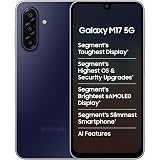
Samsung Galaxy M17 5G Mobile (Sapphire Black, 6GB RAM, 128GB Storage) | 50MP OIS Triple Camera | Super AMOLED Display | Gorilla Glass Victus | 6 Gen OS Upgrades | Knox Security | AI
₹24,999.00 (as of September 21, 2026 01:27 GMT +05:30 - More infoProduct prices and availability are accurate as of the date/time indicated and are subject to change. Any price and availability information displayed on [relevant Amazon Site(s), as applicable] at the time of purchase will apply to the purchase of this product.)
OnePlus Nord 6 | 8GB+256GB | Pitch Black | Snapdragon 8s Gen 4 | Segment's First Stable 165FPS Gaming | Segment's Largest 9000mAh Battery | Most Complete IP Rating | Personalized AI
₹46,999.00 (as of September 21, 2026 01:27 GMT +05:30 - More infoProduct prices and availability are accurate as of the date/time indicated and are subject to change. Any price and availability information displayed on [relevant Amazon Site(s), as applicable] at the time of purchase will apply to the purchase of this product.)
Motorola Edge 70 Fusion (Pantone Country Air, 8GB RAM, 128GB Storage) | 6.78" 1.5K 144Hz AMOLED Display | Snapdragon 7s Gen 4 | 50MP Sony LYTIA 710 OIS | 32MP Selfie | 7000mAh | 68W TurboPower |
₹29,699.00 (as of September 21, 2026 01:27 GMT +05:30 - More infoProduct prices and availability are accurate as of the date/time indicated and are subject to change. Any price and availability information displayed on [relevant Amazon Site(s), as applicable] at the time of purchase will apply to the purchase of this product.)
Redmi Note 17 Pro 5G (Cloud Blue, 8GB RAM, 256GB ROM) | 9000mAh Battery + 67W TurboCharge* | 6.83" 12-bit TrueColour AMOLED | No.1 Care Plan | Snapdragon 6s Gen 4 | 50MP OIS Camera | Victus 2 | IP69K
₹39,999.00 (as of September 21, 2026 01:27 GMT +05:30 - More infoProduct prices and availability are accurate as of the date/time indicated and are subject to change. Any price and availability information displayed on [relevant Amazon Site(s), as applicable] at the time of purchase will apply to the purchase of this product.)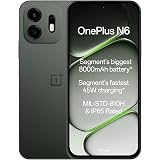
OnePlus N6 | 6GB+128GB | Midnight Green | Segment's Biggest 8000mAh Battery | Segment's Fastest 45W Charging | 60-Month Smoothness | Smooth 120Hz Display | 50MP Camera | Military-Grade Durability
₹26,999.00 (as of September 21, 2026 01:27 GMT +05:30 - More infoProduct prices and availability are accurate as of the date/time indicated and are subject to change. Any price and availability information displayed on [relevant Amazon Site(s), as applicable] at the time of purchase will apply to the purchase of this product.)
Nothing Phone (4b), White (8GB, 128GB)
₹32,180.00 (as of September 21, 2026 01:27 GMT +05:30 - More infoProduct prices and availability are accurate as of the date/time indicated and are subject to change. Any price and availability information displayed on [relevant Amazon Site(s), as applicable] at the time of purchase will apply to the purchase of this product.)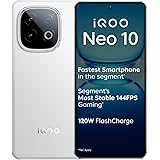
iQOO Neo 10 (Alpine White, 8GB RAM, 256GB Storage) | Segment's Fastest Processor* with Snapdragon 8s Gen 4 & Supercomputing chip Q1 | 120W FlashCharge | Segment's Brightest AMOLED Display*
₹43,999.00 (as of September 21, 2026 01:27 GMT +05:30 - More infoProduct prices and availability are accurate as of the date/time indicated and are subject to change. Any price and availability information displayed on [relevant Amazon Site(s), as applicable] at the time of purchase will apply to the purchase of this product.)
Motorola Moto g37 Power 5G (Pantone Nautical Blue, 128GB Storage, 4GB RAM) | 6.67-inch HD+ 120Hz Display | Dimensity 6400 | 50MP Camera | 7000mAh Battery | 30W Charging
₹17,129.00 (as of September 21, 2026 01:27 GMT +05:30 - More infoProduct prices and availability are accurate as of the date/time indicated and are subject to change. Any price and availability information displayed on [relevant Amazon Site(s), as applicable] at the time of purchase will apply to the purchase of this product.)
Redmi 17 5G (Eternal Orange, 6GB RAM, 128GB ROM) | 7900mAh Battery + 45W Fast Charging | 6.9" 120Hz Adaptive Display | Snapdragon 4 Gen 5 | 50MP Dual AI Camera | Corning® Gorilla® Glass 7i | IP64
₹23,999.00 (as of September 21, 2026 01:27 GMT +05:30 - More infoProduct prices and availability are accurate as of the date/time indicated and are subject to change. Any price and availability information displayed on [relevant Amazon Site(s), as applicable] at the time of purchase will apply to the purchase of this product.)