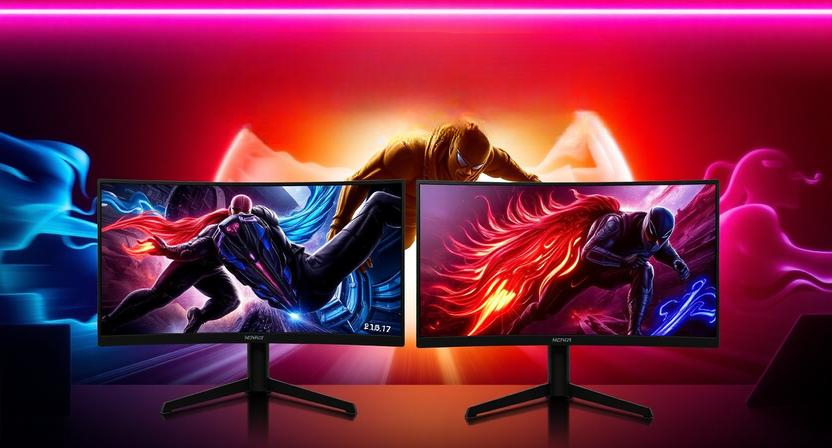
In the relentless pursuit of competitive gaming dominance, every millisecond counts. For those who crave unparalleled responsiveness and fluid motion, the 240Hz gaming monitor represents the pinnacle of display technology, offering a gateway to truly unleashed gaming speed. Moving beyond the more common 144Hz or even 165Hz panels, 240Hz monitors deliver an astonishing refresh rate, rendering 240 frames per second (FPS). This translates directly into a significantly smoother, more immersive, and ultimately more advantageous gaming experience.
The core benefit of a 240Hz refresh rate lies in its ability to drastically reduce motion blur and input lag. Traditional monitors, with lower refresh rates, struggle to keep pace with the rapid visual information generated by high-FPS gaming. This results in a phenomenon known as “ghosting” or “smearing,” where fast-moving objects leave trails on the screen, making them appear indistinct and difficult to track. A 240Hz monitor, by refreshing the image 240 times every second, effectively paints a new picture almost every 4 milliseconds. This rapid succession of frames creates a visual continuity that is remarkably smooth, allowing for crystal-clear tracking of enemies, precise aiming, and an overall heightened sense of presence within the game world.
For esports professionals and aspiring champions, this reduction in motion blur is not merely an aesthetic improvement; it’s a critical competitive edge. In fast-paced genres like First-Person Shooters (FPS), Real-Time Strategy (RTS), and fighting games, the ability to instantly perceive and react to subtle movements is paramount. A 240Hz display ensures that enemy players are rendered with minimal delay, allowing for quicker target acquisition and more decisive action. The difference between seeing an opponent appear for the first time at 60Hz versus 240Hz can be the difference between securing a kill and being eliminated. This is particularly evident in games where milliseconds dictate victory, such as Valorant, Counter-Strike: Global Offensive, Apex Legends, and Overwatch.
Beyond the sheer speed, the clarity afforded by a 240Hz panel contributes to reduced eye strain during extended gaming sessions. While the human eye cannot consciously perceive 240 distinct frames per second, the brain processes the increased visual data, leading to a more natural and less fatiguing viewing experience. The smoother transitions reduce the cognitive load required to track motion, allowing players to maintain focus and reaction times for longer periods. This is a significant advantage for competitive players who often engage in marathon gaming sessions.
To truly harness the power of a 240Hz monitor, a powerful gaming PC is essential. The monitor can only display as many frames as the graphics card can render. Therefore, to achieve the full 240 FPS experience, your system must be capable of consistently pushing frames at or near that rate. This typically requires a high-end CPU and a top-tier GPU, often paired with ample RAM. If your system struggles to maintain a high FPS, the benefits of a 240Hz monitor will be diminished, as you will not be consistently experiencing the intended refresh rate. It’s crucial to match your hardware to your display’s capabilities for optimal performance.
When selecting a 240Hz gaming monitor, several key specifications warrant careful consideration. Panel type plays a significant role in overall performance. TN (Twisted Nematic) panels are historically the fastest, offering the quickest response times, which is crucial for 240Hz. However, they often suffer from poorer color accuracy and viewing angles compared to other panel types. IPS (In-Plane Switching) panels have made significant strides in speed, with many modern 240Hz IPS displays offering excellent color reproduction and wide viewing angles, albeit sometimes at a slightly higher price point and potentially with marginally slower response times than the absolute fastest TN panels. VA (Vertical Alignment) panels generally offer superior contrast ratios and deeper blacks, but historically have been slower and more prone to ghosting, making them less ideal for extreme refresh rates, though advancements are being made.
Response time is another critical metric. Measured in milliseconds (ms), it refers to how quickly a pixel can change from one color to another. For 240Hz gaming, a response time of 1ms (GtG – Gray-to-Gray) is highly desirable, as it minimizes ghosting and smearing. Some manufacturers may advertise even lower response times, such as 0.5ms or 0.1ms, often achieved through overdrive technologies. While these can further reduce ghosting, it’s important to note that these figures can sometimes be achieved under specific, often unrealistic, testing conditions and may introduce artifacts like inverse ghosting.
Resolution is also a factor. While 1080p (Full HD) is the most common resolution for 240Hz monitors, offering the best chance of achieving consistently high frame rates with current hardware, 1440p (QHD) 240Hz monitors are becoming increasingly available. These offer a sharper, more detailed image, but require even more powerful hardware to drive at such high refresh rates. 4K resolution at 240Hz is currently beyond the reach of most consumer-grade hardware. The choice between 1080p and 1440p at 240Hz often comes down to a balance between visual fidelity and achievable frame rates for your specific gaming needs and hardware configuration.
Adaptive-Sync technologies, such as NVIDIA G-Sync and AMD FreeSync, are indispensable for a seamless 240Hz experience. These technologies synchronize the monitor’s refresh rate with the GPU’s frame rate, eliminating screen tearing and stuttering. Screen tearing occurs when the GPU outputs frames at a different rate than the monitor’s refresh rate, resulting in a fragmented image. Adaptive-Sync ensures that the monitor displays a complete frame from the GPU without interruption, providing a fluid and tear-free visual experience, even when frame rates fluctuate. For 240Hz gaming, the benefits of Adaptive-Sync are amplified due to the rapid pace of the action.
When considering which 240Hz gaming monitor to invest in, look for features tailored to competitive gaming. Low input lag is paramount. Input lag is the delay between your input (mouse click, keyboard press) and the corresponding action appearing on screen. While refresh rate significantly impacts motion clarity, low input lag ensures that your actions are registered and displayed as quickly as possible. Many reputable gaming monitors are designed with low input lag in mind, often featuring specialized processing to minimize this delay.
Ergonomics are also important for comfort during long gaming sessions. Look for monitors with adjustable stands that allow for height, tilt, and swivel adjustments. Some monitors also offer pivot functionality for vertical orientation. Features like a matte anti-glare coating can help reduce distractions from ambient lighting.
The market for 240Hz gaming monitors is diverse, with manufacturers like ASUS ROG, Acer Predator, MSI, LG, Alienware, and Samsung offering a range of options. Researching specific models, reading professional reviews, and considering user feedback can help narrow down the choices. Pay attention to the specific technologies implemented by each manufacturer, such as their overdrive settings and panel calibration, as these can influence the overall gaming performance.
In conclusion, for the discerning gamer who prioritizes speed, responsiveness, and a competitive edge, a 240Hz gaming monitor is an investment that can profoundly elevate their gaming experience. By offering unparalleled motion clarity, reduced input lag, and a smoother visual flow, these displays empower players to react faster, aim truer, and immerse themselves more deeply in the virtual worlds they inhabit. When paired with a capable gaming rig, a 240Hz monitor truly unleashes the ultimate gaming speed, transforming every frame into an opportunity for victory.
Acer SmartChoice SA242Y E 23.8 Inch Full HD IPS Monitor I 100Hz Refresh Rate I 1ms VRB I AMD FreeSync I Ultra Slim ZeroFrame Design I VisionCare I HDMI & VGA Inbox HDMI Cable I VESA Mount I Black
₹6,099.00 (as of September 10, 2026 05:38 GMT +05:30 - More infoProduct prices and availability are accurate as of the date/time indicated and are subject to change. Any price and availability information displayed on [relevant Amazon Site(s), as applicable] at the time of purchase will apply to the purchase of this product.)
BenQ GW2790Q, 27 Inch (68.58 cm), IPS, 2K QHD 2560x1440, 100Hz, Black, 99% sRGB, 1500:1 CR, Eye-Careu, Dual HDMI, DisplayPort, Bezel-Less, Eyesafe, Wall Mountable Monitor
₹15,498.00 (as of September 10, 2026 05:38 GMT +05:30 - More infoProduct prices and availability are accurate as of the date/time indicated and are subject to change. Any price and availability information displayed on [relevant Amazon Site(s), as applicable] at the time of purchase will apply to the purchase of this product.)
Lenovo L27-4C| 27 Inch (68.58 cm) Ultraslim Monitor, FHD 1920x1080, IPS, 144Hz, 99% sRGB, 1ms, 2x3W Speakers, Dual HDMI, Display Port, Audio Port, AMD FreeSync,Eyesafe, Bezel-Less, VESA Mount, Grey
₹11,494.00 (as of September 10, 2026 05:38 GMT +05:30 - More infoProduct prices and availability are accurate as of the date/time indicated and are subject to change. Any price and availability information displayed on [relevant Amazon Site(s), as applicable] at the time of purchase will apply to the purchase of this product.)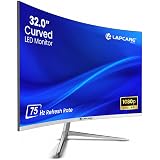
LAPCARE Lapeye 32 Inch Curved Monitor | Full HD 1920x1080 | 75Hz Refresh Rate | HDMI & VGA Ports | Flicker-Free Display | 178° Wide Viewing Angle | Wall Mount Compatible
₹11,499.00 (as of September 10, 2026 05:38 GMT +05:30 - More infoProduct prices and availability are accurate as of the date/time indicated and are subject to change. Any price and availability information displayed on [relevant Amazon Site(s), as applicable] at the time of purchase will apply to the purchase of this product.)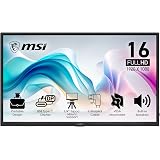
MSI PRO MP165 E6 15.6" FHD Portable Monitor, 1080p IPS 60Hz 4ms, Anti-Flicker, Less Blue Light, Speaker, Foldable Stand, 75x75mm VESA Mount, Black, HDMI, USB-C PD
₹8,599.00 (as of September 10, 2026 05:38 GMT +05:30 - More infoProduct prices and availability are accurate as of the date/time indicated and are subject to change. Any price and availability information displayed on [relevant Amazon Site(s), as applicable] at the time of purchase will apply to the purchase of this product.)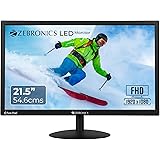
Zebronics 21.5” (54.6cm) LED Monitor, FHD 1920x1080, 250nits Brightness, Dual Input - HDMI/VGA, 2000000:1 Dynamic Contrast Ratio, 16.7M Colors, 16:9 Aspect Ratio, Wall Mountable (EA 122)
₹3,999.00 (as of September 10, 2026 05:38 GMT +05:30 - More infoProduct prices and availability are accurate as of the date/time indicated and are subject to change. Any price and availability information displayed on [relevant Amazon Site(s), as applicable] at the time of purchase will apply to the purchase of this product.)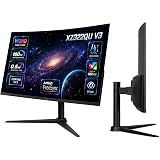
Acer Nitro XZ322QU V3 31.5 Inch Curved Gaming Monitor | WQHD 2560x1440 | 180Hz | Up to 0.5ms GTG | AMD FreeSync | VESA DisplayHDR 400 | 1500R Curved Screen VisionCare | HDMI 2.0 |DisplayPort 1.4
₹21,999.00 (as of September 10, 2026 05:38 GMT +05:30 - More infoProduct prices and availability are accurate as of the date/time indicated and are subject to change. Any price and availability information displayed on [relevant Amazon Site(s), as applicable] at the time of purchase will apply to the purchase of this product.)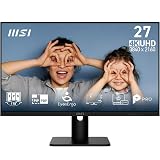
MSI PRO MP273UP E6 27-Inch 4K UHD Computer Monitor, 3840 x 2160 IPS, 60Hz, 4ms, HDR Ready, Eye Care, Built-in Speaker, PiP/PbP, HDMI 2.0b, DP 1.4a, Tilt/Height Adjustable, Vesa Mount, Black
₹20,299.00 (as of September 10, 2026 05:38 GMT +05:30 - More infoProduct prices and availability are accurate as of the date/time indicated and are subject to change. Any price and availability information displayed on [relevant Amazon Site(s), as applicable] at the time of purchase will apply to the purchase of this product.)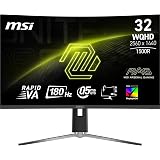
MSI MAG 32CQ6PF 32 Inch WQHD Curved Gaming Monitor - 1500R 2560 x 1440 Rapid VA Panel, 180 Hz / 0.5ms (GtG, Min.), Adaptive Sync - DP 1.4, HDMI 2.0b CEC
₹21,499.00 (as of September 10, 2026 05:38 GMT +05:30 - More infoProduct prices and availability are accurate as of the date/time indicated and are subject to change. Any price and availability information displayed on [relevant Amazon Site(s), as applicable] at the time of purchase will apply to the purchase of this product.)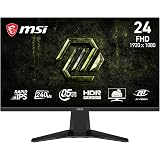
MSI MAG 245F X24 24-Inch Gaming Monitor, 1920x1080 FHD, Rapid IPS, 240Hz, 0.5ms, HDR Ready, AMD FreeSync™ Premium, Eye Care, AI Vision, HDMI 2.0b, DP 1.2a, Frame-Less, Vesa Mount, Black
₹9,499.00 (as of September 10, 2026 05:38 GMT +05:30 - More infoProduct prices and availability are accurate as of the date/time indicated and are subject to change. Any price and availability information displayed on [relevant Amazon Site(s), as applicable] at the time of purchase will apply to the purchase of this product.)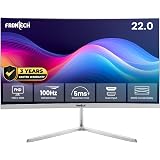
FRONTECH (54.61cm, LED, FHD 1920x1080,100Hz, White, 3500R Curved, Bezel Less Design, HDMI & VGA Ports Monitor (MON-0079C)
₹5,699.00 (as of September 10, 2026 05:38 GMT +05:30 - More infoProduct prices and availability are accurate as of the date/time indicated and are subject to change. Any price and availability information displayed on [relevant Amazon Site(s), as applicable] at the time of purchase will apply to the purchase of this product.)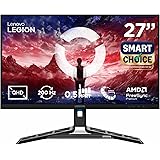
Lenovo Legion {Smartchoice} R27qe Gen 2 | 27" (68.58cm) QHD IPS 200Hz Gaming Monitor | 0.5ms, AMD FreeSync, 99%sRGB, 2xHDMI 2.1, TMDS, 1xDP 1.4| Tilt, Swivel, Pivot, Height Adjust | Black | 68C7GAC3IN
₹18,499.00 (as of September 10, 2026 05:38 GMT +05:30 - More infoProduct prices and availability are accurate as of the date/time indicated and are subject to change. Any price and availability information displayed on [relevant Amazon Site(s), as applicable] at the time of purchase will apply to the purchase of this product.)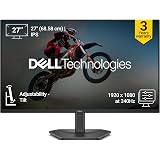
Dell SE2726HG 27" (Smartchoice) FHD Gaming Monitor | 240Hz Fast IPS | 0.5ms Response | AMD FreeSync Premium | HDR10 | 99% sRGB | Eye Comfort Certified | HDMI 2.1 & DP 1.4 Ports | Tilt Stand | Black
₹12,755.00 (as of September 10, 2026 05:38 GMT +05:30 - More infoProduct prices and availability are accurate as of the date/time indicated and are subject to change. Any price and availability information displayed on [relevant Amazon Site(s), as applicable] at the time of purchase will apply to the purchase of this product.)
ZEBRONICS EA124 LED Monitor, 24 inch (60.4cm), 250 nits, 100Hz, FHD, 1920x1080, HDMI, VGA, Ultra Slim Bezel, Built-in Speakers, Metal Stand, Wall Mountable
₹6,499.00 (as of September 10, 2026 05:38 GMT +05:30 - More infoProduct prices and availability are accurate as of the date/time indicated and are subject to change. Any price and availability information displayed on [relevant Amazon Site(s), as applicable] at the time of purchase will apply to the purchase of this product.)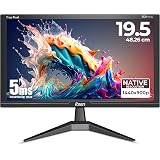
Foxin LED Monitor Crystal 19.5 Inch (48.26 cm), HD 1440x900, 60Hz, 5ms Response Time, 16.7M Colors, HDMI & VGA Ports, Wall Mountable Computer Monitor for PC, CCTV & Laptop Screen Extender
₹2,570.00 (as of September 10, 2026 05:38 GMT +05:30 - More infoProduct prices and availability are accurate as of the date/time indicated and are subject to change. Any price and availability information displayed on [relevant Amazon Site(s), as applicable] at the time of purchase will apply to the purchase of this product.)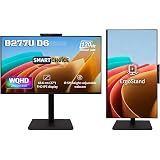
Acer Smartchoice B277U D6 27 Inch WQHD 2560x1440 IPS Monitor | 120Hz | 5MP IR Webcam | HDR10, Delta E
₹19,999.00 (as of September 10, 2026 05:38 GMT +05:30 - More infoProduct prices and availability are accurate as of the date/time indicated and are subject to change. Any price and availability information displayed on [relevant Amazon Site(s), as applicable] at the time of purchase will apply to the purchase of this product.)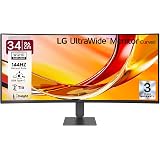
LG 34U640B 86 cm (34 Inch) 21:9 UltraWide WQHD (3440x1440) Curved Monitor(1800R), 144Hz, sRGB 99%(Typ.), HDR10, Anti-Glare, HDMI X 2, DP, USB-C (PD 65W), PBP, PIP, Tilt/Height Adjustable Stand (Black)
₹32,499.00 (as of September 10, 2026 05:38 GMT +05:30 - More infoProduct prices and availability are accurate as of the date/time indicated and are subject to change. Any price and availability information displayed on [relevant Amazon Site(s), as applicable] at the time of purchase will apply to the purchase of this product.)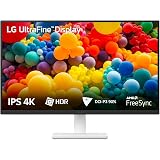
LG 27US500 68.4 cm (27 Inch) Ultra HD 4K (3840x2160) IPS Monitor with 60Hz, 5ms (GtG) HDR10, Flicker Safe, Reader Mode, 2xHDMI, Anti-Glare, 3-Side Virtually Borderless Design, DCI-P3 90% (Black)
₹19,999.00 (as of September 10, 2026 05:38 GMT +05:30 - More infoProduct prices and availability are accurate as of the date/time indicated and are subject to change. Any price and availability information displayed on [relevant Amazon Site(s), as applicable] at the time of purchase will apply to the purchase of this product.)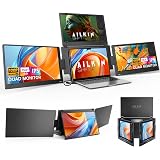
Portable Quad Monitor Laptop Screen Extender FHD 1200P IPS Monitor with Type C to Type C Cable Compatible with Windows(10,11)/ Mac (M1 M2 M3) for 15.6 Triple Screen Extender By AILKIN (Grey/Black)
₹48,999.00 (as of September 10, 2026 05:38 GMT +05:30 - More infoProduct prices and availability are accurate as of the date/time indicated and are subject to change. Any price and availability information displayed on [relevant Amazon Site(s), as applicable] at the time of purchase will apply to the purchase of this product.)