
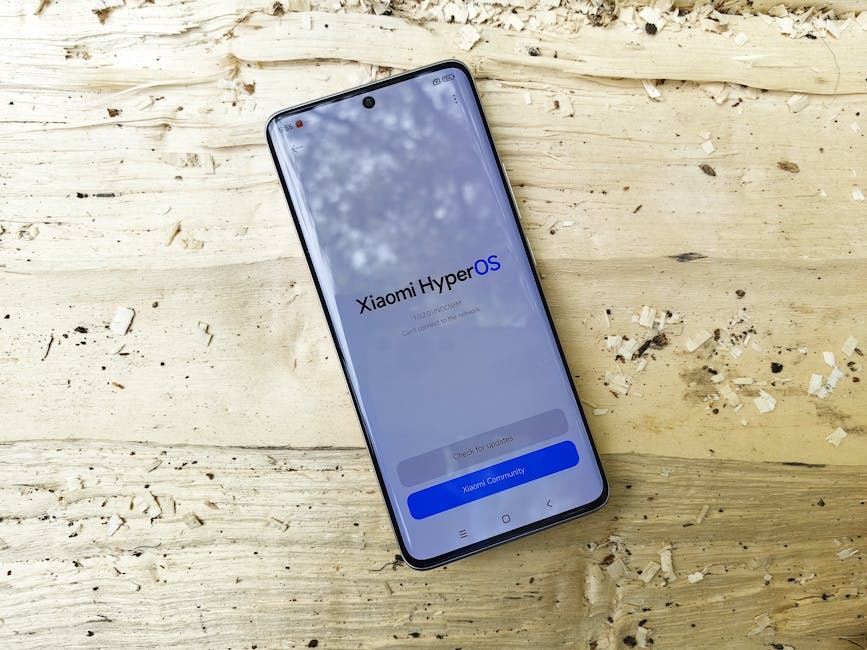
Xiaomi 5G Battery Life: Power Through Your Day
In the rapidly evolving landscape of mobile technology, 5G connectivity has emerged as a game-changer, promising faster download speeds, lower latency, and a more responsive internet experience. However, this enhanced performance often comes with a significant caveat: increased power consumption. For many users, battery life is a paramount concern, dictating how long they can stay connected and productive throughout their day. Xiaomi, a brand renowned for its value-for-money proposition and feature-rich smartphones, has consistently strived to address this challenge, particularly with its 5G-enabled devices. This in-depth exploration delves into the intricacies of Xiaomi 5G battery life, examining the factors that influence it, the technologies employed to optimize it, and practical strategies to maximize your device’s endurance.
Understanding the 5G Power Drain:
The fundamental reason behind the increased battery drain associated with 5G is the nature of the technology itself. 5G networks, especially in their initial Non-Standalone (NSA) configurations, often rely on existing 4G infrastructure for control functions while utilizing new 5G radio frequencies for data transfer. This dual connectivity requires the modem to actively manage and switch between different network bands and technologies, a process that inherently consumes more power. Furthermore, higher frequency 5G bands, while offering superior speeds, have a shorter range, necessitating more frequent signal searching and re-establishment, further taxing the battery. The increased data throughput also means more energy is expended processing and transmitting larger amounts of data.
Xiaomi’s Technological Arsenal for Battery Optimization:
Xiaomi has not been passive in the face of 5G’s power demands. The company has invested heavily in a multi-pronged approach to ensure its 5G smartphones deliver robust battery performance.
-
High-Capacity Batteries: The most straightforward approach is to equip devices with larger battery capacities. Many of Xiaomi’s 5G offerings boast batteries in the 4500mAh to 5000mAh range, and sometimes even exceeding 5000mAh. This sheer volume of stored energy provides a significant buffer against the increased consumption of 5G.
-
Advanced Power Management Software: Beyond hardware, Xiaomi’s proprietary MIUI software plays a crucial role. Sophisticated power management algorithms are designed to intelligently monitor app usage, identify power-hungry processes, and optimize background activity. Features like app battery saver, extreme battery saver mode, and intelligent task management help to curb unnecessary power expenditure.
-
Efficient Chipsets: The System-on-Chip (SoC) is the brain of any smartphone, and its power efficiency directly impacts battery life. Xiaomi frequently partners with leading chip manufacturers like Qualcomm and MediaTek, opting for SoCs that are built on advanced, smaller process nodes (e.g., 7nm, 5nm). These smaller nodes allow for greater transistor density while consuming less power. Furthermore, these chipsets often incorporate dedicated AI engines and power management units that are optimized for handling 5G connectivity efficiently.
-
Adaptive Refresh Rate Displays: High refresh rate displays, while providing smoother visuals, are notorious battery drains. Xiaomi has widely adopted adaptive or variable refresh rate technology. This allows the display’s refresh rate to dynamically adjust based on the content being viewed. For static content, the refresh rate drops significantly, conserving power, while for fast-paced gaming or scrolling, it ramps up for a fluid experience.
-
Intelligent Charging Technologies: While not directly impacting discharge, efficient and intelligent charging can significantly improve the overall user experience. Xiaomi’s fast-charging technologies, such as Mi Turbo Charge and HyperCharge, not only reduce charging times but also employ intelligent algorithms to protect battery health during the charging process, ensuring longevity. Some devices also feature reverse wireless charging, offering a convenient way to top up other devices without needing a separate charger.
-
5G Modem Optimization: Chipset manufacturers are continuously working on improving the power efficiency of their 5G modems. Xiaomi leverages these advancements, ensuring that the modems within their devices are designed to minimize power consumption when connected to 5G networks. This includes features like dynamic spectrum sharing (DSS), which allows 4G and 5G to coexist on the same spectrum, and improved sleep modes for the modem when not actively transmitting or receiving data.
Factors Influencing Xiaomi 5G Battery Life in Practice:
While Xiaomi implements advanced technologies, real-world battery life is a complex interplay of hardware, software, and user behavior. Here are the key factors that will influence how long your Xiaomi 5G phone lasts on a single charge:
-
Network Conditions and Signal Strength: This is perhaps the most significant external factor. A weak or fluctuating 5G signal will force your phone’s modem to work harder, consuming considerably more battery. Conversely, a strong and stable 5G signal will result in better battery performance. Similarly, the availability and prevalence of 5G in your area will dictate how often your phone actually utilizes the 5G modem. If you’re consistently in areas with poor 5G coverage, your phone might default to 4G, which is generally more power-efficient.
-
Usage Patterns: How you use your phone is paramount. Intensive tasks like prolonged gaming, streaming high-definition video over 5G, constant social media scrolling, and frequent GPS usage will naturally drain the battery faster than light usage involving occasional calls and text messages.
-
Screen Brightness and Refresh Rate: A brighter screen consumes more power. Similarly, keeping the display on a high, fixed refresh rate (e.g., 120Hz) will use more battery than an adaptive setting or a lower fixed rate.
-
Background App Activity: Apps running in the background, even when not actively in use, can consume significant power. This includes apps that sync data, check for notifications, or perform location tracking.
-
Software Updates: Xiaomi regularly releases software updates that often include optimizations for power management and battery efficiency. Keeping your device updated is crucial for ensuring you benefit from these improvements.
-
Ambient Temperature: Extreme temperatures, both hot and cold, can negatively impact battery performance. High temperatures can accelerate battery degradation and reduce its capacity, while very cold temperatures can temporarily reduce its output.
-
Enabled Features: Features like always-on display, Bluetooth, Wi-Fi scanning, and location services, when constantly active, contribute to battery drain.
Maximizing Your Xiaomi 5G Battery Life: Practical Tips:
To truly power through your day with your Xiaomi 5G device, consider implementing these practical strategies:
-
Optimize 5G Connectivity:
- Prioritize Wi-Fi: Whenever possible, connect to a stable Wi-Fi network, as it is significantly more power-efficient than 5G.
- 5G Auto/Smart 5G: Utilize Xiaomi’s “5G Auto” or “Smart 5G” mode. This intelligent feature allows the phone to automatically switch between 5G and 4G based on the task at hand and network conditions, conserving battery when high speeds aren’t necessary.
- Disable 5G When Not Needed: If you’re in an area with consistently poor 5G coverage or don’t require the ultra-fast speeds, consider manually setting your preferred network type to 4G in the mobile network settings.
-
Screen Management:
- Lower Brightness: Reduce screen brightness to the lowest comfortable level. Utilize auto-brightness, which intelligently adjusts based on ambient light.
- Adaptive Refresh Rate: Ensure your display is set to its adaptive or variable refresh rate mode. This is usually the default setting, but it’s worth checking in display settings.
- Reduce Screen Timeout: Set a shorter screen timeout duration so the display turns off automatically after a brief period of inactivity.
-
App and Background Management:
- Identify Battery Hogs: Regularly check the “Battery” section in your phone’s settings to identify apps that are consuming the most power.
- Restrict Background Activity: For non-essential apps, restrict their background activity. This prevents them from running and consuming power when you’re not actively using them.
- Disable Unnecessary Notifications: Excessive notifications can wake up your device and drain battery. Customize notification settings for apps you don’t need constant alerts from.
- Close Apps You’re Not Using: While modern Android handles multitasking well, it’s still good practice to close apps you’ve finished with, especially resource-intensive ones.
-
System and Feature Optimization:
- Keep Software Updated: Regularly install system updates as they often contain battery optimization improvements.
- Manage Location Services: Set location services to “While Using the App” for most applications, or disable it entirely for apps that don’t require it.
- Disable Bluetooth and Wi-Fi When Not In Use: While convenient, these radios consume power when active. Turn them off when you don’t need them.
- Utilize Battery Saver Modes: Xiaomi’s built-in battery saver modes can significantly extend battery life by limiting background activity, reducing performance, and dimming the screen. Use the “Extreme Battery Saver” for critical situations.
-
Charging Habits:
- Avoid Extreme Temperatures: Do not charge your phone in direct sunlight or extremely hot environments.
- Don’t Let it Drain Completely: While modern batteries are less susceptible to “memory effect,” it’s generally healthier for the battery to avoid letting it consistently drop to 0%.
- **Use Original