The hum of a traditional air conditioner kicking in and out is a familiar sound, but it’s also a sound of inefficient energy expenditure. For decades, these fixed-speed compressors have been the standard, offering a simple on-off cooling mechanism. However, the advent of inverter air conditioning technology has revolutionized how we cool our homes and offices, offering a compelling proposition for energy savings and enhanced comfort. This detailed exploration delves into the core reasons why inverter ACs are the demonstrably smarter choice for reducing energy consumption and your utility bills.
At the heart of an inverter AC’s efficiency lies its variable-speed compressor. Unlike conventional ACs that operate at a single, fixed speed, an inverter compressor can adjust its rotational speed based on the cooling demand. This dynamic control is the fundamental differentiator, leading to significant energy conservation. Imagine a car driver constantly accelerating to full throttle and then slamming on the brakes. This is analogous to a non-inverter AC. An inverter AC, on the other hand, is like a skilled driver who smoothly adjusts their speed to maintain a consistent pace, using far less fuel.
The energy-saving mechanism begins the moment an inverter AC is switched on. Instead of a jarring, power-intensive startup to rapidly cool a room to a set temperature, inverter ACs initiate a gradual ramp-up of the compressor. This initial surge in power is significantly lower than that of a fixed-speed unit. Once the desired temperature is approached, the inverter compressor doesn’t shut off entirely. Instead, it throttles down its speed, maintaining the temperature with minimal energy input. This continuous, low-power operation prevents the frequent, high-energy cycles of traditional ACs, which consume a substantial amount of power each time their compressors restart.
The difference in energy consumption can be substantial. Studies and real-world performance data consistently show that inverter ACs can offer energy savings of 30% to 50% compared to their non-inverter counterparts. This translates directly into lower monthly electricity bills, a tangible benefit that quickly offsets any initial price difference. The economic advantage is not just a short-term gain; over the lifespan of the appliance, the cumulative savings can be considerable, making the inverter AC a financially astute investment.
Beyond the direct energy savings, inverter ACs contribute to a more stable and comfortable indoor environment. Traditional ACs, with their on-off cycling, create noticeable temperature fluctuations. The room cools down, the compressor turns off, the temperature rises, and then the compressor kicks back on to cool it down again. This cyclic nature leads to uncomfortable swings in temperature and humidity. Inverter ACs, by maintaining a consistent cooling output, eliminate these dramatic temperature fluctuations. The compressor operates at a steady, low speed, ensuring a more consistent and pleasant temperature throughout the room. This enhanced comfort is a direct byproduct of their efficient energy management.
Furthermore, the precise control offered by inverter technology leads to better humidity management. When a traditional AC cycles on and off, it doesn’t have sufficient time to effectively dehumidify the air. Inverter ACs, by running for longer periods at lower speeds, can remove more moisture from the air, leading to a drier and more comfortable indoor environment, especially in humid climates. This reduction in humidity can also help prevent the growth of mold and mildew, contributing to a healthier living space.
The longevity of an inverter AC can also be indirectly linked to its energy-saving capabilities. The stress on the compressor in a traditional AC is immense due to the constant starting and stopping. Each startup requires a significant surge of power, which puts a strain on the motor and other components. Inverter ACs, with their smooth, variable operation and reduced startup surges, experience less wear and tear on their compressors. This can lead to a longer operational lifespan for the unit, further enhancing its overall value proposition.
The technological advancements that power inverter ACs are sophisticated yet accessible. At the core is the inverter circuit board, which converts the direct current (DC) power from the unit’s electronics into alternating current (AC) power for the compressor. Crucially, this inverter circuit can vary the frequency of the AC power supplied to the compressor, thereby controlling its speed. When the cooling demand is high, the inverter increases the frequency, making the compressor run faster. As the room cools and the demand decreases, the inverter reduces the frequency, slowing down the compressor to a crawl. This precise modulation is what allows for such remarkable energy efficiency.
The environmental impact of inverter ACs is another significant factor in their favor. Reduced energy consumption directly translates to a lower carbon footprint. By using less electricity, inverter ACs contribute to a decrease in greenhouse gas emissions, particularly if the electricity is generated from fossil fuels. As global awareness of climate change grows, choosing energy-efficient appliances like inverter ACs becomes not just a personal financial decision but also a responsible environmental choice.
When comparing inverter ACs to their non-inverter counterparts, it’s important to consider the overall cost of ownership. While the initial purchase price of an inverter AC might be slightly higher, this difference is often recouped within a few years through reduced energy bills. The long-term savings, coupled with potentially longer lifespan and enhanced comfort, make the inverter AC a superior long-term investment. The “smart choice” is not just about the upfront cost but about the total cost of operating and enjoying the appliance over its entire useful life.
The efficiency ratings of air conditioners, such as the Seasonal Energy Efficiency Ratio (SEER) in many regions, are a key indicator. Inverter ACs consistently achieve higher SEER ratings than comparable fixed-speed models. A higher SEER rating signifies greater energy efficiency over an entire cooling season, further validating the claim that inverter ACs are the more energy-saving option.
The operation of an inverter AC can be described as intelligent cooling. It doesn’t just blast cold air until a thermostat is satisfied. Instead, it constantly monitors the room temperature and adjusts its cooling output accordingly. This adaptive approach ensures that the system is always operating at its most efficient level, delivering the precise amount of cooling needed without wasting energy. This sophisticated control system is a testament to the engineering that underpins inverter technology.
In conclusion, the energy-saving prowess of inverter ACs is not a marketing gimmick; it is a fundamental technological advantage rooted in their variable-speed compressor technology. The ability to precisely modulate cooling output, reduce startup energy surges, maintain consistent temperatures, and manage humidity more effectively all contribute to significant energy conservation. For consumers seeking to lower their utility bills, enhance their comfort, and make a more environmentally responsible choice, the inverter AC stands out as the clear and intelligent solution.
Lloyd 1.5 Ton 5 Star Inverter Split AC, 2026 New Star Rated (6 in 1 Convertible, Cools Up To 54°C, DG Mode, Ice Clean, Smart 4 Way Swing, Turbo Cool, Installation Check, White, GLS18I5AGGGW)
₹42,990.00 (as of July 21, 2026 08:38 GMT +05:30 - More infoProduct prices and availability are accurate as of the date/time indicated and are subject to change. Any price and availability information displayed on [relevant Amazon Site(s), as applicable] at the time of purchase will apply to the purchase of this product.)
Voltas 1 ton 3 Star,New star rated, Inverter Split AC (Copper, Convertible 5-in-1 Cooling Mode, 2-Way Air Swing, Anti-dust Filter with Anti Microbial Coating, Auto Clean (123INV CAM, White)
₹29,990.00 (as of July 21, 2026 08:38 GMT +05:30 - More infoProduct prices and availability are accurate as of the date/time indicated and are subject to change. Any price and availability information displayed on [relevant Amazon Site(s), as applicable] at the time of purchase will apply to the purchase of this product.)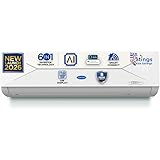
Carrier 1.5 Ton 3 Star Wi-Fi Smart Flexicool Inverter Split AC (Copper, Convertible 6-in-1 with Wi-Fi with Geo-Fencing, Smart Energy Display, 2026 Model, ESTER EDGE Gxi WiFi-CAI18EE3R36W1, White)
₹33,990.00 (as of July 21, 2026 08:38 GMT +05:30 - More infoProduct prices and availability are accurate as of the date/time indicated and are subject to change. Any price and availability information displayed on [relevant Amazon Site(s), as applicable] at the time of purchase will apply to the purchase of this product.)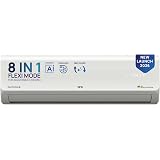
IFB 1 Ton 3 Star,New star rated, AI Powered Inverter Split AC,Hybrid Mode, 8in1 Flexi Mode, Heavy Duty Compressor, Long Air Throw, Self Clean, Dual Gold Fins, 100% Copper, CI133SL11RGM3, white
₹29,457.00 (as of July 21, 2026 08:38 GMT +05:30 - More infoProduct prices and availability are accurate as of the date/time indicated and are subject to change. Any price and availability information displayed on [relevant Amazon Site(s), as applicable] at the time of purchase will apply to the purchase of this product.)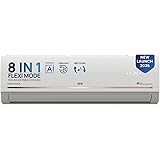
IFB 2 Ton 3 Star,New star rated, AI Powered Inverter Split AC,Hybrid Mode, 8-in-1 Flexi Mode, Heavy Duty Compressor, Long Air Throw, Self Clean, Dual Gold Fins, 100% Copper, CI223GD32RGM3, white
₹47,490.00 (as of July 21, 2026 08:38 GMT +05:30 - More infoProduct prices and availability are accurate as of the date/time indicated and are subject to change. Any price and availability information displayed on [relevant Amazon Site(s), as applicable] at the time of purchase will apply to the purchase of this product.)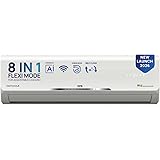
IFB 1.5 Ton 5Star,New star rated,AI Powered Inverter Split Air Conditioner with Inbuilt WiFi,Hybrid Mode, 8in1 Flexi Mode,Heavy Duty Compressor,Self Clean,100% Copper Tubes,CI195SS32SGM3, White
₹42,490.00 (as of July 21, 2026 08:38 GMT +05:30 - More infoProduct prices and availability are accurate as of the date/time indicated and are subject to change. Any price and availability information displayed on [relevant Amazon Site(s), as applicable] at the time of purchase will apply to the purchase of this product.)
Blue Star 1.5 Ton 3 Star,New Star Rated, Wi-Fi Smart Inverter Split AC (Copper, 5 in 1 Convertible Cooling, DigiQ Hepta Sensor, Blue Fins,Turbo Cool,Blue Fins (IA318ZXUS, White)
₹37,490.00 (as of July 21, 2026 08:38 GMT +05:30 - More infoProduct prices and availability are accurate as of the date/time indicated and are subject to change. Any price and availability information displayed on [relevant Amazon Site(s), as applicable] at the time of purchase will apply to the purchase of this product.)
Midea 1.5 Ton 3 Star, New Star Rated, Wifi Inverter Split AC with 6-in-1 Convertible Cooling, Turbo Mode, Heavy Duty Cooling at 52℃, Auto Clean&HD+PM 2.5 Filter(Copper, AC 1.5Ton MAI18SD3R36W0, White)
₹29,990.00 (as of July 21, 2026 08:38 GMT +05:30 - More infoProduct prices and availability are accurate as of the date/time indicated and are subject to change. Any price and availability information displayed on [relevant Amazon Site(s), as applicable] at the time of purchase will apply to the purchase of this product.)
Godrej 1.5 Ton 3 Star| New Star Rated| Inverter Split AC | 5-in-1 Convertible Cooling | 5 Year Comprehensive Warranty| AI Powered| Heavy Duty Cooling at 52°C| (AC 1.5T EC HIC 18Q3TH WA)
₹32,450.00 (as of July 21, 2026 08:38 GMT +05:30 - More infoProduct prices and availability are accurate as of the date/time indicated and are subject to change. Any price and availability information displayed on [relevant Amazon Site(s), as applicable] at the time of purchase will apply to the purchase of this product.)
Blue Star 1.5 Ton 3 Star, Wi-Fi Smart Inverter Split AC (Copper, 5 in 1 Convertible Cooling, 4-Way Swing, Turbo Cool, Voice Command, IC318YNUS, White)
₹32,290.00 (as of July 21, 2026 08:38 GMT +05:30 - More infoProduct prices and availability are accurate as of the date/time indicated and are subject to change. Any price and availability information displayed on [relevant Amazon Site(s), as applicable] at the time of purchase will apply to the purchase of this product.)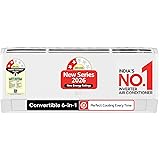
LG Essential Series, 0.8 Ton 2 Star,New star rated, Smart Inverter Split AC (Copper, Convertible 6-in-1 Cooling, Faster Cooling & Energy Saving, HD Filter with AntiVirus Protection, AS-Q11KNVE, White)
₹24,990.00 (as of July 21, 2026 08:38 GMT +05:30 - More infoProduct prices and availability are accurate as of the date/time indicated and are subject to change. Any price and availability information displayed on [relevant Amazon Site(s), as applicable] at the time of purchase will apply to the purchase of this product.)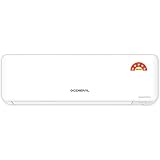
GENERAL 1 Ton BEE 2026 5 Star Rated, Inverter Split AC (ASGG12CGAB-B, White, Copper, 3520W, Powerful Cooling, 10m Long Reach Airflow, 55°C Max, Suitable for 120~150 Sft, Free Standard Installation)
₹49,490.00 (as of July 21, 2026 08:38 GMT +05:30 - More infoProduct prices and availability are accurate as of the date/time indicated and are subject to change. Any price and availability information displayed on [relevant Amazon Site(s), as applicable] at the time of purchase will apply to the purchase of this product.)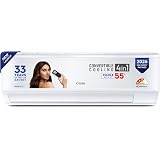
Cruise 1 Ton 3 Star VarioQool Inverter Split AC (CWCVBM-VQ1D123, White) | Fast Cooling at 50 °C | 80–110 sq ft |100% Copper | Convertible 4-in-1 | Monsoon Comfort | PM2.5 Filter | Anti-Rust Tech
₹26,990.00 (as of July 21, 2026 08:38 GMT +05:30 - More infoProduct prices and availability are accurate as of the date/time indicated and are subject to change. Any price and availability information displayed on [relevant Amazon Site(s), as applicable] at the time of purchase will apply to the purchase of this product.)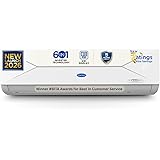
Carrier 1.5 Ton 5 Star, New Star rated, Flexicool Inverter Split AC (Copper, Convertible 6-in-1 with Smart Energy Display, Insta Cool, Auto Clean and PM 2.5 Filter, ESTER EDGE Gxi-CAI18EE5R36F0, White)
₹43,490.00 (as of July 21, 2026 08:38 GMT +05:30 - More infoProduct prices and availability are accurate as of the date/time indicated and are subject to change. Any price and availability information displayed on [relevant Amazon Site(s), as applicable] at the time of purchase will apply to the purchase of this product.)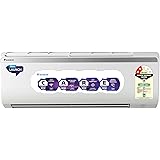
Daikin 0.8 Ton 2 Star, New Star rated,Fixed Speed Split AC (Copper, PM2.5 Filter, FTQ28XV16, White)
₹28,900.00 (as of July 21, 2026 08:38 GMT +05:30 - More infoProduct prices and availability are accurate as of the date/time indicated and are subject to change. Any price and availability information displayed on [relevant Amazon Site(s), as applicable] at the time of purchase will apply to the purchase of this product.)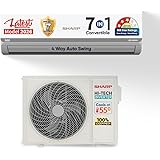
Sharp 1.5 Ton 3 star, New Star Rated, Split AC (4 Way Swing, 100% copper, Hi-Tech Inverter Compressor, 7-1 Convertible, Turbo cool, Dust filter, AH-SI17V3B-GCN, White)
₹32,590.00 (as of July 21, 2026 08:38 GMT +05:30 - More infoProduct prices and availability are accurate as of the date/time indicated and are subject to change. Any price and availability information displayed on [relevant Amazon Site(s), as applicable] at the time of purchase will apply to the purchase of this product.)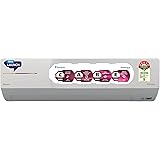
Daikin 1.5 Ton 5 Star,New Star rated, Inverter Split AC (Copper, PM2.5 Filter, MTKM50XV16, White)
₹48,990.00 (as of July 21, 2026 08:38 GMT +05:30 - More infoProduct prices and availability are accurate as of the date/time indicated and are subject to change. Any price and availability information displayed on [relevant Amazon Site(s), as applicable] at the time of purchase will apply to the purchase of this product.)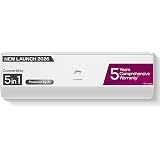
Godrej 2 Ton 3 Star AC | New star rated | Inverter Split AC | 5-Year Comprehensive Warranty | AI Powered | 5-in-1 Convertible | I-Sense Technology | Self-clean (AC 2T EC HIC 24J3TS WA, White)
₹42,990.00 (as of July 21, 2026 08:38 GMT +05:30 - More infoProduct prices and availability are accurate as of the date/time indicated and are subject to change. Any price and availability information displayed on [relevant Amazon Site(s), as applicable] at the time of purchase will apply to the purchase of this product.)
Blue Star 1.5 Ton 5 Star,New Star Rated, Wi-Fi Smart Inverter Split AC (Copper, AI Pro+, 4-Way Swing, DigiQ Hepta Sensor, Blue Fins,Turbo Cool, Self Clean Technology (IA518ZXUS, White))
₹47,490.00 (as of July 21, 2026 08:38 GMT +05:30 - More infoProduct prices and availability are accurate as of the date/time indicated and are subject to change. Any price and availability information displayed on [relevant Amazon Site(s), as applicable] at the time of purchase will apply to the purchase of this product.)