
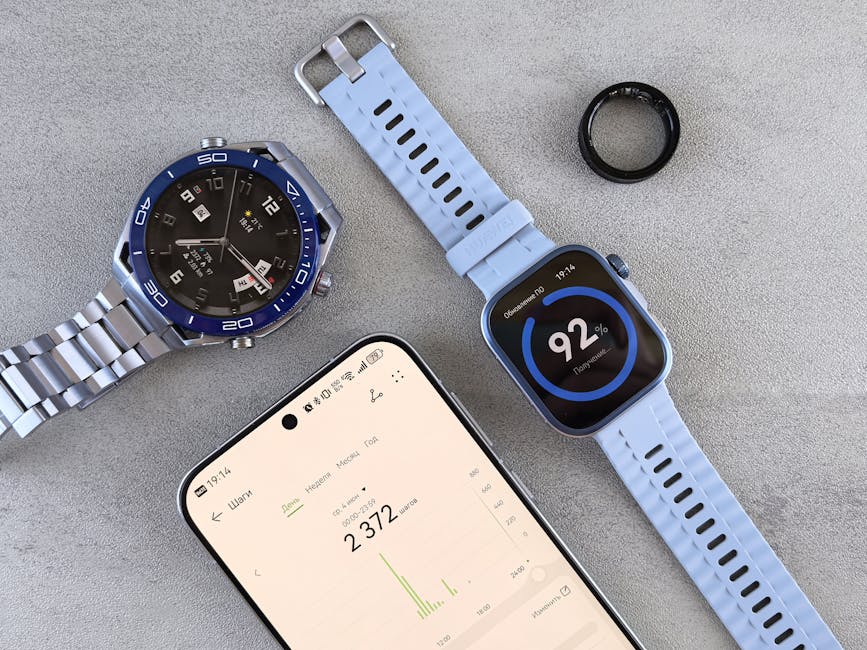
Smart Ring for Health: Your Ultimate Wearable Tracker
The landscape of wearable technology is continuously evolving, and the smart ring is emerging as a discreet yet powerful contender, offering a comprehensive suite of health monitoring features directly from your finger. Gone are the days of bulky wristbands; the smart ring provides an elegant, unobtrusive alternative for individuals seeking to gain deeper insights into their well-being. This article delves into the multifaceted capabilities of smart rings as ultimate wearable trackers, exploring their technology, health metrics, benefits, and future potential.
At its core, a smart ring for health is a miniaturized powerhouse of sensors, meticulously engineered to capture a wide array of physiological data. These rings typically house a combination of accelerometers, gyroscopes, optical heart rate sensors, and temperature sensors, often complemented by advanced algorithms to process and interpret the raw data. The discreet design, often crafted from durable materials like titanium or ceramic, ensures comfort and wearability throughout the day and night, seamlessly integrating into your lifestyle without drawing undue attention.
One of the primary functions of a health-focused smart ring is sleep tracking. Unlike wrist-worn devices that can sometimes be uncomfortable for sleep, a ring’s subtle presence allows for uninterrupted data collection. It meticulously monitors sleep stages – light, deep, and REM – providing users with a detailed breakdown of their sleep architecture. This granular understanding of sleep patterns is crucial for identifying potential sleep disturbances, optimizing sleep hygiene, and ultimately improving overall energy levels and cognitive function. Metrics like sleep duration, time in each stage, sleep efficiency, and awakenings are presented in an easily digestible format, often within a companion mobile application.
Beyond sleep, smart rings excel in activity and fitness tracking. Built-in accelerometers and gyroscopes accurately record steps taken, distance covered, and calories burned. More advanced rings can even differentiate between various activities, such as running, cycling, and swimming, providing personalized workout insights. Heart rate monitoring, a cornerstone of fitness tracking, is also a key feature. Continuous heart rate monitoring allows for the assessment of resting heart rate – a significant indicator of cardiovascular health and fitness levels – and heart rate zones during exercise, enabling users to train more effectively and safely.
Stress management is another area where smart rings are proving invaluable. By analyzing heart rate variability (HRV), a measure of the variation in time between heartbeats, these devices can offer insights into the body’s stress response. Elevated stress levels can manifest as reduced HRV, and smart rings can alert users to periods of heightened stress, prompting them to engage in mindfulness exercises, breathing techniques, or other stress-reducing activities. This proactive approach to stress management can have profound positive impacts on both mental and physical health.
Body temperature monitoring is a feature gaining increasing prominence, particularly in the context of illness detection and reproductive health. Smart rings can track subtle fluctuations in basal body temperature, which can be an early indicator of illness, such as a fever. For women, these temperature readings can be used to identify ovulation windows and track menstrual cycles with greater accuracy, offering a non-invasive method for family planning or fertility awareness.
The data aggregation and analysis capabilities of smart ring companion apps are what truly transform raw sensor data into actionable insights. These applications often employ sophisticated algorithms to identify trends, patterns, and anomalies in your health data. They provide personalized recommendations based on your unique physiology and lifestyle. For example, a ring might suggest an earlier bedtime based on your sleep patterns or recommend a lighter workout if your body shows signs of fatigue or high stress. This personalized feedback loop empowers users to make informed decisions about their health and well-being.
The discreet and comfortable design of smart rings offers a significant advantage over traditional wearables. For individuals who find wrist-worn devices cumbersome, irritating, or aesthetically unappealing, a smart ring provides a seamless integration into their daily lives. This unobtrusive nature encourages consistent wear, leading to more comprehensive and reliable data collection over time. The ability to wear the ring constantly, including during sleep and even in certain water-based activities (depending on the ring’s waterproofing), ensures a continuous stream of health information.
Furthermore, smart rings are increasingly focusing on advanced health metrics. Some models are exploring the integration of SpO2 sensors to monitor blood oxygen levels, which can be indicative of respiratory health and sleep apnea. Others are investigating non-invasive blood glucose monitoring, a Holy Grail for wearable technology that could revolutionize diabetes management. The miniaturization of sophisticated sensors continues to push the boundaries of what is possible in a form factor as small as a ring.
The benefits of using a smart ring for health are numerous and far-reaching. They empower individuals with a deeper understanding of their body’s signals, fostering a more proactive approach to health management. Early detection of potential health issues, improved sleep quality, optimized fitness routines, and better stress management are all tangible outcomes. The personalized insights provided by these devices can motivate users to adopt healthier habits and make sustainable lifestyle changes. Moreover, the discreet nature of the technology makes it accessible to a wider audience, including those who may have previously resisted wearing fitness trackers.
As the technology matures, the future of smart rings in health tracking looks incredibly promising. We can anticipate further advancements in sensor accuracy, the integration of new biometric measurements, and more sophisticated AI-driven analytics. The potential for seamless integration with other health platforms and electronic health records could create a truly holistic view of an individual’s health. Imagine a future where your smart ring alerts your doctor to subtle changes in your vital signs, enabling early intervention and personalized treatment plans. The evolution of smart rings is not just about tracking data; it’s about transforming how we understand and manage our health, one finger-tap at a time.