
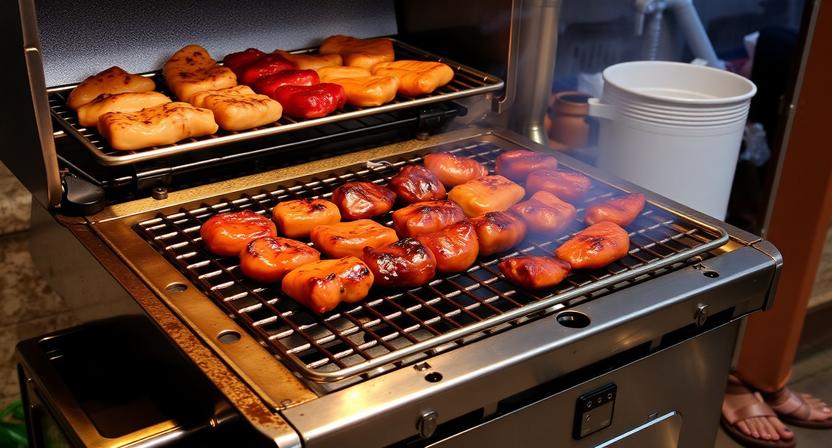
Description: Discover the best barbecues grill for your home. From charcoal vs. gas to advanced pellet tech, master the art of outdoor cooking with our expert guide.
The Art and Science of the Perfect Barbecues Grill
There is something inherently primal and deeply satisfying about cooking over an open flame. In Tier 1 nations like the United States, Canada, and Australia, the barbecues grill is more than just a kitchen appliance; it is a centerpiece of social interaction, a symbol of summer, and a tool for culinary expression. Whether it is the nostalgic scent of hickory smoke or the surgical precision of a high-end gas burner, grilling has evolved into a sophisticated blend of tradition and technology.
According to the Hearth, Patio & Barbecue Association (HPBA), over 70% of households in North America own at least one grill. This staggering statistic underscores the importance of choosing the right equipment. However, with an overwhelming array of options—ranging from portable infrared units to massive outdoor kitchen suites—making the “smart” choice requires a deep dive into the mechanics of heat, flavor, and durability.
In this comprehensive guide, we will explore the landscape of the modern barbecues grill, providing you with the expertise needed to transform your backyard into a five-star steakhouse.
Choosing Your Weapon: The Different Types of Barbecues Grill
The first step in your grilling journey is selecting the fuel source that aligns with your lifestyle and flavor preferences. Each type of barbecues grill offers a distinct set of advantages and learning curves.
1. Gas Grills: The King of Convenience
For the busy professional or the spontaneous entertainer, the gas grill is the gold standard. Powered by liquid propane or natural gas, these machines offer “twist-and-turn” ignition and near-instant heat.
- Pros: Rapid preheating (10–15 minutes), precise temperature control via dials, and easy cleanup.
- Cons: Generally more expensive upfront; lacks the deep, smoky flavor of wood or charcoal.
- Best For: Weeknight dinners and large parties where speed is of the essence.
2. Charcoal Grills: The Authentic Flavor Profile
Purists will argue that if it isn’t charcoal, it isn’t barbecue. Charcoal grills use briquettes or lump charcoal to create a high-heat environment that facilitates the Maillard reaction—the chemical process that gives seared meat its savory crust.
- Pros: High searing temperatures (up to 700°F), unmatched smoky aroma, and generally lower initial cost.
- Cons: Longer setup time (30–45 minutes), manual temperature regulation, and ash disposal.
- Best For: Flavor enthusiasts who enjoy the process of building and managing a fire.
3. Pellet Grills: The High-Tech Smoker
The pellet grill has revolutionized the industry by combining the flavor of wood with the automation of an oven. These grills use an auger to feed compressed wood pellets into a fire pot, governed by a digital controller.
- Pros: “Set it and forget it” convenience, incredible versatility (smoke, bake, roast, or grill), and consistent results.
- Cons: Requires electricity to run the auger and fan; limited searing capabilities compared to gas or charcoal.
- Best For: Low-and-slow barbecue (brisket, ribs) and tech-savvy cooks who want precision.
4. Electric and Infrared Options: Urban Grilling Solutions
As urban living rises, many apartment dwellers are restricted from using gas or charcoal. Electric grills and infrared technology provide a safe, smoke-free alternative that still delivers impressive results.
- Pros: Permitted on most balconies, no fuel tanks to refill, and extremely compact.
- Cons: Smaller cooking surfaces and a lack of traditional “flame-kissed” flavor.
- Best For: City dwellers and small patios.
Comparison of Barbecues Grill Types
| Feature | Gas Grill | Charcoal Grill | Pellet Grill | Electric Grill |
| Startup Time | 10 mins | 30-45 mins | 15 mins | 10 mins |
| Flavor Intensity | Moderate | High (Smoky) | High (Woody) | Low |
| Temp Control | Easy (Dials) | Difficult (Vents) | Very Easy (Digital) | Easy |
| Maintenance | Moderate | High (Ash) | Moderate | Low |
| Price Range | $$$ | $ | $$$$ | $$ |
The Anatomy of a High-Performance Barbecues Grill
When evaluating a barbecues grill, looking beyond the shiny exterior is vital. High-quality construction determines not just how well the food tastes, but how many seasons the unit will survive.
Burner Quality and BTUs
In gas grilling, BTUs (British Thermal Units) are often used as a marketing gimmick. A high BTU rating doesn’t necessarily mean a better grill; it simply measures fuel consumption. Instead, look for heat flux—the BTUs per square inch of cooking surface.
- Authority Tip: A well-insulated grill with 30,000 BTUs will outperform a thin-walled, leaky grill with 60,000 BTUs every time.
Grate Materials: Cast Iron vs. Stainless Steel
The grates are the primary contact point between your food and the heat source.
- Porcelain-Coated Cast Iron: Excellent at retaining heat for perfect sear marks but requires maintenance to prevent rusting.
- Stainless Steel: Highly durable and resistant to corrosion. Look for “304 Grade” stainless steel for the best longevity in Tier 1 coastal climates.
The Importance of Lid Construction
A heavy, double-walled lid is essential for maintaining consistent internal temperatures, especially in colder climates. It acts as an insulator, preventing heat loss and reducing fuel consumption.
Essential Grilling Techniques for Professional Results
Owning a premium barbecues grill is only half the battle. To produce world-class results, you must master the fundamental techniques used by pitmasters.
Direct vs. Indirect Heat
Understanding heat zones is the difference between a juicy steak and a burnt offering.
- Direct Heat: Placing food directly over the flame. Best for thin cuts like burgers, hot dogs, and asparagus.
- Indirect Heat: Placing food away from the flame and closing the lid. This turns your grill into a convection oven. Best for large roasts, whole chickens, or thick-cut ribeyes (the “reverse sear” method).
The “Maillard Reaction” and Searing
To achieve that delicious brown crust, your grill surface must reach at least 300°F (150°C). This process, known as the Maillard reaction, creates hundreds of different flavor compounds. For the best sear, ensure your meat is pat-dry before hitting the grates; moisture creates steam, which prevents browning.
The Importance of Internal Temperature
Stop guessing and stop cutting into your meat to check for doneness. This lets the juices escape. Invest in a high-quality, instant-read digital thermometer.
- Rare: 125°F (52°C)
- Medium-Rare: 135°F (57°C)
- Medium: 145°F (63°C)
- Well Done: 160°F (71°C)
Maintenance and Longevity: Protecting Your Investment
A high-end barbecues grill can cost anywhere from $500 to $5,000. To ensure you get a decade of use out of it, a strict maintenance routine is non-negotiable.
1. The Post-Grill Burn-Off
After removing your food, turn the heat to high for 10 minutes. This carbonizes any remaining food particles, making them easy to brush off with a stainless steel or nylon brush.
2. Deep Cleaning Twice a Year
Remove the grates, flavorizer bars, and burners. Vacuum out the “cookbox” to remove ash and grease buildup. This doesn’t just improve flavor; it prevents dangerous grease fires.
3. Seasoning the Grates
Just like a cast-iron skillet, your grill grates benefit from seasoning. Wipe them down with a high-smoke-point oil (like grapeseed or canola) after cleaning to create a non-stick barrier and protect against oxidation.
4. Use a High-Quality Cover
In Tier 1 countries with harsh winters or high humidity, a grill cover is your first line of defense. Look for a cover that is breathable; a completely airtight cover can trap moisture underneath, accelerating rust.
The Future of Grilling: Smart Tech and Sustainability
The barbecues grill industry is currently undergoing a massive digital transformation. We are seeing the integration of “Smart Grills” that connect to your smartphone via Wi-Fi or Bluetooth.
Smart Monitoring
Brands like Weber and Traeger now offer integrated probes that send real-time alerts to your phone when your meat reaches the target temperature. Some even allow you to adjust the grill’s internal temperature remotely.
Sustainable Grilling
As environmental consciousness grows, we are seeing a shift toward more sustainable fuels.
- Lump Charcoal: Made from hardwood scraps rather than chemical-laden briquettes.
- Sustainably Sourced Pellets: Using sawdust from furniture manufacturing to reduce waste.
- Natural Gas Conversions: For those looking to move away from the carbon footprint of propane tank production and transport.
Frequently Asked Questions About Barbecues Grill
Q: Is it better to grill with the lid open or closed?
A: As a general rule, if the food is thin (under 3/4 inch), keep the lid open for a quick sear. For anything thicker, close the lid to ensure the center cooks through without burning the exterior.
Q: Why is my gas grill flame orange instead of blue?
A: An orange flame usually indicates a lack of oxygen or a blockage in the burner tubes (often spider webs!). A healthy flame should be blue with yellow tips.
Q: Can I use wood chips in a gas grill?
A: Yes! Use a smoker box—a small metal container that sits on top of the burners—to hold wood chips. This allows you to add a hint of smoky flavor to a gas-powered barbecues grill.
Real-World Case Study: The “Reverse Sear” Revolution
In recent years, the “Reverse Sear” has become the gold standard for cooking thick steaks in Tier 1 steakhouses. This technique perfectly illustrates the use of a barbecues grill‘s versatility.
- The Setup: A home cook uses a charcoal grill set up for indirect heat (coals on one side).
- The Slow Cook: A 2-inch thick ribeye is placed on the “cool” side until it reaches an internal temp of 115°F.
- The Finish: The steak is moved directly over the searing hot coals for 60 seconds per side.
- The Result: A steak with an edge-to-edge pink interior and a professional-grade crust. This method reduces the “grey band” of overcooked meat found in traditional high-heat methods.
Conclusion: Ignite Your Culinary Potential
Choosing the right barbecues grill is a transformative decision for any homeowner. It is an investment in your lifestyle, your health, and your social life. Whether you opt for the rugged, hands-on experience of charcoal, the streamlined efficiency of gas, or the high-tech precision of a pellet smoker, the key lies in understanding the mechanics of heat and the importance of quality materials.
By mastering the techniques of direct and indirect heat, maintaining your equipment with discipline, and utilizing modern temperature monitoring, you can elevate your outdoor cooking from basic “backyard burgers” to gourmet excellence.
Your next legendary meal is just one spark away.
✍️ Ready to Become a Grill Master?
Don’t settle for mediocre meals. Upgrade your outdoor space today by selecting a handpicked barbecues grill from our latest reviews. Whether you are looking for a compact portable unit or a professional-grade smoker, our expert recommendations will help you find the perfect match for your backyard.
SUKHSADHAN Folding Portable Barbecue BBQ Grill Set: Compact and Convenient for Outdoor and Home Grilling
₹1,592.00 (as of September 20, 2026 13:39 GMT +05:30 - More infoProduct prices and availability are accurate as of the date/time indicated and are subject to change. Any price and availability information displayed on [relevant Amazon Site(s), as applicable] at the time of purchase will apply to the purchase of this product.)
Heavy-Duty Iron Sigdi (Size 27 x 23 CM) Angiti with Strong Stand & Vertical Support Wooden Handle Strong Riveted Rods Chulha Heater Griller Tandoor Stove for Outdoor Cooking Biomass Stove
Now retrieving the price.
(as of September 20, 2026 13:39 GMT +05:30 - More infoProduct prices and availability are accurate as of the date/time indicated and are subject to change. Any price and availability information displayed on [relevant Amazon Site(s), as applicable] at the time of purchase will apply to the purchase of this product.)
The Better Home Heavy-Duty Iron Charcoal Grill - Sturdy Barbecue Sigdi for Home & Garden with 2 Rust-Proof Stainless Steel Skewers | Portable BBQ Set with Wooden Handles & Mesh Grill (Silver)
₹599.00 (as of September 20, 2026 13:39 GMT +05:30 - More infoProduct prices and availability are accurate as of the date/time indicated and are subject to change. Any price and availability information displayed on [relevant Amazon Site(s), as applicable] at the time of purchase will apply to the purchase of this product.)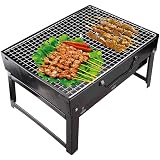
ZAYQAHAUS Folding Portable Outdoor Barbeque Charcoal BBQ Grill Oven Black Carbon Steel, Black BBQ Toaster Briefcase Style BBQ Grill Oven for Home Outdoor Picnic Camping Travelling
Now retrieving the price.
(as of September 20, 2026 13:39 GMT +05:30 - More infoProduct prices and availability are accurate as of the date/time indicated and are subject to change. Any price and availability information displayed on [relevant Amazon Site(s), as applicable] at the time of purchase will apply to the purchase of this product.)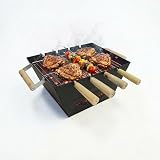
POSHIO Bbq Grill for Home Barbeque Set with 4 Skewers,1 Steel Grill & Charcoal Tray | Tandoori Grill Set for Outdoor (Sturdy built, 13.4x9.4x8.7inches, Black)
Now retrieving the price.
(as of September 20, 2026 13:39 GMT +05:30 - More infoProduct prices and availability are accurate as of the date/time indicated and are subject to change. Any price and availability information displayed on [relevant Amazon Site(s), as applicable] at the time of purchase will apply to the purchase of this product.)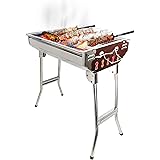
IBELL CA-11 Foldable Stainless Steel Charcoal Barbecue And Tandoor Grill Barbeque Stand For Outdoor Picnic Camping And Travel, Free Standing.
₹2,134.00 (as of September 20, 2026 13:39 GMT +05:30 - More infoProduct prices and availability are accurate as of the date/time indicated and are subject to change. Any price and availability information displayed on [relevant Amazon Site(s), as applicable] at the time of purchase will apply to the purchase of this product.)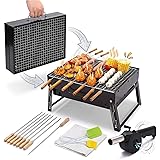
EYUVAA LABEL Portable Charcoal BBQ Grill Set with 8 Skewers, Spatula, Oil Brush & Air Blower| Foldable Heavy Duty Barbecue Grill for Camping, Picnic, Terrace, Garden & Outdoor Cooking
₹949.00 (as of September 20, 2026 13:39 GMT +05:30 - More infoProduct prices and availability are accurate as of the date/time indicated and are subject to change. Any price and availability information displayed on [relevant Amazon Site(s), as applicable] at the time of purchase will apply to the purchase of this product.)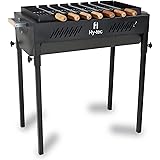
H Hy-tec (Device) Hybb, Backyard Charcoal Grill Barbeque With 7 Skewers & Charcoal Tray (Stellar Black), Free Standing
₹4,249.00 (as of September 20, 2026 13:39 GMT +05:30 - More infoProduct prices and availability are accurate as of the date/time indicated and are subject to change. Any price and availability information displayed on [relevant Amazon Site(s), as applicable] at the time of purchase will apply to the purchase of this product.)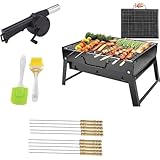
TRIGOP Barbecue Grills - Foldable Charcoal Barbeque Grill With 【2 Spatula, 1 BBQ, 10 Stick & 1Air Blower 】 Outdoor Bbq Grill Tools For Camping Picnics Traveling - Stellar Black 【Barbecue set 】
₹769.00 (as of September 20, 2026 13:39 GMT +05:30 - More infoProduct prices and availability are accurate as of the date/time indicated and are subject to change. Any price and availability information displayed on [relevant Amazon Site(s), as applicable] at the time of purchase will apply to the purchase of this product.)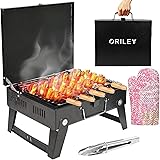
ORILEY Portable Charcoal Heavy Duty Barbeque Grill | 4 Combo | 5 Sticks | 1 Glove | 1 Tongs | Standing Foldable BBQ Tools for Home Outdoor Camping Picnic Travel Cooking (Pack of 1, Black)
₹1,449.00 (as of September 20, 2026 13:39 GMT +05:30 - More infoProduct prices and availability are accurate as of the date/time indicated and are subject to change. Any price and availability information displayed on [relevant Amazon Site(s), as applicable] at the time of purchase will apply to the purchase of this product.)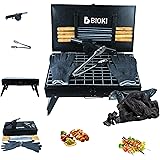
Bioki Ultimate Barbecue grill for Home | All-in-One Barbeque Grill Set & Tandoori Grill for Home - Complete Set for Perfect BBQ with Charcoal Tongs Gloves Air Blower for Perfect Outdoor cooking
₹2,599.00 (as of September 20, 2026 13:39 GMT +05:30 - More infoProduct prices and availability are accurate as of the date/time indicated and are subject to change. Any price and availability information displayed on [relevant Amazon Site(s), as applicable] at the time of purchase will apply to the purchase of this product.)
Horizonite Folding Portable Barbecue BBQ Grill Set | Compact Stainless Steel Charcoal Grill for Outdoor Camping Picnic and Home Use | Foldable Lightweight Barbeque Grill with Ventilation Design
₹948.00 (as of September 20, 2026 13:39 GMT +05:30 - More infoProduct prices and availability are accurate as of the date/time indicated and are subject to change. Any price and availability information displayed on [relevant Amazon Site(s), as applicable] at the time of purchase will apply to the purchase of this product.)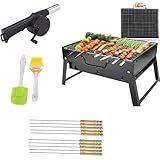
Barbecue Grills - Foldable Charcoal Barbeque Grill with 10 Skewers, 2 Spatula & 1 Air Blower | Outdoor BBQ Grill Tools for Camping Hiking Picnics Traveling - Stellar Black
₹799.00 (as of September 20, 2026 13:39 GMT +05:30 - More infoProduct prices and availability are accurate as of the date/time indicated and are subject to change. Any price and availability information displayed on [relevant Amazon Site(s), as applicable] at the time of purchase will apply to the purchase of this product.)
RYQELVA Foldable Charcoal BBQ Grill, Portable Barbecue Grill with Stand for Outdoor Camping, Picnic & Home, Heavy Duty Iron, Large 24-Inch, Black
₹1,999.00 (as of September 20, 2026 13:39 GMT +05:30 - More infoProduct prices and availability are accurate as of the date/time indicated and are subject to change. Any price and availability information displayed on [relevant Amazon Site(s), as applicable] at the time of purchase will apply to the purchase of this product.)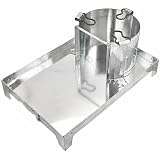
Iron Chulha Heavy Duty Portable Sigdi Stove 48x23x33 CM 2 Kg | Strong Iron Build, Supports Large Utensils, Coal Firewood Stove, Outdoor Camping Trekking Travel Home Use
Now retrieving the price.
(as of September 20, 2026 13:39 GMT +05:30 - More infoProduct prices and availability are accurate as of the date/time indicated and are subject to change. Any price and availability information displayed on [relevant Amazon Site(s), as applicable] at the time of purchase will apply to the purchase of this product.)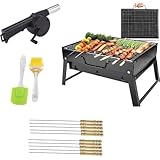
Barbecue Grills - Foldable Charcoal Barbeque Grill With (2 Spatula, 1 BBQ, 10 Stick & 1Air Blower) Outdoor Bbq Grill Tools For Camping Picnics Traveling - Stellar Black (Barbecue set)
₹657.71 (as of September 20, 2026 13:39 GMT +05:30 - More infoProduct prices and availability are accurate as of the date/time indicated and are subject to change. Any price and availability information displayed on [relevant Amazon Site(s), as applicable] at the time of purchase will apply to the purchase of this product.)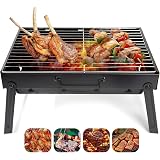
PRONCE Folding Mini BBQ Grill Portable (BLACK) | Quick-Deploy Legs, 4 Skewer Sets Included
₹549.00 (as of September 20, 2026 13:39 GMT +05:30 - More infoProduct prices and availability are accurate as of the date/time indicated and are subject to change. Any price and availability information displayed on [relevant Amazon Site(s), as applicable] at the time of purchase will apply to the purchase of this product.)
kitchf Folding Portable Barbecue BBQ Grill Set: Compact and Convenient for Outdoor and Home Grilling
₹1,514.00 (as of September 20, 2026 13:39 GMT +05:30 - More infoProduct prices and availability are accurate as of the date/time indicated and are subject to change. Any price and availability information displayed on [relevant Amazon Site(s), as applicable] at the time of purchase will apply to the purchase of this product.)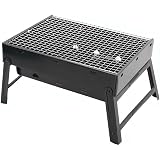
IDITRI EXPORT - Portable Barbecue Charcoal Grill | Toaster Style Folding BBQ Grill Oven for Outdoor Cooking, Camping & Picnic
Now retrieving the price.
(as of September 20, 2026 13:39 GMT +05:30 - More infoProduct prices and availability are accurate as of the date/time indicated and are subject to change. Any price and availability information displayed on [relevant Amazon Site(s), as applicable] at the time of purchase will apply to the purchase of this product.)