
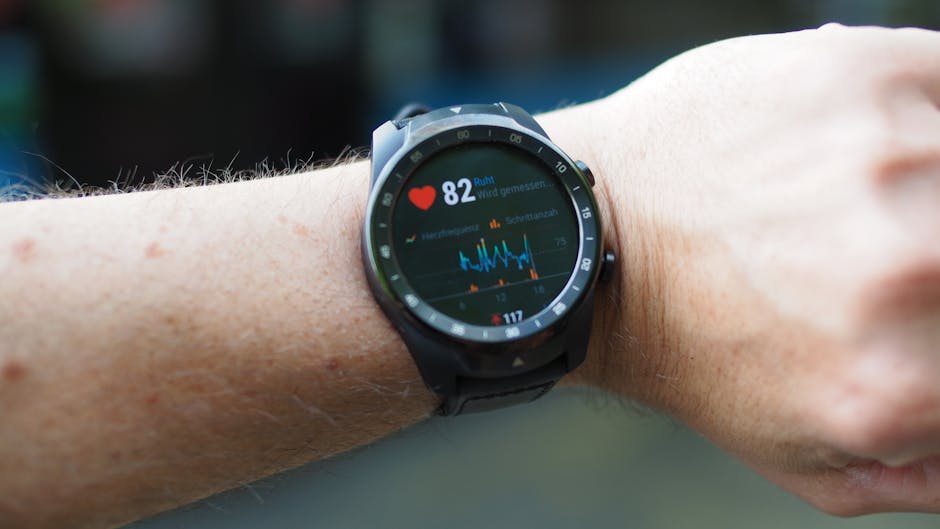
Invest in Your Health: Smartwatches with Superior Heart Rate Accuracy
In today’s health-conscious world, the smartwatch has transcended its role as a mere gadget, evolving into an indispensable tool for proactive wellness management. At the forefront of this evolution lies the critical metric of heart rate monitoring, a cornerstone for understanding cardiovascular health, optimizing workouts, and detecting potential anomalies. However, not all smartwatches are created equal when it comes to the precision of their heart rate sensors. For those serious about leveraging wearable technology for genuine health insights, investing in a smartwatch with superior heart rate accuracy is paramount. This article delves into the science behind accurate heart rate tracking, explores the factors that contribute to superior performance, and highlights key features to look for when making this crucial health investment.
The human heart is a marvel of biological engineering, its rhythmic contractions driving the circulation of blood and sustaining life. Monitoring its rate – the number of beats per minute (BPM) – provides a window into our physiological state. During physical activity, a higher heart rate signifies increased demand on the cardiovascular system. Conversely, a resting heart rate can be an indicator of overall fitness and cardiovascular health. Elevated resting heart rates can sometimes signal stress, illness, or underlying conditions. Irregular heart rhythms, or arrhythmias, can also be detected through consistent and accurate heart rate monitoring, prompting individuals to seek professional medical advice.
The technology underpinning smartwatch heart rate monitoring primarily relies on photoplethysmography (PPG). This technique uses LEDs to emit light into the skin and a photodiode to detect the changes in light absorption. As blood pulses through the capillaries, the volume of blood in the tissue fluctuates, causing variations in light reflection or absorption. The smartwatch’s algorithms then interpret these fluctuations to calculate the heart rate. While seemingly straightforward, achieving high accuracy in real-world conditions is a complex challenge.
Several factors can influence PPG accuracy. Skin tone is a significant one; darker skin tones absorb more light, potentially leading to less reliable readings. Motion artifacts, such as vigorous arm movements during exercise or even everyday activities, can introduce noise into the sensor’s readings, making it difficult for algorithms to distinguish true heartbeats from extraneous signals. Ambient light can also interfere with the LED’s signal. Furthermore, the fit of the smartwatch on the wrist plays a crucial role. A loose strap can lead to inconsistent contact, while a strap that’s too tight can restrict blood flow, affecting accuracy.
Smartwatches that prioritize superior heart rate accuracy often incorporate several key advancements. Firstly, they utilize multi-wavelength LEDs. Instead of relying on a single green light, these advanced sensors often employ multiple wavelengths of light (e.g., green, red, and infrared). This allows for a more robust signal, less susceptible to interference from skin pigmentation and ambient light. The combination of different wavelengths can penetrate the skin at varying depths, capturing more comprehensive blood volume information.
Secondly, these devices employ sophisticated algorithms. Beyond simple peak detection, advanced algorithms are designed to filter out noise, account for motion artifacts, and compensate for variations in skin tone. Machine learning plays an increasingly vital role here, with algorithms trained on vast datasets to recognize and interpret complex PPG signals accurately. Some high-end smartwatches also incorporate advanced signal processing techniques, such as Kalman filters, to smooth out noisy data and provide more stable readings.
Thirdly, the sensor placement and design are optimized. The physical arrangement of the LEDs and photodiodes, as well as the curvature of the sensor module, can influence how effectively it interacts with the skin. Some manufacturers also employ multiple sensors strategically placed on the underside of the watch to capture data from different points on the wrist, further enhancing accuracy and robustness.
When evaluating smartwatches for their heart rate accuracy, look for devices that have undergone independent validation studies. Reputable brands often publish their findings or have their devices tested by third-party organizations specializing in biometric sensor accuracy. These studies typically compare smartwatch readings against gold-standard medical devices like ECG monitors or chest straps.
Beyond the core sensor technology, other features contribute to a better heart rate monitoring experience. Continuous heart rate tracking, as opposed to on-demand readings, provides a more comprehensive picture of your cardiovascular response throughout the day and during sleep. Sleep tracking, which heavily relies on accurate heart rate and heart rate variability (HRV) data, can offer valuable insights into recovery and overall well-being. Heart rate zones, which automatically categorize your exertion levels during workouts, are crucial for optimizing training intensity and achieving fitness goals. Some advanced smartwatches also offer features like abnormal heart rate alerts, which can notify you of unusually high or low heart rates or potential signs of atrial fibrillation (AFib), a common heart rhythm disorder.
Consider the battery life of the smartwatch. Continuous heart rate monitoring can be power-intensive, so a device with excellent battery life ensures you won’t miss crucial data due to frequent charging. The comfort and fit of the watch are also important for sustained wear and accurate readings. Look for adjustable straps and a design that feels secure yet comfortable against your skin. The accompanying app or software is equally vital. It should present your heart rate data clearly and intuitively, offering trends, historical data, and actionable insights. The ability to export this data for sharing with healthcare professionals can be invaluable.
Investing in a smartwatch with superior heart rate accuracy is an investment in your health. It empowers you with real-time data to make informed decisions about your physical activity, recovery, and overall well-being. By understanding the technology, the influencing factors, and the key features to prioritize, you can select a device that serves as a reliable and insightful companion on your journey to a healthier life. Brands that consistently demonstrate a commitment to accuracy in their heart rate sensors, through rigorous testing and advanced technological integration, are the ones to consider when making this important health-focused purchase.