
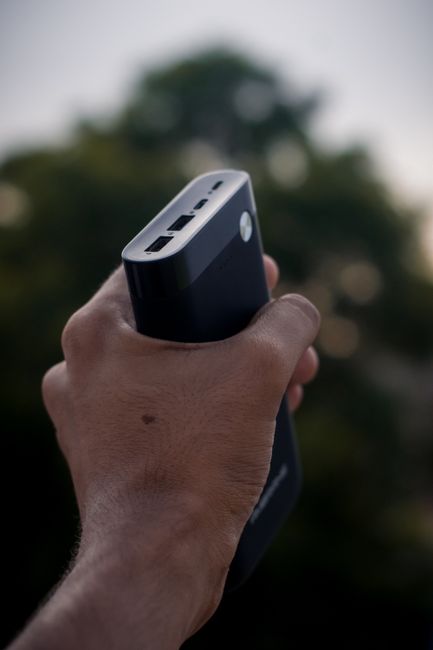
Fast Charging Power Banks: Get Back to 100% Quickly
In our increasingly mobile-dependent world, a dead smartphone battery is more than just an inconvenience; it’s a digital lifeline severed. The solution? Fast charging power banks. These portable powerhouses are engineered to deliver a rapid jolt of energy, drastically reducing the downtime associated with traditional charging. Gone are the days of tethering yourself to a wall socket for hours. Today, you can reclaim your device’s full charge in a fraction of the time, thanks to advancements in power delivery technology. This article delves deep into the world of fast charging power banks, exploring what makes them tick, how to choose the right one, and the benefits they offer for the modern, always-on user.
The Science Behind the Speed: Understanding Fast Charging Technologies
The magic behind fast charging power banks lies in sophisticated charging protocols that allow for higher voltage and amperage delivery compared to standard USB charging. The most prominent and widely adopted standard is USB Power Delivery (USB PD). USB PD is an open standard that allows for dynamic negotiation between the power source (the power bank) and the device being charged. This means the power bank can intelligently determine the optimal charging speed for your specific device, ensuring both speed and safety. USB PD supports a range of voltage and current profiles, enabling it to charge everything from smartphones and tablets to laptops and even some gaming consoles.
Another significant player is Qualcomm Quick Charge (QC). While proprietary to Qualcomm chipsets, Quick Charge has become ubiquitous, especially in Android devices. Different versions of Quick Charge (QC 3.0, QC 4.0, QC 5.0) offer progressively faster charging speeds. QC 4.0 and above are designed to be backward-compatible with USB PD, meaning a QC 4.0+ compatible device can benefit from USB PD charging, and vice-versa, when connected to a compatible charger.
Beyond these dominant players, other proprietary fast charging technologies exist, such as Samsung’s Adaptive Fast Charging (AFC) and OnePlus’s Warp Charge (now SuperVOOC). While these are often device-specific, many modern power banks are designed to support multiple protocols, offering broader compatibility. The key takeaway is that a fast charging power bank will advertise its support for these specific technologies, often indicated by logos like “USB PD Certified” or “Quick Charge 3.0 Compatible.”
Decoding the Specs: What to Look for in a Fast Charging Power Bank
Choosing the right fast charging power bank involves understanding a few key specifications:
- Capacity (mAh): Measured in milliampere-hours (mAh), this indicates how much energy the power bank can store. A higher mAh means more charges for your devices. For a smartphone, 10,000mAh is a common and versatile capacity, capable of providing 2-3 full charges. For devices like laptops or multiple devices, consider 20,000mAh or higher.
- Output Ports and Protocols: This is where fast charging truly shines. Look for power banks with USB-C ports that support USB PD. Many also include USB-A ports that support Quick Charge or other proprietary protocols. The number of ports matters if you need to charge multiple devices simultaneously.
- Output Wattage (W): This is the crucial indicator of charging speed. For smartphones, look for a minimum of 18W for decent fast charging. For tablets and some laptops, 30W to 65W is preferable. High-end laptops might require 100W or even more, so check your device’s charging requirements. A power bank that supports higher wattages can charge devices faster, and importantly, can also charge itself back up more quickly.
- Input Ports and Charging Speed: Just as important as output is how quickly the power bank itself can be recharged. Look for a power bank with a USB-C input that supports USB PD. This allows you to recharge the power bank itself at high speeds, often referred to as “fast recharging.” A 10,000mAh power bank might take 6-8 hours to recharge via a standard 5V/2A USB port, but with USB PD input, it could be fully replenished in 2-3 hours.
- Build Quality and Safety Features: A good power bank will have robust build quality, often with a durable casing. Crucially, it should incorporate safety features like overcharge protection, over-discharge protection, short-circuit protection, and temperature control to prevent damage to your devices and ensure user safety. Reputable brands usually highlight these certifications.
- Portability and Design: While speed is paramount, consider the physical attributes. Power banks come in various sizes and weights. A compact 10,000mAh model is perfect for everyday carry, while a larger capacity unit might be better suited for travel. Some power banks also offer features like built-in cables or wireless charging pads.
Maximizing Your Charging Experience: Tips for Fast Charging Power Banks
To get the most out of your fast charging power bank, consider these practical tips:
- Use the Right Cables: Not all USB cables are created equal. For fast charging, especially with USB PD and Quick Charge, you need cables that are rated to handle the higher power output. Look for cables that explicitly state support for the charging protocol you are using (e.g., a “USB PD compatible cable”). Using a standard, low-quality cable can bottleneck the charging speed or even prevent fast charging altogether.
- Charge Directly: Avoid using USB hubs or extension cords that might not support the required power delivery. Connect the power bank directly to your device for the fastest and most reliable charge.
- Check Device Compatibility: While many power banks are designed for broad compatibility, it’s always best to confirm that your specific device supports the fast charging protocols offered by the power bank. Most smartphone manufacturers list the charging technologies their devices support.
- Understand Charging Stages: Most devices don’t charge at their maximum fast charging speed for the entire duration. They typically charge rapidly in the initial stages (e.g., 0-50%) and then slow down as they approach full capacity to protect the battery. This is normal behavior.
- Keep it Cool: Batteries perform best at moderate temperatures. Avoid charging your device or the power bank in extreme heat or direct sunlight, as this can slow down charging and potentially degrade battery health over time.
- Regularly Update Device Software: Sometimes, software updates on your smartphone or tablet can improve charging efficiency and compatibility with newer charging technologies.
The Benefits of Embracing Fast Charging Power Banks
The advantages of investing in a fast charging power bank are numerous and impactful for daily life:
- Time Efficiency: This is the most obvious benefit. Instead of waiting hours, you can get a significant charge in minutes, allowing you to stay connected and productive on the go. A quick top-up during a coffee break can mean the difference between a fully functional day and a frustratingly dead device.
- Uninterrupted Productivity: For professionals, students, and content creators, a dead battery can mean missed calls, lost work, and disrupted workflows. Fast charging power banks ensure you can quickly revive your devices and continue your tasks without significant downtime.
- Enhanced Travel Experience: When traveling, access to power outlets can be unpredictable. A fast charging power bank provides a reliable and quick way to keep your essential devices powered, from navigation and communication to entertainment.
- Peace of Mind: Knowing you have a powerful and fast charging solution readily available eliminates battery anxiety. You can leave the house with confidence, knowing you can easily top up your devices whenever needed.
- Device Longevity (Indirectly): While fast charging can generate more heat, modern power banks and devices are engineered with sophisticated thermal management. By using a high-quality power bank that supports appropriate charging protocols, you are less likely to rely on slow, potentially less efficient charging methods that could stress your device’s battery over the long term.
The Future of Portable Power
The evolution of fast charging power banks is far from over. We are seeing increasing wattages, more sophisticated charging algorithms, and the integration of advanced battery technologies. The push towards GaN (Gallium Nitride) technology in chargers, which allows for smaller, more efficient, and cooler-running power delivery, is also making its way into the power bank space. As devices continue to demand more power and users expect faster charging, the innovation in fast charging power banks will undoubtedly continue to accelerate, making our digital lives even more seamless and connected.