
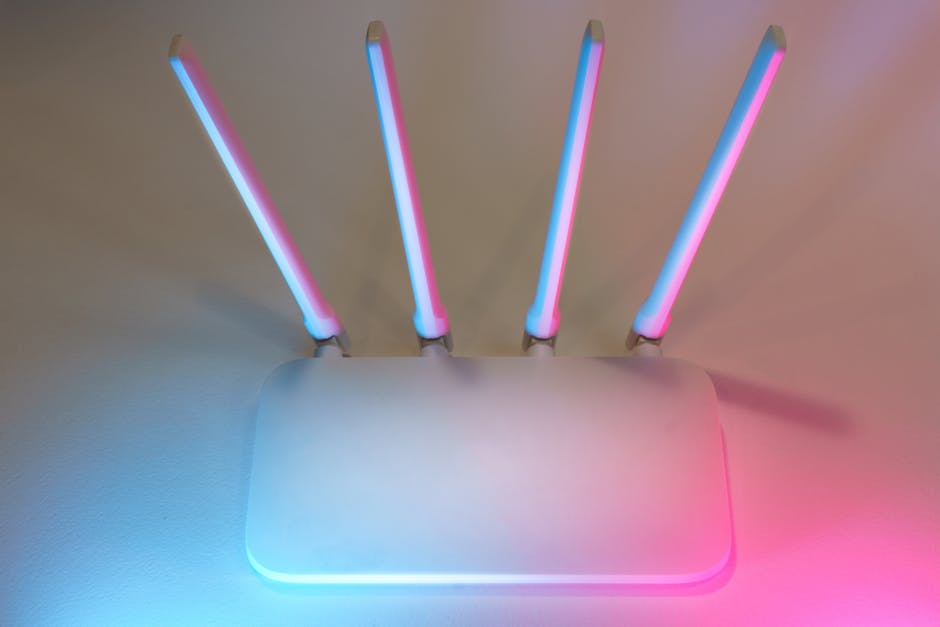
Unleash the Future of Home Connectivity: Boosting Your Wi-Fi Performance with Wi-Fi 7
The ubiquitous nature of Wi-Fi has transformed our homes into interconnected hubs, powering everything from smart thermostats to immersive gaming experiences. However, as our reliance on seamless wireless connectivity grows, so too does the demand on our existing Wi-Fi infrastructure. Lagging downloads, dropped video calls, and the frustration of dead zones are becoming increasingly common. Fortunately, a revolutionary leap forward in wireless technology is here: Wi-Fi 7. This cutting-edge standard promises to redefine home networking, offering unprecedented speeds, reduced latency, and a more robust and reliable connection for all your devices.
Understanding the Wi-Fi 7 Revolution: Beyond Just Speed
While raw speed is a headline-grabbing feature of Wi-Fi 7, its impact extends far beyond simply downloading files faster. Wi-Fi 7, officially known as IEEE 802.11be, builds upon the foundation laid by its predecessors, Wi-Fi 5 (802.11ac) and Wi-Fi 6/6E (802.11ax), introducing a suite of advanced technologies that collectively deliver a significantly superior user experience.
At its core, Wi-Fi 7 introduces Multi-Link Operation (MLO), a game-changing feature that allows devices to connect and transmit data simultaneously across multiple frequency bands (2.4 GHz, 5 GHz, and the newly available 6 GHz band). Imagine having multiple lanes on a highway, allowing traffic to flow more efficiently and avoiding bottlenecks. MLO enables devices to intelligently select the best path for data, dynamically switching between bands to maximize speed and minimize interference. This means smoother streaming, more responsive gaming, and a more stable connection, even in crowded wireless environments.
Another significant advancement is the increased use of wider channels. Wi-Fi 7 supports up to 320 MHz channels in the 6 GHz band, doubling the maximum channel width of Wi-Fi 6/6E. Think of channels as pipes carrying data. Wider pipes can carry more data at once, leading to a substantial increase in theoretical throughput. This translates to download and upload speeds that can rival wired Ethernet connections, making it ideal for bandwidth-intensive applications like 8K video streaming, virtual reality (VR), and augmented reality (AR).
Key Technologies Powering Wi-Fi 7 Performance Gains:
- Multi-Link Operation (MLO): As mentioned, this is the cornerstone of Wi-Fi 7. MLO allows devices to establish multiple links simultaneously across different frequency bands. This can be used in two primary modes:
- Multi-Link Single Radio (MLSR): The device uses a single radio to connect to multiple bands, aggregating their capacity.
- Multi-Link Multi-Radio (MLMR): The device uses multiple radios to connect to multiple bands, further increasing bandwidth and redundancy. This allows for seamless switching between bands based on real-time conditions, ensuring the most optimal connection at any given moment.
- 4096-QAM Modulation (4K-QAM): This advanced modulation scheme packs more data into each transmission signal. By encoding more bits per symbol, 4K-QAM significantly boosts data rates, allowing for a more efficient use of available bandwidth. This is akin to fitting more information into each packet of data, making transmissions faster and more efficient.
- Extended 6 GHz Band Support: Wi-Fi 7 fully leverages the recently opened 6 GHz spectrum, offering a vast, uncongested airspace for wireless communication. This band, previously unused by Wi-Fi, provides a clean slate free from interference from older Wi-Fi devices and other wireless technologies. This dedicated spectrum is crucial for achieving the maximum speeds and lowest latencies promised by Wi-Fi 7.
- Multi-RU (Resource Unit) Puncturing: This feature enhances efficiency in scenarios with interference. If a portion of a wider channel is experiencing interference, Wi-Fi 7 can intelligently “puncture” or bypass that specific segment, allowing the rest of the channel to be used for data transmission. This prevents the entire channel from being rendered unusable, ensuring a more robust and continuous connection even in challenging environments.
- Enhanced OFDMA (Orthogonal Frequency Division Multiple Access): While OFDMA was a key feature of Wi-Fi 6, Wi-Fi 7 refines it further. OFDMA allows a single channel to be divided into smaller sub-channels, enabling a router to communicate with multiple devices simultaneously. Wi-Fi 7’s enhanced OFDMA, coupled with MLO and wider channels, dramatically improves capacity and efficiency, especially in dense network environments.
Translating Technology into Tangible Benefits for Your Home:
The technical advancements of Wi-Fi 7 translate directly into a superior home networking experience. Here’s how you’ll benefit:
- Blazing Fast Speeds: Experience multi-gigabit speeds that make buffering a relic of the past. Download large files in seconds, stream 8K content without interruption, and enjoy incredibly fast uploads for cloud backups and content creation.
- Ultra-Low Latency: For gamers and VR/AR enthusiasts, latency is the enemy. Wi-Fi 7’s advancements significantly reduce delays, providing a more responsive and immersive experience. Say goodbye to lag in online games and choppy VR sessions.
- Unparalleled Capacity: With the explosion of connected devices in our homes, network congestion is a growing concern. Wi-Fi 7’s enhanced OFDMA and MLO capabilities allow your router to efficiently manage a multitude of devices simultaneously, ensuring everyone gets a smooth and stable connection.
- Eliminate Dead Zones and Improve Reliability: MLO’s ability to connect across multiple bands and intelligently switch between them helps to mitigate signal degradation and interference, leading to a more consistent and reliable connection throughout your home.
- Future-Proofing Your Network: As new bandwidth-hungry applications and devices emerge, your Wi-Fi 7 network will be ready to handle the demands, ensuring you don’t need to upgrade your router again for years to come.
Upgrading to Wi-Fi 7: What You Need to Know
To harness the power of Wi-Fi 7, you’ll need compatible hardware. This means investing in a Wi-Fi 7 router and Wi-Fi 7 client devices (laptops, smartphones, tablets, smart TVs, etc.). While the initial investment might seem significant, the long-term benefits in terms of performance, reliability, and future-proofing are substantial.
When choosing a Wi-Fi 7 router, look for reputable brands and models that clearly advertise their Wi-Fi 7 capabilities, including support for MLO, 320 MHz channels, and 4K-QAM. Ensure the router also supports the latest Wi-Fi security protocols like WPA3 for enhanced network protection.
For client devices, newer models are increasingly coming equipped with Wi-Fi 7 support. Keep an eye out for Wi-Fi 7 certification when purchasing new smartphones, laptops, and other wireless-enabled gadgets. Even if not all your devices are Wi-Fi 7 ready, a Wi-Fi 7 router will still offer significant improvements to your existing Wi-Fi 6 and Wi-Fi 5 devices by intelligently managing the network and providing a more robust backhaul.
Optimizing Your Wi-Fi 7 Network for Peak Performance:
Even with the latest hardware, a few best practices can further enhance your Wi-Fi 7 experience:
- Strategic Router Placement: Position your Wi-Fi 7 router in a central location, away from obstructions like thick walls, metal objects, and large appliances that can interfere with signal strength.
- Leverage the 6 GHz Band: Whenever possible, connect your most demanding devices to the 6 GHz band for the fastest speeds and lowest latency. This band is less prone to interference.
- Firmware Updates: Regularly update your Wi-Fi 7 router’s firmware. Manufacturers frequently release updates that optimize performance, patch security vulnerabilities, and introduce new features.
- Mesh Networking for Larger Homes: For very large homes or those with complex layouts, consider a Wi-Fi 7 mesh system. These systems use multiple nodes to create a seamless, whole-home Wi-Fi network, eliminating dead zones and ensuring consistent coverage.
- Minimize Interference: While Wi-Fi 7 is designed to combat interference, reducing the number of other wireless devices operating on similar frequencies can still be beneficial. Consider disabling older Wi-Fi standards on your router if you have exclusively Wi-Fi 6/6E or Wi-Fi 7 devices.
The Future is Wireless, and Wi-Fi 7 is Leading the Charge
Wi-Fi 7 represents a monumental leap forward in wireless networking, promising to transform how we interact with our digital world. By embracing its advanced technologies, homeowners can unlock unprecedented speeds, ultra-low latency, and unparalleled network reliability. As the number of connected devices continues to grow and our demand for bandwidth intensifies, Wi-Fi 7 is not just an upgrade; it’s a necessary evolution for a truly seamless and future-proof home network. Get ready to experience the internet like never before.