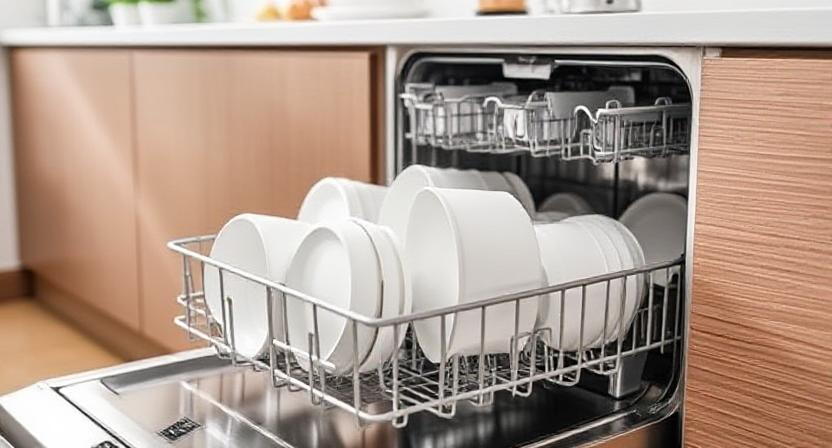
Description: The ultimate guide to automatic dishwashers for Indian homes. Learn about types, features, cost, saving water/time, and making the smart choice.
Reclaiming Time in the Indian Household
The Indian kitchen is the heart of the home—a place of vibrant cooking, large family meals, and, inevitably, mountains of used utensils. For generations, the arduous task of “bartan dhona” (washing dishes) has been an unavoidable, time-consuming ritual, often demanding 30-60 minutes daily. But what if there was a smart, efficient, and surprisingly water-saving solution?
Enter the automatic dishwasher. Once viewed as a luxury suited only for Western homes, this powerful appliance is rapidly transitioning into an essential appliance in modern Indian households. It’s not just about convenience; it’s a profound shift towards better hygiene, significant time-saving, and a modern lifestyle.
This comprehensive guide is meticulously crafted for the Indian consumer. We will demystify the technology, confront common myths (like “it won’t clean Indian greasy utensils” or “it wastes too much water”), and provide you with expert, data-backed insights to confidently choose the perfect automatic dishwasher for your home.
Understanding the Indian Context: Why a Dishwasher is a Necessity, Not a Luxury
The challenges faced by the Indian consumer are unique, demanding a specialized look at the benefits of an automatic dishwasher:
The Utensil Diversity Challenge
From heavy kadhai used for deep-frying pooris to intricate stainless steel thalis and delicate glassware, Indian kitchens use a vast range of materials and shapes. Modern dishwashers are specifically engineered with versatile racks and powerful jets to handle this diversity.
- Stainless Steel: The most common material, which dishwashers clean effectively without tarnishing.
- Ceramics/Bone China: Specialized gentle cycles ensure no chipping or damage.
- Pressure Cookers & Large Pots: Many models now feature dedicated space or adjustable racks to fit these bulky items that are staples of Indian cooking.
Battling Oil and Masala Residue
Indian cuisine is rich in oil, ghee, and strong spices like turmeric and chilli powder. Standard manual washing often leaves a greasy film. Automatic dishwashers utilize high-temperature water (60°C – 70°C or higher in intensive cycles), coupled with specialized detergents, to completely emulsify and wash away tough grease and stubborn masala stains. This level of sanitization is difficult to achieve with manual washing.
The Hidden Cost of Water & Time
A common misconception is that dishwashers waste water.
| Comparison Metric | Manual Washing (Running Tap) | Automatic Dishwasher (Standard Cycle) | Insight for Indian Homes |
| Water Consumption | 60 – 100 Litres per cycle | 9 – 15 Litres per cycle | Up to 90% Less Water used than a continuously running tap method. |
| Time Savings | 30 – 60 Minutes per day | 5 – 10 Minutes loading/unloading | 20+ hours saved monthly. |
Actionable Insight: The water efficiency of a high-quality dishwasher is a significant factor in areas facing water scarcity, making it an environmentally and economically sound investment.
Decoding the Technology: How an Automatic Dishwasher Works
An automatic dishwasher is a marvel of engineering, operating on a simple yet highly effective principle that maximizes hygiene and efficiency.
Key Components and Cycle Flow
- Water Intake: The machine draws a small amount of water, which is then heated by an internal element.
- Detergent Release: At the optimal time, the detergent is released from the dispenser.
- High-Pressure Spray: Powerful jets (from rotating spray arms) force the hot, soapy water onto all surfaces of the dishes. The force and heat break down food particles and grease.
- Drainage: The dirty water, containing the dissolved food and grime, is pumped out.
- Rinsing: Clean, hot water is sprayed to remove any residual soap or food particles.
- Drying: Most modern dishwashers use residual heat (from the hot rinse) for condensation drying, or have an active fan/heat drying feature, ensuring spot-free results—a critical feature for eliminating water spots often seen on stainless steel utensils.
Essential Dishwasher Chemicals
To achieve the best results, three chemicals are typically required:
- Detergent: Available in powder, gel, or tablet form (the most convenient). It contains enzymes that break down starches and proteins.
- Rinse Aid: This crucial liquid lowers the surface tension of the water, preventing droplets from forming and thus eliminating water spots, leading to a perfect, streak-free dry. A must-have for Indian stainless steel utensils.
- Dishwasher Salt (Water Softener): In areas with hard water (very common across India), salt is essential. It regenerates the machine’s internal ion exchanger, preventing limescale buildup on both the appliance and your dishes, ensuring long-term efficiency.
Choosing Your Perfect Automatic Dishwasher: Types and Capacity
This section will delve deep into the various models available in the Indian market, focusing on space, installation, and capacity.
Types of Dishwashers: Fitting Your Kitchen
- Freestanding Dishwashers: (Most popular in India) Easy installation, generally 12-15 place settings.
- Built-in/Integrated Dishwashers: Sleek, seamlessly fits into modular kitchens, often covered by a matching cabinet panel.
- Compact/Countertop Dishwashers: Ideal for bachelors, small apartments, or homes with limited space; usually 6-8 place settings.
- Dishwashers with Half-Load Function: Essential for small families, saving water and power when a full load isn’t ready.
Understanding Capacity: Place Settings Explained
- Detailed table on what constitutes a ‘Place Setting’ in the Indian context (thali, katori, glass, spoons).
- Recommended place settings based on family size (e.g., 12-14 place settings for a family of 4-6).
Essential Features and Cycles for the Indian Consumer
This section will provide actionable advice on what features are non-negotiable for Indian cooking habits.
Must-Have Wash Programs
- Intensive/Kadhai Cycle: For heavy-duty cleaning of greasy pots and pans.
- Express/Quick Wash: For lightly soiled dishes or quick turnover.
- Eco Program: Optimizing water and electricity usage.
- Extra Drying/Hygiene Option: Crucial for sanitization and sparkling stainless steel.
Smart & Utility Features
- Adjustable Racks & Cutlery Basket: Flexibility to fit tall glasses, large kadhai, and pressure cookers.
- Inverter Motor Technology: Silent operation and better energy efficiency (a major purchasing driver).
- Delayed Start: Allows running the dishwasher at night or during off-peak power hours.
Automatic Dishwasher Myths Busted: The Indian Perspective
Addressing the most common fears and misconceptions in the Indian consumer base with data.
Myth 1: “It Wastes Too Much Water”
- Data-backed comparison to manual washing (as mentioned above).
Myth 2: “It Can’t Clean Indian Grease and Masala Stains”
- Expert explanation of high-heat wash and enzyme detergents.
Myth 3: “Only Western Utensils Can Be Washed”
- Real-world examples of stainless steel, brass (pujas utensils), and pressure cooker compatibility (with caveats on non-stick).
Myth 4: “It Uses Too Much Electricity”
- Focus on the BEE star rating and low consumption of modern inverter models.
Installation, Maintenance, and Longevity in Indian Conditions
Providing practical, long-term advice.
Installation Prerequisites
- Water inlet, drain point, and power socket requirements.
Maintenance for Hard Water Areas
- The necessity of using dishwasher salt regularly.
- How to clean the filter and spray arms.
Financial Analysis: Is the Investment Worth It?
A realistic cost-benefit analysis.
Initial Cost vs. Long-Term Savings
- Calculation of savings on domestic help wages (partial offset).
- Cost of detergent/rinse aid/salt per cycle.
- The intrinsic, non-monetary value of saved time and improved hygiene.
Conclusion: Embracing the Automatic Dishwasher Revolution
The Automatic Dishwasher is more than just a convenience; it’s a tool for elevated living, hygiene, and efficiency. By saving water, time, and ensuring superior sanitation, it perfectly complements the fast-paced, modern Indian lifestyle. Choosing the right model, using the correct chemicals (especially rinse aid and salt), and following simple loading rules will unlock its full potential.
The time to transition from tedious manual washing to smart, automated cleaning is now. Reclaim your time and energy for what truly matters, and let the automatic dishwasher handle the daily grind.
Call to Action: Ready to transform your kitchen routine? Research models with the ‘Intensive’ or ‘Kadhai’ cycle feature and check the BEE rating for maximum efficiency!

URJIX™ Ultrasonic Dishwasher Household Mini Portable Countertop Dishwasher White
₹3,933.00 (as of September 19, 2026 23:00 GMT +05:30 - More infoProduct prices and availability are accurate as of the date/time indicated and are subject to change. Any price and availability information displayed on [relevant Amazon Site(s), as applicable] at the time of purchase will apply to the purchase of this product.)
MIDEA 13 Place Setting Freestanding Dishwasher (WQP12-5201F, Silver,7 wash program, Child Lock, Extra Dry & Intensive 70 degree wash, A++ Energy Efficient, Delay Timer, Half Load, Adjustable Basket)
Now retrieving the price.
(as of September 19, 2026 23:00 GMT +05:30 - More infoProduct prices and availability are accurate as of the date/time indicated and are subject to change. Any price and availability information displayed on [relevant Amazon Site(s), as applicable] at the time of purchase will apply to the purchase of this product.)
Godrej Eon Dishwasher | 8 Place Setting Counter-Top | Compact with an In-built heater (DWT EON MGNS 8C NF SKBK, Silky Black) | Perfect for Indian kitchens: Smaller families and Bachelors
Now retrieving the price.
(as of September 19, 2026 23:00 GMT +05:30 - More infoProduct prices and availability are accurate as of the date/time indicated and are subject to change. Any price and availability information displayed on [relevant Amazon Site(s), as applicable] at the time of purchase will apply to the purchase of this product.)
LG 14 Place Settings Dishwasher, TrueSteam, Inverter Direct Drive, Wi-Fi & Free Standing Dishwasher (DFB424FP, Silver, Silent Operation, Tough Stain Removal, Adjustable racks & Clean from Every Angle)
₹54,990.00 (as of September 19, 2026 23:00 GMT +05:30 - More infoProduct prices and availability are accurate as of the date/time indicated and are subject to change. Any price and availability information displayed on [relevant Amazon Site(s), as applicable] at the time of purchase will apply to the purchase of this product.)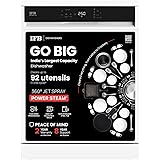
IFB 14 Place Settings (fits up to 80 utensils) with DeepClean® Technology Freestanding Dishwasher (Neptune FX14, White, 70° Hot Water Wash with Hygienic Steam Drying, Perfect for Indian Utensils)
₹42,790.00 (as of September 19, 2026 23:00 GMT +05:30 - More infoProduct prices and availability are accurate as of the date/time indicated and are subject to change. Any price and availability information displayed on [relevant Amazon Site(s), as applicable] at the time of purchase will apply to the purchase of this product.)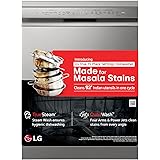
LG 15 Place Setting Dishwasher (fits up to 92* utensils), Cleans Kadhai & Pressure Cooker, TrueSteam, QuadWash, Inverter DD,Wi-Fi & Freestanding Dishwasher with Auto Open Door(DFB435FV, Prime Silver)
₹58,990.00 (as of September 19, 2026 23:00 GMT +05:30 - More infoProduct prices and availability are accurate as of the date/time indicated and are subject to change. Any price and availability information displayed on [relevant Amazon Site(s), as applicable] at the time of purchase will apply to the purchase of this product.)
Faber 14 Place Free Standing Dishwasher|7 Wash Programs| LED Display| Adjustable Racks | Half Load Wash| Child Lock | 2Yr Comprehensive & 10Yr Cavity Warranty |FFSD 7PR 14S BK, Black Finish
₹30,250.00 (as of September 19, 2026 23:00 GMT +05:30 - More infoProduct prices and availability are accurate as of the date/time indicated and are subject to change. Any price and availability information displayed on [relevant Amazon Site(s), as applicable] at the time of purchase will apply to the purchase of this product.)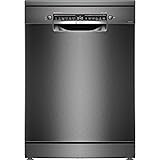
Bosch 15 Place Settings Series-6 free-standing Dishwasher 60 cm Brushed black steel anti-fingerprint with Wi-Fi,Heat exchanger, (SMS6HMC00I, Black Steel)
₹62,900.00 (as of September 19, 2026 23:00 GMT +05:30 - More infoProduct prices and availability are accurate as of the date/time indicated and are subject to change. Any price and availability information displayed on [relevant Amazon Site(s), as applicable] at the time of purchase will apply to the purchase of this product.)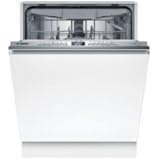
Bosch SMV6HMX01I Series 6 Fully Integrated Built-In Dishwasher, 15 Place Settings, Wi-Fi Enabled, Heat Exchanger Drying, Intensive Zone
₹72,230.00 (as of September 19, 2026 23:00 GMT +05:30 - More infoProduct prices and availability are accurate as of the date/time indicated and are subject to change. Any price and availability information displayed on [relevant Amazon Site(s), as applicable] at the time of purchase will apply to the purchase of this product.)
Voltas Beko 14 Place Setting Dishwasher, AquaFlex, AquaIntense (DF14S2,Silver), Free 1 Year Extended warranty
₹28,950.00 (as of September 19, 2026 23:00 GMT +05:30 - More infoProduct prices and availability are accurate as of the date/time indicated and are subject to change. Any price and availability information displayed on [relevant Amazon Site(s), as applicable] at the time of purchase will apply to the purchase of this product.)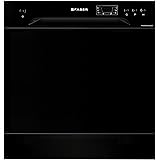
Faber 8 Place Dishwasher | 6 Wash Programs |Adjustable Upper Rack & Cutlery Tray | 8L Water/Cycle | Suitable for Oil & Masala Stains | 2Yr Warranty & 5Yr On Cavity | FFSD 6PR 8S Ace
₹24,990.00 (as of September 19, 2026 23:00 GMT +05:30 - More infoProduct prices and availability are accurate as of the date/time indicated and are subject to change. Any price and availability information displayed on [relevant Amazon Site(s), as applicable] at the time of purchase will apply to the purchase of this product.)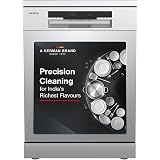
Hafele Aqua Chrome Dishwasher |13 Place Settings |Upto 70 Utensils |Designed for Indian Kitchens |Free-Standing |Hygienic & High-Performance Cleaning |Premium Stainless Steel Finish |5-Year Warranty
₹38,999.00 (as of September 19, 2026 23:00 GMT +05:30 - More infoProduct prices and availability are accurate as of the date/time indicated and are subject to change. Any price and availability information displayed on [relevant Amazon Site(s), as applicable] at the time of purchase will apply to the purchase of this product.)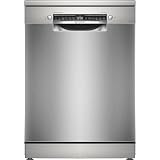
Bosch 15 Place Setting (Fits up to 80 utensils) Free Standing Dishwasher for Indian Utensils | Intensive Kadhai Program for Pressure Cooker, Home Connect (SMS6HMI01I, Silver Inox, Inbuilt Heater)
₹64,990.00 (as of September 19, 2026 23:00 GMT +05:30 - More infoProduct prices and availability are accurate as of the date/time indicated and are subject to change. Any price and availability information displayed on [relevant Amazon Site(s), as applicable] at the time of purchase will apply to the purchase of this product.)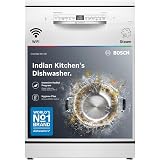
Bosch 14 Place Setting Free Standing Dishwasher for Indian Utensils, WiFi Enabled, Intensive Kadhai Program, Inbuilt Heater, Fits Up to 80 Utensils, White (SMS6IKW01I)
₹45,000.00 (as of September 19, 2026 23:00 GMT +05:30 - More infoProduct prices and availability are accurate as of the date/time indicated and are subject to change. Any price and availability information displayed on [relevant Amazon Site(s), as applicable] at the time of purchase will apply to the purchase of this product.)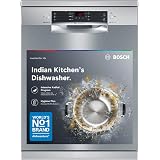
Bosch 15 Place Setting (fits up to 80 utensils) Free-Standing Dishwasher for Indian Utensils | Hygiene+ & Intensive Kadhai Program (SMS46KI03I, Inbuilt Heater, Removes 99.9% Germs, Silver Inox)
₹59,990.00 (as of September 19, 2026 23:00 GMT +05:30 - More infoProduct prices and availability are accurate as of the date/time indicated and are subject to change. Any price and availability information displayed on [relevant Amazon Site(s), as applicable] at the time of purchase will apply to the purchase of this product.)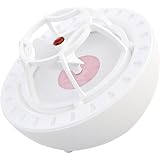
ZOOMELLA Portable Sink Ultrasonic Cleaner Dishwasher USB Auto Washing Red Home & Garden|Major Appliances|Dishwashers
₹3,879.00 (as of September 19, 2026 23:00 GMT +05:30 - More infoProduct prices and availability are accurate as of the date/time indicated and are subject to change. Any price and availability information displayed on [relevant Amazon Site(s), as applicable] at the time of purchase will apply to the purchase of this product.)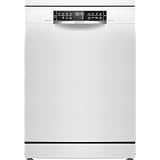
Bosch Series 6 15 Place Settings Free Standing Dishwasher | WiFi Enabled with Home Connect | PerfectDry Technology | 60 cm | Multiple Wash Programs | White | SMS6ZCW37Q
₹1,09,990.00 (as of September 19, 2026 23:00 GMT +05:30 - More infoProduct prices and availability are accurate as of the date/time indicated and are subject to change. Any price and availability information displayed on [relevant Amazon Site(s), as applicable] at the time of purchase will apply to the purchase of this product.)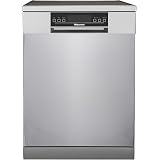
Hisense 15 Place Settings Dishwasher (H15DSS, Silver,Stainless Steel, Inbuilt Heater,Quick Wash)
₹32,590.00 (as of September 19, 2026 23:00 GMT +05:30 - More infoProduct prices and availability are accurate as of the date/time indicated and are subject to change. Any price and availability information displayed on [relevant Amazon Site(s), as applicable] at the time of purchase will apply to the purchase of this product.)
CLUB BOLLYWOOD®Portable Sink Ultrasonic Cleaner Dishwasher USB Auto Washing Red|Home & Garden | Major Appliances |1 Piece Ultrasonic Dishwasher
₹3,763.00 (as of September 19, 2026 23:00 GMT +05:30 - More infoProduct prices and availability are accurate as of the date/time indicated and are subject to change. Any price and availability information displayed on [relevant Amazon Site(s), as applicable] at the time of purchase will apply to the purchase of this product.)