
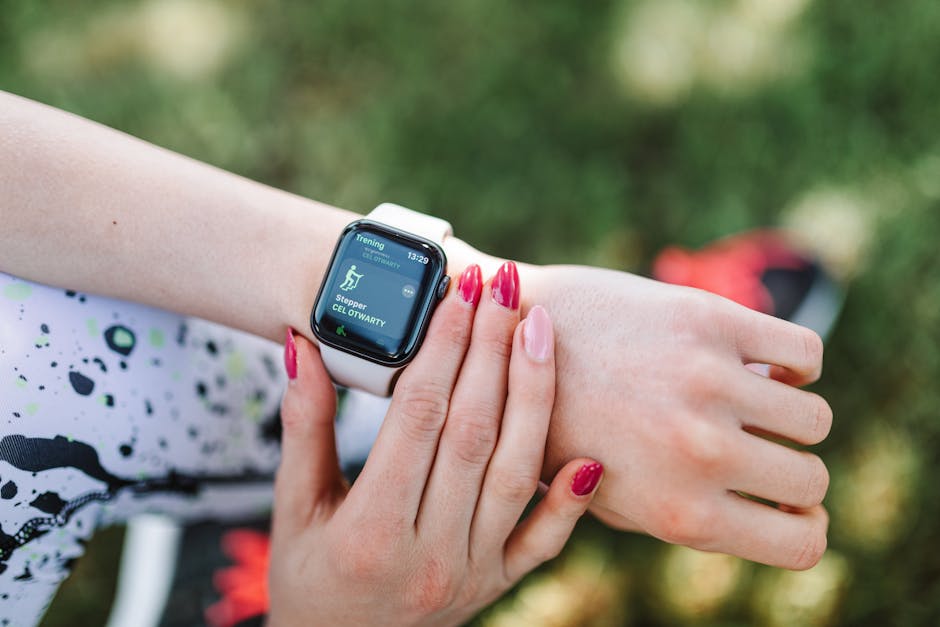
Decoding the Digital Wrist: Essential Features for Your Smart Sports Watch
The modern athlete, whether a weekend warrior or a seasoned competitor, is increasingly reliant on technology to optimize performance, track progress, and stay connected. At the forefront of this technological revolution is the smart sports watch, a multifaceted device that transcends mere timekeeping to become a personal coach, health monitor, and communication hub. Navigating the vast array of features available can be daunting. This comprehensive guide dissects the crucial functionalities to consider when selecting the perfect smart sports watch, ensuring your investment empowers your fitness journey.
1. Precision Tracking: The Foundation of Smart Sports Watches
At its core, a smart sports watch excels at accurately capturing your physical activity. This begins with robust GPS tracking. For runners, cyclists, and outdoor enthusiasts, accurate distance, pace, and route mapping are paramount. Look for watches with multi-band GPS (e.g., GPS, GLONASS, Galileo, BeiDou) for superior accuracy, especially in challenging environments like dense forests or urban canyons. Heart rate monitoring is another non-negotiable feature. Optical heart rate sensors are standard, but their accuracy can vary. For serious athletes demanding clinical-grade precision, consider watches offering ECG (electrocardiogram) capabilities or even chest strap compatibility for the most reliable data.
Beyond these fundamentals, delve into activity-specific metrics. For runners, this includes stride length, cadence, vertical oscillation, and ground contact time, offering insights into running form and efficiency. Swimmers will appreciate features like stroke detection, SWOLF scores, and pool length recognition. Cyclists benefit from advanced metrics like power meter compatibility, cadence, and speed sensors. Strength training enthusiasts may find value in automatic rep counting and exercise recognition, though accuracy can be a mixed bag.
2. Health and Wellness Beyond the Workout
The evolution of smart sports watches has seen them transform into comprehensive health companions. Sleep tracking is now a standard, analyzing sleep stages (light, deep, REM), duration, and interruptions to provide a sleep score and actionable advice for improvement. Blood oxygen saturation (SpO2) monitoring is gaining prominence, offering insights into respiratory health and acclimatization to altitude. Stress tracking, often derived from heart rate variability (HRV) data, helps users understand their daily stress levels and implement relaxation techniques.
Body battery or recovery advisor features are invaluable for preventing overtraining. These algorithms analyze your activity, sleep, and HRV to estimate your body’s energy reserves and recommend optimal rest periods. For women, menstrual cycle tracking offers a discreet and integrated way to monitor hormonal fluctuations and their impact on training and well-being. Fall detection, a life-saving feature, is increasingly being integrated, automatically alerting emergency contacts if a hard fall is detected.
3. Smart Connectivity and Convenience
The “smart” in smart sports watch unlocks a world of convenience. Smartphone notifications are a given, allowing you to discreetly view calls, texts, emails, and app alerts without pulling out your phone. Music storage and playback are a game-changer for solo workouts, enabling you to leave your phone at home. Look for watches with ample storage capacity and compatibility with popular streaming services.
Contactless payments (e.g., Garmin Pay, Google Pay, Apple Pay) offer a streamlined way to make purchases on the go, eliminating the need for wallets during runs or rides. Voice assistants (e.g., Google Assistant, Alexa) provide hands-free control for setting timers, checking weather, or sending quick messages. App ecosystems are crucial; a robust app store allows you to download third-party applications for specialized training plans, advanced analytics, or integration with other fitness platforms.
4. Durability and Design: Built for the Grind
A sports watch is an investment that needs to withstand the rigors of an active lifestyle. Water resistance is essential, with ratings varying from splash-proof to full submersion. For swimmers and triathletes, a 5 ATM or 10 ATM rating is recommended. Build materials play a significant role in durability. Look for robust cases made from materials like reinforced polymer, stainless steel, or titanium. Scratch-resistant displays, such as Corning Gorilla Glass or sapphire crystal, are crucial for maintaining clarity and aesthetics.
Display type and brightness are critical for outdoor visibility. AMOLED displays offer vibrant colors and deep blacks but can consume more battery. Transflective displays excel in direct sunlight, offering excellent readability with minimal power draw. Consider the size and comfort of the watch. A bulky watch can be cumbersome during intense workouts, while a too-small display can be difficult to read. Interchangeable watch bands offer personalization and allow you to switch between rugged sports bands and more stylish options.
5. Battery Life: Powering Your Adventures
A smart sports watch is only useful if it has power. Battery life is a paramount consideration, especially for endurance athletes or those embarking on multi-day adventures. Manufacturers often provide battery life estimates for various usage scenarios, including smartwatch mode, GPS mode, and ultra-trac GPS mode. Look for watches that offer at least a week of battery life in smartwatch mode and several hours of continuous GPS tracking. Solar charging capabilities, offered by some high-end models, can significantly extend battery life by harnessing sunlight.
6. Advanced Training and Performance Metrics
For serious athletes, advanced training features can provide a competitive edge. Training load and recovery analysis help prevent overtraining and optimize performance by quantifying the intensity and duration of your workouts. VO2 Max estimation provides a benchmark of your cardiovascular fitness, allowing you to track improvements over time. Running power, a relatively new metric, measures the actual effort you’re expending while running, offering a more objective measure of performance than pace alone.
Training effect provides feedback on the physiological impact of your workouts, helping you understand whether you’re building aerobic or anaerobic capacity. Race predictor features can estimate your potential finish times for various distances based on your current fitness level. PacePro™ technology (Garmin) or similar features offer dynamic pacing guidance for race day, adapting to your planned strategy and the course profile.
7. Navigation and Mapping: Explore with Confidence
For adventurers and those who venture off the beaten path, robust navigation features are indispensable. Topographic maps offer detailed terrain information, contour lines, and points of interest, allowing for safe and informed exploration. Breadcrumb trails allow you to retrace your steps, a crucial safety feature in unfamiliar territory. Turn-by-turn navigation provides on-screen directions for routes, akin to a car GPS. Back-to-start functionality ensures you can always find your way back to your starting point.
8. User Interface and Ecosystem Integration
The best smart sports watch is one you’ll actually use. A user-friendly interface with intuitive controls and a clear display is essential. Companion apps are critical for syncing data, analyzing trends, and customizing watch settings. Look for apps that are well-designed, offer comprehensive data visualization, and integrate seamlessly with other popular fitness platforms like Strava, TrainingPeaks, or Apple Health. Customizable watch faces allow for personalization, displaying the metrics most important to you at a glance.
9. Specific Sport Profiles and Customization
The ideal smart sports watch should cater to your primary athletic pursuits. Look for a wide range of pre-loaded sport profiles that accurately track the metrics relevant to your activities. The ability to customize these profiles with specific data fields and alerts is a significant advantage. For example, a runner might want to see pace, heart rate, and elapsed time prominently displayed, while a hiker might prioritize elevation, distance, and bearing.
10. Price and Value Proposition
Smart sports watches span a wide price range, from budget-friendly options to premium devices with advanced features. Determine your budget and prioritize the features that are most important to your fitness goals. Consider the long-term value of a device. A more expensive watch with superior durability, advanced features, and a robust ecosystem might offer better long-term value than a cheaper alternative that needs frequent replacement or lacks essential functionality. Reading reviews and comparing specifications across different brands and models is crucial to making an informed decision.