
Unveiling the Invisible Threat: Understanding UV Rays and How Sunglasses Offer Essential Protection
The sun, a life-giving celestial body, bathes our planet in light and warmth. Yet, beneath its comforting glow lies an invisible electromagnetic radiation with the potential to cause significant harm: ultraviolet (UV) rays. Understanding these rays, their different types, and their impact on our eyes is crucial for safeguarding our vision. Fortunately, a simple yet effective tool exists to mitigate this risk: sunglasses. This article delves deep into the science of UV radiation, its detrimental effects on ocular health, and the sophisticated mechanisms by which sunglasses provide indispensable protection.
UV radiation exists on a spectrum, categorized into three primary types based on wavelength: UVA, UVB, and UVC. UVC rays, with the shortest wavelength, are almost entirely absorbed by the Earth’s ozone layer and pose no significant threat to us. However, UVA and UVB rays penetrate the atmosphere and reach our planet’s surface, impacting our skin and eyes in profound ways.
UVA Rays: The Deeper Penetrator
UVA rays possess longer wavelengths, allowing them to penetrate deeper into the skin and, importantly, into the eye’s deeper structures. They account for approximately 95% of all UV radiation reaching the Earth’s surface. While not as intensely burning as UVB, UVA’s cumulative effects are significant. They are present throughout daylight hours, regardless of cloud cover, and can even penetrate glass, meaning exposure can occur indoors or while driving. In the eye, UVA rays contribute to photoaging of the ocular tissues, leading to conditions like pterygium (a fleshy growth on the conjunctiva) and pinguecula (a yellowish deposit on the conjunctiva). More critically, UVA radiation is strongly implicated in the development of cataracts, a clouding of the eye’s natural lens that impairs vision. It also plays a role in macular degeneration, a leading cause of irreversible vision loss in older adults.
UVB Rays: The Burner and Blocker
UVB rays have shorter wavelengths than UVA and are primarily responsible for sunburn on the skin. They are more intense between 10 am and 4 pm, especially during summer months and at higher altitudes or closer to the equator. While largely absorbed by the cornea and lens, UVB rays can still cause significant damage to the eye’s surface. Acute exposure to high levels of UVB can result in photokeratitis, often referred to as “snow blindness” or “welder’s flash.” This painful condition causes inflammation of the cornea, characterized by redness, tearing, light sensitivity, and a gritty sensation. Chronic exposure to UVB also contributes to the development of cataracts and can exacerbate existing eye conditions.
The Cumulative Impact on Ocular Health
The damage inflicted by UV rays is often cumulative, meaning it builds up over a lifetime of exposure. This makes consistent, lifelong protection paramount. Children are particularly vulnerable as their eyes have clearer lenses, allowing more UV radiation to reach the retina. Their outdoor playtime, often without adequate eye protection, puts them at a higher risk for developing UV-related eye problems later in life.
Sunglasses: Your Ocular Shield
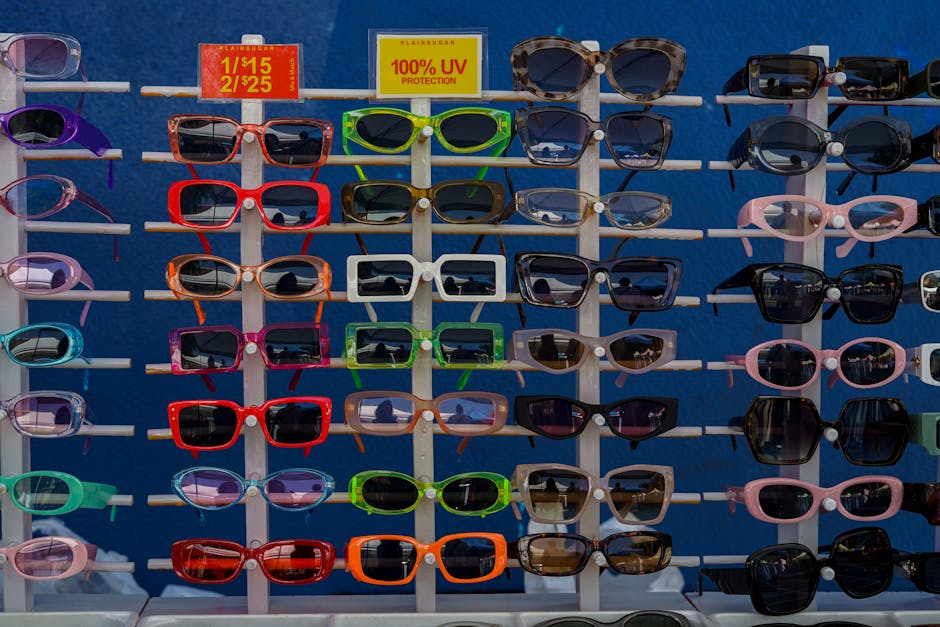
Sunglasses are not merely a fashion accessory; they are essential protective eyewear. The effectiveness of sunglasses in blocking UV radiation is determined by their ability to absorb these harmful wavelengths. This protective capability is not dictated by the tint or darkness of the lenses, but rather by the specific UV-blocking treatment applied during manufacturing.
Key Features of Protective Sunglasses:
-
UV 400 Protection: This is the most crucial indicator of effective UV protection. Lenses labeled “UV 400” block all UV rays with wavelengths up to 400 nanometers. This encompasses both UVA and UVB rays, offering comprehensive protection. If a label is absent, it’s best to inquire with the retailer or assume they offer minimal protection.
-
Lens Material and Coatings: While the base lens material can offer some inherent UV absorption, special coatings are typically applied to achieve UV 400 protection. These coatings are transparent and do not affect the visual clarity or color perception of the lenses.
-
Coverage and Fit: The design of the sunglasses plays a vital role in their protective efficacy. Wraparound styles or those with wider frames offer superior coverage, minimizing UV rays from entering the eyes from the sides, top, or bottom. A snug fit that rests close to the face is ideal.
-
Polarization: While polarization primarily reduces glare from reflective surfaces like water, snow, and asphalt, it does not inherently block UV rays. Polarized lenses can be combined with UV protection, offering both glare reduction and UV shielding. It’s important to ensure polarized sunglasses also carry the UV 400 label for complete protection.
-
Lens Tint and Color: The tint and color of sunglass lenses affect how much visible light is absorbed, influencing comfort and visual perception in different lighting conditions. Darker tints reduce brightness, while lighter tints are suitable for overcast days. However, the tint’s darkness is unrelated to its UV-blocking capability. A light-tinted lens can offer 100% UV protection, and a very dark lens can offer none if not properly treated. Common lens colors include:
- Gray: Reduces brightness without distorting color perception, making them versatile for most conditions.
- Brown/Amber: Enhances contrast and depth perception, useful for driving and sports.
- Green: Offers good contrast and color accuracy, similar to gray lenses.
- Yellow/Orange: Significantly enhances contrast in low-light conditions, ideal for overcast or foggy weather.
Beyond UV Protection: Additional Benefits of Sunglasses
While UV protection is their primary function, sunglasses offer other valuable benefits:
-
Reduced Glare: Glare from sunlight can cause discomfort, eye strain, and temporary vision impairment, particularly when driving or engaging in outdoor activities. Polarized lenses are particularly effective at reducing this bothersome glare.
-
Protection from Debris: Sunglasses act as a physical barrier, shielding the eyes from windblown dust, sand, and other airborne particles that can cause irritation and injury.
-
Comfort in Bright Light: They significantly reduce the intensity of visible light, making bright conditions more comfortable and preventing squinting, which can lead to headaches.
Choosing the Right Sunglasses
When selecting sunglasses, prioritize the “UV 400” label above all else. Consider your lifestyle and intended use. For general everyday wear, versatile gray or brown lenses are excellent choices. If you participate in water sports or snow activities, polarized lenses with UV protection are highly recommended. For prolonged outdoor activities in intense sunlight, wraparound styles offer the best coverage.
Investing in a quality pair of sunglasses that offer UV 400 protection is a simple yet profoundly impactful step towards safeguarding your long-term vision. By understanding the invisible threat of UV rays and the protective capabilities of well-chosen sunglasses, you empower yourself to enjoy the sun’s brilliance with confidence and clarity.