
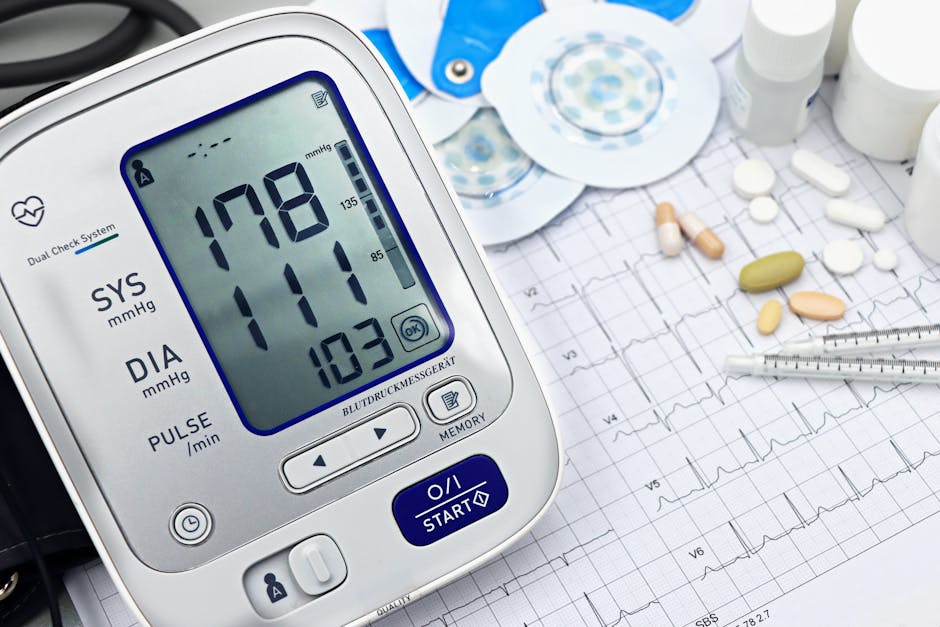
Revolutionary Smartwatches: Blood Pressure Monitoring on Your Wrist
The humble wristwatch has undergone a remarkable evolution. Once solely a timekeeping device, it has transformed into a powerful personal computer, a health tracker, and now, a groundbreaking medical instrument. The latest frontier in wearable technology is the integration of accurate, on-demand blood pressure (BP) monitoring directly on your wrist. This technological leap promises to democratize health management, empowering individuals with unprecedented insights into their cardiovascular well-being and potentially revolutionizing early disease detection and management.
For decades, blood pressure monitoring has been confined to clinical settings or required bulky, cuff-based devices. This accessibility barrier has often led to missed diagnoses, delayed treatment, and a general lack of consistent data for individuals, particularly those with hypertension or at risk. Revolutionary smartwatches are dismantling these barriers, offering a seamless and discreet solution that integrates vital health data into daily life.
The technology behind wrist-based blood pressure monitoring is complex and has been the subject of intense research and development. Unlike traditional cuff-based sphygmomanometers that rely on occluding an artery and detecting pressure changes, smartwatches employ sophisticated optical and electrical sensors. One prominent approach utilizes photoplethysmography (PPG) sensors, commonly found in existing smartwatches for heart rate tracking. PPG works by shining light into the skin and measuring the absorption and reflection of that light as blood flows through the capillaries. As the heart beats, blood volume in the arteries fluctuates, causing changes in light absorption. By analyzing these subtle fluctuations, algorithms can infer changes in blood volume and, consequently, blood pressure.
Another innovative method involves bioimpedance. This technique passes a small, imperceptible electrical current through the user’s body. Different tissues and fluids have varying electrical resistance. As blood pressure changes, the volume of blood in the arteries fluctuates, altering the electrical impedance detected by the sensors. By precisely measuring these impedance changes, alongside other physiological data like heart rate and potentially even arterial stiffness, advanced algorithms can estimate systolic and diastolic blood pressure.
The journey to accurate wrist-based BP monitoring has not been without its challenges. Achieving medical-grade accuracy without a physical cuff has been a significant hurdle. Factors such as skin elasticity, hydration levels, ambient temperature, and even the user’s movement can influence sensor readings. Therefore, manufacturers have invested heavily in developing sophisticated algorithms that can filter out noise, account for individual physiological variations, and calibrate readings against traditional methods. Many of these smartwatches require an initial calibration process, where users take their blood pressure with a traditional cuff and input the readings into the smartwatch app. This calibration allows the device to learn the user’s unique physiological profile and refine its future estimations.
The implications of this technology are far-reaching. For individuals diagnosed with hypertension, these smartwatches offer a powerful tool for continuous monitoring. Instead of relying on infrequent clinic visits or manual logging, users can track their BP throughout the day, during different activities, and under varying stress levels. This granular data provides invaluable insights for both the patient and their physician, enabling more personalized and effective treatment plans. For instance, if a patient notices a consistent spike in BP during specific work-related situations, they can proactively implement stress-management techniques or discuss potential medication adjustments with their doctor.
Beyond diagnosed hypertension, these devices hold immense potential for early detection and prevention. Many individuals are unaware they have high blood pressure, a condition often referred to as the “silent killer” due to its asymptomatic nature. By providing accessible and frequent BP readings, smartwatches can flag potential issues early, prompting users to seek medical attention before serious complications arise. This proactive approach could significantly reduce the incidence of strokes, heart attacks, and kidney disease, saving countless lives and reducing healthcare burdens.
The convenience factor is undeniable. Gone are the days of needing a dedicated appointment or fumbling with a bulky cuff. A quick glance at your wrist provides immediate feedback, empowering you to make informed decisions about your lifestyle. Imagine being able to check your BP before a strenuous workout, after a stressful meeting, or even before a meal, allowing you to understand how various factors influence your cardiovascular health.
Furthermore, the integration of BP monitoring into smartwatches opens up new avenues for remote patient monitoring. Healthcare providers can gain access to real-time or near-real-time BP data from their patients, enabling them to remotely manage chronic conditions, adjust treatment plans, and intervene promptly if readings fall outside of acceptable ranges. This is particularly beneficial for elderly patients, those with mobility issues, or individuals living in remote areas.
The development process for these revolutionary devices involves rigorous clinical trials and validation against established medical standards. Regulatory bodies like the U.S. Food and Drug Administration (FDA) are actively involved in evaluating the accuracy and safety of these medical-grade smartwatches. Obtaining clearance from these agencies is a testament to the technological advancements and the commitment to delivering reliable health data. Early models have already received such approvals in various markets, signaling a significant shift in the landscape of personal health monitoring.
Looking ahead, the potential for further innovation is vast. Future iterations of these smartwatches may incorporate even more advanced sensors to measure other vital cardiovascular parameters, such as pulse wave velocity (a measure of arterial stiffness), electrocardiogram (ECG) readings for heart rhythm analysis, and even blood oxygen saturation. The convergence of these diverse data streams within a single wearable device will offer a comprehensive picture of cardiovascular health, enabling even more precise diagnostics and personalized interventions.
The ethical considerations surrounding the collection and use of such sensitive health data are also paramount. Robust data privacy and security measures are essential to protect user information. Transparency about how data is collected, stored, and utilized is crucial for building trust and ensuring widespread adoption. Users must have control over their data and be informed about its potential uses.
The advent of blood pressure monitoring on smartwatches represents a paradigm shift in how we approach cardiovascular health. It moves from reactive treatment to proactive management, from clinical isolation to everyday empowerment. This technology is not merely a gadget; it is a powerful tool that democratizes health, fosters early detection, and ultimately, has the potential to save lives. As research continues and technology advances, we can anticipate even more sophisticated and integrated health monitoring capabilities becoming readily available on our wrists, ushering in a new era of personalized and preventative healthcare. The smartwatch is no longer just a fashion statement; it is rapidly becoming an indispensable partner in our journey towards a healthier future.