
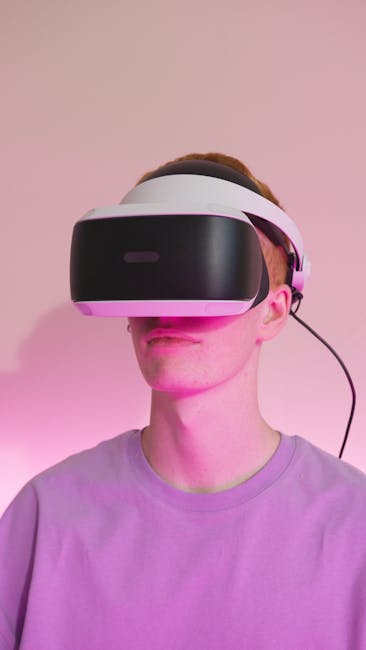
Untethered Freedom: Wireless VR Headsets Revolutionizing Gaming
The dream of truly immersive virtual reality, free from the constraints of cables, has long been a tantalizing prospect for gamers. For years, the most powerful VR experiences were tethered to high-end PCs, limiting movement and introducing a tangible barrier between the player and the virtual world. However, the advent and rapid evolution of wireless VR headsets have shattered these limitations, ushering in an era of untethered freedom and transforming the gaming landscape. This shift is not merely a convenience; it’s a fundamental enhancement of the VR experience, unlocking new levels of immersion, accessibility, and gameplay potential.
The Limitations of Wired VR: A Tangible Barrier
Before delving into the liberation offered by wireless technology, it’s crucial to understand the drawbacks of its wired predecessors. The primary and most significant limitation was the physical cable connecting the headset to a powerful PC. This cable, while necessary for data and power transfer, imposed several restrictions:
- Restricted Movement: Gamers were constantly aware of the cable’s presence, carefully navigating their play space to avoid tripping or entanglement. This physical constraint directly hindered the naturalistic movements that VR promises, such as ducking behind cover, reaching for objects, or performing sweeping turns. The fear of yanking the cable or damaging equipment was a constant, albeit often subconscious, deterrent to full immersion.
- Setup Complexity: Setting up a wired VR system often involved numerous connections, sensor placement (for older systems), and software configurations. This initial hurdle could be intimidating for newcomers to the VR ecosystem, acting as a barrier to entry.
- Reduced Realism: The very act of feeling a cable tugging on your head or seeing it snake across your floor breaks the illusion of being truly present in the virtual environment. It’s a constant reminder of the physical reality outside the game, detracting from the suspension of disbelief.
- Limited Play Space: The length of the cable dictated the maximum safe play area. For more expansive games or experiences requiring significant physical activity, this limitation was particularly frustrating.
The Dawn of Wireless: Untethered Immersion Takes Flight
Wireless VR headsets have systematically addressed these limitations, offering a paradigm shift in how we interact with virtual worlds. This technological leap is characterized by several key advancements:
- Standalone Power and Processing: The most significant innovation is the integration of powerful processors and batteries directly into the headset itself. This eliminates the need for an external PC for core functionality, allowing for self-contained operation. Devices like the Meta Quest series exemplify this, boasting impressive onboard processing power capable of running a vast library of games and applications without any external tether.
- Wireless Data Transmission: Advanced wireless protocols, such as Wi-Fi 6 and specialized low-latency wireless technologies, enable seamless streaming of high-resolution video and audio data from a PC to the headset, or between the headset and its internal storage. This high-bandwidth, low-latency communication is critical for maintaining a smooth and responsive VR experience, minimizing motion sickness and maximizing realism.
- Inside-Out Tracking: Modern wireless headsets predominantly utilize inside-out tracking, employing cameras mounted on the headset itself to map the surrounding environment and track the user’s position and movement. This eliminates the need for external base stations or sensors, further simplifying setup and enhancing freedom of movement. The headset becomes its own tracking system, allowing for truly uninhibited exploration.
Key Wireless VR Headsets and Their Impact
The market for wireless VR is rapidly expanding, with several prominent players pushing the boundaries of what’s possible:
- Meta Quest Series (Quest 2, Quest 3): The Meta Quest line has arguably been the most influential in popularizing standalone wireless VR. The Quest 2, in particular, offered an exceptional balance of performance, affordability, and accessibility, bringing VR to a mainstream audience. The Quest 3 builds upon this legacy with enhanced processing power, improved optics, and a more comfortable design, further solidifying its position as a leading wireless VR platform. Its extensive library of standalone games and the ability to stream PC VR titles wirelessly via Air Link or Virtual Desktop provide unparalleled versatility.
- Pico Neo Series: Pico has emerged as a strong competitor, particularly in international markets, offering compelling standalone wireless VR headsets with robust performance and a growing content library. Their focus on enterprise solutions also hints at the broader applications of untethered VR.
- Upcoming and Niche Offerings: The landscape is constantly evolving with new players and specialized devices. While not purely standalone, some PC VR headsets are exploring wireless adapters or integrated wireless solutions, offering a hybrid approach for users with existing PC VR setups who desire greater freedom.
The Gaming Revolution: How Wireless VR Enhances Gameplay
The transition to wireless VR has profound implications for the gaming experience, fundamentally altering how we play and interact with virtual worlds:
- Unprecedented Immersion: The absence of a cable is a game-changer for immersion. Gamers can instinctively dodge, duck, lean, and physically move in response to in-game events without the constant mental calculation of cable management. This allows for more natural and intuitive gameplay, leading to a deeper sense of presence and engagement. Imagine physically ducking behind a virtual wall in a shooter or truly feeling the recoil of a weapon as you step aside.
- Enhanced Physicality and Fitness: Wireless VR opens the door for more physically demanding games. Experiences like Beat Saber, Supernatural, or Thrill of the Fight become far more engaging and effective workouts when you’re not worried about tripping over a cable. This increased physicality can lead to more dynamic and exhilarating gameplay.
- Expanded Gameplay Possibilities: Developers are now designing games with the freedom of wireless VR in mind. This includes experiences that leverage room-scale tracking more extensively, allowing for larger play areas and more complex interactions. Games can now incorporate more intricate physical puzzles, expansive exploration, and dynamic combat scenarios that were previously impractical or impossible with wired setups.
- Increased Accessibility: The simplified setup and standalone nature of many wireless VR headsets make them far more accessible to a wider audience. The barrier to entry is significantly lowered, allowing more people to experience the magic of virtual reality gaming without needing a powerful PC or extensive technical knowledge.
- Social VR Reimagined: Wireless VR enhances social VR experiences by allowing for more natural and uninhibited interactions. Players can move around each other, gesture more freely, and engage in physical activities together in virtual spaces, fostering a more connected and lively social environment.
Challenges and the Road Ahead
Despite the incredible advancements, the wireless VR gaming experience is not without its challenges:
- Battery Life: While improving, battery life remains a consideration for extended gaming sessions. Users often need to manage charging cycles or have backup solutions for longer playtimes.
- Processing Power Limitations: Standalone headsets, while powerful, still have limitations compared to high-end gaming PCs. This can affect graphical fidelity and the complexity of simulations in some demanding titles. However, the ability to stream PC VR wirelessly mitigates this for many users.
- Thermal Management: Packing powerful components into a compact headset can lead to heat generation, which can impact performance and comfort over time.
- Cost: While prices have become more accessible, high-end wireless VR headsets still represent a significant investment.
The future of wireless VR gaming is incredibly bright. Continued advancements in processing power, battery technology, wireless transmission efficiency, and display resolution will only further enhance the untethered experience. We can anticipate even more sophisticated tracking systems, lighter and more comfortable designs, and a wider array of content specifically tailored for the unique advantages of wireless freedom. The ongoing evolution of this technology promises to make virtual reality gaming not just a niche hobby but a mainstream form of entertainment, offering unparalleled immersion and boundless possibilities for exploration and interaction. The era of untethered freedom in VR gaming has truly arrived, and its impact will only continue to grow.