
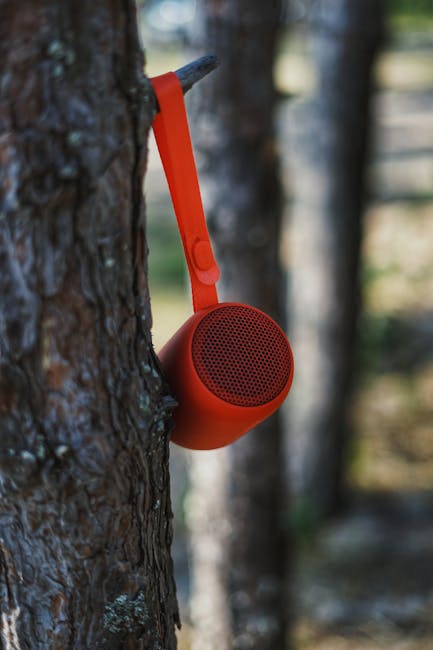
Hear the Difference: Bluetooth Speakers with Exceptional Bass
The visceral thrill of a deep, resonant bassline can elevate any musical experience, transforming a casual listen into an immersive journey. For audiophiles and casual listeners alike, the quest for Bluetooth speakers that deliver truly exceptional bass is a persistent one. While portability and convenience are hallmarks of Bluetooth technology, the ability to reproduce low-frequency sounds with power, clarity, and definition is often the deciding factor in speaker selection. This article delves into the nuances of exceptional bass in Bluetooth speakers, exploring the technology, design considerations, and key features that contribute to a bass-forward listening experience.
Understanding what constitutes “exceptional bass” is crucial. It’s not merely about loudness, but about the quality of the low frequencies. This includes:
- Depth: The ability to reproduce the lowest audible frequencies with a sense of physical presence.
- Punch: The impact and percussive quality of bass notes, making them feel alive and dynamic.
- Clarity: The ability to distinguish individual bass notes without muddiness or distortion, even at higher volumes.
- Extension: The range of bass frequencies the speaker can accurately reproduce.
Several factors contribute to a Bluetooth speaker’s ability to achieve exceptional bass. Driver size and type are paramount. Larger drivers, particularly woofers, have more surface area to move air, which is essential for generating low frequencies. Materials also play a role; rigid yet lightweight materials like reinforced paper cones, carbon fiber, or specialized polymers can improve responsiveness and reduce unwanted resonance. Some speakers employ passive radiators, which are essentially unpowered speaker cones that vibrate in response to the air pressure generated by the active woofer. This clever design amplifies bass output without requiring a larger, more power-hungry active driver, often leading to a more compact yet bass-rich speaker.
Cabinet design and construction are equally important. A well-braced, rigid enclosure minimizes cabinet resonance, preventing the speaker’s own structure from interfering with the sound reproduction and muddying the bass. Materials like dense MDF (medium-density fiberboard) or even aluminum can contribute to a more solid foundation for bass. The internal volume of the cabinet also affects bass response; larger volumes generally allow for deeper bass extension. Acoustic porting, where a carefully designed opening in the cabinet allows air to escape and reinforce bass frequencies, is another common technique to enhance low-end performance.
Amplification and digital signal processing (DSP) are the brains behind the brawn. Powerful amplifiers are needed to drive larger drivers and produce satisfying bass levels. More sophisticated DSP algorithms can actively shape the speaker’s frequency response, boosting bass frequencies, controlling distortion, and ensuring a balanced sound profile even at different volume levels. Advanced DSP can also adapt to the speaker’s environment, optimizing bass output for different room acoustics.
When evaluating Bluetooth speakers for their bass capabilities, look for specific features and specifications. Frequency response charts, while often presented in marketing materials, can offer a general idea of a speaker’s low-end capabilities. A speaker with a lower minimum frequency listed indicates better bass extension. However, it’s crucial to remember that these charts don’t always tell the whole story, and listening tests are invaluable.
Brand reputation and user reviews are also excellent indicators. Certain brands have built a reputation for delivering robust bass in their portable audio offerings. Likewise, user feedback often highlights the bass performance, with enthusiasts frequently discussing the speaker’s ability to deliver a satisfying low-end punch.
Consider the intended use case. If you prioritize deep, room-filling bass for parties or outdoor gatherings, you’ll likely be looking for larger, more powerful speakers with robust driver configurations. For more personal listening, a more compact speaker with well-tuned passive radiators might suffice.
Several Bluetooth speakers consistently stand out for their exceptional bass performance. The JBL Charge series, for instance, is renowned for its surprisingly potent bass for its size, often attributed to its dual passive radiators and well-engineered acoustics. The Sony SRS-XB line (Extra Bass) is explicitly designed to emphasize low frequencies, often employing dedicated bass-boosting technologies and larger drivers. Brands like Bose also offer models with a rich and defined bass, though sometimes with a slightly more refined and less overtly boomy approach. For those seeking truly sub-woofer-like performance in a portable package, some higher-end offerings from brands like Bowers & Wilkins or Bang & Olufsen might incorporate more advanced driver technologies and larger enclosures, though at a premium price point.
When making your selection, don’t underestimate the power of stereo pairing. Many modern Bluetooth speakers allow you to link two identical units to create a true stereo soundstage. This not only widens the sound image but can also significantly enhance the perceived bass, as each speaker contributes to the overall low-frequency output.
Ultimately, the best Bluetooth speaker for exceptional bass is a subjective choice, influenced by personal preference and listening habits. However, by understanding the underlying technology, key design elements, and specific features to look for, consumers can navigate the vast market and find a speaker that delivers the low-end impact they crave, truly allowing them to hear the difference.