
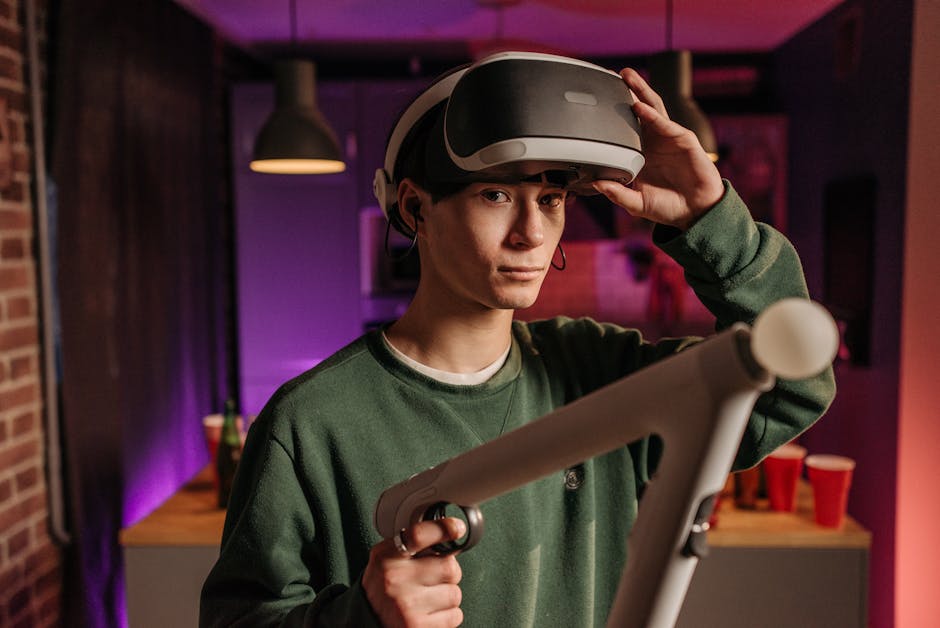
Immerse Yourself Without Breaking the Bank: Budget-Friendly VR Headsets That Deliver Maximum Fun
Virtual reality (VR) technology, once confined to high-end gaming rigs and exorbitant price tags, is now more accessible than ever. The dream of stepping into another world, experiencing breathtaking landscapes, and engaging in thrilling adventures is no longer a luxury reserved for a select few. Numerous budget-friendly VR headsets have emerged, challenging the notion that affordable means compromising on quality and enjoyment. This article delves into the top contenders in the affordable VR space, showcasing how they deliver immersive experiences and unadulterated fun without demanding a king’s ransom.
The key to unlocking affordable VR fun lies in understanding what truly matters for an enjoyable experience. While cutting-edge specs like ultra-high refresh rates and resolutions are appealing, many budget headsets offer a surprisingly robust feature set that prioritizes core immersion. This includes decent display quality, comfortable ergonomics, intuitive tracking, and a healthy library of accessible games and applications. The focus shifts from bleeding-edge fidelity to delivering a compelling and engaging virtual environment that captivates the user.
One of the undeniable champions in the budget VR arena is the Meta Quest 2. While no longer the absolute cheapest option, its enduring popularity and frequent price drops make it a perennial favorite. The Quest 2 is a standalone device, meaning it doesn’t require a powerful PC or external sensors to operate. This self-contained nature significantly lowers the barrier to entry. Its 1832×1920 resolution per eye, coupled with a 90Hz refresh rate (and experimental 120Hz), provides sharp visuals and smooth motion, crucial for preventing motion sickness and enhancing immersion. The inside-out tracking, utilizing cameras on the headset to monitor your position and controllers, is remarkably accurate for its price point, allowing for freedom of movement within your play space. The Quest 2’s expansive library of games and apps, accessible through the Meta Quest Store, is its strongest asset. From blockbuster titles like “Beat Saber” and “Superhot VR” to social experiences and educational apps, there’s an endless well of entertainment. Furthermore, its ability to connect to a PC via Oculus Link (or Air Link wirelessly) opens up the vast world of PC VR titles, effectively doubling its content potential. The comfort has been improved with aftermarket accessories, and the controllers are ergonomic and responsive, contributing to a seamless interaction with virtual worlds.
For those seeking an even more budget-conscious entry point, the PICO Neo 3 Link presents a compelling alternative, particularly if PC VR is your primary interest. While it can function as a standalone device, its strength lies in its PC VR capabilities. It offers a respectable 1832×1920 per eye resolution and a 90Hz refresh rate, providing a visually pleasing experience. The Neo 3 Link utilizes inside-out tracking, offering good positional accuracy for PC VR gaming. Its primary advantage for budget-conscious PC VR enthusiasts is its often more aggressive pricing compared to other PC VR-capable headsets. The setup is straightforward, and it integrates well with SteamVR, granting access to a massive library of PC VR games. While its standalone library might not be as extensive as the Quest 2’s, for users who already own a gaming PC and are looking for an affordable way to dive into PC VR without investing in a premium headset, the PICO Neo 3 Link is an excellent choice. The controllers are functional and provide a good tactile feel, further enhancing the gaming experience.
Beyond the established players, exploring slightly older but still capable headsets can unlock incredible value. The original Meta Quest (now often available at significantly reduced prices on the used market) can still offer a fun VR experience. While its resolution and refresh rate are lower than the Quest 2, it still provides a fully standalone VR experience with a decent library of games. For casual VR enthusiasts or those on a very tight budget who want to dip their toes into VR without a significant financial commitment, the original Quest remains a viable option. The tracking is still functional, and the core VR immersion is present. It’s important to note that the standalone software support might be less robust over time compared to newer models, but the existing library is still substantial enough for many hours of enjoyment.
Another avenue for budget-friendly VR involves leveraging existing technology. Smartphone-based VR headsets, such as the Google Cardboard (though largely superseded by more advanced options) and various third-party enclosures like the Samsung Gear VR (discontinued but widely available used) or the Homido Grab, offer an entry point into VR for pennies on the dollar. These headsets utilize the processing power and display of your smartphone. While the visual fidelity and tracking capabilities are inherently limited by the smartphone’s hardware, they provide a surprisingly engaging experience for certain types of content. Simple 360-degree videos, basic VR games, and educational apps can be incredibly immersive when viewed through these devices. The key here is managing expectations; these are not comparable to dedicated VR headsets, but for casual exploration and experiencing introductory VR content, they are exceptionally affordable. The simplicity of these headsets makes them ideal for younger users or those simply curious about VR.
When considering budget VR, it’s crucial to look beyond the initial price tag and factor in the overall value. This includes the availability and cost of games and applications. Standalone headsets like the Quest 2 often have a curated store with a mix of free and paid content, while PC VR headsets rely on platforms like Steam, which frequently offers sales and bundles. The ease of use and setup also plays a significant role in the overall fun factor. Headsets that are quick to set up and require minimal technical expertise are more likely to be used and enjoyed.
Comfort is another often-overlooked aspect of budget VR. While premium headsets might offer advanced padding and ventilation, many budget options have made significant strides in ergonomics. Adjustable straps, balanced weight distribution, and breathable face interfaces contribute to longer and more enjoyable VR sessions. Investing in aftermarket accessories like comfort straps or facial interfaces can further enhance the experience without breaking the bank.
The evolution of VR technology has democratized the immersive experience. The days of VR being an exclusive club are long gone. With careful consideration of your needs and budget, you can easily find a VR headset that provides hours of exhilarating fun, transporting you to new worlds and offering unique forms of entertainment without a prohibitive cost. The budget VR market is a testament to innovation and accessibility, proving that you don’t need to spend a fortune to experience the magic of virtual reality.