
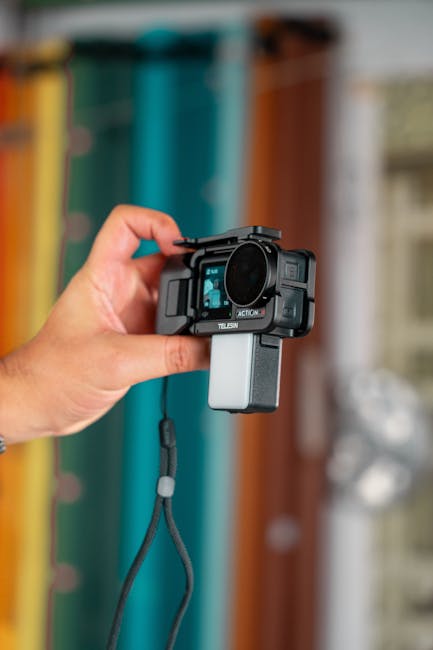
Action Camera Guide: Capture Every Thrill
The world is a playground, and with the right action camera, every exhilarating moment can be preserved with stunning clarity. From scaling mountain peaks to conquering ocean depths, action cameras are engineered to withstand extreme conditions and capture dynamic footage that static cameras simply cannot. This guide will equip you with the knowledge to choose, use, and master your action camera, ensuring no thrill goes unrecorded.
Understanding the Core of Action Cameras
Action cameras are characterized by their ruggedness, compact size, and wide-angle lenses. This potent combination allows them to be mounted virtually anywhere – on helmets, handlebars, surfboards, drones, and even your own body – to provide an immersive perspective of your adventures. Key features to consider include image stabilization, waterproof capabilities, resolution and frame rate, battery life, and connectivity options.
Choosing Your Perfect Companion: Key Features to Prioritize
When embarking on your action camera quest, several critical specifications will dictate your recording experience.
- Image Stabilization: This is paramount for smooth, watchable footage, especially during high-motion activities. Look for Electronic Image Stabilization (EIS) or Optical Image Stabilization (OIS). EIS digitally corrects shakiness, while OIS physically compensates for movement. The more advanced the stabilization, the less nauseating your footage will be.
- Resolution and Frame Rate: Higher resolutions (4K, 5.7K) offer incredible detail and the ability to crop in post-production without significant quality loss. Frame rates (60fps, 120fps, 240fps) are crucial for capturing smooth slow-motion. For instance, 120fps at 1080p allows for a 4x slow-motion effect when played back at 30fps.
- Waterproofing: Many action cameras are inherently waterproof to a certain depth, but others require an external housing. Understand the depth rating and whether it meets your aquatic aspirations. For serious diving, a dedicated underwater housing is essential.
- Field of View (FOV): Action cameras typically boast ultra-wide lenses, capturing a vast scene. Common FOV options include wide, super-wide, and narrow. A wider FOV immerses the viewer in the action, while a narrower FOV can reduce distortion and focus on specific subjects.
- Durability and Build Quality: These cameras are designed for abuse. Look for robust construction, scratch-resistant lenses, and solid mounting points. Some models offer shockproof and dustproof ratings in addition to waterproofing.
- Battery Life: Action-packed days demand robust battery performance. Consider the camera’s advertised battery life for continuous recording at your desired resolution and frame rate. Carrying spare batteries or a portable power bank is always a wise precaution.
- Connectivity and App Integration: Wi-Fi and Bluetooth enable seamless file transfer to your smartphone or tablet, allowing for quick edits and social media sharing. Companion apps often offer remote control functionality, live preview, and advanced settings adjustments.
- Audio Quality: While often overlooked, good audio can significantly enhance your footage. Look for cameras with multiple microphones and noise reduction capabilities. External microphone support is a bonus for professional-level audio capture.
Mounting and Accessories: Unleash Your Creative Potential
The true magic of action cameras lies in their versatility, unlocked by a vast array of mounting solutions and accessories.
- Helmet Mounts: Essential for cyclists, skiers, snowboarders, and motorcyclists, these provide a first-person perspective. Chin mounts offer a unique, immersive view, while top mounts are more traditional.
- Chest Mounts: Ideal for activities where you need your hands free and want to capture your torso and immediate surroundings, such as hiking, kayaking, or climbing.
- Handlebar/Pole Mounts: Perfect for bikes, scooters, or even for extending your reach to capture unique angles.
- Suction Cup Mounts: Allow you to attach your camera to smooth, non-porous surfaces like car windows or kayaks.
- Adhesive Mounts: Versatile and strong, these can be applied to helmets, boards, or any clean surface.
- Floating Hand Grips: Crucial for water sports to prevent your camera from sinking and to offer a stable, comfortable grip.
- Diving Housings: For exploring the underwater world beyond the camera’s native depth rating, these provide essential protection.
- External Microphones: If audio is a priority, an external mic can dramatically improve clarity and reduce wind noise.
- Battery Packs and Chargers: Extend your recording time and ensure you’re never caught with a dead battery.
Mastering the Settings: Optimizing Your Footage
Understanding your camera’s settings is key to capturing the best possible footage for your specific activity.
- Resolution and Frame Rate: As discussed, match these to your intended use. For cinematic shots with potential for slow-motion, higher frame rates are a must. For general vlogging or static shots, a lower frame rate at a higher resolution might suffice.
- Field of View (FOV): Experiment with different FOV settings to find what best suits your activity. A wider FOV captures more of the environment, while a narrower FOV can feel more focused.
- Exposure and White Balance: Most action cameras offer automatic settings, but manual control can be beneficial. For bright, sunny days, consider slightly underexposing to preserve highlight detail. For changing light conditions, auto white balance is usually reliable.
- ISO: This controls light sensitivity. Higher ISO values allow for shooting in low light but can introduce digital noise. Keep ISO as low as possible for the best image quality.
- Color Profiles: Some cameras offer different color profiles (e.g., Flat, Vivid). Flat profiles retain more dynamic range, allowing for greater flexibility in post-production color grading.
- Protune/Pro Settings: If your camera offers advanced settings like Protune, explore them. These often provide access to manual controls for shutter speed, aperture, and color, enabling professional-level adjustments.
Essential Shooting Techniques for Dynamic Content
Beyond the technical settings, specific shooting techniques will elevate your action camera footage from amateur to awe-inspiring.
- Smooth Panning: When following a subject or sweeping across a landscape, a smooth, controlled pan is crucial. Practice with your mounts to achieve fluid motion.
- Rule of Thirds: Even with wide-angle lenses, applying the rule of thirds can improve composition. Place your subject off-center to create a more dynamic and engaging image.
- Leading Lines: Utilize natural lines within your environment – roads, rivers, fences – to draw the viewer’s eye into the scene and create a sense of depth.
- Vary Your Angles: Don’t just shoot from one perspective. Experiment with low angles, high angles, and dynamic shots that follow the action.
- Capture the Environment: Don’t solely focus on the action. Include shots of the surrounding landscape to provide context and immersion.
- Embrace the POV: The inherent nature of action cameras is to provide a point-of-view shot. Lean into this and capture the raw, unadulterated experience.
- Slow Motion Mastery: Use slow motion strategically to highlight key moments of action, impact, or beauty. Don’t overdo it; a few well-placed slow-motion clips can be more impactful than an entire video in slow-mo.
- Time-Lapse and Hyperlapse: These techniques are excellent for showcasing the passage of time, such as sunsets, cloud formations, or the progression of a journey. Hyperlapse adds movement to a time-lapse by repositioning the camera between shots.
Post-Production: Bringing Your Adventures to Life
The raw footage from your action camera is just the beginning. Post-production is where you transform those clips into a captivating story.
- Editing Software: Numerous options exist, from free mobile apps like CapCut and InShot to professional desktop software like Adobe Premiere Pro, Final Cut Pro, and DaVinci Resolve.
- Color Correction and Grading: Enhance the mood and visual appeal of your footage. Adjust brightness, contrast, saturation, and apply creative color grades to evoke specific emotions.
- Stabilization (in post): Even with in-camera stabilization, further stabilization in editing can often improve the final result.
- Audio Enhancement: Clean up background noise, adjust audio levels, and add music to enhance the emotional impact of your video.
- Adding Music and Sound Effects: Music sets the tone, while sound effects add realism and punch.
- Transitions and Effects: Use transitions sparingly and effectively to move between clips. Avoid overusing flashy effects that can detract from your content.
- Export Settings: Choose export settings that balance quality and file size for your intended platform (e.g., YouTube, Instagram).
Maintenance and Care: Ensuring Longevity
To keep your action camera performing at its peak, proper maintenance is essential.
- Cleaning: Regularly clean the lens with a microfiber cloth to remove smudges and debris. For underwater use, rinse the camera in fresh water after exposure to saltwater or chlorine.
- Battery Care: Avoid extreme temperatures, which can degrade battery life. Store batteries fully charged or partially charged, depending on the manufacturer’s recommendations.
- Firmware Updates: Keep your camera’s firmware updated. Manufacturers often release updates that improve performance, fix bugs, and add new features.
- Storage: Store your camera in a protective case when not in use to prevent damage from drops