The world of action cameras is a vibrant ecosystem, teeming with devices designed to capture life’s most exhilarating moments. Whether you’re scaling mountains, diving into the ocean’s depths, or simply chasing your kids around the park, the right action camera can transform fleeting experiences into vivid, shareable memories. But with a plethora of options, each boasting a unique set of features and price points, navigating this landscape can feel daunting. This comprehensive guide will equip you with the knowledge to make an informed decision, ensuring you choose the perfect action camera to match your adventures.
Understanding Your Needs: The Cornerstone of Your Decision
Before diving into specifications, the most crucial step is to honestly assess your intended use. Are you a professional filmmaker seeking cinematic quality, or a casual user documenting family vacations?
- Extreme Sports Enthusiast: If your activities involve high impact, rapid movement, and challenging environments (skiing, snowboarding, mountain biking, surfing, motocross), you’ll prioritize ruggedness, superior stabilization, and high frame rates for slow-motion playback. Water resistance and dustproofing are non-negotiable.
- Traveler/Vlogger: For documenting journeys, creating travel vlogs, or capturing everyday life, versatility is key. Look for excellent image quality in various lighting conditions, good audio recording capabilities, a user-friendly interface, and perhaps a front-facing screen for selfie-style recording. Battery life becomes more significant for extended travel days.
- Outdoor Adventurer (Hiking, Camping): Durability, battery life, and ease of use are paramount. While not necessarily requiring the absolute highest frame rates, good image quality and a wide field of view are beneficial for capturing expansive landscapes.
- Undersea Explorer: Waterproofing is the absolute priority. Consider depth ratings and the availability of underwater housing or built-in waterproofing. Image quality in low light conditions underwater is also a critical factor.
- Budget-Conscious User: If your budget is a primary concern, focus on core functionalities. Many entry-level action cameras offer excellent value, capturing good quality footage without the premium price tag of top-tier models.
Key Features to Consider: Deconstructing the Tech
Once you have a clear understanding of your needs, you can start evaluating the technical specifications that differentiate action cameras.
1. Image Sensor and Resolution:
The image sensor is the heart of any camera, and its size and type significantly impact image quality.
- Resolution (Pixels): Measured in megapixels (MP), higher resolution generally means more detail. For action cameras, common resolutions range from 1080p (Full HD) to 4K and even 8K. While 4K is becoming the standard for its clarity and ability to crop in post-production, 1080p is still perfectly adequate for many uses and offers smaller file sizes.
- Sensor Size: Larger sensors generally perform better in low light and produce images with a wider dynamic range (the ability to capture detail in both bright and dark areas). However, most action cameras utilize smaller sensors to maintain their compact form factor.
2. Video Capabilities: Frame Rates and Codecs
This is where action cameras truly shine, enabling smooth, dynamic footage.
- Frame Rate (fps – Frames Per Second): This determines how smooth your video appears.
- 24/30fps: Standard for most cinematic content and general viewing.
- 60fps: Provides smoother motion, ideal for capturing fast-paced action and allowing for 2x slow-motion when played back at 30fps.
- 120fps/240fps: Essential for dramatic slow-motion effects. Capturing at 120fps and playing back at 30fps results in 4x slow-motion.
- Resolution at High Frame Rates: A crucial consideration is the resolution at which a camera can record at higher frame rates. Some cameras may drop to 1080p or lower when shooting at 120fps or 240fps.
- Video Codecs: These determine how video data is compressed. H.264 is common, while H.265 (HEVC) offers better compression, resulting in smaller file sizes with comparable quality, but requires more processing power to edit.
3. Image Stabilization: The Key to Smooth Footage
This is arguably the most critical feature for action cameras, combating the inherent shake and vibration of dynamic activities.
- Electronic Image Stabilization (EIS): Software-based stabilization that crops into the image to counteract movement. Most modern action cameras feature advanced EIS.
- Optical Image Stabilization (OIS): Physical movement of the lens or sensor to stabilize the image. Less common in action cameras due to their compact nature.
- Gimbal Stabilization: External gimbals provide the smoothest possible footage but add bulk and cost. Some cameras integrate gimbal-like stabilization through advanced EIS.
- HyperSmooth (GoPro), RockSteady (DJI), FlowState (Insta360): These are proprietary names for advanced EIS systems, each with varying degrees of effectiveness. Look for reviews specifically testing stabilization in your intended use case.
4. Field of View (FOV): Capturing the Wider Picture
Action cameras are renowned for their wide-angle lenses, allowing you to capture more of the scene.
- Ultra-Wide: Captures an expansive view, ideal for dramatic landscapes and immersive first-person perspectives. Can sometimes lead to distortion.
- Wide: A good balance between capturing a broad scene and minimizing distortion.
- Narrow: Offers a more traditional perspective, similar to a smartphone.
- Adjustable FOV: Many cameras allow you to switch between different FOV settings.
5. Durability and Waterproofing: Built for the Elements
This is a defining characteristic of action cameras.
- Ruggedness: Look for cameras with reinforced bodies, scratch-resistant screens, and shock absorption.
- Waterproofing:
- IP Ratings: A common standard. IPX7 means the device can be submerged in up to 1 meter of water for 30 minutes. IPX8 allows for deeper submersion.
- Depth Rating: For diving, check the specific depth rating of the camera or its required underwater housing.
- Waterproof Housing: Many cameras come with or offer optional waterproof housings for enhanced protection and deeper submersion.
6. Battery Life: Powering Your Adventures
Action cameras can be power-hungry, especially when recording at high resolutions and frame rates.
- Battery Capacity: Measured in milliampere-hours (mAh), a higher number generally indicates longer recording times.
- Removable vs. Built-in Batteries: Removable batteries offer the flexibility to swap them out for extended recording sessions, while built-in batteries are often more integrated into the camera’s design.
- Charging Options: Consider USB-C charging for faster and more convenient charging.
7. Audio Quality: Capturing the Sound of the Action
While often an afterthought, good audio can significantly enhance your footage.
- Built-in Microphones: Most action cameras have multiple microphones to capture ambient sound.
- External Microphone Support: For professional-quality audio, look for cameras that support external microphones via a 3.5mm jack or USB adapter.
- Wind Noise Reduction: Many cameras have built-in algorithms to mitigate wind noise.
8. Connectivity and Storage:
- Wi-Fi and Bluetooth: Essential for wirelessly connecting to your smartphone for control, live preview, and file transfer.
- GPS: Some cameras offer GPS tagging to record your location data.
- Storage: Action cameras use microSD cards. Ensure you have a fast and reliable card (UHS-I or UHS-II recommended for 4K recording). Check the maximum supported card size.
9. User Interface and Ease of Use:
- Touchscreen: A responsive touchscreen can greatly simplify navigation and settings adjustments.
- Physical Buttons: Some users prefer physical buttons for tactile feedback, especially in gloves or wet conditions.
- Companion App: A well-designed and intuitive mobile app is crucial for controlling the camera remotely and managing your footage.
Top Action Camera Brands and Their Strengths:
- GoPro: The undisputed leader, known for its robust features, excellent image quality, superior stabilization, and vast ecosystem of accessories. Their HERO series consistently sets the benchmark.
- DJI: A strong contender, particularly with their Osmo Action line, offering impressive stabilization, good image quality, and often a more competitive price point.
- Insta360: A pioneer in 360-degree cameras, they also offer excellent single-lens action cameras with innovative features like invisible selfie sticks and advanced editing capabilities.
- Akaso/Crosstour/Campark: These brands offer budget-friendly alternatives that provide good core functionality for casual users or those on a tighter budget.
Accessories: Enhancing Your Action Camera Experience
No action camera is complete without the right accessories.
- Mounts: Chest mounts, head mounts, handlebar mounts, suction cup mounts, adhesive mounts – the options are endless and crucial for capturing unique perspectives.
- Batteries: Extra batteries are a must for extended shooting.
- Chargers: Dual battery chargers can save you time.
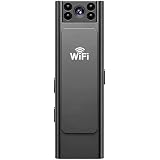
Drumstone (𝐄𝐱𝐥𝐮𝐬𝐢𝐯𝐞 𝟐𝟎 𝐘𝐞𝐚𝐫𝐬 𝐰𝐚𝐫𝐫𝐚𝐧𝐭𝐲 1080P HD Portable Body Camera with Night Vision, Waterproof Design, Long Battery Life, Rotating Clip, Compact Wearable Action Cam
Now retrieving the price.
(as of September 27, 2026 05:37 GMT +05:30 - More infoProduct prices and availability are accurate as of the date/time indicated and are subject to change. Any price and availability information displayed on [relevant Amazon Site(s), as applicable] at the time of purchase will apply to the purchase of this product.)
Qubo Smart Cam 360° by Hero Group [2026 Edition]| 3MP Ultra 2K Display | Color Night Vision | 360° Panoramic Monitoring | 2-Way Talk | AI Person Detection | microSD & Cloud Support (Pack of 2)
₹5,690.00 (as of September 27, 2026 05:37 GMT +05:30 - More infoProduct prices and availability are accurate as of the date/time indicated and are subject to change. Any price and availability information displayed on [relevant Amazon Site(s), as applicable] at the time of purchase will apply to the purchase of this product.)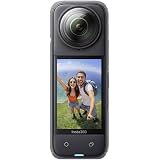
Insta360 X4-8K Waterproof 360 Optical Zoom Action Camera, 4K Wide-Angle Video, Removable Lens Guards, 135 Min Battery Life, Ai Editing, Stabilization, for Sports, Travel, Outdoor, Black
₹35,991.00 (as of September 27, 2026 05:37 GMT +05:30 - More infoProduct prices and availability are accurate as of the date/time indicated and are subject to change. Any price and availability information displayed on [relevant Amazon Site(s), as applicable] at the time of purchase will apply to the purchase of this product.)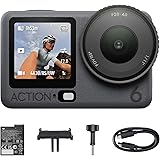
DJI Osmo Action 6 Standard Combo, 8K Waterproof Action Camera | 1/1.1" Square Sensor, Variable Aperture of f/2.0–f/4.0, Rocksteady 3.0, Cold-Resistant, 4hrs Battery, 50GB Storage
₹44,990.00 (as of September 27, 2026 05:37 GMT +05:30 - More infoProduct prices and availability are accurate as of the date/time indicated and are subject to change. Any price and availability information displayed on [relevant Amazon Site(s), as applicable] at the time of purchase will apply to the purchase of this product.)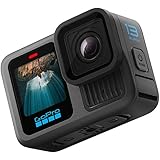
GoPro HERO13 Black - Waterproof Action Camera with 5.3K60 Video, 27MP Photo + Compatability with HB-Series Lenses(1-Yr International+1-Yr India Warranty)
₹37,990.00 (as of September 27, 2026 05:37 GMT +05:30 - More infoProduct prices and availability are accurate as of the date/time indicated and are subject to change. Any price and availability information displayed on [relevant Amazon Site(s), as applicable] at the time of purchase will apply to the purchase of this product.)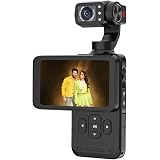
Handheld Action Camera with AI Face Tracking, 3.5” Rotating Screen, 48MP Sensor, Wi-Fi, Night Vision & External Mic Support
Now retrieving the price.
(as of September 27, 2026 05:37 GMT +05:30 - More infoProduct prices and availability are accurate as of the date/time indicated and are subject to change. Any price and availability information displayed on [relevant Amazon Site(s), as applicable] at the time of purchase will apply to the purchase of this product.)
AUSHA 4K Smart Vlog Camera with 330° AI Face Tracking | Handheld Gimbal Stabilizer, WiFi Connectivity, 1.72” Touchscreen, 2400mAh Battery for YouTube, Reels & Live Streaming
₹9,499.00 (as of September 27, 2026 05:37 GMT +05:30 - More infoProduct prices and availability are accurate as of the date/time indicated and are subject to change. Any price and availability information displayed on [relevant Amazon Site(s), as applicable] at the time of purchase will apply to the purchase of this product.)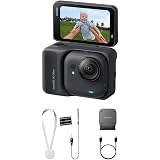
Insta360 GO Ultra - Small 4K Vlogging Camera, Hands-Free, POV Cam, 1/1.28" Sensor, 53g Lightweight, 156° FOV, 200 Min Battery Life, Magnetic Wearable Action Camera for Sports, Vlog,Midnight Black
₹54,990.00 (as of September 27, 2026 05:37 GMT +05:30 - More infoProduct prices and availability are accurate as of the date/time indicated and are subject to change. Any price and availability information displayed on [relevant Amazon Site(s), as applicable] at the time of purchase will apply to the purchase of this product.)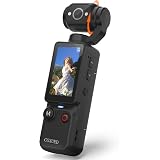
W & O Vlogging Camera with 180° Rotating Lens, Pocket Body Camera with Audio & Video Recording, 7-Hour Battery, Handheld POV Cameras with 32GB Card, Easy One-Button Recording for Travel,Daily Life
₹4,999.00 (as of September 27, 2026 05:37 GMT +05:30 - More infoProduct prices and availability are accurate as of the date/time indicated and are subject to change. Any price and availability information displayed on [relevant Amazon Site(s), as applicable] at the time of purchase will apply to the purchase of this product.)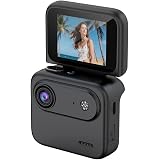
DkianY360 Digital Vlogging Camera 1080P | 2.0" Reversible Flip Screen | 143° Wide Angle Lens | Anti-Shake Stabilization | Universal Mount for Reels, YouTube & Content Creation
₹2,999.00 (as of September 27, 2026 05:37 GMT +05:30 - More infoProduct prices and availability are accurate as of the date/time indicated and are subject to change. Any price and availability information displayed on [relevant Amazon Site(s), as applicable] at the time of purchase will apply to the purchase of this product.)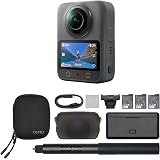
DJI Osmo 360 Adventure Combo, 360 Action Camera | 1-Inch 360° Imaging, Extended Battery Life With 3 Batteries, Native 8K 360° Video, 4K/120fps & 170° Boost Video
₹54,990.00 (as of September 27, 2026 05:37 GMT +05:30 - More infoProduct prices and availability are accurate as of the date/time indicated and are subject to change. Any price and availability information displayed on [relevant Amazon Site(s), as applicable] at the time of purchase will apply to the purchase of this product.)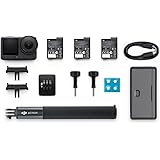
DJI Osmo Action 6 Adventure Combo | 4K Action Camera with 1/1.1" Square Sensor, Variable Aperture of f/2.0–f/4.0, Cold-Resistant, 4hrs Battery, Action Camera
₹54,890.00 (as of September 27, 2026 05:37 GMT +05:30 - More infoProduct prices and availability are accurate as of the date/time indicated and are subject to change. Any price and availability information displayed on [relevant Amazon Site(s), as applicable] at the time of purchase will apply to the purchase of this product.)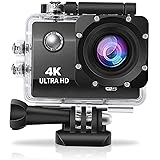
4K 30FPS Action Camera Ultra HD Underwater Camera 170 Degree Wide Angle 98FT Waterproof Camera (Glossy Black)
₹1,699.00 (as of September 27, 2026 05:37 GMT +05:30 - More infoProduct prices and availability are accurate as of the date/time indicated and are subject to change. Any price and availability information displayed on [relevant Amazon Site(s), as applicable] at the time of purchase will apply to the purchase of this product.)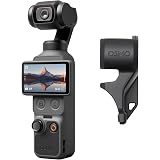
DJI Osmo Pocket 4 Standard 3-Axis Gimbal Camera with 4K Video | AI Tracking, Touchscreen Display, Portable Stabilized Vlogging Camera for Travel, YouTube , Content Creation & More
₹52,990.00 (as of September 27, 2026 05:37 GMT +05:30 - More infoProduct prices and availability are accurate as of the date/time indicated and are subject to change. Any price and availability information displayed on [relevant Amazon Site(s), as applicable] at the time of purchase will apply to the purchase of this product.)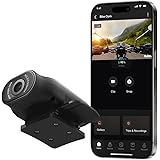
Qubo by Hero Group Smart Bike Cam Pro | 2K Resolution 3MP 1296p | 2000 mAh | 124 Degree Wide Angle | Night Vision | for Motorcycles, Bicycles | Proof on Demand | Record Your Rides | (Bike Cam)
₹3,990.00 (as of September 27, 2026 05:37 GMT +05:30 - More infoProduct prices and availability are accurate as of the date/time indicated and are subject to change. Any price and availability information displayed on [relevant Amazon Site(s), as applicable] at the time of purchase will apply to the purchase of this product.)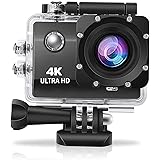
JK Vision 30Fps Action Camera Ultra Hd Underwater Camera 170 Degree Wide Angle 98Ft Waterproof Camera (Light 4K Action (Ac)) - Digital, Multicolor (DDC-48)
₹1,599.00 (as of September 27, 2026 05:37 GMT +05:30 - More infoProduct prices and availability are accurate as of the date/time indicated and are subject to change. Any price and availability information displayed on [relevant Amazon Site(s), as applicable] at the time of purchase will apply to the purchase of this product.)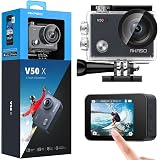
AKASO V50X Native 4K30fps WiFi Action Camera with EIS Touch Screen 4X Zoom 131 feet Waterproof Camera Support External Mic Remote Control with Helmet Accessories
₹12,499.00 (as of September 27, 2026 05:37 GMT +05:30 - More infoProduct prices and availability are accurate as of the date/time indicated and are subject to change. Any price and availability information displayed on [relevant Amazon Site(s), as applicable] at the time of purchase will apply to the purchase of this product.)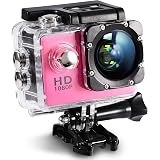
Mini DV Sports Camera,Action Camera 4K Waterproof 30m Outdoor Sports Video DV Camera 1080P Full HD LCD Mini Camcorder Mounting Accessories Kits(Pink)
Now retrieving the price.
(as of September 27, 2026 05:37 GMT +05:30 - More infoProduct prices and availability are accurate as of the date/time indicated and are subject to change. Any price and availability information displayed on [relevant Amazon Site(s), as applicable] at the time of purchase will apply to the purchase of this product.)
Dkian Y360 Digital Camera 1080P Full HD with 2.0-Inch Reversible Screen, 143° Wide-Angle Lens, Anti-Shake Stabilization, Universal Mount, Compact Vlogging Camera for YouTube, Reels & Travel
₹3,299.00 (as of September 27, 2026 05:37 GMT +05:30 - More infoProduct prices and availability are accurate as of the date/time indicated and are subject to change. Any price and availability information displayed on [relevant Amazon Site(s), as applicable] at the time of purchase will apply to the purchase of this product.)