
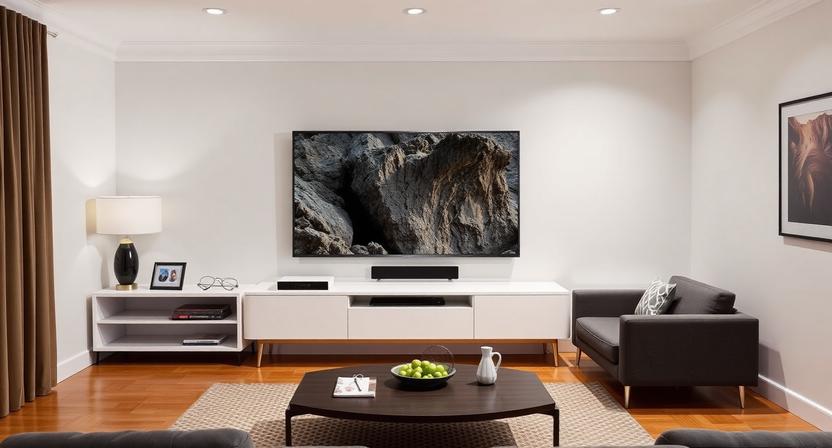
The allure of a new LED TV is undeniable. Crisp images, vibrant colors, and the promise of cinematic immersion beckon. Yet, amidst the dazzling array of screen sizes, a crucial question looms: what is the perfect LED TV size for your room? This isn’t a one-size-fits-all scenario. The ideal screen size is a delicate dance between your viewing environment, personal preferences, and the content you consume. Dive deep with us as we demystify the process, transforming you into a savvy shopper ready to conquer the world of LED TV dimensions.
Understanding the Basics: Diagonal Measurement and Aspect Ratio
Before we embark on our size-finding adventure, let’s establish some fundamental terms. LED TV sizes are universally measured diagonally, from one corner of the screen to the opposite. This measurement, typically in inches, is your primary indicator. Secondly, virtually all modern TVs adhere to a 16:9 aspect ratio, meaning the screen is 16 units wide for every 9 units high. This is crucial for understanding how the physical screen dimensions translate to your viewing area.
The Golden Rule: Viewing Distance is King
The single most important factor dictating your ideal TV size is viewing distance – the space between your eyes and the screen. Too small a screen at a great distance, and details become lost. Too large a screen at close proximity, and you’ll be left with a dizzying panorama of pixels, straining your neck and eyes.
The SMPTE (Society of Motion Picture and Television Engineers) Recommendation: A widely accepted guideline suggests a viewing distance that is 1.6 to 2.4 times the diagonal screen size. For instance, for a 55-inch TV, this translates to a viewing distance of approximately 7.3 to 11 feet (55 inches 1.6 / 12 inches/foot to 55 inches 2.4 / 12 inches/foot).
The THX (Tomlinson Holman’s eXperiment) Recommendation: For a more cinematic experience, THX recommends a viewing distance that is 1.2 times the diagonal screen size. This suggests a closer, more immersive feel. For a 55-inch TV, this would be around 5.5 feet.
Practical Application: Measuring Your Space
The most effective way to determine your optimal viewing distance is to physically measure it. Sit in your primary viewing position and have someone mark the spot. Then, measure the distance from that spot to where the TV will be placed. Once you have this measurement, you can work backward using the recommendations above.
- Example: If your primary viewing distance is 8 feet (96 inches), using the SMPTE recommendation (viewing distance / 1.6 to 2.4), your ideal TV size would fall between approximately 40 inches (96 / 2.4) and 60 inches (96 / 1.6).
Beyond the Numbers: Room Size and Layout
While viewing distance is paramount, the overall size and layout of your room play a significant role.
-
Small Rooms (e.g., Bedrooms, Small Apartments): In smaller spaces, a massive TV can overwhelm the room, making it feel cramped and unbalanced. Opt for more modest sizes, typically in the 32-inch to 50-inch range. A 43-inch or 50-inch TV can offer a fantastic viewing experience without dominating the space. Consider wall-mounting to maximize floor space.
-
Medium Rooms (e.g., Living Rooms, Dens): These rooms offer more flexibility. The 55-inch to 65-inch range often hits the sweet spot for medium-sized living rooms, providing an immersive experience without being overwhelming. This size range is incredibly popular for a reason – it balances impact with practicality.
-
Large Rooms (e.g., Open-Plan Living Areas, Home Theaters): For expansive spaces, don’t shy away from larger screens. 70 inches and above can transform a large room into a true entertainment hub. If your viewing distance is significant (10 feet or more), a 75-inch, 85-inch, or even larger TV will be necessary to achieve an engaging picture.
The “Wow” Factor vs. Practicality: Personal Preference
Ultimately, personal preference plays a crucial role. Some individuals crave the “cinematic” feel, while others prefer a more understated presence.
-
The Cinephile: If you’re a movie buff who enjoys a truly immersive experience, lean towards the larger end of your calculated range, especially if your viewing distance allows. Consider the THX recommendation for a more theater-like feel.
-
The Casual Viewer: If you primarily use your TV for news, casual browsing, or occasional shows, a slightly smaller screen that fits comfortably within your viewing distance might be perfectly sufficient.
-
The Gamer: Gamers often benefit from larger screens to appreciate in-game details and for a more immersive gameplay experience. However, be mindful of input lag on very large TVs and ensure your chosen model is optimized for gaming. A sweet spot for many gamers is often in the 55-inch to 75-inch range, depending on their setup.
Content Matters: HD vs. 4K and Beyond
The resolution of your TV also influences the ideal screen size.
-
HD (720p/1080p): On smaller screens (under 40 inches), HD is perfectly adequate. However, as screen sizes increase, the limitations of HD become more apparent. Pixels can become visible at closer viewing distances, leading to a less sharp image.
-
4K (UHD): This is where larger screens truly shine. With four times the pixels of 1080p, 4K resolution allows you to sit closer to larger screens without sacrificing image clarity. For 55-inch and larger TVs, 4K is almost a necessity to fully appreciate the detail and sharpness.
-
8K: While still a niche market, 8K TVs offer even higher resolution. For these supersized screens (80 inches and above), 8K can provide an unparalleled level of detail, but the availability of 8K content is still limited.
The Impact of Screen Features
Beyond size, other features can influence your perception of the TV and its suitability for your room.
-
Bezel Size: Slim bezels create a more modern and immersive look, making a larger screen appear less imposing. A TV with a thin bezel can often feel smaller than a TV with a thick, chunky frame, even if they have the same screen size.
-
Stand Design: The design of the TV stand can also impact how the TV fits into your room. A minimalist stand can make the TV feel lighter and more integrated, while a bulky stand might make it feel more prominent.
-
Wall Mounting: Wall-mounting a TV can dramatically change its perceived size and impact on a room. It frees up floor space and allows you to position the TV at an optimal viewing height, often making a larger screen feel more appropriate.
A Step-by-Step Guide to Finding Your Perfect Size:
- Measure Your Viewing Distance: Sit in your primary viewing spot and measure the distance to where the TV will be placed.
- Consult the Guidelines: Use the SMPTE (1.6-2.4x diagonal) or THX (1.2x diagonal) recommendations to get a range of ideal screen sizes.
- Consider Your Room Size and Layout: Does a large screen feel overwhelming or just right for your space?
- Factor in Your Content: Are you primarily watching broadcast TV, streaming movies, or gaming?
- Think About Resolution: For larger screens, 4K is highly recommended.
- Visualize the TV in Your Space: Use painter’s tape on your wall to outline the dimensions of potential TV sizes. This can be a surprisingly effective way to gauge how a particular size will look and feel.
- Don’t Be Afraid to Go Bigger (Within Reason): Many people regret not going with a slightly larger TV. If your measurements and room allow, and your budget permits, consider opting for the upper end of your ideal range.
Common Pitfalls to Avoid:
- Choosing a TV solely based on price: The cheapest option might not be the best for your viewing experience.
- Ignoring viewing distance: This is the most common mistake and leads to dissatisfaction.
- Overestimating room capacity for a large TV: A TV that’s too big can make a room feel claustrophobic.
- Underestimating the impact of 4K on larger screens: A large HD TV will look noticeably less sharp than a 4K equivalent.
By carefully considering these factors, you can confidently navigate the world of LED TV sizes and find the perfect screen that enhances your viewing experience without compromising your room’s aesthetic. The journey from small to supersized is an exciting one, and with this guide, you’re well-equipped to make the right choice.
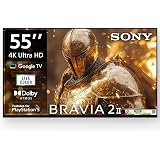
Sony 139 cm (55 inches) BRAVIA 2M2 Series 4K Ultra HD Smart LED Google TV K-55S25BM2
₹66,990.00 (as of September 18, 2026 17:30 GMT +05:30 - More infoProduct prices and availability are accurate as of the date/time indicated and are subject to change. Any price and availability information displayed on [relevant Amazon Site(s), as applicable] at the time of purchase will apply to the purchase of this product.)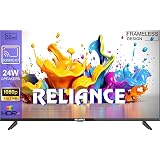
Reliance 80 cm (32 inch) Full HD LED Smart Android TV with 24 W Front Boom Speakers | 1000+ Smart Apps | Mobile Screen Connect | WiFi | Games (RGT32MP2784FHD)
₹10,999.00 (as of September 18, 2026 17:30 GMT +05:30 - More infoProduct prices and availability are accurate as of the date/time indicated and are subject to change. Any price and availability information displayed on [relevant Amazon Site(s), as applicable] at the time of purchase will apply to the purchase of this product.)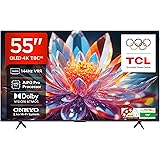
TCL 139 cm (55 inches) 4K Ultra HD Smart QLED Google TV | 120Hz Refresh Rate | 3GB RAM | Dolby Vision & Atmos | 55T8C
₹45,990.00 (as of September 18, 2026 17:30 GMT +05:30 - More infoProduct prices and availability are accurate as of the date/time indicated and are subject to change. Any price and availability information displayed on [relevant Amazon Site(s), as applicable] at the time of purchase will apply to the purchase of this product.)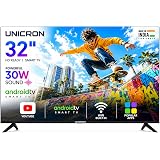
UNICRON TE 32 Inch Android Smart TV, HD Ready LED Television with WiFi, 30W Sound with in Built Speaker & IPS Bright Display, Apps Compatible (Netflix, Prime)
₹10,375.00 (as of September 18, 2026 17:30 GMT +05:30 - More infoProduct prices and availability are accurate as of the date/time indicated and are subject to change. Any price and availability information displayed on [relevant Amazon Site(s), as applicable] at the time of purchase will apply to the purchase of this product.)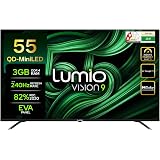
Lumio Vision 9 2026 139cm (55 inches) 4K Ultra HD Smart QD-MiniLED Google TV EPIC3-ADSI
₹54,999.00 (as of September 18, 2026 17:30 GMT +05:30 - More infoProduct prices and availability are accurate as of the date/time indicated and are subject to change. Any price and availability information displayed on [relevant Amazon Site(s), as applicable] at the time of purchase will apply to the purchase of this product.)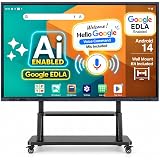
BIG VUE Pluss 55 inch Android 14 Smart Interactive Television | EDLA 4K UHD Flat Panel Digital Board with Stand, 8 GB RAM 128 GB ROM, Ai, Multitouch Screen Display for Teaching, Classroom & Office Use
₹69,800.00 (as of September 18, 2026 17:30 GMT +05:30 - More infoProduct prices and availability are accurate as of the date/time indicated and are subject to change. Any price and availability information displayed on [relevant Amazon Site(s), as applicable] at the time of purchase will apply to the purchase of this product.)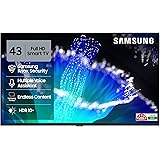
Samsung 108 cm (43 inches) FHD Smart LED TV UA43F5550FUXXL
₹26,000.00 (as of September 18, 2026 17:30 GMT +05:30 - More infoProduct prices and availability are accurate as of the date/time indicated and are subject to change. Any price and availability information displayed on [relevant Amazon Site(s), as applicable] at the time of purchase will apply to the purchase of this product.)
Xiaomi 80 cm (32 inches) A Pro QLED Series Smart TV L32MB-APIN
₹15,499.00 (as of September 18, 2026 17:30 GMT +05:30 - More infoProduct prices and availability are accurate as of the date/time indicated and are subject to change. Any price and availability information displayed on [relevant Amazon Site(s), as applicable] at the time of purchase will apply to the purchase of this product.)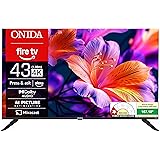
Onida 108 cm (43 inch) Ultra HD 4K Smart LED Fire TV 43UFD
₹24,199.00 (as of September 18, 2026 17:30 GMT +05:30 - More infoProduct prices and availability are accurate as of the date/time indicated and are subject to change. Any price and availability information displayed on [relevant Amazon Site(s), as applicable] at the time of purchase will apply to the purchase of this product.)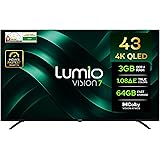
Lumio Vision 7 2026 109cm (43 inches) 4K Ultra HD Smart QLED Google TV FTW1-ADSJ
₹32,999.00 (as of September 18, 2026 17:30 GMT +05:30 - More infoProduct prices and availability are accurate as of the date/time indicated and are subject to change. Any price and availability information displayed on [relevant Amazon Site(s), as applicable] at the time of purchase will apply to the purchase of this product.)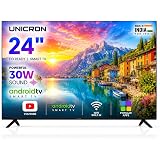
UNICRON 24 Inch Android Smart TV, HD LED Television with 30W Sound Speaker, WiFi Enabled, IPS A+ Display Panel, Gaming, Screen Mirroring & Mobile Connectivity
Now retrieving the price.
(as of September 18, 2026 17:30 GMT +05:30 - More infoProduct prices and availability are accurate as of the date/time indicated and are subject to change. Any price and availability information displayed on [relevant Amazon Site(s), as applicable] at the time of purchase will apply to the purchase of this product.)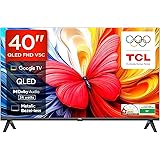
TCL 101 cms (40 inches) Full HD Smart QLED Google TV | Dolby Audio 24 watts | Ai Clarity | Metallic Bezel-Less | Multiple Viewing Mode | 40V5C
₹24,990.00 (as of September 18, 2026 17:30 GMT +05:30 - More infoProduct prices and availability are accurate as of the date/time indicated and are subject to change. Any price and availability information displayed on [relevant Amazon Site(s), as applicable] at the time of purchase will apply to the purchase of this product.)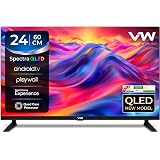
VW 60 cm (24 inch) HD Ready QLED Smart Android TV VW24SFL
₹7,499.00 (as of September 18, 2026 17:30 GMT +05:30 - More infoProduct prices and availability are accurate as of the date/time indicated and are subject to change. Any price and availability information displayed on [relevant Amazon Site(s), as applicable] at the time of purchase will apply to the purchase of this product.)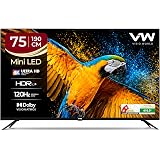
VW Visio World 190 cm (75 inches) 4K Ultra HD QLED Smart Mini LED Google TV VW75GQ2
₹65,999.00 (as of September 18, 2026 17:30 GMT +05:30 - More infoProduct prices and availability are accurate as of the date/time indicated and are subject to change. Any price and availability information displayed on [relevant Amazon Site(s), as applicable] at the time of purchase will apply to the purchase of this product.)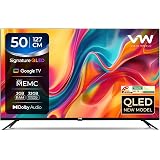
VW Visio World 127 cm (50 inches) Pro Series 4K Ultra HD Smart QLED Google TV VW50GQ2
₹29,999.00 (as of September 18, 2026 17:30 GMT +05:30 - More infoProduct prices and availability are accurate as of the date/time indicated and are subject to change. Any price and availability information displayed on [relevant Amazon Site(s), as applicable] at the time of purchase will apply to the purchase of this product.)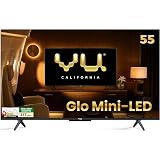
Vu California 139cm (55 inches) Glo MiniLED Google 4K TV VUGLOMINILED 2026 | 600Nits HDR Brightness QLED Picture I 2xSpeaker+2xWoofer 50W VuFX Sound
₹46,990.00 (as of September 18, 2026 17:30 GMT +05:30 - More infoProduct prices and availability are accurate as of the date/time indicated and are subject to change. Any price and availability information displayed on [relevant Amazon Site(s), as applicable] at the time of purchase will apply to the purchase of this product.)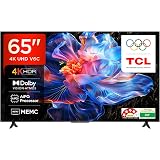
TCL 164 cm (65 inches) 4K Ultra HD Smart LED Google TV | 4K HDR | Dolby Vision & Atmos | MEMC | 65V6C
₹49,990.00 (as of September 18, 2026 17:30 GMT +05:30 - More infoProduct prices and availability are accurate as of the date/time indicated and are subject to change. Any price and availability information displayed on [relevant Amazon Site(s), as applicable] at the time of purchase will apply to the purchase of this product.)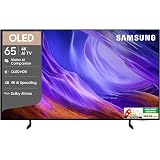
Samsung 65 inches OLED 4K Samsung Vision AI Smart TV QA65S85HAELXL
₹1,55,990.00 (as of September 18, 2026 17:30 GMT +05:30 - More infoProduct prices and availability are accurate as of the date/time indicated and are subject to change. Any price and availability information displayed on [relevant Amazon Site(s), as applicable] at the time of purchase will apply to the purchase of this product.)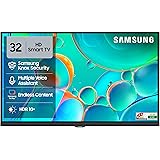
Samsung 80 cm (32 inches) HD Smart LED TV UA32H4550FUXXL
₹17,400.00 (as of September 18, 2026 17:30 GMT +05:30 - More infoProduct prices and availability are accurate as of the date/time indicated and are subject to change. Any price and availability information displayed on [relevant Amazon Site(s), as applicable] at the time of purchase will apply to the purchase of this product.)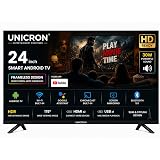
24 inch smart tv Android Frameless HD LED TV | WiFi Enabled | Built-in Apps Compatible (YouTube, Netflix, Prime Video) | HDMI, USB Connectivity | Screenmirror | Slim & Stylish | Black Premium Design
₹7,399.00 (as of September 18, 2026 17:30 GMT +05:30 - More infoProduct prices and availability are accurate as of the date/time indicated and are subject to change. Any price and availability information displayed on [relevant Amazon Site(s), as applicable] at the time of purchase will apply to the purchase of this product.)
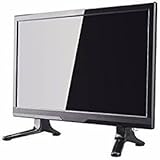
16.9 Inch Full HD LED TV, Portable Television with 1080P Resolution, USB, HDMI, VGA Port, AV Input, Black
Now retrieving the price.
(as of September 16, 2026 15:23 GMT +05:30 - More infoProduct prices and availability are accurate as of the date/time indicated and are subject to change. Any price and availability information displayed on [relevant Amazon Site(s), as applicable] at the time of purchase will apply to the purchase of this product.)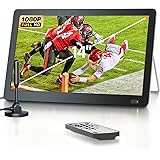
DESOBRY Portable 14 inch TV with ATSC Tuner, Mini LCD TV with Integrated Stand (Ferrous Colour), 1080P
Now retrieving the price.
(as of September 16, 2026 15:23 GMT +05:30 - More infoProduct prices and availability are accurate as of the date/time indicated and are subject to change. Any price and availability information displayed on [relevant Amazon Site(s), as applicable] at the time of purchase will apply to the purchase of this product.)
led Portable tv 16.9 inch (39.6 cm) (16.9) Full HD LED TV 1080p Full HD Resolution
₹4,800.00 (as of September 16, 2026 15:23 GMT +05:30 - More infoProduct prices and availability are accurate as of the date/time indicated and are subject to change. Any price and availability information displayed on [relevant Amazon Site(s), as applicable] at the time of purchase will apply to the purchase of this product.)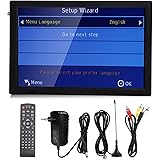
14 Inch Portable Digital TV, 1080P Digital TV with Antenna USB Port and MMC Card Slot 1800 mAh Battery, Supports Various Video Formats
Now retrieving the price.
(as of September 16, 2026 15:23 GMT +05:30 - More infoProduct prices and availability are accurate as of the date/time indicated and are subject to change. Any price and availability information displayed on [relevant Amazon Site(s), as applicable] at the time of purchase will apply to the purchase of this product.)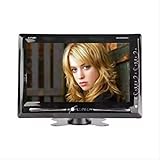
4K 9.5" Led Digital Screen Tv Built-in Av in/Av Out Audio Video Format - JPEG / Mp3 / Wma / Mp4 Compatible with DVD/Dth/CCTV | Built-in Speaker | User-Friendly Touch Buttons |
Now retrieving the price.
(as of September 16, 2026 15:23 GMT +05:30 - More infoProduct prices and availability are accurate as of the date/time indicated and are subject to change. Any price and availability information displayed on [relevant Amazon Site(s), as applicable] at the time of purchase will apply to the purchase of this product.)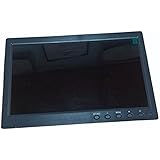
TORLOY 10.1” INCH TV HDMI, VGA, Built in Speaker Support,RCA, USB, RF Ports. 24v to 12 v dc LED TV 10.1”
Now retrieving the price.
(as of September 16, 2026 15:23 GMT +05:30 - More infoProduct prices and availability are accurate as of the date/time indicated and are subject to change. Any price and availability information displayed on [relevant Amazon Site(s), as applicable] at the time of purchase will apply to the purchase of this product.)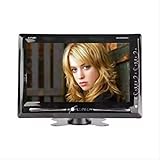
4K 9.5" Led Digital Screen Tv Built-In Av In/Av Out Audio Video Format - Jpeg / Mp3 / Wma / Mp4 Touch Buttons Compatible With Dvd/Dth/Cctv
Now retrieving the price.
(as of September 16, 2026 15:23 GMT +05:30 - More infoProduct prices and availability are accurate as of the date/time indicated and are subject to change. Any price and availability information displayed on [relevant Amazon Site(s), as applicable] at the time of purchase will apply to the purchase of this product.)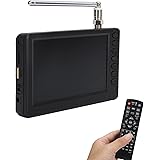
Vbestlife 5 Inch ATSC Mini Digital TV, 1080P HD LED Portable Pocket TV, Rechargeable, Supports USB & TF Card Input, Ideal for Car, Camping & Kitchen
Now retrieving the price.
(as of September 16, 2026 15:23 GMT +05:30 - More infoProduct prices and availability are accurate as of the date/time indicated and are subject to change. Any price and availability information displayed on [relevant Amazon Site(s), as applicable] at the time of purchase will apply to the purchase of this product.)
WORLDTECH 9.5 INCH HDMI TV
Now retrieving the price.
(as of September 16, 2026 15:23 GMT +05:30 - More infoProduct prices and availability are accurate as of the date/time indicated and are subject to change. Any price and availability information displayed on [relevant Amazon Site(s), as applicable] at the time of purchase will apply to the purchase of this product.)