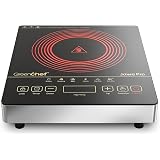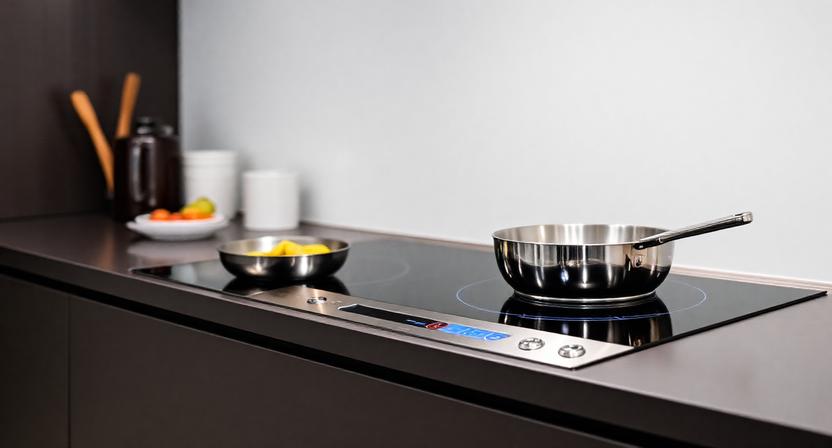
Description: Unlock the power, speed, and safety of an induction cooktop. Our comprehensive guide covers magnetic technology, efficiency, best models, and essential usage tips for Indian cooking.
🇮🇳 Introduction: The Shift to Smart and Efficient Cooking
The Indian kitchen is a dynamic space, rich with tradition but constantly evolving with technology. While the LPG cylinder and the gas stove have been the backbone of Indian cooking for decades, a significant and silent revolution is underway: the embrace of the induction cooktop. In an era defined by efficiency, safety, and a growing consciousness about energy consumption, induction technology offers a compelling and modern alternative.
For the modern Indian household—be it a space-constrained apartment in Mumbai or a large joint family home in Punjab—the benefits of induction are becoming increasingly undeniable. Market research indicates that the household adoption rate of electric cooking appliances, including induction cooktops, is steadily rising, driven by factors like increasing fuel costs, the need for a safe secondary cooking source, and the appliance’s sheer speed and precision.
This comprehensive, expert-led guide will meticulously dismantle the myths surrounding induction cooktops, explain the science behind their magic, and provide actionable insights and specific recommendations tailored to the unique demands of traditional and modern Indian cuisine.
⚛️ Section 1: The Science Behind the Speed – How an Induction Cooktop Works
Unlike gas or traditional electric resistance cooktops, which use a flame or a heated coil to transfer heat to the vessel, an induction cooktop uses electromagnetism. Understanding this core principle is key to appreciating its efficiency.
The Magnetic Magic: Understanding the Induction Principle
At its core, the induction cooktop contains an electromagnet coil beneath a smooth ceramic glass surface.
- Electricity to Magnetism: When electricity passes through the coil, it generates an oscillating magnetic field.
- Eddy Currents: When a ferromagnetic cooking vessel (one that is magnetic) is placed on the surface, the magnetic field induces strong electrical currents—known as Eddy Currents—directly within the base of the vessel.
- Resistance and Heat: The natural electrical resistance of the vessel’s metal converts these powerful currents into instantaneous heat.
- Cool Surface: Crucially, the cooktop surface itself does not heat up directly; it only gets warm from residual heat transferred back from the hot vessel.
This process ensures that 90% of the energy produced is directly used to heat the food, making induction cooktops significantly more energy-efficient than gas (approx. 40-55% efficiency) or traditional electric coils (approx. 70% efficiency).
Key Advantages of Induction Cooking Over Gas
| Feature | Induction Cooktop | LPG Gas Stove | Advantage for Indian Users |
| Energy Efficiency | Up to 90% | Approx. 40-55% | Lower electricity bills, less energy waste. |
| Speed (Heating) | Extremely fast (instant heat) | Medium to slow | Time savings for quick meals and boiling water. |
| Safety | No open flame, surface cools quickly | Open flame, high risk of burns | Essential for households with children/elderly. |
| Cleaning | Flat ceramic glass, easy to wipe | Burners, grates, and crevices (hard to clean) | Effortless maintenance and hygiene. |
| Precision | Precise temperature control (digital) | Relative control (manual knob) | Perfect for delicate recipes like rasgullas or tempering. |
🍲 Section 2: Essential Requirements and Indian Cuisine Compatibility
A primary concern for Indian readers is compatibility with existing kitchenware and the ability to cook traditional meals, which often require specific techniques and vessel shapes.
The Critical Factor: Induction Cooktop Compatible Cookware
For the induction cooktop to work, the vessel must be magnetic. This is non-negotiable.
- How to Check: Simply use a small magnet. If the magnet sticks firmly to the bottom of your pot or pan, it is induction compatible.
- Compatible Materials:
- Cast Iron: Excellent heat retention, perfect for slow-cooked curries or tawa preparations.
- Magnetic Stainless Steel (Tri-ply or Multi-ply): The base layers must contain ferromagnetic material. This is the best choice for daily use, offering even heating.
- Enameled Steel/Cast Iron: Also compatible and highly durable.
- Incompatible Materials (Needs Replacement):
- Aluminium or Copper (Non-magnetic): Will not work unless they have a bonded magnetic stainless steel base layer (look for the “Induction Ready” symbol).
- Glass, Ceramic, Earthenware: Cannot be used.
Actionable Tip for Indian Homes: When buying new cookware, look for the universal coil symbol which indicates induction readiness. Investing in a good magnetic tri-ply pressure cooker and a magnetic steel kadhai is the ideal starting point for your Indian induction kitchen.
Cooking Indian Dishes on an Induction Cooktop
Induction cooktops are perfectly capable of handling the diversity of Indian cooking, and often perform better in key areas:
- Tadka/Tempering: Requires high, sudden heat. Induction provides this instantaneous heat control, ensuring your tadka sizzles perfectly without burning.
- Roti/Dosa: Requires a uniform temperature. A good quality, flat-bottomed cast iron tawa or dosa pan on an induction cooktop provides consistent, even heat, eliminating cold spots.
- Deep Frying: Maintaining a stable oil temperature is essential. Digital controls on an induction cooktop allow you to set the temperature precisely (e.g., 180°C), making deep-fried items like pakoras and samosas crispier and less oily.
- Boiling Milk: The precise temperature controls can help prevent milk from boiling over, a common kitchen frustration, especially in high-capacity Indian homes.
🔌 Section 3: Technical Deep Dive and Buying Guide for Indian Users
Choosing the right induction cooktop involves looking beyond the brand name and focusing on critical technical specifications that impact performance and longevity.
Key Technical Specifications to Prioritize
- Wattage (Power): This is the most crucial factor for speed. Induction cooktops typically range from 1200W to 2000W.
- Recommendation: For standard Indian cooking (quick boiling, heavy frying), aim for a cooktop with a minimum of 1800W. Lower wattage (1200-1500W) models are often cheaper but are noticeably slower.
- Digital Power vs. Temperature Control: Ensure the model offers both.
- Power Control (e.g., 100W to 2000W): Used for bulk cooking or rapid heating.
- Temperature Control (e.g., 60°C to 240°C): Used for precise, slow cooking like simmering dal or making kheer.
- Control Panel Type (Feather-Touch vs. Button):
- Feather-Touch: Sleek, modern, and very easy to clean (a quick wipe). Preferred choice.
- Push-Button: Durable but crevices can accumulate grease and masala.
- Pre-Set Cooking Menus: Most induction cooktops feature dedicated buttons for Indian staples like ‘Dosa,’ ‘Idli,’ ‘Curry,’ or ‘Deep Fry.’ These are essentially optimized, pre-set power/temperature cycles, making the appliance highly user-friendly for routine cooking.
Safety Features: A Non-Negotiable Checklist
Safety is the single most compelling reason for many Indian families to switch to induction cooking.
- Auto Shut-off: The cooktop should automatically switch off if:
- The vessel is removed from the surface.
- It detects no vessel on the zone.
- It has been operating too long without any user input (a critical feature for forgetful users).
- Overheating Protection: Essential for preventing damage to the internal coil and the cooktop itself during high-power usage.
- Child Lock: A vital feature that locks the control panel, preventing children from accidentally turning the cooktop on or changing settings.
- Residual Heat Indicator: A warning light that stays illuminated until the glass surface is cool enough to touch (remember, the residual heat from the hot vessel can still cause minor burns).
🏡 Section 4: Practical Usage and Maintenance for Longevity
To ensure your investment lasts for years, simple maintenance and correct usage are crucial.
Best Practices for Using Your Induction Cooktop
- Use Flat-Bottomed Vessels: The efficiency of induction relies on maximum contact. Warped or uneven vessel bases will lead to inefficient heating and potentially damaged cookware.
- Center the Vessel: Always center your pot or pan on the clearly marked coil ring. Using a vessel too small or too large for the coil will reduce efficiency and may not work at all.
- Avoid Sliding: While the ceramic glass is tough, sliding heavy, gritty vessels across the surface can cause scratches. Always lift the vessel slightly when repositioning.
- Protect from Voltage Fluctuations: Indian electricity supply can be erratic. Power Words: While most quality induction cooktops have some internal surge protection, connecting them to a high-quality voltage stabilizer or using a surge protector is a wise, proactive measure to prevent premature failure.
Case Study Example: In a pilot project conducted by a major Indian appliance manufacturer, households using an 1800W induction cooktop consistently reported a reduction of 25-30% in monthly cooking energy costs compared to LPG, particularly when only using the cooktop for 60% of their daily cooking needs, highlighting its economic viability as a supplementary appliance.
Troubleshooting Common Induction Issues
- Cooktop Not Turning On: Check the vessel. Is it magnetic? Is it centered correctly? The sensor needs to detect the presence of the appropriate material.
- Beeping or Error Code: Consult the manual. This often signals overheating (let it cool), incompatible cookware, or a voltage issue.
- Noise During Operation: The cooktop fan will make a low whirring sound (essential for cooling the electronics). A high-pitched hum is often the vibration of a lightweight, multi-layer vessel. This is usually normal and not a fault.
🎯 Conclusion: The Smart Investment for the Modern Indian Kitchen
The induction cooktop is far more than a simple appliance; it’s a strategic investment in the efficiency, safety, and modernity of the Indian kitchen. The speed at which it boils water for tea (chai), the precision it offers for simmering dal, and the unparalleled safety it provides, especially in homes with active young children, make it an indispensable tool. By understanding the magnetic principle, choosing the right wattage (ideally 1800W+), and ensuring compatibility with your cookware, you are not just buying a cooktop—you are adopting a superior, futuristic way to cook.
Make the intelligent switch today and transform the way you experience cooking.
✍️ Compelling Call to Action
Ready to boost your cooking speed and kitchen safety? Now that you know the vital specs and compatibility secrets, click here to check out our handpicked list of the highest-rated 1800W+ induction cooktops that are perfectly suited for the demands of diverse Indian cooking!
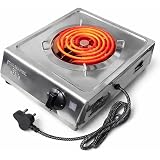
2000 Watts Single Burner Radiant Grill Round G-Coil Hot Plate Portable Electric Cooktop Shocked Proof Heater/Cooking Stove With Cord Cable For Kitchen Cooking Without Gas
₹2,100.00 (as of September 21, 2026 06:07 GMT +05:30 - More infoProduct prices and availability are accurate as of the date/time indicated and are subject to change. Any price and availability information displayed on [relevant Amazon Site(s), as applicable] at the time of purchase will apply to the purchase of this product.)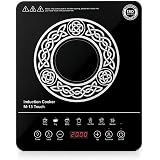
Induction Cooker M-13 Touch, 2000W Portable Electric Cooktop, 8 Indian Cooking Modes, Crystal Glass Top, Touch Control, Timer and Auto Off Feature
₹1,499.00 (as of September 21, 2026 06:07 GMT +05:30 - More infoProduct prices and availability are accurate as of the date/time indicated and are subject to change. Any price and availability information displayed on [relevant Amazon Site(s), as applicable] at the time of purchase will apply to the purchase of this product.)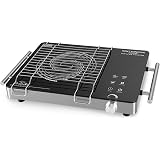
KENT Sunstar Infrared Cooktop 2000W | 3 Preset Menus | Grill Stand to BBQ & Roast | Microcrystalline Glass | Digital Functions with LED Display | Adjustable Temperature Knob | SS Handle |Auto Cut-Off
₹2,999.00 (as of September 21, 2026 06:07 GMT +05:30 - More infoProduct prices and availability are accurate as of the date/time indicated and are subject to change. Any price and availability information displayed on [relevant Amazon Site(s), as applicable] at the time of purchase will apply to the purchase of this product.)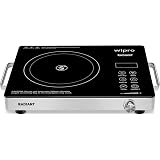
Wipro Elato CIRC201 Infrared Radiant Cooktop 2200W |Works With ALL Cookware – Kadai, Glass, Clay, Aluminium & Steel |Preset Menus, Timer & Overheat Protection |Crystal Glass Top|Black|1 Year Warranty
₹4,499.00 (as of September 21, 2026 06:07 GMT +05:30 - More infoProduct prices and availability are accurate as of the date/time indicated and are subject to change. Any price and availability information displayed on [relevant Amazon Site(s), as applicable] at the time of purchase will apply to the purchase of this product.)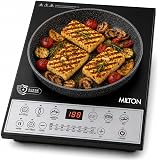
MILTON Appliances ELIO Plus 1300W Ceramic Induction Cooktop | 5.5KV Surge Protection | 6 Preset Indian Menu Options & Timer | Soft Touch Button | Easy to Clean | Portable | 3Y Warranty On Coil | Black
₹2,350.00 (as of September 21, 2026 06:07 GMT +05:30 - More infoProduct prices and availability are accurate as of the date/time indicated and are subject to change. Any price and availability information displayed on [relevant Amazon Site(s), as applicable] at the time of purchase will apply to the purchase of this product.)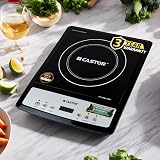
iBELL CASTOR CTVEGA058Y 2000W, 3-YEAR WARRANTY, Induction Cooktop, Touch Control, Digital Display, Energy Efficient, Black Glass Cooktop,[Black]
₹1,990.00 (as of September 21, 2026 06:07 GMT +05:30 - More infoProduct prices and availability are accurate as of the date/time indicated and are subject to change. Any price and availability information displayed on [relevant Amazon Site(s), as applicable] at the time of purchase will apply to the purchase of this product.)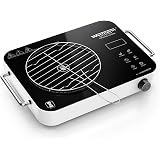
WelTherm Premium 2200W Infrared Cooker with Grill, Touch Panel & Rotary Knob Controller, Adjustable Temperature & Power Levels, Works with All Cookware,Side Handles, Portable Electric Cooktop
₹4,255.00 (as of September 21, 2026 06:07 GMT +05:30 - More infoProduct prices and availability are accurate as of the date/time indicated and are subject to change. Any price and availability information displayed on [relevant Amazon Site(s), as applicable] at the time of purchase will apply to the purchase of this product.)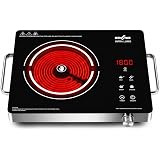
Kenstar Infra LUMO 2000W Infrared Stove with 11 Power Levels, 4 Preset Modes, Toughened Glass Top and Timer Function Silver Black
₹2,449.00 (as of September 21, 2026 06:07 GMT +05:30 - More infoProduct prices and availability are accurate as of the date/time indicated and are subject to change. Any price and availability information displayed on [relevant Amazon Site(s), as applicable] at the time of purchase will apply to the purchase of this product.)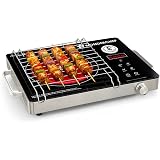
Wonderchef Evita Neo Infrared Electric Cooktop with Crystal Glass for Kitchens, 2200W, BBQ Grill Included, 4 Pre-Set Functions, Compatible with Steel, Ceramic, Cast-Iron, Aluminium, 2-Yr Warranty
₹3,698.99 (as of September 21, 2026 06:07 GMT +05:30 - More infoProduct prices and availability are accurate as of the date/time indicated and are subject to change. Any price and availability information displayed on [relevant Amazon Site(s), as applicable] at the time of purchase will apply to the purchase of this product.)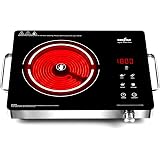
Kenstar Infra LUMO NEO 2200W Infrared Stove with 22 Power Levels, 4 Preset Modes, Toughened Glass Top and Timer Function Silver Black
₹2,699.00 (as of September 21, 2026 06:07 GMT +05:30 - More infoProduct prices and availability are accurate as of the date/time indicated and are subject to change. Any price and availability information displayed on [relevant Amazon Site(s), as applicable] at the time of purchase will apply to the purchase of this product.)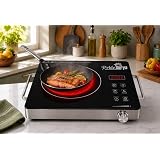
Pride Surya Infrared Cooktop, 2200W, Crystal Glass Surface, Feather Touch Control, Digital Display, 4 Cooking Modes, Auto Shut Off
₹1,999.00 (as of September 21, 2026 06:07 GMT +05:30 - More infoProduct prices and availability are accurate as of the date/time indicated and are subject to change. Any price and availability information displayed on [relevant Amazon Site(s), as applicable] at the time of purchase will apply to the purchase of this product.)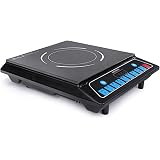
Sheffield Classic 1500W Induction Cooktop with Push Button Control, 7 Preset Cooking Modes, Auto Pan Detection, Fast Heating Portable Electric Stove for Home Kitchen
₹1,699.00 (as of September 21, 2026 06:07 GMT +05:30 - More infoProduct prices and availability are accurate as of the date/time indicated and are subject to change. Any price and availability information displayed on [relevant Amazon Site(s), as applicable] at the time of purchase will apply to the purchase of this product.)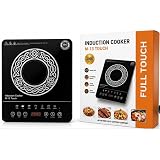
Induction Cooker M-13 Touch, 2000W Portable Electric Cooktop, 8 Indian Cooking Modes, Crystal Glass Top, Touch Control, Timer and Auto Off Feature
₹1,499.00 (as of September 21, 2026 06:07 GMT +05:30 - More infoProduct prices and availability are accurate as of the date/time indicated and are subject to change. Any price and availability information displayed on [relevant Amazon Site(s), as applicable] at the time of purchase will apply to the purchase of this product.)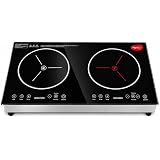
Pigeon Jodi Built-In Or TableTop Cooktop | 3500W Combined Power | 1500W Induction + 2000W Infrared Radiant (Black, Touch Panel)
₹9,999.00 (as of September 21, 2026 06:07 GMT +05:30 - More infoProduct prices and availability are accurate as of the date/time indicated and are subject to change. Any price and availability information displayed on [relevant Amazon Site(s), as applicable] at the time of purchase will apply to the purchase of this product.)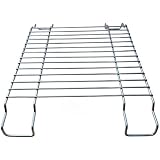
Induction Infrared Grill Stand for Cooktop | Stainless Steel Universal Flame Diffuser Plate | Heat Diffuser for Gas & Induction Stove | Roti, Chapati, BBQ, Tandoor Grill Rack
₹225.00 (as of September 21, 2026 06:07 GMT +05:30 - More infoProduct prices and availability are accurate as of the date/time indicated and are subject to change. Any price and availability information displayed on [relevant Amazon Site(s), as applicable] at the time of purchase will apply to the purchase of this product.)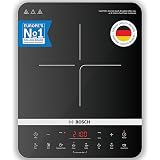
Bosch TrueSafe 2100W UltraSleek Induction Cooktop |Touch Panel (PI815S11EI) | Variable Temperature Control | Superior 6KV Surge Protection | 8 Preset Menus & Timer | 3 Year Coil Warranty | Child Lock
₹4,999.00 (as of September 21, 2026 06:07 GMT +05:30 - More infoProduct prices and availability are accurate as of the date/time indicated and are subject to change. Any price and availability information displayed on [relevant Amazon Site(s), as applicable] at the time of purchase will apply to the purchase of this product.)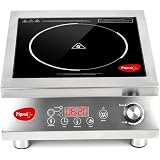
Pigeon Egnite Heavy Duty Commercial Infrared Cooktop 3500W || For Commercial, Stainless Steel Body, Dual Ring Heating, Rotary Knob Control, and Timer
₹7,520.00 (as of September 21, 2026 06:07 GMT +05:30 - More infoProduct prices and availability are accurate as of the date/time indicated and are subject to change. Any price and availability information displayed on [relevant Amazon Site(s), as applicable] at the time of purchase will apply to the purchase of this product.)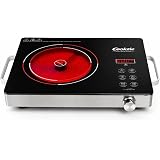
Cookzie 2200W Infrared Cooktop with BBQ Grill | Works with All Types of Cookware | Powerful Heating | Crystal Glass Top | Touch Control | Adjustable Temperature & Timer | Electric Stove
₹1,998.00 (as of September 21, 2026 06:07 GMT +05:30 - More infoProduct prices and availability are accurate as of the date/time indicated and are subject to change. Any price and availability information displayed on [relevant Amazon Site(s), as applicable] at the time of purchase will apply to the purchase of this product.)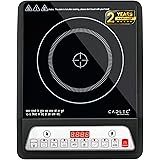
Cadlec CookBlaze 2000W Induction Cooktop with Crystal Glass | 7 Cooking Modes, Auto Shut-Off, Over-Heat Protection, LED Display, BIS Approved, 2-Year Warranty | Black
₹1,699.00 (as of September 21, 2026 06:07 GMT +05:30 - More infoProduct prices and availability are accurate as of the date/time indicated and are subject to change. Any price and availability information displayed on [relevant Amazon Site(s), as applicable] at the time of purchase will apply to the purchase of this product.)