
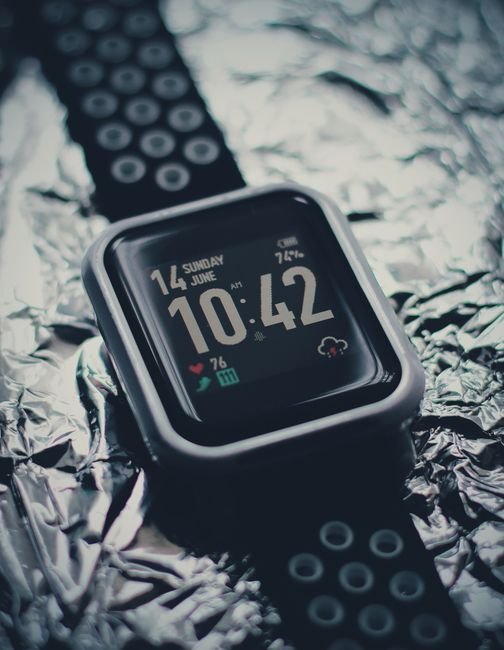
Bluetooth Calling Watch Technology Explained: Your Wrist, Your Phone
The evolution of wearable technology has been nothing short of remarkable, and at the forefront of this revolution lies the Bluetooth calling watch. More than just a timekeeping device, these smartwatches have transformed our wrists into miniature communication hubs, seamlessly integrating phone calls, messages, and a plethora of other smart features into our daily lives. This article delves deep into the intricate workings of Bluetooth calling watch technology, demystifying how this seemingly magical functionality is achieved and what it truly means for the modern user.
At its core, a Bluetooth calling watch leverages the ubiquitous Bluetooth wireless technology to establish a connection with your smartphone. This connection is the linchpin that enables the watch to perform its calling capabilities. Bluetooth, a short-range wireless standard, operates within a specific frequency band (2.4 GHz) and utilizes a peer-to-peer protocol to facilitate data exchange between devices. In the context of a smartwatch, this means your watch and phone are essentially talking to each other without the need for cables.
The process of making and receiving calls via a Bluetooth calling watch involves several key components and protocols working in tandem. Firstly, the watch itself houses a microprocessor, a Bluetooth module, a speaker, a microphone, and often a display for caller ID and interaction. Your smartphone, on the other hand, acts as the primary gateway to the cellular network, handling the actual call routing and signal transmission.
When you initiate a call from your watch, the following sequence of events unfolds:
- User Input: You select a contact or dial a number directly on the watch’s touchscreen interface.
- Data Transmission to Smartphone: The watch’s microprocessor processes this input and transmits the call request to your smartphone via the established Bluetooth connection. This transmission includes information like the dialed number or the contact’s identifier.
- Smartphone Action: Your smartphone receives this request. If it has a cellular signal, it initiates the outgoing call as if you were making it directly from your phone.
- Audio Routing: This is where the magic truly happens. For the audio to flow to and from your watch, Bluetooth utilizes specific audio profiles, most commonly Hands-Free Profile (HFP) and Headset Profile (HSP). HFP is more comprehensive, allowing for two-way audio and control commands, while HSP is a simpler profile primarily for audio streaming. When you’re on a call, the audio stream from your phone is transmitted wirelessly via Bluetooth to your watch’s speaker. Simultaneously, the audio captured by the watch’s microphone is transmitted back to your phone via Bluetooth, which then relays it to the person on the other end of the call.
- Call Management: The watch’s display shows caller ID, call duration, and offers controls for muting, putting the call on hold, or ending the call. These commands are also sent back to the smartphone via Bluetooth.
Receiving a call follows a similar, albeit reversed, process. When your smartphone receives an incoming call, it sends a notification to your watch via Bluetooth. The watch then displays the caller ID, rings (or vibrates), and presents you with options to answer or reject the call. Upon answering, the audio connection is established as described above, allowing you to converse directly through your watch.
The quality of Bluetooth calling is heavily influenced by several factors. The Bluetooth version plays a significant role; newer versions like Bluetooth 5.0 and above offer improved range, faster data transfer rates, and enhanced power efficiency, leading to a more stable and clearer audio experience. The quality of the microphone and speaker on the watch are also critical. High-quality components can minimize background noise and deliver clearer audio, even in moderately noisy environments. Interference from other electronic devices operating on the 2.4 GHz band can also degrade call quality. Finally, the distance between your watch and smartphone is a key determinant; Bluetooth has a limited range, typically around 10 meters (33 feet), though this can vary. Maintaining a close proximity ensures a robust connection.
Beyond just making and receiving calls, Bluetooth calling watches often integrate with your smartphone’s contact list, allowing you to access and dial contacts directly from your wrist. They can also display call logs and even allow for voicemail access, further enhancing their utility as a communication device.
The underlying technology also extends to other smart features that leverage the Bluetooth connection. Notifications for text messages, emails, social media updates, and calendar alerts are all pushed from your smartphone to your watch, keeping you informed without constantly needing to pull out your phone. This seamless integration is a cornerstone of the smartwatch experience, and Bluetooth calling is a pivotal component of this interconnected ecosystem.
From a technical standpoint, the Bluetooth module within the watch is a sophisticated piece of hardware responsible for transmitting and receiving radio waves. It adheres to the Bluetooth specifications, ensuring interoperability with your smartphone. The firmware and software running on the watch’s microprocessor are what interpret the incoming Bluetooth data, manage the user interface, and execute the calling functions. This software is often developed by the watch manufacturer and is crucial for optimizing performance and user experience.
The power consumption associated with Bluetooth calling is a consideration. While Bluetooth is designed to be power-efficient, continuous audio streaming and call handling do consume battery power. Manufacturers continuously work to optimize power management through efficient hardware design and software algorithms to extend battery life.
The security of Bluetooth communication is also an important aspect. Bluetooth employs various security measures, including encryption and authentication, to protect the data transmitted between devices. However, like any wireless technology, it’s not entirely immune to vulnerabilities, and users are advised to be aware of their surroundings and connected devices.
In conclusion, Bluetooth calling watch technology is a sophisticated blend of hardware and software that has revolutionized how we communicate. By leveraging the power of Bluetooth, these devices have effectively shrunk the functionality of our smartphones onto our wrists, offering unparalleled convenience and connectivity. The continuous advancements in Bluetooth technology, coupled with improvements in smartwatch hardware and software, promise even more seamless and integrated communication experiences in the future.