
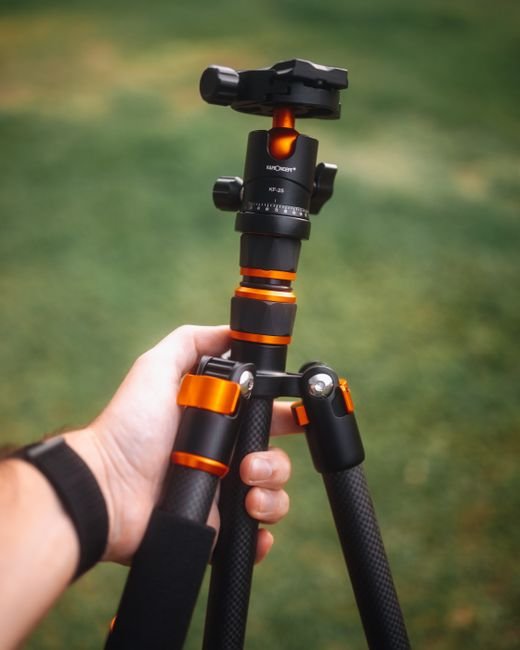
Lightweight Tripods: Your Portable Photography Companion
In the pursuit of capturing stunning photographs, many photographers overlook a crucial piece of equipment that can elevate their work significantly: the tripod. While often associated with bulky, heavy setups, the market has seen a surge in innovative lightweight tripods, transforming them from cumbersome accessories into indispensable portable photography companions. These modern marvels offer stability, reduce camera shake, and unlock creative possibilities without weighing down your gear.
The primary advantage of a lightweight tripod lies in its portability. Designed with advanced materials like carbon fiber and high-grade aluminum alloys, these tripods significantly reduce overall weight. This makes them ideal for photographers who are constantly on the move, whether it’s for landscape expeditions, urban exploration, travel photography, or even spontaneous street shoots. Imagine hiking to a remote vista for the perfect sunrise; lugging a heavy tripod can be a deterrent. A lightweight alternative, however, becomes a welcome partner, easily slung over a shoulder or clipped to a backpack. The reduced strain on your body translates to more energy for capturing those fleeting moments and a more enjoyable photographic experience.
Beyond mere portability, lightweight tripods deliver essential stability, which is paramount for achieving sharp, high-quality images. Camera shake, even imperceptible to the naked eye, can result in blurry photographs, especially in low light conditions or when using longer focal lengths. A stable tripod eliminates this issue, allowing for longer exposure times. This opens up a world of creative techniques: capturing the silky smooth flow of waterfalls, the ethereal trails of light in night photography, or the serene stillness of a twilight landscape. Without a stable base, achieving these effects would be impossible, or at best, frustratingly inconsistent.
The design of lightweight tripods has also evolved to prioritize user-friendliness and versatility. Many feature quick-release leg locks, allowing for rapid deployment and adjustment. This is invaluable when you need to set up your shot quickly, perhaps to catch a fleeting wildlife encounter or a rapidly changing sky. Twist-lock mechanisms, while sometimes slightly heavier, offer a secure grip and are often preferred by photographers working in dusty or wet environments. The number of leg sections also plays a role in portability and stability. While more sections allow for a more compact folded size, they can sometimes introduce a slight reduction in rigidity. Photographers often balance this trade-off based on their specific needs.
Carbon fiber remains the king of lightweight tripod materials. It offers an exceptional strength-to-weight ratio, meaning it’s incredibly strong yet remarkably light. Carbon fiber also excels at dampening vibrations, further enhancing image sharpness. While generally more expensive than aluminum, the benefits in terms of weight reduction and performance are often well worth the investment for serious photographers. Aluminum tripods, while heavier than their carbon fiber counterparts, offer a more budget-friendly option and can still be surprisingly lightweight, especially in their more compact models. Modern aluminum alloys are also very durable and resistant to corrosion.
When selecting a lightweight tripod, several key specifications warrant consideration. Maximum height is crucial for comfortable shooting and for achieving desired perspectives. A tripod that extends to eye level or slightly above can eliminate the need for awkward bending and allow you to frame your shots more effectively. Conversely, a minimum height that is very low is beneficial for macro photography or for capturing unique low-angle perspectives. The load capacity is another critical factor. Ensure the tripod can comfortably support the weight of your camera body and lens combination, with a margin of safety. Exceeding a tripod’s load capacity can lead to instability and potential damage.
The ball head is the heart of any tripod system. Lightweight tripods often come with compact, lightweight ball heads. Look for a ball head that offers smooth, precise movements and a secure locking mechanism. A quick-release plate system is essential for quickly attaching and detaching your camera. Arca-Swiss compatibility is a widely adopted standard and offers excellent interchangeability between different tripod heads and camera plates. Some photographers opt for separate, higher-quality ball heads to further enhance control and stability.
The evolution of tripod design has also led to innovative features that enhance their utility. Many lightweight tripods include a monopod conversion feature, where one of the legs can be detached and used as a standalone monopod. This offers added versatility for situations where a full tripod is impractical, such as crowded events or while navigating narrow trails. Some models also incorporate adjustable leg angles, allowing for greater stability on uneven terrain and the ability to set up in tight spaces. The inclusion of interchangeable feet (spikes, rubber pads) can further adapt the tripod to various surfaces, from slippery rocks to soft ground.
For travel photographers, a truly compact and lightweight tripod is a game-changer. Many travel-specific models fold down to incredibly small sizes, fitting easily into carry-on luggage. These often feature shorter leg sections and a more streamlined design, prioritizing packability without sacrificing essential stability. The ability to quickly set up and capture a shot without drawing undue attention is also a significant advantage in urban environments or sensitive locations.
Investing in a quality lightweight tripod is an investment in your photography. It’s not just about carrying less weight; it’s about enabling better techniques, achieving sharper images, and ultimately, unlocking your creative potential. The convenience and performance offered by these modern marvels make them an indispensable tool for any photographer who values portability and image quality. From the aspiring enthusiast to the seasoned professional, a lightweight tripod is a dependable companion, ready to support your vision wherever your photographic journey takes you.