
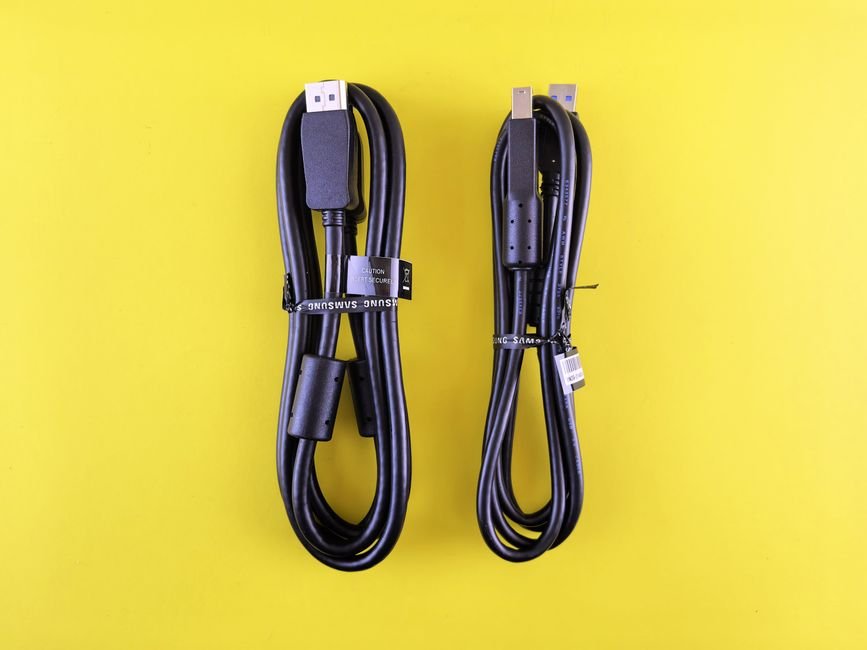
Beyond the Basics: Advanced Features in Modern USB Cables
The ubiquitous USB cable, once a simple conduit for data and power, has evolved into a sophisticated piece of technology, bristling with advanced features that extend its capabilities far beyond its rudimentary origins. While the average consumer might still perceive USB cables as interchangeable, a deeper dive reveals a landscape of innovation, performance enhancements, and specialized functionalities that are crucial for today’s demanding digital ecosystem. Understanding these advanced features is no longer just for the technically inclined; it’s becoming essential for anyone seeking optimal performance from their devices, from high-speed data transfer to immersive multimedia experiences.
One of the most significant advancements lies in power delivery capabilities. Modern USB standards, particularly USB Power Delivery (USB PD), have revolutionized how devices are charged. USB PD allows for dynamic negotiation of power profiles between the charger and the connected device, enabling significantly higher wattage than older USB standards. This means faster charging for laptops, tablets, and even smartphones, reducing downtime and increasing productivity. Beyond raw wattage, USB PD introduces intelligent power management, allowing a single charger to power multiple devices with varying needs. Look for cables supporting USB PD 3.0 or higher, which offer enhanced features like Programmable Power Supply (PPS) for fine-grained voltage and current adjustments, further optimizing charging efficiency and battery health. The physical construction of these cables also plays a role; thicker gauge wires and robust shielding are necessary to handle the increased current without overheating or signal degradation.
Data transfer speeds have also seen exponential growth, driven by advancements in USB specifications. USB 3.2 Gen 2×2, for instance, offers a staggering 20 Gbps bandwidth, enabling rapid transfer of large files like high-resolution videos and extensive photo libraries. This is achieved through the utilization of multiple data lanes and improved encoding schemes. For professionals working with massive datasets, such as video editors or 3D modelers, these speeds translate directly into saved time and increased workflow efficiency. Beyond sheer speed, the reliability of these high-speed connections is paramount. High-quality cables employ advanced shielding techniques, like foil and braided shielding, to minimize electromagnetic interference (EMI) and radio-frequency interference (RFI), ensuring data integrity even in electrically noisy environments. Features like reinforced connectors and strain relief are also critical for maintaining a stable connection during frequent plugging and unplugging.
Alternate Modes (Alt Modes) represent another groundbreaking evolution, transforming USB-C ports into versatile multimedia hubs. Thunderbolt 3 and Thunderbolt 4, built upon the USB-C connector, exemplify the power of Alt Modes. These protocols leverage the high bandwidth of USB-C to carry not only data and power but also DisplayPort video signals and PCIe lanes. This allows a single USB-C cable to connect a laptop to an external monitor, an eGPU, and high-speed storage simultaneously, creating a powerful and streamlined workstation. Other Alt Modes cater to specific needs, such as HDMI Alt Mode for direct video output to HDMI displays, or even specialized industrial protocols. The ability of a USB-C cable to negotiate and support these diverse Alt Modes is a testament to its complex internal architecture and the sophisticated handshake protocols involved. Identifying cables that explicitly state support for specific Alt Modes is crucial for unlocking these advanced functionalities.
The physical design of modern USB cables has also undergone significant refinement. Connector durability and design are paramount. USB-C, with its reversible design, has eliminated the frustration of incorrect insertion. However, the internal construction of USB-C connectors is far more intricate than its predecessors. High-quality USB-C cables feature robust internal pins, often gold-plated for enhanced conductivity and corrosion resistance, and reinforced housing to withstand repeated stress. The addition of e-markers (electronic markers) within the cable itself is a critical feature for advanced functionality. These small chips communicate the cable’s capabilities, such as its maximum supported power, data transfer speed, and Alt Mode compatibility, to the connected devices. This ensures that devices only attempt to draw power or utilize features that the cable can safely and reliably support, preventing damage and performance bottlenecks.
Active cables represent a further leap in performance, particularly for longer cable runs or when pushing the limits of bandwidth. These cables incorporate active electronics within the cable itself, such as signal amplifiers or re-drivers. This allows them to regenerate and strengthen the data signal over distances where passive cables would experience significant degradation, leading to data loss or reduced speeds. Active USB-C cables are essential for applications requiring long-distance connectivity without compromising performance, such as connecting servers in a rack or extending the reach of high-bandwidth peripherals. Identifying active cables often involves checking product specifications for terms like “active,” “boosted,” or “signal repeater.”
Cable management and flexibility are also increasingly considered advanced features, especially in professional and enthusiast setups. While not directly related to data or power transfer, the materials used in cable construction contribute significantly to user experience and longevity. Braided nylon sheathing, for example, offers superior abrasion resistance and tangle prevention compared to traditional rubberized coatings. Flexible internal wiring and robust strain relief at the connector points prevent kinks and breaks, extending the cable’s lifespan. For users with multiple devices and a desire for a clean aesthetic, cables with integrated Velcro straps or magnetic cable ties are becoming more prevalent, facilitating organized and clutter-free setups.
The integration of specialized protocols beyond the standard USB specifications is also a growing trend. For instance, some high-end gaming peripherals and professional audio interfaces utilize custom USB implementations that prioritize ultra-low latency for critical applications. These cables might incorporate specialized chipsets or optimized wiring to minimize any delay between input and output. Similarly, in industrial automation, USB cables might be designed to withstand harsh environmental conditions, including extreme temperatures, vibrations, and exposure to chemicals, incorporating specialized materials and ruggedized connectors.
In conclusion, the modern USB cable is a far cry from its humble beginnings. Advanced features such as high-wattage power delivery, multi-gigabit data transfer speeds, versatile Alternate Modes, integrated e-markers, active signal amplification, and durable, user-friendly construction are transforming how we connect and interact with our devices. As technology continues to advance, we can expect USB cables to become even more intelligent, capable, and integral to our digital lives, pushing the boundaries of performance and convenience.