
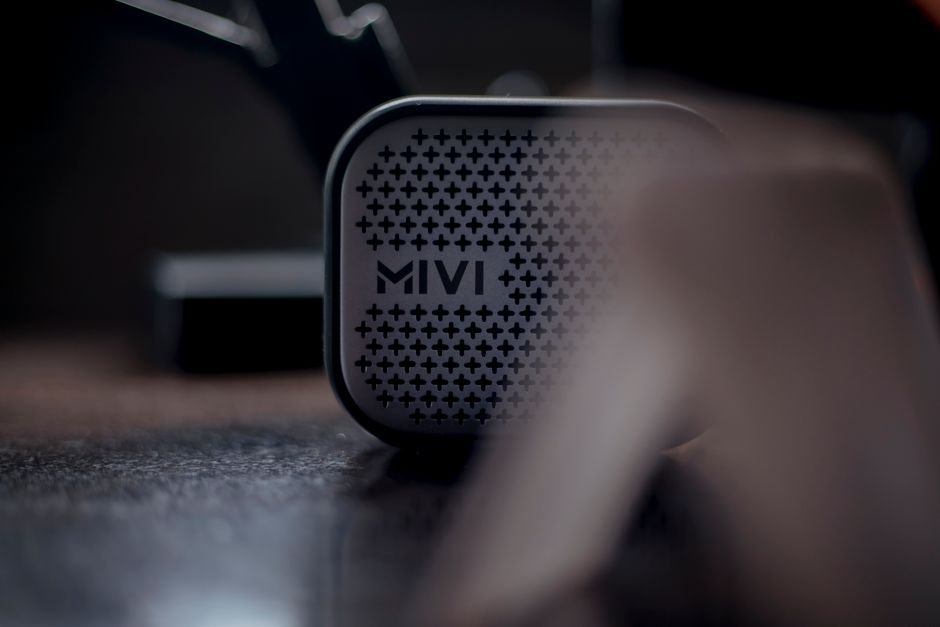
The Future of Sound: Innovative Bluetooth Speaker Technology
The humble Bluetooth speaker, once a simple convenience for portable audio, is undergoing a profound transformation. Beyond mere wireless connectivity, a wave of innovation is reshaping how we experience sound, pushing the boundaries of audio fidelity, environmental integration, and user interaction. The future of Bluetooth speaker technology lies in a sophisticated interplay of advanced acoustics, intelligent processing, and seamless connectivity, promising an era of immersive, personalized, and context-aware soundscapes.
At the forefront of this evolution is the relentless pursuit of enhanced audio fidelity. While Bluetooth 5.0 and its successors have significantly improved bandwidth and reduced latency, the focus is now shifting to higher-resolution audio codecs. Technologies like LDAC (Sony) and aptX HD (Qualcomm) are becoming increasingly prevalent, enabling the transmission of near-lossless audio over Bluetooth. This means audiophiles can finally enjoy the nuances and detail of their favorite tracks without the compromises historically associated with wireless audio. Expect further advancements in codec efficiency and the development of proprietary, ultra-low latency codecs that rival wired connections, opening doors for professional audio monitoring and gaming applications where even milliseconds matter.
Beyond codecs, driver and acoustic engineering are seeing a renaissance. Manufacturers are investing in novel driver materials like graphene, beryllium, and advanced composite structures that offer superior stiffness and responsiveness, leading to clearer highs, richer mids, and more impactful bass. The integration of multiple drivers in sophisticated arrays, coupled with advanced digital signal processing (DSP), is enabling true spatial audio experiences. Think beyond simple stereo; future Bluetooth speakers will likely feature beamforming technology, allowing them to direct sound with pinpoint accuracy, creating personalized sound bubbles for individual listeners or immersing entire rooms in a 3D soundstage. This directional audio capability also opens avenues for privacy-enhancing features, ensuring your music or calls are heard only by you.
Intelligent audio processing and AI integration are poised to revolutionize the user experience. Smart speakers have already laid the groundwork for voice control and smart home integration, but future Bluetooth speakers will go much further. AI algorithms will learn user listening habits, automatically adjusting EQ settings, volume levels, and even speaker placement recommendations based on room acoustics and content being played. Imagine a speaker that detects the genre of music and optimizes its output accordingly, or a speaker that intelligently adapts its sound profile to compensate for background noise in a busy environment. Machine learning will also play a crucial role in predictive maintenance, alerting users to potential issues before they impact performance.
The concept of the “smart” speaker is expanding beyond voice assistants. Future Bluetooth speakers will likely incorporate a wider array of sensors. Environmental sensors could monitor air quality, temperature, and humidity, allowing the speaker to act as a central hub for smart home automation. Integrated cameras, while raising privacy concerns, could enable advanced gesture control or even facial recognition for personalized audio experiences. Imagine a speaker that recognizes your mood and plays music accordingly, or a speaker that seamlessly transitions your audio from one room to another as you move throughout your home, driven by intelligent spatial awareness.
Durability and environmental integration are becoming increasingly important considerations. The trend towards ruggedized, waterproof, and dustproof speakers will continue, catering to outdoor enthusiasts and those who want their audio companions to withstand the elements. However, innovation is also extending to sustainable materials and energy efficiency. Expect to see more speakers constructed from recycled plastics, bamboo, and other eco-friendly materials. Furthermore, advancements in battery technology, including faster charging and longer battery life, will be crucial, alongside the exploration of energy harvesting technologies like solar power for truly off-grid audio solutions.
Connectivity is evolving beyond Bluetooth. While Bluetooth will remain the dominant wireless protocol, the integration of other technologies like Wi-Fi and UWB (Ultra-Wideband) will become more common. Wi-Fi enables higher bandwidth for streaming lossless audio and facilitates seamless integration with multi-room audio systems. UWB, with its precise location tracking capabilities, could unlock new possibilities for augmented reality audio experiences, allowing sounds to be anchored to specific objects or locations in the real world. The concept of mesh networking for speakers will also gain traction, allowing multiple speakers to form a robust and scalable audio network, delivering synchronized audio throughout an entire property.
The form factor and aesthetics of Bluetooth speakers will also see significant diversification. While traditional portable designs will persist, we can anticipate the emergence of speakers that are more seamlessly integrated into our living spaces. Think of speakers disguised as decorative objects, integrated into furniture, or even embedded within walls. The focus will be on creating audio solutions that are not only functional but also aesthetically pleasing and unobtrusive. This could also lead to modular speaker systems, allowing users to customize their audio setup by combining different modules for enhanced bass, mid-range, or treble, or even for specific directional audio capabilities.
Personalization and accessibility will be key drivers of future innovation. Beyond EQ adjustments, future Bluetooth speakers will offer highly customizable audio profiles tailored to individual hearing capabilities. This could include frequency response adjustments for those with hearing loss or personalized soundscapes designed to enhance focus or relaxation. The integration of haptic feedback, allowing users to “feel” the sound, could also open up new avenues for accessibility and immersive experiences.
The future of Bluetooth speaker technology is not a singular destination but a dynamic and evolving landscape. It’s a future where sound is not just heard but experienced – intelligently, immersively, and seamlessly integrated into every facet of our lives. The ongoing advancements in audio fidelity, AI, sensor technology, and connectivity are paving the way for a new generation of audio devices that are more powerful, more intuitive, and more personal than ever before.