
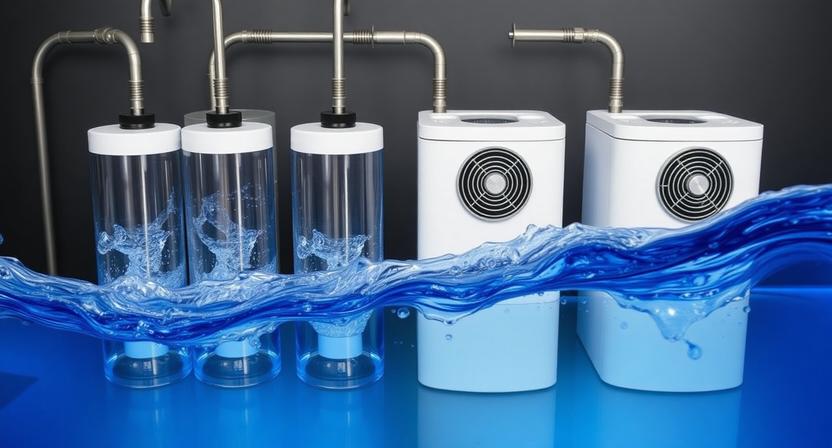
In the relentless pursuit of efficiency and extended equipment lifespan, the often-overlooked realm of cooling water treatment stands paramount. For industrial processes, HVAC systems, and even specialized domestic applications, maintaining the integrity of cooling water is not merely about preventing scale and corrosion; it’s about safeguarding significant investments and ensuring uninterrupted operation. At the heart of this protective strategy lies the cooling water purifier. This comprehensive guide delves deep into the world of these essential devices, equipping you with the knowledge to make informed purchasing decisions that deliver tangible benefits.
Understanding the Enemy: Contaminants in Cooling Water Systems
Before exploring purification technologies, grasping the nature of the adversaries is crucial. Cooling water systems are susceptible to a barrage of contaminants, each posing unique threats:
- Dissolved Solids (Minerals): Primarily calcium and magnesium, these are the culprits behind scale formation. As water heats and evaporates, these minerals precipitate out, forming hard, insulating layers that reduce heat transfer efficiency, clog pipes, and increase energy consumption. Other dissolved solids like silica can also contribute to scaling and fouling.
- Suspended Solids (Particulates): This category encompasses silt, sand, rust particles, and organic debris. These particles can settle in low-flow areas, creating sludge that impedes water flow, acts as a breeding ground for microorganisms, and contributes to corrosion by creating anaerobic conditions.
- Corrosion Byproducts: Rust (iron oxides) and other metallic ions leached from system components are significant concerns. These byproducts not only degrade the system’s integrity but can also exacerbate scaling by acting as nucleation sites for mineral precipitation.
- Microorganisms: Bacteria, algae, and fungi thrive in the nutrient-rich environment of cooling water. They form biofilms, which are slimy layers that impede heat transfer, promote corrosion (microbiologically influenced corrosion – MIC), and can even clog fine filters.
- Dissolved Gases: Oxygen is a primary driver of corrosion. Carbon dioxide can lower pH, leading to acidic conditions and increased metal dissolution.
The Role of Cooling Water Purifiers: More Than Just Filtration
Cooling water purifiers are designed to combat these contaminants through various mechanisms, often employing a multi-stage approach. Their primary objectives are:
- Scale Prevention: By removing or deactivating scale-forming minerals, purifiers prevent the deposition of hard layers on heat exchange surfaces.
- Corrosion Inhibition: Reducing the presence of oxygen, dissolved solids, and corrosive byproducts significantly mitigates the risk of metal degradation.
- Microbiological Control: Preventing the proliferation of harmful microorganisms keeps the system clean and prevents biofilm formation.
- Improved Heat Transfer Efficiency: A clean system with unobstructed heat exchange surfaces operates at peak efficiency, leading to lower energy consumption and reduced operating costs.
- Extended Equipment Lifespan: By preventing scale, corrosion, and fouling, purifiers protect critical components like heat exchangers, pumps, and pipes, significantly extending their operational life and reducing maintenance and replacement expenses.
Key Technologies in Cooling Water Purification: A Comparative Overview
The market offers a diverse range of cooling water purifier technologies, each with its strengths and ideal applications. Understanding these is fundamental to making the right choice:
1. Media Filters (Sand Filters, Multi-media Filters):
- Mechanism: These filters utilize layers of granular media (e.g., sand, anthracite, garnet) to physically trap suspended solids. Water passes through the media bed, and particles larger than the pore spaces are retained.
- Pros: Effective at removing a wide range of suspended solids, relatively low operating cost, robust and durable.
- Cons: Do not remove dissolved solids, require periodic backwashing to clean the media, can become clogged with fine particles over time.
- Best For: Pre-filtration to remove larger debris before more advanced purification stages, systems with high levels of suspended solids.
2. Cartridge Filters:
- Mechanism: Employ disposable cartridges made from various materials (e.g., polypropylene, pleated paper) with specific micron ratings. Water flows through the cartridge, and contaminants are trapped on the surface or within the media.
- Pros: Offer precise filtration down to very low micron ratings, easy to replace, compact size.
- Cons: Cartridges are consumables and require regular replacement, can be more expensive for high-volume applications, may not be suitable for very high temperatures or aggressive chemicals.
- Best For: Fine filtration of suspended solids, applications requiring specific particle size removal, systems with moderate flow rates.
3. Bag Filters:
- Mechanism: Similar to cartridge filters, but use fabric bags housed in a basket. As water flows through the bag, contaminants are trapped.
- Pros: High flow rate capacity, cost-effective for large volumes of suspended solids, easy bag replacement.
- Cons: Less precise filtration than cartridge filters, bags are consumables.
- Best For: High-volume industrial applications with significant suspended solids, pre-filtration before finer stages.
4. Reverse Osmosis (RO) Systems:
- Mechanism: Utilizes a semi-permeable membrane that allows water molecules to pass through while rejecting dissolved salts, minerals, and other contaminants under pressure.
- Pros: Highly effective at removing dissolved solids, producing very pure water, also removes suspended solids and microorganisms.
- Cons: High initial cost, requires significant pre-filtration to protect the RO membrane, produces a concentrated brine reject stream, requires electricity to operate pumps, membrane lifespan can be affected by water quality.
- Best For: Applications requiring extremely pure water, areas with high levels of dissolved solids in the source water, critical systems where scale formation is a major concern.
5. Electrodeionization (EDI) Systems:
- Mechanism: Combines ion exchange resins with an electric current to continuously remove ions from water. The electric field drives ions through ion-selective membranes, separating them from the water.
- Pros: Produces very high-purity water without the need for chemicals or regeneration, low operating cost after initial setup, continuous operation.
- Cons: Requires RO pre-treatment for optimal performance, sensitive to high levels of suspended solids, higher initial cost than RO alone.
- Best For: Applications demanding ultra-pure water, such as high-purity steam generation or sensitive electronic manufacturing processes.
6. Ion Exchange (IX) Systems:
- Mechanism: Employs resin beads that selectively attract and hold specific ions (e.g., calcium, magnesium) from the water, exchanging them for less problematic ions (e.g., sodium or hydrogen).
- Pros: Effective at removing specific dissolved ions, relatively cost-effective for targeted contaminant removal.
- Cons: Resins require periodic regeneration with chemicals (e.g., salt brine), produces a concentrated waste stream during regeneration, not effective for suspended solids.
- Best For: Softening water by removing calcium and magnesium, demineralizing water for specific applications, often used in conjunction with other purification methods.
7. UV Sterilization:
- Mechanism: Uses ultraviolet light to damage the DNA of microorganisms, rendering them unable to reproduce and effectively sterilizing the water.
- Pros: Chemical-free, effective against bacteria, viruses, and protozoa, does not alter water chemistry.
- Cons: Does not remove dissolved or suspended solids, effectiveness can be reduced by turbidity (cloudiness) in the water, requires electricity.
- Best For: Microbiological control, often used as a final polishing step after other purification methods.
8. Chemical Treatment:
- Mechanism: While not strictly a “purifier” in the mechanical sense, chemical treatment plays a vital role in cooling water management. This includes adding scale inhibitors, corrosion inhibitors, biocides, and dispersants.
- Pros: Can be highly effective in preventing scale, corrosion, and microbiological growth.
- Cons: Requires careful dosing and monitoring, potential environmental concerns with some chemicals, can add to operating costs.
- Best For: Comprehensive water treatment programs, often used in conjunction with purification technologies.
Factors to Consider When Choosing Your Cooling Water Purifier:
Selecting the right cooling water purifier involves a careful assessment of several critical factors:
-
Water Source Quality: This is the most crucial starting point. Analyze your source water for:
- Total Dissolved Solids (TDS): High TDS will necessitate technologies like RO or ion exchange.
- Hardness (Calcium & Magnesium): Indicates the propensity for scale.
- Suspended Solids (Turbidity): Dictates the need for robust pre-filtration.
- pH: Affects corrosion rates and the effectiveness of certain treatment methods.
- Presence of specific ions: Iron, silica, etc.
- Microbiological Load: Determines the need for sterilization.
-
System Design and Application:
- Flow Rate: The purifier must be sized to handle the required water flow without becoming a bottleneck.
- Operating Temperature and Pressure: Some technologies have limitations.
- Materials of Construction: Ensure compatibility with system materials.
- Cooling Tower Type: Open recirculating, closed-loop, or once-through systems have different water chemistry challenges.
- Sensitivity of Equipment: Highly sensitive equipment may require higher purity water.
Tata Swach Bulb 6000-Litre Cartridge, 1 Piece, White, Hollow Fiber Membrane
₹699.00 (as of March 24, 2026 15:26 GMT +05:30 - More infoProduct prices and availability are accurate as of the date/time indicated and are subject to change. Any price and availability information displayed on [relevant Amazon Site(s), as applicable] at the time of purchase will apply to the purchase of this product.)
ZeroB Suraksha Tap 2.0 | Non-Electric Tap Water Filter | Advance Exsil Nano Technology | 1800L Purification | Removes 99.99% Bacteria & Viruses | Portable & Fits Any Taps | Drinking, Kitchen & Outdoor
₹1,899.00 (as of March 24, 2026 15:25 GMT +05:30 - More infoProduct prices and availability are accurate as of the date/time indicated and are subject to change. Any price and availability information displayed on [relevant Amazon Site(s), as applicable] at the time of purchase will apply to the purchase of this product.)
Aqua Grand RO Water Purifier for Home | 12 Stage RO+UV+UF+Copper | High TDS 2000 PPM Membrane | 12L Storage, 20 LPH | Fully Automatic | Best for Borewell, Tanker & Municipal Water
Now retrieving the price.
(as of March 24, 2026 15:25 GMT +05:30 - More infoProduct prices and availability are accurate as of the date/time indicated and are subject to change. Any price and availability information displayed on [relevant Amazon Site(s), as applicable] at the time of purchase will apply to the purchase of this product.)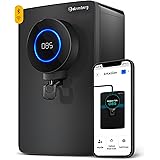
Atomberg Intellon - India’s 1st Adaptive Water Purifier*| RO+UF+UV+Alkaliser | Zero Cost for 2Yrs | 4 Modes | TDS-Based Filtration | Smart IoT | 7-Stage | Retains Minerals | 8L | 2Yr Warranty | No AMC
₹17,899.00 (as of March 24, 2026 15:26 GMT +05:30 - More infoProduct prices and availability are accurate as of the date/time indicated and are subject to change. Any price and availability information displayed on [relevant Amazon Site(s), as applicable] at the time of purchase will apply to the purchase of this product.)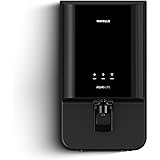
Havells Aquas Lite Water Purifier, UV + UF Purification, 4-stages, 7L Storage, Ideal for Municipal Water, Significant water savings, BIS Approved, Black
₹7,979.00 (as of March 24, 2026 15:26 GMT +05:30 - More infoProduct prices and availability are accurate as of the date/time indicated and are subject to change. Any price and availability information displayed on [relevant Amazon Site(s), as applicable] at the time of purchase will apply to the purchase of this product.)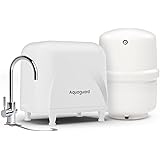
Aquaguard Select Designo 9-Stage Under The Counter Water Purifier | RO+UV+Active Copper Tech | Taste Adjuster | Inbuilt Pressure Pump | Suitable for Tanker, Borewell & Municipal Water
₹15,999.00 (as of March 24, 2026 15:26 GMT +05:30 - More infoProduct prices and availability are accurate as of the date/time indicated and are subject to change. Any price and availability information displayed on [relevant Amazon Site(s), as applicable] at the time of purchase will apply to the purchase of this product.)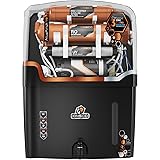
Kinsco Aqua Punch Pro With ISI Mark RO+UV+UF+TDS Adjuster 18 L RO + UV + CU Guard + Alkaline Enhancer + Mineral Water Purifier (Black)
₹4,499.00 (as of March 24, 2026 15:26 GMT +05:30 - More infoProduct prices and availability are accurate as of the date/time indicated and are subject to change. Any price and availability information displayed on [relevant Amazon Site(s), as applicable] at the time of purchase will apply to the purchase of this product.)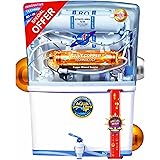
Aqua Libra 12 Litre Water Purifier (ISI Mark) - RO+UV+UF+Copper Technology with In-tank UV LED Sterilization | Suitable for Borewell & Municipal Water | 1 Year Warranty
₹3,300.00 (as of March 24, 2026 15:25 GMT +05:30 - More infoProduct prices and availability are accurate as of the date/time indicated and are subject to change. Any price and availability information displayed on [relevant Amazon Site(s), as applicable] at the time of purchase will apply to the purchase of this product.)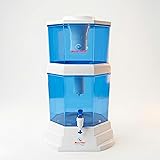
Microfilter Polymers Limited Gravity Based Non-Electric Water Purifier| Multi-Layer Filtration System| UF Ultra Mesh Technology | Chemical-Free, Easy to Use Water Filter for Home & Office (20 Litre)
₹1,465.00 (as of March 24, 2026 15:25 GMT +05:30 - More infoProduct prices and availability are accurate as of the date/time indicated and are subject to change. Any price and availability information displayed on [relevant Amazon Site(s), as applicable] at the time of purchase will apply to the purchase of this product.)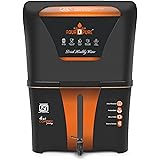
AQUA D PURE 4 in 1 Copper RO Water Purifier with 10 Stage Purification Filtration, UV, UF, TDS Adjuster and 12 Liter Large Storage Tank, Suitable for all type of water supply.
₹4,939.00 (as of March 24, 2026 15:26 GMT +05:30 - More infoProduct prices and availability are accurate as of the date/time indicated and are subject to change. Any price and availability information displayed on [relevant Amazon Site(s), as applicable] at the time of purchase will apply to the purchase of this product.)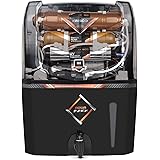
Kinsco Aqua Punch 15 Litre Copper + RO + UV + UF + TDS Adjuster Pure Copper Water Purifier Dispenser Machine, Black (With Free Pre Filter)
₹4,092.00 (as of March 24, 2026 15:26 GMT +05:30 - More infoProduct prices and availability are accurate as of the date/time indicated and are subject to change. Any price and availability information displayed on [relevant Amazon Site(s), as applicable] at the time of purchase will apply to the purchase of this product.)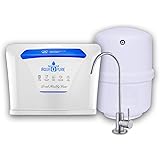
AQUA D PURE 12L Under Sink RO Water Purifier | RO + UV + UF + TDS Controller + Copper Filter | Under-Counter Purification System |White
₹9,499.00 (as of March 24, 2026 15:25 GMT +05:30 - More infoProduct prices and availability are accurate as of the date/time indicated and are subject to change. Any price and availability information displayed on [relevant Amazon Site(s), as applicable] at the time of purchase will apply to the purchase of this product.)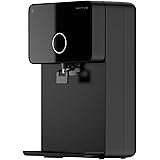
Native by Urban Company M1 RO+UV+Copper+Alkaline+Mineraliser | 10-Stage Water Purifier | No Service for 2 Years | India's Only 2-year Unconditional Warranty | 8L Storage
₹14,999.00 (as of March 24, 2026 15:26 GMT +05:30 - More infoProduct prices and availability are accurate as of the date/time indicated and are subject to change. Any price and availability information displayed on [relevant Amazon Site(s), as applicable] at the time of purchase will apply to the purchase of this product.)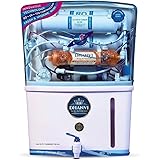
DHANVI Aqua Fresh RO UV UF Copper Water Purifier | 12L Storage | TDS Adjuster | Inside Tank Technology | Home Kitchen Water Filter System
₹3,300.00 (as of March 24, 2026 15:25 GMT +05:30 - More infoProduct prices and availability are accurate as of the date/time indicated and are subject to change. Any price and availability information displayed on [relevant Amazon Site(s), as applicable] at the time of purchase will apply to the purchase of this product.)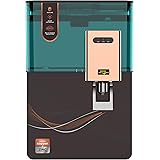
AQUA LIBRA ISI Mark Water Purifier for Home | RO + UV + UF + Copper + UV LED | 12L Tank | Suitable for Borewell, Tanker & Municipal Water
₹6,199.00 (as of March 24, 2026 15:25 GMT +05:30 - More infoProduct prices and availability are accurate as of the date/time indicated and are subject to change. Any price and availability information displayed on [relevant Amazon Site(s), as applicable] at the time of purchase will apply to the purchase of this product.)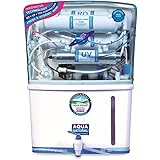
Aqua X Pure RO Domestic Water Purifier (RO+UV+COPPER With ZINC+ HIGH TDS MEMBRANE+ TDS CONTROL) Best For Home/Office Purpose, Automatic | 12 Liter Storage||.
₹4,199.00 (as of March 24, 2026 15:25 GMT +05:30 - More infoProduct prices and availability are accurate as of the date/time indicated and are subject to change. Any price and availability information displayed on [relevant Amazon Site(s), as applicable] at the time of purchase will apply to the purchase of this product.)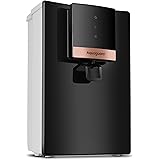
AQUAGUARD NEO COPPER UV UF
Now retrieving the price.
(as of March 24, 2026 15:26 GMT +05:30 - More infoProduct prices and availability are accurate as of the date/time indicated and are subject to change. Any price and availability information displayed on [relevant Amazon Site(s), as applicable] at the time of purchase will apply to the purchase of this product.)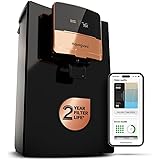
Aquaguard Ritz Pro RO+UV+Copper Water Purifier I Stainless Steel Tank | 2 year filter life | SMART Purifier | TDS Display | FilterLife & Water In take Tracker | With Mega Sediment filter
₹17,499.00 (as of March 24, 2026 15:26 GMT +05:30 - More infoProduct prices and availability are accurate as of the date/time indicated and are subject to change. Any price and availability information displayed on [relevant Amazon Site(s), as applicable] at the time of purchase will apply to the purchase of this product.)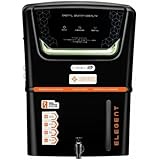
Havok Elegant RO + UV + UF + TDS Controller Water Purifier with Digital Smart Display | 15L Storage | 3-in-1 Mineralizer Copper Water Purifier | Multi-Stage Purification for Home (Black & Green)
₹3,699.00 (as of March 24, 2026 15:25 GMT +05:30 - More infoProduct prices and availability are accurate as of the date/time indicated and are subject to change. Any price and availability information displayed on [relevant Amazon Site(s), as applicable] at the time of purchase will apply to the purchase of this product.)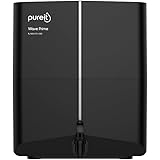
Pureit Wave Prime Water Purifier for Home (Black) with RO+MF Filtration | Water Purifier Filter For Home | 6-Stage Purification | Up to 45% Savings | Suitable for Borewell/Tanker/Municipal Supply | 7L
₹7,499.00 (as of March 24, 2026 15:26 GMT +05:30 - More infoProduct prices and availability are accurate as of the date/time indicated and are subject to change. Any price and availability information displayed on [relevant Amazon Site(s), as applicable] at the time of purchase will apply to the purchase of this product.)