
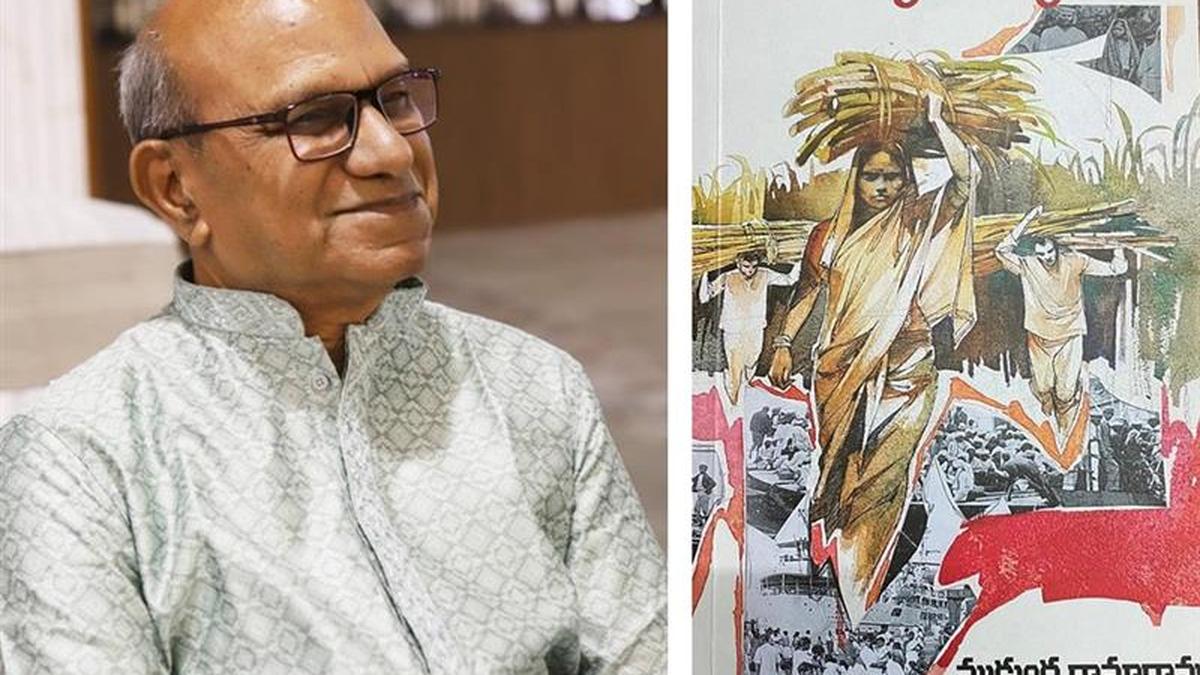
“You are happy now. Why do you want to know all this?”
Mukunda Ramarao faced this question whenever he tried, late in life, to ask about his family’s past. At 82, the Hyderabad-based academic and technologist has finally answered that question for himself — and for thousands of others whose histories were erased by distance, paperwork and silence.
His Telugu book Agamya Gamyaalu (Impassable Destinations of Elusive Horizons — the title translated by the author) is not a conventional family memoir. It is a painstaking chronicle of the Indian indentured labour system that transported nearly 1.5 million men and women from the subcontinent to plantations and worksites across South Africa, the Caribbean, Fiji, Mauritius and parts of Africa between the 19th and early 20th centuries. Mukunda’s own grandparents were among them.
“My father was born in South Africa,” he says, his voice steady but reflective. “But I did not know this story for most of my life.”
His grandparents left their neighbouring villages in Andhra Pradesh separately, without knowing each other, bound by five-year labour contracts under the British colonial system. They met only after landing in South Africa, where they got married, and returned to India (departed on February 2, 1914, aboard the ship Umkuzi) shortly after their son — Mukunda’s father — was born. Unlike many indentured labourers who stayed on, they chose to return, unwilling to endure another term.
Buried history
Yet this extraordinary journey was never spoken of at home. Mukunda grew up in Kharagpur, West Bengal, where his family found work in the railways. “They never told me,” he says. “Even when I asked, they would say, ‘You are happy now. Be happy’.”
Seven or eight years ago, after relatives from South Africa re-established contact and fragments of documents began surfacing, the scale of the story emerged. Birth certificates, marriage records, altered names, lost addresses — each piece revealed how deeply indentured labour fractured families, identities and memories.

Beyond personal history, Mukunda discovered a global pattern. Indentured labour, often described as a post-slavery system, was anything but benign. Recruiters – agents of colonial governments – targeted impoverished villages, promising wages and land. Many were deceived, coerced or taken. Once transported by ship, labourers were bound by contracts they could not read, enforced through violence, imprisonment and economic strangulation. Women faced sexual exploitation; families were broken apart; mortality rates were high.
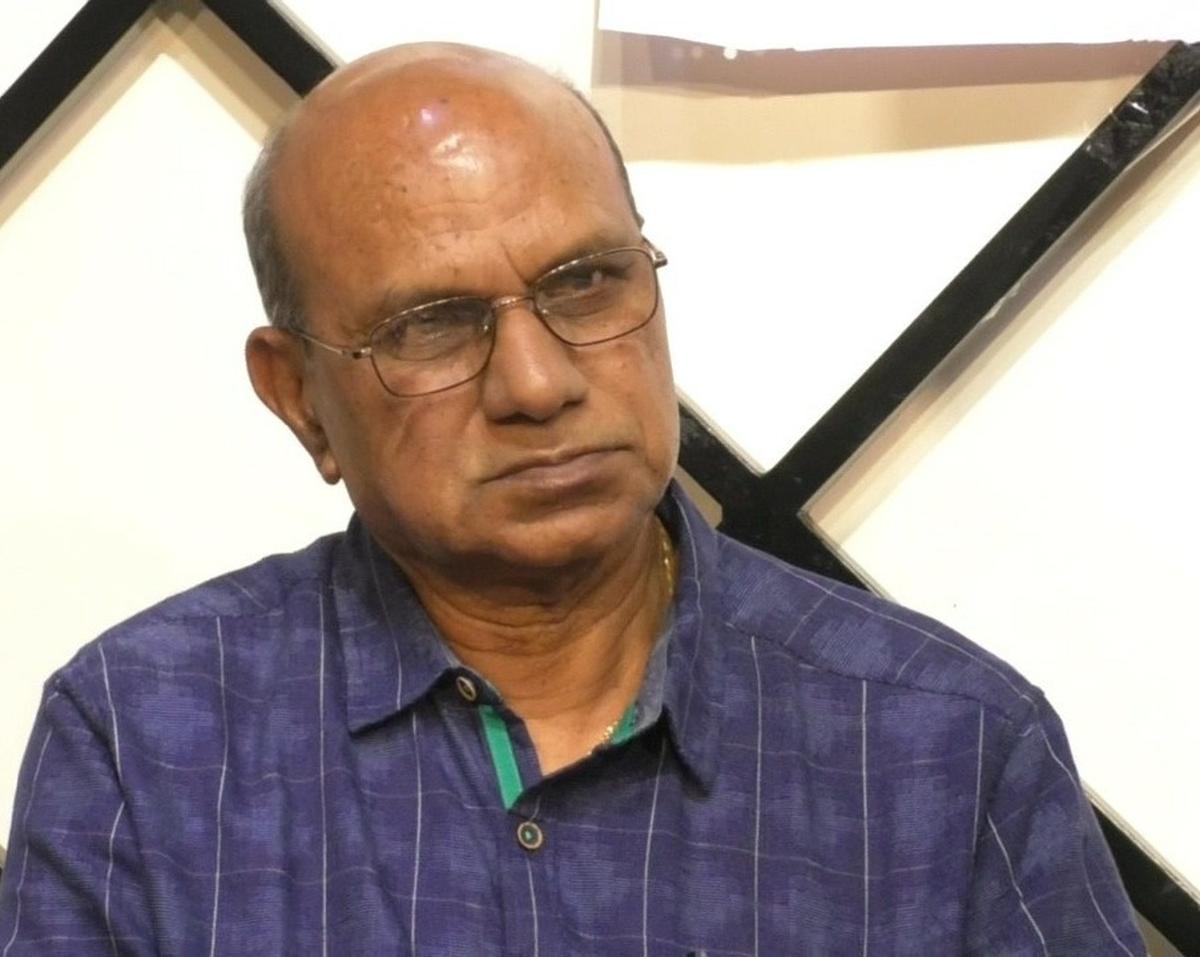
Mukunda Ramarao
| Photo Credit:
Special Arrangement
“From the moment they were picked up, it was hell,” Mukunda says. “They did not know where they were going, how long the journey was, or whether they would return.”
What followed after arrival was no less brutal. Labourers worked on sugar plantations, railways and farms under harsh supervision, paid little or nothing, restricted from moving freely, and punished for dissent. Names were misspelt or changed entirely; letters home rarely reached; religions and social identities were reshaped by survival. Many never returned. Those who did often found themselves alienated, seen as outsiders in their villages.
Global apathy
This experience, Mukunda insists, was not unique to Indians in South Africa. “This happened in nearly 20 countries,” he says. “The geography changes, not the suffering.”
That global lens is central to Agamya Gamyaalu. Though Mukunda initially set out to document South Africa, his research widened as he realised how interconnected the system was. He spent nearly six years gathering material from archives, personal accounts and overseas contacts, deliberately keeping his family in the background.
“I did not want this to become my story,” he says. “My grandparents are important to me, but there are so many grandparents. Their pain is bigger than mine.”
Ironically, Mukunda was never trained as a historian. A science graduate with a PhD in mathematics from IIT Kharagpur, he spent decades working in software, including on railway reservation systems; the most significant being the development of the utility software POET (Passenger Operated Enquiry Terminal).
A writer and a distinguished poet, he describes himself as a ‘misfit’ when it comes to writing history. Yet that distance may have given him clarity, allowing him to avoid romanticising endurance or diluting violence.

The book avoids sentimentality. It confronts how indentured labour functioned as a global economic system, one that replaced slavery in form, but not in spirit. Its legacy remains visible today in diaspora communities whose languages, religions and surnames reflect the forced migration.
For Mukunda, the greatest tragedy is silence. “Parents hide pain to give children a better life,” he says. “But when they hide everything, children lose their roots.”
Agamya Gamyaalu is an attempt to restore those roots — not just for his descendants, but for anyone willing to look beyond statistics and dates.
In bringing together stories scattered across oceans and generations, Mukunda reminds us that indentured labour was not a marginal episode in history. It was a global displacement, and its echoes are still with us.
(Agamya Gamyaalu by Mukunda Ramarao, distributed by Navodaya Book House, Hyderabad; ₹350)
Published – February 26, 2026 03:45 pm IST
