
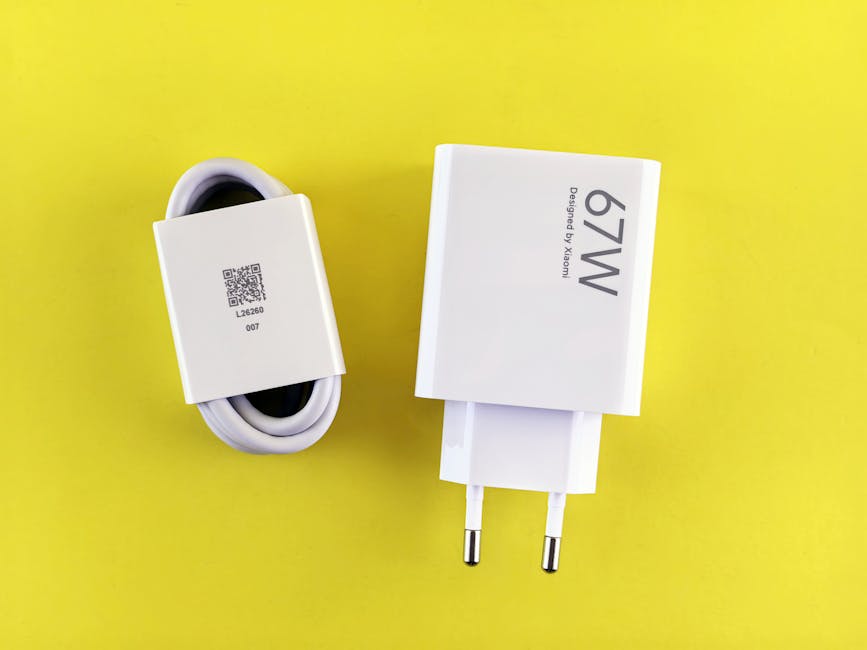
Power Up Swiftly: Navigating the Maze of Smartphone Fast Chargers
In today’s hyper-connected world, a dead smartphone battery is more than an inconvenience; it’s a digital lifeline severed. Fortunately, the advent of fast charging technology has revolutionized how we replenish our devices, transforming minutes of waiting into mere moments. However, the sheer volume of fast charger options can be overwhelming, leaving consumers perplexed about which charger truly delivers on its promise without compromising their precious smartphone. This comprehensive guide will equip you with the knowledge to navigate this complex landscape, ensuring you choose the right fast charger for your specific needs.
Understanding the Fast Charging Landscape: Protocols and Power
The key to unlocking rapid charging lies in understanding the underlying charging protocols. These are standardized communication languages between your charger and your smartphone, dictating how much power can be safely transferred. The most prevalent protocols include:
- USB Power Delivery (USB PD): This is a highly versatile and widely adopted standard, particularly prevalent in newer Android devices and iPhones. USB PD allows for dynamic negotiation of voltage and current, enabling higher power outputs. Look for chargers that explicitly state “USB PD” support. Different versions of USB PD (e.g., PD 2.0, PD 3.0, PD 3.1) offer progressively higher power capabilities.
- Qualcomm Quick Charge (QC): A dominant force in the Android ecosystem for years, Quick Charge is still relevant for many devices. QC versions (QC 3.0, QC 4+, QC 5) offer increasing speeds and efficiency. Newer QC versions are often backward compatible with older ones.
- Proprietary Charging Technologies: Many manufacturers have developed their own proprietary fast charging solutions to differentiate their offerings and push performance boundaries. Examples include:
- Samsung’s Super Fast Charging (AFC): Primarily for Samsung devices, often leveraging USB PD at higher wattages.
- OnePlus Warp Charge/SuperVOOC/SuperVOOC 2.0: Known for its exceptionally fast charging speeds, often requiring specific OnePlus cables and chargers.
- Xiaomi’s Mi Turbo Charge/HyperCharge: Similar to OnePlus, Xiaomi offers aggressive charging speeds, often with dedicated hardware.
- Oppo’s VOOC/SuperVOOC: A pioneer in fast charging, Oppo’s technologies are highly efficient and can be found in devices from other brands through licensing agreements.
Wattage: The Horsepower of Your Charger
Beyond protocols, wattage (W) is the direct measure of a charger’s power output. Higher wattage generally translates to faster charging. However, it’s crucial to understand that your smartphone will only draw the maximum wattage it’s designed to handle. A 100W charger won’t magically make a 25W-capable phone charge at 100W.
- Low Wattage (5W-10W): Standard charging, suitable for older devices or overnight charging.
- Medium Wattage (18W-30W): Common for many smartphones, offering a noticeable speed improvement over standard charging.
- High Wattage (30W-65W): Increasingly common for flagship smartphones, delivering rapid top-ups.
- Ultra-High Wattage (65W+): Found in high-end smartphones and increasingly in chargers designed for multiple devices, capable of charging even power-hungry laptops.
Key Factors to Consider When Choosing Your Fast Charger:
-
Your Smartphone’s Charging Capabilities: This is paramount. Check your phone’s specifications or its original charger. Most manufacturers list the maximum supported charging wattage. Using a charger with significantly higher wattage than your phone can support is generally safe (due to the negotiation process), but you won’t experience the full speed benefit. Conversely, using a lower wattage charger will result in slower charging.
-
Supported Charging Protocols: Ensure the charger supports the fast charging protocol used by your smartphone. If your phone uses USB PD, prioritize a USB PD-certified charger. If it relies on a proprietary technology, a genuine charger from that manufacturer is often the best bet for optimal performance and safety.
-
Number of Ports and Device Compatibility:
- Single-Port Chargers: Ideal for users who primarily need to charge one device at a time.
- Multi-Port Chargers: Essential for those with multiple devices (phone, tablet, earbuds, smartwatch). Look for chargers with a combination of USB-A and USB-C ports, and ensure they can intelligently distribute power among connected devices. Some multi-port chargers offer a high-wattage USB-C PD port for your primary device and lower-wattage ports for secondary devices.
-
Charger Type: Wall Adapters vs. Power Banks:
- Wall Adapters: The most common type, designed for use with wall outlets. They offer the highest sustained power output.
- Power Banks: Portable batteries that allow you to charge your devices on the go. Many modern power banks incorporate fast charging protocols and high wattages. Consider the capacity (mAh) and the output wattage when choosing a power bank.
-
Cable Quality: The charging cable is as important as the charger itself. A low-quality cable can bottleneck charging speed and even pose a safety risk.
- USB-C to USB-C: For most modern fast charging, this is the standard.
- Look for USB-IF Certified Cables: This certification ensures the cable meets safety and performance standards.
- Thicker Cables: Generally indicate better conductivity and can handle higher power.
- Proprietary Cables: Some manufacturers (like OnePlus with Warp Charge) require specific cables to achieve their fastest speeds.
-
Safety Features and Certifications:
- Over-Voltage Protection (OVP): Prevents excessive voltage from damaging your device.
- Over-Current Protection (OCP): Prevents too much current from flowing.
- Over-Temperature Protection (OTP): Shuts down the charger if it overheats.
- Short-Circuit Protection (SCP): Protects against short circuits.
- UL, CE, FCC Certifications: These indicate that the charger has undergone rigorous safety testing.
-
Brand Reputation and Reviews: Stick with reputable brands known for their quality and reliability. Read user reviews to gauge real-world performance, durability, and any potential issues.
Navigating Specific Scenarios:
- For iPhone Users: Newer iPhones (iPhone 8 and later) support USB PD. Look for USB PD chargers with at least 20W output. For the fastest charging, a 30W or higher USB PD charger is recommended. Remember, you’ll need a USB-C to Lightning cable.
- For Samsung Users: Samsung devices often support both USB PD and their proprietary Adaptive Fast Charging (AFC). For the fastest charging, look for chargers that explicitly mention “Super Fast Charging” or support USB PD at 25W or 45W (depending on your model).
- For Android Users with Multiple Protocols: If your Android phone supports both USB PD and a Qualcomm Quick Charge version, a charger that supports both will offer the most flexibility.
- For Gamers and Power Users: If you frequently use your phone for demanding tasks, a charger with a higher wattage and robust safety features is crucial to ensure consistent power delivery without overheating.
- For Travelers: A compact, multi-port wall charger can be a lifesaver, allowing you to charge multiple devices simultaneously at the fastest possible speeds. Consider a power bank with fast charging capabilities for on-the-go power.
The Future of Fast Charging:
The fast charging landscape is constantly evolving. We’re seeing advancements in GaN (Gallium Nitride) technology, which allows for smaller, more efficient, and cooler-running chargers. Power outputs continue to climb, with some devices already supporting charging speeds exceeding 100W. As standards mature and competition intensifies, expect even faster, safer, and more versatile charging solutions to emerge.
By understanding the fundamental principles of charging protocols, wattage, and safety, and by carefully considering your smartphone’s capabilities and your personal usage habits, you can confidently select the right fast charger to keep your digital life powered up and connected.