
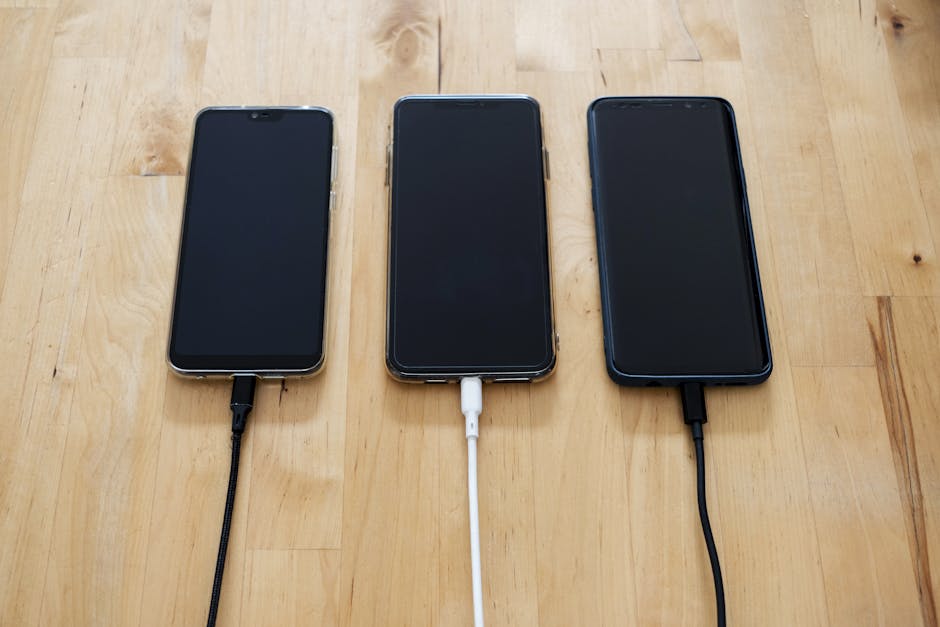
Fast Charging 5G Phones: The Ultimate Speed Boost
The advent of 5G technology has ushered in an era of unprecedented mobile speeds, transforming how we download, stream, and interact with the digital world. However, this enhanced connectivity comes with a voracious appetite for power. Enter fast charging – the critical enabler that ensures our 5G-enabled devices can keep pace with our demanding usage. Fast charging for 5G phones isn’t just a convenience; it’s an essential component of the 5G experience, providing the ultimate speed boost that complements and amplifies the network’s capabilities.
The 5G Power Paradox: Speed vs. Stamina
5G networks, with their higher frequencies and wider bandwidths, enable significantly faster data transfer rates and lower latency. This translates to near-instantaneous downloads, seamless 4K streaming, and incredibly responsive online gaming. Yet, these advanced functionalities require more processing power and constant communication with the cellular network, leading to increased battery drain. Early 5G devices often struggled with battery life, leaving users tethered to chargers for extended periods. This is where fast charging technology steps in, mitigating the power paradox and ensuring the 5G experience is both exhilarating and practical.
Understanding Fast Charging Technologies: A Deeper Dive
The term “fast charging” encompasses a range of technologies designed to replenish a smartphone’s battery significantly quicker than standard charging. These technologies operate by increasing the voltage and current supplied to the battery, thereby accelerating the rate of energy transfer. Several proprietary and standardized protocols exist, each with its own strengths and limitations:
-
USB Power Delivery (USB PD): This is a universal standard that allows for higher power output and intelligent negotiation between the charger and the device. USB PD is highly adaptable, supporting a wide range of power levels, making it a cornerstone for many fast-charging solutions. It’s particularly crucial for 5G phones as it enables higher wattage delivery, significantly reducing charging times. The flexibility of USB PD means a single charger can often power multiple devices, from smartphones to laptops, a key benefit in a world increasingly reliant on mobile connectivity.
-
Qualcomm Quick Charge (QC): A widely adopted proprietary technology, Qualcomm’s Quick Charge has seen numerous iterations, with each generation offering progressively faster charging speeds. QC 4+ and its successors are designed to be compatible with USB PD, offering a robust and efficient charging solution for a vast array of Android devices, many of which are 5G enabled. The intelligent power management in Quick Charge helps to prevent overheating and optimize battery health, a critical consideration for devices that are constantly pushing the boundaries of performance.
-
Proprietary Charging Technologies: Many manufacturers have developed their own proprietary fast-charging solutions to differentiate their products and offer even more rapid charging. Examples include:
- OnePlus Warp Charge/SuperVOOC: Known for its exceptionally fast charging speeds, OnePlus’s technology often prioritizes delivering high wattage directly to the battery.
- Samsung Adaptive Fast Charging/Super Fast Charging: Samsung offers various levels of fast charging, with its latest iterations achieving impressive charging speeds comparable to other leading brands.
- Xiaomi Mi Turbo Charge/HyperCharge: Xiaomi has consistently pushed the envelope with its charging speeds, introducing technologies that can charge devices from 0 to 100% in remarkably short times.
The key to these proprietary systems often lies in specialized charging ICs (Integrated Circuits) within both the charger and the phone, as well as unique battery architectures that can safely handle higher charging rates.
The Wattage Game: More Watts, More Speed
The speed of fast charging is directly proportional to the wattage (W) delivered. Standard chargers typically range from 5W to 15W. Fast charging for 5G phones, however, often starts at 25W and can go upwards of 120W, and even higher in some experimental devices.
-
25W-45W: This range is becoming increasingly common for mid-range and many flagship 5G phones. It allows for a significant reduction in charging time compared to standard chargers, often enabling a substantial charge (e.g., 50%) in around 30 minutes.
-
65W-120W+: High-end 5G smartphones are increasingly adopting these higher wattage chargers. Devices with 100W+ charging can often reach a full charge in under 20 minutes, effectively eliminating the need for overnight charging and making a quick top-up during a coffee break a viable option. This level of speed is particularly beneficial for power-hungry 5G applications, ensuring users can quickly regain battery capacity and continue their high-speed activities.
How Fast Charging Works: The Science Behind the Speed
Fast charging isn’t magic; it’s a sophisticated interplay of hardware and software. The fundamental principle involves increasing the amount of electrical energy delivered to the battery per unit of time. This is achieved through several mechanisms:
-
Increased Voltage and Current: Standard USB charging typically operates at 5V. Fast charging protocols can increase the voltage (e.g., to 9V, 12V, or even higher) and/or the current (e.g., from 1A to 3A or more). The combination of voltage and current determines the wattage (Power = Voltage x Current).
-
Intelligent Negotiation: Modern fast-charging systems employ sophisticated communication protocols between the charger and the device. This negotiation allows them to dynamically adjust the charging parameters based on the battery’s current state, temperature, and health. This intelligent management is crucial to prevent overcharging, overheating, and battery degradation.
-
Multi-Stage Charging: Batteries are not charged linearly. Fast charging often utilizes a multi-stage process:
- Constant Current (CC) Phase: In the initial phase, the charger delivers a constant high current to rapidly fill the battery.
- Constant Voltage (CV) Phase: As the battery approaches full capacity, the voltage is kept constant, and the current gradually decreases to prevent overcharging and protect the battery.
- Trickle Charging: In the final stages, a very low current is used to maintain the charge at 100% and compensate for self-discharge.
-
Thermal Management: Higher charging rates generate more heat. Advanced fast-charging systems incorporate robust thermal management systems, including temperature sensors and adaptive charging algorithms, to dissipate heat effectively and ensure safe operation, protecting both the battery and the device. Some devices feature dual-battery configurations or specialized cooling solutions to handle the increased thermal load.
The Benefits of Fast Charging for 5G Users
The integration of fast charging with 5G phones yields a multitude of practical advantages:
-
Uninterrupted 5G Experience: The primary benefit is the ability to quickly recharge your device, ensuring you can continue to utilize the high speeds and low latency of 5G without constant battery anxiety. Whether it’s downloading large files, streaming high-definition content, or engaging in real-time multiplayer gaming, fast charging keeps you powered up.
-
Reduced Downtime: Gone are the days of leaving your phone plugged in for hours. A quick 15-30 minute charge can often provide enough power to last for several hours of moderate use, significantly reducing downtime and keeping you connected throughout the day. This is invaluable for busy professionals, frequent travelers, and anyone who relies heavily on their smartphone.
-
Enhanced Productivity and Entertainment: With fast charging, you’re less likely to be interrupted by a low battery warning. This allows for extended productivity sessions, uninterrupted movie marathons, and immersive gaming experiences without the nagging concern of your phone dying.
-
Flexibility and Convenience: The ability to quickly top up your battery offers unparalleled flexibility. You can charge your phone during a short break, while commuting, or even during a quick stop at a cafe, ensuring you always have sufficient power when you need it most.
-
Future-Proofing: As 5G adoption grows and applications become more demanding, fast charging will become even more indispensable. Investing in a 5G phone with robust fast-charging capabilities ensures you are well-equipped for the evolving mobile landscape.
Choosing the Right Fast Charger for Your 5G Phone
To harness the full potential of your 5G phone’s fast-charging capabilities, selecting the correct charger is paramount. Here are key considerations:
-
Compatibility is Key: Always check if the charger is compatible with your phone’s specific fast-charging protocol (e.g., USB PD, Quick Charge, or the manufacturer’s proprietary technology). Using an incompatible charger may result in slower charging speeds or, in rare cases, damage to the device.
-
Wattage Matters: Ensure the charger’s wattage meets or exceeds your phone’s maximum supported charging speed. For example, if your 5G phone supports 65W charging, a 30W charger will not provide the fastest possible charge.
-
Quality of the Charger: Opt for reputable brands and chargers that meet safety standards. Cheap, unbranded chargers may not offer the same level of safety or efficiency and could potentially damage your device or pose a fire hazard. Look for certifications like UL, CE, or FCC.
-
Cable Quality: The charging cable plays an equally important role. For high-wattage fast charging, you need a cable that can safely handle the increased power. USB-IF certified cables are recommended, especially those rated for higher amperages. A flimsy or low-quality cable can bottleneck charging speed and generate excessive heat.
-
Consider a Multi-Port Charger: If you have multiple