
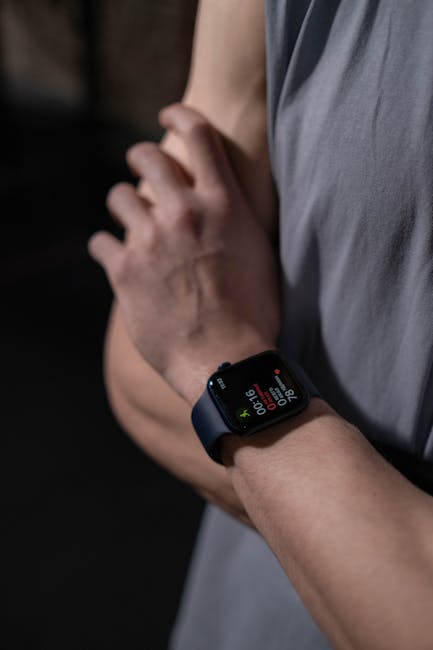
Unlock Your Potential: Setting Personalized Fitness Goals with Your Smart Band
Your smart band is more than just a step counter; it’s a powerful tool for crafting and achieving personalized fitness goals. Gone are the days of one-size-fits-all workout plans. With the data your wearable collects, you can now tailor your journey to your unique body, lifestyle, and aspirations. This article will guide you through leveraging your smart band’s capabilities to set, track, and conquer your fitness objectives, optimizing your health and performance like never before.
Understanding Your Baseline: The Foundation of Personalization
Before setting any goals, your smart band’s primary function is to provide a snapshot of your current fitness level. It meticulously records metrics such as:
- Steps Taken: A fundamental indicator of daily activity.
- Distance Covered: Provides context for your step count and helps estimate calorie expenditure.
- Active Minutes/Zone Minutes: Crucial for understanding how much time you spend in heart rate zones that promote cardiovascular health and fat burning.
- Heart Rate: Your resting heart rate (RHR) is a key indicator of cardiovascular fitness. Your maximum heart rate (MHR) and target heart rate zones are essential for optimizing workout intensity.
- Sleep Quality and Duration: Recovery is paramount. Your band’s sleep tracking reveals patterns, duration, and stages (light, deep, REM), highlighting areas for improvement that directly impact your fitness progress.
- Calories Burned: An estimate of your energy expenditure, both through basal metabolic rate (BMR) and activity.
- VO2 Max (on some models): A direct measure of your aerobic capacity, indicating how efficiently your body uses oxygen.
Actionable Insight: Review your smart band’s historical data. Look for trends over the past week and month. What’s your average daily step count? How many active minutes do you typically achieve? What’s your resting heart rate? This data forms your personal fitness baseline, the essential starting point for setting realistic and achievable goals.
Crafting SMART Fitness Goals with Smart Band Data
The SMART framework (Specific, Measurable, Achievable, Relevant, Time-bound) is the gold standard for goal setting. Your smart band amplifies each element:
- Specific: Instead of “get fitter,” aim for “increase my average daily step count by 20%.” Your band provides the exact numbers to define this specificity.
- Measurable: Your smart band is the measurement tool. Each metric it tracks becomes a quantifiable target.
- Achievable: Use your baseline data to set goals that are challenging but not overwhelming. If your average is 5,000 steps, aiming for 20,000 tomorrow is unrealistic. A 10-15% increase is a more achievable starting point.
- Relevant: Ensure your goals align with your overall health and fitness aspirations. If your primary goal is weight loss, focus on calorie expenditure and active minutes. If it’s endurance, target longer runs or higher intensity intervals.
- Time-bound: Set deadlines. “Increase my average daily step count by 20% within the next four weeks.”
Personalized Goal Categories and Smart Band Integration:
Let’s explore how to set personalized goals across various fitness domains using your smart band:
1. Activity and Movement Goals:
- Goal: Increase daily step count.
- Smart Band Integration: Set a daily step goal in your band’s app. Monitor your progress throughout the day and use gentle reminders if you’re falling behind. Aim for consistency over peak days.
- Personalization: If your job is sedentary, set smaller, more frequent step goals (e.g., 1,000 steps every hour). If you’re already active, focus on increasing distance or intensity.
- Goal: Achieve a target number of active minutes or zone minutes.
- Smart Band Integration: Your band tracks time spent in specific heart rate zones (e.g., fat burn, cardio, peak). Set a weekly target for these minutes.
- Personalization: Tailor your target based on your fitness level and desired outcome. For general health, focus on moderate-intensity zone minutes. For endurance improvements, aim for more time in higher zones.
- Goal: Reduce sedentary time.
- Smart Band Integration: Many bands offer sedentary alerts. Configure these to remind you to move after a set period of inactivity.
- Personalization: Adjust the alert frequency based on your daily schedule and comfort level.
2. Cardiovascular Health Goals:
- Goal: Lower resting heart rate (RHR).
- Smart Band Integration: Consistently monitor your RHR, ideally first thing in the morning. A lower RHR indicates improved cardiovascular efficiency.
- Personalization: Aim for a gradual decrease of 1-2 beats per minute per month. This is a long-term goal that reflects consistent aerobic training.
- Goal: Improve VO2 Max.
- Smart Band Integration: If your band tracks VO2 Max, use this as a direct indicator of aerobic fitness.
- Personalization: Focus on consistent cardiovascular exercise, particularly interval training, to see improvements.
- Goal: Increase workout intensity.
- Smart Band Integration: Use heart rate data to ensure you’re pushing yourself during workouts. Aim to spend a targeted amount of time in specific heart rate zones.
- Personalization: For high-intensity interval training (HIIT), aim for short bursts in your peak heart rate zone. For steady-state cardio, focus on maintaining a consistent heart rate in the cardio zone.
3. Sleep and Recovery Goals:
- Goal: Increase total sleep duration.
- Smart Band Integration: Track your nightly sleep duration. Identify patterns and aim to add 15-30 minutes per night.
- Personalization: Consistency is key. Aim for a regular sleep schedule, even on weekends.
- Goal: Improve sleep quality.
- Smart Band Integration: Analyze your sleep stages (light, deep, REM). Aim to increase deep and REM sleep, which are crucial for physical and mental restoration.
- Personalization: Identify factors affecting your sleep (e.g., late-night screen time, caffeine intake) and make adjustments. Your band can help correlate these changes with sleep improvements.
- Goal: Reduce sleep disturbances.
- Smart Band Integration: Monitor your wake-up times and restlessness during the night.
- Personalization: Experiment with pre-sleep routines and observe their impact on your sleep data.
4. Strength and Performance Goals:
While smart bands don’t directly measure strength, they can support these goals indirectly:
- Goal: Increase workout consistency for strength training.
- Smart Band Integration: Use your band to track active minutes during your strength sessions, ensuring you’re dedicating sufficient time. Set reminders for your workout days.
- Personalization: Schedule your strength training sessions and use your band to confirm you’re adhering to your plan.
- Goal: Improve recovery between workouts.
- Smart Band Integration: Monitor your RHR and sleep quality. If these metrics are consistently poor, it might indicate insufficient recovery.
- Personalization: Adjust your training intensity or schedule rest days based on your recovery data.
Leveraging Smart Band Features for Goal Achievement:
- Setting and Tracking: Most smart band apps allow you to set specific daily, weekly, or monthly goals for various metrics. Regularly check your progress and adjust your targets as needed.
- Reminders and Notifications: Utilize customizable alerts for activity, hydration, or even to take medication. These gentle nudges can significantly improve adherence.
- Data Visualization: The charts and graphs in your app provide invaluable insights into your progress over time. Identify what’s working and what isn’t.
- Workout Modes: Many bands offer specific workout modes (running, cycling, swimming, etc.). Using these accurately logs your activity and provides more detailed metrics for that specific exercise.
- Goal-Based Challenges: Some apps offer community challenges or personal challenges that can add a gamified element to your fitness journey, keeping you motivated.
- Integration with Other Apps: Connect your smart band data to other health and fitness apps (e.g., MyFitnessPal for calorie tracking) to create a holistic view of your well-being.
Advanced Personalization Strategies:
- Heart Rate Zone Training: Understand your heart rate zones (e.g., 50-60% of MHR for very light activity, 80-90% for very hard effort). Program your workouts to spend a specific amount of time in each zone based on your goals.
- Periodization: For more advanced users, consider periodizing your training. This involves cycling through different training phases (e.g., base building, strength, peaking) with varying intensity and volume, using your smart band data to guide these transitions.
- Listen to Your Body, Informed by Data: Your smart band provides objective data, but always combine it with your subjective feelings. If you’re feeling overly fatigued, even if your data suggests you should push harder, prioritize rest. Conversely, if you feel great, your band might show you have more capacity than you realized.
**Common Pitfalls to