
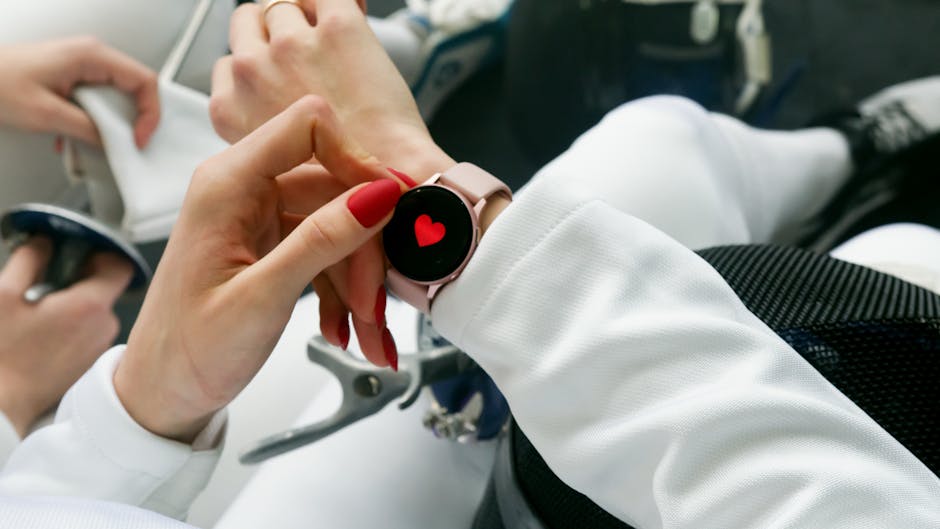
The Wrist-Worn Guardian: Smartwatches Revolutionizing Heart Health Monitoring with BP & Heart Rate Features
The humble wristwatch has undergone a remarkable metamorphosis. Once a purely time-telling device, it has evolved into a sophisticated personal health companion, with smartwatches leading the charge. Among their burgeoning capabilities, features dedicated to monitoring vital cardiovascular indicators like blood pressure (BP) and heart rate are rapidly transforming how individuals manage and understand their heart health. These wrist-worn guardians are no longer just about step counting; they are becoming indispensable tools for proactive cardiovascular care, offering unprecedented accessibility and continuous insight.
Unveiling the Power of Continuous Heart Rate Monitoring
At the core of any smartwatch’s cardiovascular prowess lies its heart rate sensor. Most modern smartwatches employ photoplethysmography (PPG) technology, which utilizes LEDs to shine light onto the skin and a photodetector to measure the subtle changes in light absorption as blood flows through the capillaries. This allows for continuous, real-time monitoring of your heart’s rhythm and intensity.
Key Heart Rate Features and Their Significance:
- Real-time Heart Rate Display: This provides an immediate snapshot of your current cardiac activity, invaluable during workouts, stressful situations, or simply for general awareness. Understanding your resting heart rate can be a powerful indicator of overall cardiovascular fitness. A lower resting heart rate often signifies a more efficient heart.
- Heart Rate Zones: During exercise, smartwatches can categorize your heart rate into different zones (e.g., fat burning, cardio, peak). This allows users to optimize their training intensity for specific fitness goals, ensuring they are working out effectively and safely.
- High and Low Heart Rate Alerts: One of the most critical safety features, these alerts notify you if your heart rate deviates significantly from your personalized baseline. An unusually high heart rate when at rest could signal an underlying issue, while persistently low heart rate might indicate bradycardia, which can lead to fatigue and dizziness.
- Irregular Rhythm Notifications (AFib Detection): This is a game-changer for stroke prevention. Advanced smartwatches, like those from Apple and Samsung, can analyze heart rate data for patterns indicative of atrial fibrillation (AFib), a common type of irregular heartbeat that significantly increases stroke risk. While not a diagnostic tool, these notifications prompt users to seek medical attention, potentially catching a serious condition early.
- Heart Rate Variability (HRV): HRV measures the time interval between consecutive heartbeats. A higher HRV generally indicates a more adaptable and resilient nervous system, often associated with better cardiovascular health and lower stress levels. Tracking HRV over time can reveal trends related to recovery, stress, and overall well-being.
- Sleep Heart Rate Tracking: Monitoring heart rate during sleep provides crucial insights into your body’s recovery and stress levels overnight. Abnormal heart rate patterns during sleep can also be indicative of sleep apnea or other underlying health issues.
The Emerging Frontier: Blood Pressure Monitoring on Your Wrist
While heart rate monitoring has become standard, the integration of blood pressure (BP) monitoring into smartwatches is a more recent, yet incredibly significant, development. Traditional BP cuffs are cumbersome and provide only snapshot readings. Smartwatches aim to offer more frequent, less invasive, and potentially more comprehensive BP data.
How Smartwatches Measure Blood Pressure:
The technology for on-wrist BP monitoring is still evolving, but the primary methods involve:
- Optical Sensors (PPG) with Advanced Algorithms: Similar to heart rate monitoring, some smartwatches use PPG sensors. However, instead of just measuring pulse, sophisticated algorithms analyze the subtle changes in light reflection and absorption caused by arterial expansion and contraction. These algorithms are trained on vast datasets to correlate these optical signals with actual BP readings.
- Electrocardiogram (ECG) and PPG Integration: Some devices combine ECG data (which measures the electrical activity of the heart) with PPG data. This fusion of information can provide a more accurate estimation of BP by analyzing pulse wave velocity and other hemodynamic parameters.
- Inflatable Cuffs (Less Common in Consumer Models): While not yet widespread in mainstream consumer smartwatches due to size and convenience limitations, some experimental or niche devices incorporate miniature inflatable cuffs that wrap around the wrist to take traditional BP measurements.
Key Blood Pressure Features and Their Benefits:
- On-Demand BP Readings: The ability to take a BP reading anytime, anywhere, without the need for a separate cuff is a significant convenience. This empowers individuals to monitor their BP more frequently, especially after physical activity, during stressful periods, or as directed by their physician.
- Trend Analysis and Historical Data: Smartwatches store BP readings over time, allowing users and their healthcare providers to identify trends, track the effectiveness of medication or lifestyle changes, and detect potential fluctuations that might otherwise go unnoticed.
- High and Low BP Alerts: Similar to heart rate alerts, these notifications can flag readings that fall outside a healthy range, prompting users to seek medical advice. This is particularly beneficial for individuals managing hypertension or hypotension.
- Correlation with Lifestyle Factors: By integrating BP data with other tracked metrics like activity levels, sleep patterns, and even logged food intake, smartwatches can help users understand how various lifestyle choices impact their blood pressure. This personalized feedback loop is crucial for making informed decisions about health.
- Preparation for Doctor’s Appointments: Users can arrive at their doctor’s appointments armed with a detailed history of their BP readings, facilitating more informed discussions and potentially leading to quicker diagnoses and more effective treatment plans.
The Synergy of Heart Rate and Blood Pressure Monitoring
The true power of these smartwatches lies in the synergistic relationship between heart rate and blood pressure monitoring. When viewed together, these metrics provide a more holistic picture of cardiovascular health.
- Understanding Stress Responses: A sudden spike in both heart rate and blood pressure can indicate a physiological stress response. Tracking these alongside other stress indicators can help individuals identify triggers and develop coping mechanisms.
- Evaluating Exercise Effectiveness: Monitoring heart rate and BP during and after exercise can reveal how well the cardiovascular system is adapting to physical demands. For example, a healthy BP should return to baseline relatively quickly after exertion.
- Detecting Potential Issues: Abnormal synchronized patterns between heart rate and BP could point to underlying cardiovascular conditions that warrant further investigation by a medical professional.
Considerations and Future Directions
While the advancements in smartwatch heart health monitoring are revolutionary, it’s crucial to acknowledge their limitations.
- Accuracy and Validation: While consumer-grade smartwatches have made significant strides, their BP readings are often estimations and may not be as precise as medical-grade devices. It is essential to consult with a healthcare professional for accurate diagnoses and treatment. Many smartwatches recommend calibrating their BP readings against a traditional cuff.
- Not a Substitute for Medical Advice: Smartwatches are powerful tools for monitoring and data collection, but they are not a substitute for professional medical advice, diagnosis, or treatment. Always consult your doctor for any health concerns.
- Regulatory Approvals: Features like AFib detection and BP monitoring are subject to regulatory approval (e.g., FDA in the US) to ensure their safety and efficacy.
- Battery Life: Continuous monitoring, especially with advanced sensors, can impact battery life, requiring more frequent charging.
- Data Privacy and Security: As these devices collect sensitive health data, ensuring robust data privacy and security measures is paramount.
The future of smartwatches in heart health monitoring is incredibly bright. We can anticipate even greater accuracy in BP estimation, integration with other physiological sensors (like blood oxygen and temperature), and more sophisticated AI-driven insights to predict potential cardiovascular events. The ongoing evolution of these wearable technologies promises to empower individuals with unprecedented control over their heart health, transforming preventative care and fostering a more proactive approach to well-being. The wrist-worn guardian is here to stay, continuously watching over our most vital organ.