
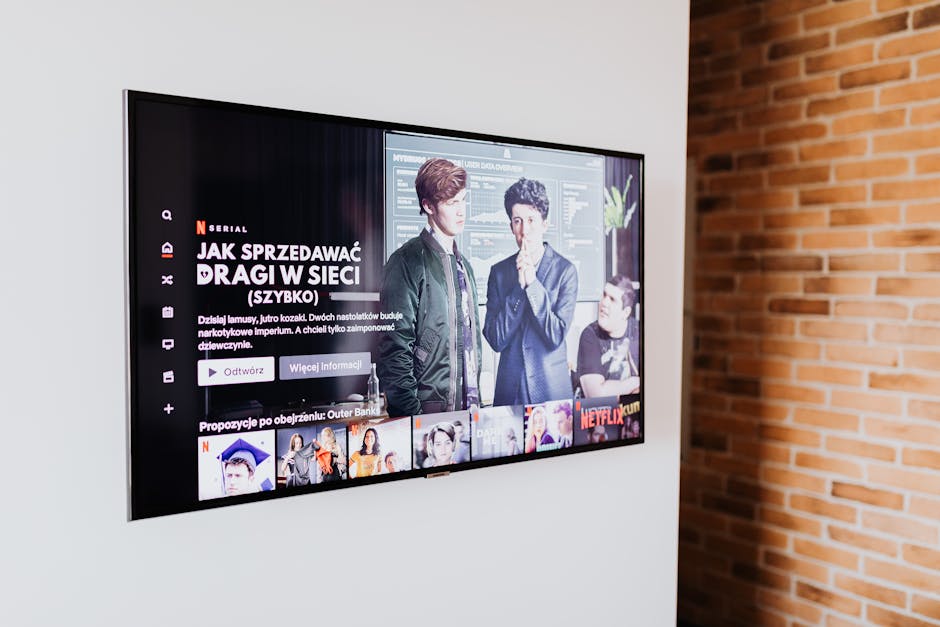
Discover the Best Android TVs for 4K Netflix & Prime Streaming
For cinephiles and binge-watchers alike, the seamless integration of streaming services like Netflix and Amazon Prime Video with cutting-edge television technology is paramount. Android TV, with its intuitive interface, vast app ecosystem, and robust performance, stands at the forefront of this evolution. When seeking the ultimate viewing experience for high-definition content, particularly 4K HDR on platforms like Netflix and Prime Video, selecting the right Android TV is crucial. This guide delves into the key features to consider and highlights some of the top contenders that deliver exceptional performance for your favorite streaming services.
Understanding the Pillars of a Superior Streaming Experience:
Before diving into specific models, it’s essential to understand what makes an Android TV excel at 4K Netflix and Prime Video streaming.
-
Picture Quality (Resolution, HDR, Color Accuracy): This is arguably the most critical factor.
- 4K UHD Resolution (3840 x 2160): Ensures sharp, detailed images, bringing out the finest nuances in 4K content.
- High Dynamic Range (HDR): This is where the magic happens. HDR widens the contrast ratio and color gamut, allowing for brighter highlights, deeper blacks, and a far more lifelike and vibrant picture. Key HDR formats to look for include:
- HDR10: The base standard for HDR.
- HDR10+: An advanced, dynamic HDR format that adjusts scene-by-scene for optimal contrast and color. Supported by Amazon Prime Video.
- Dolby Vision: Another premium dynamic HDR format, offering scene-by-scene optimization and a wider color spectrum. Widely supported by Netflix and many other streaming services.
- Color Accuracy and Gamut: The ability of the TV to reproduce a wide range of colors accurately is vital for a cinematic experience. Look for TVs that boast wide color gamuts (e.g., DCI-P3 coverage) and good factory calibration.
- Contrast Ratio and Black Levels: Deep blacks are essential for a convincing image, especially in dark scenes. OLED displays excel here, offering perfect blacks, while high-end LED/QLED TVs utilize advanced local dimming technologies to achieve impressive contrast.
- Refresh Rate and Motion Handling: A higher refresh rate (e.g., 120Hz) and sophisticated motion processing reduce motion blur and judder, making fast-paced action sequences in movies and sports appear smoother and more natural.
-
Android TV Performance and Software:
- Processor and RAM: A powerful processor and sufficient RAM are crucial for smooth navigation of the Android TV interface, quick app loading times, and seamless 4K playback without buffering or stuttering.
- Android TV Version: Ensure the TV runs a recent version of Android TV (or Google TV, its successor). Newer versions offer improved features, security updates, and better app compatibility.
- App Availability and Support: Android TV’s strength lies in its extensive Google Play Store, offering direct access to Netflix, Prime Video, Disney+, Hulu, and countless other streaming apps. Ensure the TV has these apps pre-installed or easily downloadable.
- Voice Control (Google Assistant): Integrated Google Assistant allows for effortless control of your TV, searching for content, adjusting settings, and even controlling smart home devices, all through voice commands.
-
Sound Quality: While dedicated soundbars or home theater systems are recommended for the ultimate audio experience, good built-in speakers can provide a satisfactory experience for casual viewing. Look for TVs with decent wattage and support for audio technologies like Dolby Atmos (even if simulated).
-
Connectivity:
- HDMI Ports: Sufficient HDMI ports are needed for connecting other devices. Ensure at least one HDMI 2.1 port for future-proofing and support for higher bandwidth features like 4K@120Hz.
- Wi-Fi and Ethernet: A stable internet connection is paramount for 4K streaming. Look for Wi-Fi 6 support for faster and more reliable wireless connectivity, or a robust Ethernet port.
Top Android TVs for 4K Netflix & Prime Video Streaming:
Based on these criteria, several Android TV models consistently rise to the top for their exceptional performance in delivering immersive 4K streaming experiences.
1. Sony A95K / A90K (OLED) Series:
Sony’s OLED offerings are legendary for their unparalleled picture quality, and the A95K (QD-OLED) and A90K (standard OLED) are no exceptions.
- Picture Quality: These TVs boast perfect blacks, infinite contrast, and stunning color reproduction thanks to their self-emissive OLED pixels. The A95K, with its QD-OLED technology, further elevates color volume and brightness. Support for Dolby Vision and HDR10+ ensures you get the best possible HDR experience from both Netflix and Prime Video. Motion handling is superb, with minimal blur.
- Android TV Performance: Powered by Sony’s Cognitive Processor XR, these TVs deliver lightning-fast performance, smooth UI navigation, and effortless 4K streaming. They run the latest Google TV interface, offering a refined and intuitive content discovery experience.
- Sound: Sony’s Acoustic Surface Audio+ technology, which uses the screen itself as a speaker, provides surprisingly immersive and accurate sound.
- Connectivity: Equipped with HDMI 2.1 ports, these TVs are ready for next-gen gaming and future streaming advancements.
2. TCL QM8/QM8B (Mini-LED QLED) Series:
TCL has rapidly ascended in the TV market by offering exceptional value and performance, and their Mini-LED QLED models are formidable contenders for 4K streaming.
- Picture Quality: The QM8 series utilizes Mini-LED backlighting with an impressive number of local dimming zones. This allows for excellent contrast, deep blacks (though not as perfect as OLED), and bright highlights, making HDR content pop. They support Dolby Vision and HDR10+. The QLED technology ensures vibrant and wide color reproduction.
- Android TV Performance: These TVs run on Google TV, powered by a capable processor that handles multitasking and 4K streaming with ease. The interface is responsive, and app loading is quick.
- Sound: While not as advanced as Sony’s OLEDs, the built-in sound is generally decent for everyday viewing.
- Connectivity: Features multiple HDMI 2.1 ports, making them a great choice for gamers and future-proofing your setup.
3. Hisense U8K (Mini-LED QLED) Series:
Hisense has become a strong competitor, offering premium features at more accessible price points. The U8K series is a prime example.
- Picture Quality: Similar to TCL’s Mini-LED offerings, the U8K boasts impressive brightness, excellent contrast thanks to its local dimming technology, and vibrant colors due to its QLED panel. It supports Dolby Vision and HDR10+, crucial for maximizing Netflix and Prime Video’s HDR content.
- Android TV Performance: Running Google TV, the U8K provides a smooth and user-friendly experience. The processor is robust enough for demanding streaming applications and multitasking.
- Sound: Hisense often includes decent built-in audio, and the U8K is no exception, offering a satisfactory listening experience.
- Connectivity: Multiple HDMI 2.1 ports are included, ensuring compatibility with the latest gaming consoles and high-bandwidth video sources.
4. Philips OLED+908 (OLED):
Philips, known for its Ambilight technology and strong picture processing, offers a compelling OLED option with the OLED+908.
- Picture Quality: This OLED panel delivers the signature perfect blacks and infinite contrast of OLED technology. Combined with Philips’ advanced image processing and wide color gamut, the picture is stunningly lifelike. It supports Dolby Vision and HDR10+. The integrated Ambilight feature, which projects colored light onto your wall, can further enhance immersion.
- Android TV Performance: Powered by a capable processor, the Android TV interface is fluid and responsive. App loading is quick, and 4K streaming is handled without any issues.
- Sound: Philips TVs often feature well-engineered sound systems, and the OLED+908 is no exception, offering a rich and detailed audio experience.
- Connectivity: Includes HDMI 2.1 ports for high-bandwidth connectivity.
5. Xiaomi Mi TV Q1 (QLED):
Xiaomi has disrupted the market with its feature-rich and aggressively priced televisions. The Mi TV Q1 is a strong contender for budget-conscious buyers seeking a premium streaming experience.
- Picture Quality: This QLED TV offers vibrant colors, good brightness, and decent contrast thanks to its full-array local dimming. It supports Dolby Vision and HDR10+, ensuring you can enjoy the best possible HDR from Netflix and Prime Video.
- Android TV Performance: Running Android TV, the Mi TV Q1 provides a familiar and easy-to-navigate interface. Performance is generally smooth for streaming and app usage.
- Sound: The built-in sound is adequate for most users, though an external sound system would elevate the experience.
- Connectivity: Offers a good selection of HDMI ports, though it may not always feature the latest HDMI 2.1 standard across all ports.
Optimizing Your Streaming Setup:
Beyond selecting the right TV, a few additional steps