
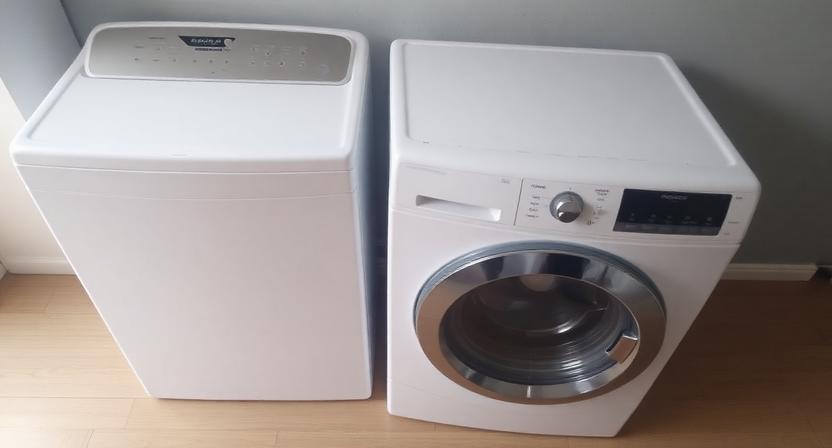
Description: Confused between front load and top load washing machines? Our in-depth guide covers efficiency, water use, space, price, and the best choice for every Indian home.
🇮🇳 Introduction: The Modern Laundry Dilemma in India
The washing machine is no longer a luxury; it is a fundamental pillar of modern Indian households, especially given the fast-paced urban lifestyle and the increasing number of dual-income families. However, stepping into an appliance store or browsing online reveals the central dilemma: Front Load vs. Top Load.
This choice is far more complex than just where the door is located. It involves significant trade-offs concerning water consumption, electricity usage, space utilization, and the quality of the wash. With the Indian appliance market witnessing robust growth, consumers are spoilt for choice, yet often lack the specific, tailored information needed to make a smart, long-term investment.
This comprehensive, expert-driven guide is designed specifically for the Indian reader. We will break down the fundamental differences between front load and top load washing machines, providing data-backed insights, addressing common Indian household constraints (like hard water and space), and ultimately guiding you to the appliance that is the smartest choice for your family’s unique needs.
🧐 Section 1: Decoding the Core Differences in Technology and Mechanics
The primary distinction between front load and top load washing machines lies in their operational mechanics—how they agitate and clean the clothes. This mechanical difference dictates everything else: efficiency, wash quality, and convenience.
Top Load Washing Machines: The Agitator and Impeller Approach
Top loaders are the more traditional and familiar choice in India. They come in two main variants:
- Agitator Models: These use a central pole (the agitator) that twists back and forth, rubbing against the clothes to remove dirt. This method is generally more aggressive on fabrics.
- Impeller Models (He/High Efficiency): These use a low-profile disc (impeller) at the bottom of the drum. The disc spins and creates strong currents of water to rub the clothes against each other for cleaning. This is gentler than the agitator.
- Key Action: Vertical Axis Rotation with water covering the clothes.
- Pros: Lower initial purchase price, easier to load/unload without bending, and the ability to pause and add forgotten clothes mid-cycle.
- Cons: Higher water consumption, typically lower energy efficiency, and potentially rougher on delicate fabrics due to higher friction.
Front Load Washing Machines: The Tumbling Motion
Front loaders operate on a horizontal axis. They use gravity and the rotation of the drum to lift clothes up and then drop them back into the water repeatedly—a process known as tumbling.
- Key Action: Horizontal Axis Tumbling with clothes lifted and dropped into a small pool of water.
- Pros: Superior wash quality due to the tumbling motion, significantly lower water consumption, greater energy efficiency, and very gentle on clothes.
- Cons: Higher initial cost, need to bend to load/unload, and cycles are often longer.
| Feature Comparison | Top Load Machine (Impeller) | Front Load Machine |
| Water Consumption | High (Clothes must be fully submerged) | Low (Uses about 40-50% less water) |
| Wash Quality | Good to Very Good (High agitation/friction) | Excellent (Gentle tumbling, better stain removal) |
| Energy Efficiency (BEE Rating) | Generally lower (3-4 Star) | Higher (4-5 Star is common) |
| Ergonomics/Loading | Easy (No bending required, easy to add clothes) | Requires bending (Difficult to add clothes mid-cycle) |
| Space Required | Less floor space, but needs headroom | More floor space, stackable (in some premium setups) |
| Price Point | Low to Mid-Range (₹15,000 – ₹30,000) | Mid to High-Range (₹25,000 – ₹60,000+) |
💧 Section 2: Critical Factors for the Indian Household
For an appliance to be truly effective in India, it must address specific local challenges that global models might overlook. The choice between front and top load washing machines hinges on these practical, real-world constraints.
Water and Energy Efficiency – The Financial Impact
In many Indian cities, both water scarcity and electricity costs are serious concerns. This is where the front load machine holds a distinct advantage.
- Water Savings: A typical top-load machine might use 120-150 liters of water per cycle. A comparable front-load machine uses only 50-70 liters because it relies on tumbling, not soaking. For a family doing laundry 3-4 times a week, the water savings over a year are substantial.
- Energy Efficiency (BEE Ratings): Front load machines generally achieve higher BEE (Bureau of Energy Efficiency) star ratings (often 5-Star). This is because they use less water and their high spin speeds extract more moisture, significantly reducing the drying time (and the need for power-intensive dryers).
- Emotional Benefit: Investing in a 5-Star front loader is not only fiscally responsible but also an eco-conscious choice, aligning with the growing environmental awareness among Indian consumers.
Hard Water and Detergent Dynamics
Hard water (high mineral content, common in many parts of India like Delhi-NCR, Rajasthan, and parts of Maharashtra) is the nemesis of all washing machines.
- Front Load Adaptation: Front loaders use less water, meaning the detergent concentration is naturally higher, aiding in better cleaning. However, the mineral deposits can harm the drum and heating element. Many modern front loaders now come with specific ‘Hard Water Wash’ programs or ceramic heating elements designed to resist calcium buildup.
- Detergent Type: Front loaders must use special HE (High-Efficiency) or Front-Load Detergent. This detergent creates less foam (lather) to prevent damage to the machine’s sensors and mechanics. Top-loaders can use standard detergent but perform best with the low-lather variety too.
Actionable Tip: If you live in a hard water zone, regardless of the type you choose, always use a water softener or liquid detergent. For a front-loader, strictly use HE detergent to prevent sensor issues and excessive lathering.
Space Constraints and Installation
The average apartment size in major Indian metropolitan areas (like Mumbai or Chennai) demands smart space utilization.
- Top Load: These have a smaller footprint in terms of floor area, fitting easily into compact wash areas or balconies. However, you need adequate vertical clearance to open the lid.
- Front Load: These typically require a wider floor space. However, they offer a unique advantage: they can be stacked with a compatible dryer (if you use one), maximizing the vertical space. They also offer a usable counter-top surface when closed.
- Vibration Challenge: Front loaders spin at very high speeds (up to 1400 RPM), which can cause significant vibration. Ensure the installation is on a level, solid concrete floor. Wooden floors or temporary platforms can amplify noise and reduce the machine’s lifespan.
🧺 Section 3: Performance, Wash Quality, and Fabric Care
Ultimately, a washing machine’s value is measured by how well it cleans your clothes and how long it keeps them looking new.
Wash Quality and Stain Removal
The debate often centers on which machine cleans better.
- Front Load Superiority: Front loaders are widely regarded as providing the superior wash quality. The tumbling action is highly effective at lifting and removing stains without being harsh. The constant dropping of clothes helps loosen dirt without the abrasive rubbing motion of an agitator.
- Top Load Agitation: While excellent at quick, deep cleaning for heavily soiled work clothes or gym wear, the aggressive agitation of a top loader (especially older models) can lead to tangling, stretching, and faster wear-and-tear of delicate fabrics like silk sarees, linens, or knitwear.
Advanced Features: Inverter Technology and Steam Wash
Modern machines, particularly in the mid-to-high end, offer cutting-edge features crucial for the Indian consumer.
- Inverter Technology: This technology replaces the conventional fixed-speed motor with a variable-speed motor that adjusts its operation based on the load.
- Benefit: Inverter motors are quieter, more energy-efficient, and have a much longer lifespan because they reduce mechanical wear and tear. This is a must-have feature for both front and top load models.
- Steam Wash (Front Load Exclusive): Many premium front loaders offer a steam cycle. The steam penetrates fabric fibers to loosen dirt, sanitize the clothes (critical for baby clothes or linens), and significantly reduce wrinkles.
- Hygiene Focus: In the post-pandemic era, the sanitizing benefit of a steam wash is a powerful selling point for Indian families concerned with hygiene.
Load Capacity and Drum Size
Capacity is measured in kilograms (kg) and relates to the weight of dry laundry it can handle per cycle.
| Family Size | Recommended Capacity (kg) |
| Singles/Couples | 6 kg – 7 kg |
| Small Families (3-4 members) | 7 kg – 8 kg |
| Large Families (5+ members) | 9 kg – 10 kg+ |
Front load drums often have a marginally larger effective capacity than a top load of the same stated kg due to the absence of a central agitator.
💸 Section 4: Budgeting, Longevity, and the Final Verdict
The decision must ultimately be balanced against the household budget and long-term operating costs.
Long-Term Cost Analysis: Initial vs. Running Costs
While a top load machine is the clear winner on initial purchase price, the front load machine is often the more economical choice over its lifespan (typically 8-12 years).
- Front Load Savings: Lower energy bills, drastically lower water bills, and significantly reduced fabric wear-and-tear (meaning your clothes last longer). These operational savings can often offset the higher purchase price within 3 to 5 years.
- Repair Costs: If a front-load machine requires service, the parts and labor can sometimes be more expensive due to the more complex, tightly packed mechanical design. This is an important consideration for regions with limited access to specialized technicians.
When to Choose Top Load (The Convenience Factor)
There are specific scenarios where a top-load machine is the undeniably smarter choice for an Indian consumer:
- Budget Priority: When the initial purchase cost is the most critical constraint.
- Ergonomic Need: For elderly family members or those with back issues who cannot comfortably bend to load a front-load machine.
- Mid-Cycle Addition: If you frequently forget small items (socks, handkerchiefs) and need the ability to pause and toss them in.
- Low Water Pressure Areas: Top-load machines are generally less sensitive to low water pressure than many front-load models, a practical issue in some residential areas.
When to Choose Front Load (The Quality and Efficiency Focus)
The Front Load machine is the ultimate investment for:
- Eco-Conscious Consumers: Those prioritizing minimal water and energy consumption.
- Fabric Care: Households with a large volume of expensive, delicate, or synthetic clothes (e.g., uniforms, silks, woolens) that require gentle handling.
- Superior Cleaning: When absolute wash quality and stain removal are the non-negotiable top priority.
🔑 Conclusion: Making the Right Investment
The choice between front load and top load washing machines is a reflection of your family’s priorities: convenience and low initial cost (Top Load) versus superior cleaning, long-term savings, and fabric care (Front Load).
For the progressive, urban Indian family, the front load washing machine represents the best long-term value, offering unmatched water and energy efficiency, and a better wash. However, for a smaller family, an elderly couple, or someone on a strict budget, a modern Impeller Top Load machine with an Inverter motor provides an excellent, convenient, and reliable solution.
Evaluate your space, your water supply, and your budget—then make the informed choice that promises to simplify your laundry routine for years to come.
✍️ Compelling Call to Action
Stop guessing and start washing smarter! Which machine fits your life? Use our comprehensive checklist in Section 4 to determine your perfect match, and then click here to explore the latest Inverter and Hard Water models tailored for the modern Indian home!
Whirlpool 7 kg Magic Clean 5 Star Fully Automatic Top Load Washing Machine Grey (MAGIC CLEAN 7.0 GENX GREY 5YMW)
₹16,400.00 (as of September 19, 2026 23:01 GMT +05:30 - More infoProduct prices and availability are accurate as of the date/time indicated and are subject to change. Any price and availability information displayed on [relevant Amazon Site(s), as applicable] at the time of purchase will apply to the purchase of this product.)
IFB 7 Kg 5 Star, DeepClean® Technology, AI Powered, WiFi, Fully Automatic Front Load Washing Machine (SERENA VXN 7012 CMS, PowerSteam®, 9 Swirl, Steam Refresh, Inbuilt Heater, Eco Inverter, White)
₹27,990.00 (as of September 19, 2026 23:01 GMT +05:30 - More infoProduct prices and availability are accurate as of the date/time indicated and are subject to change. Any price and availability information displayed on [relevant Amazon Site(s), as applicable] at the time of purchase will apply to the purchase of this product.)
Semi Automatic FoldIng 10L Small Mini WashIng MachIne With Dryer Deep CleanIng For Underwear WashIng MachIne (H2)
₹1,498.00 (as of September 19, 2026 23:01 GMT +05:30 - More infoProduct prices and availability are accurate as of the date/time indicated and are subject to change. Any price and availability information displayed on [relevant Amazon Site(s), as applicable] at the time of purchase will apply to the purchase of this product.)
LG 7 Kg 5 Star Wind Jet Dry Semi-Automatic Top Loading Washing Machine (P7020NGAZ, Dark Gray, Rat Away Feature)
₹11,990.00 (as of September 19, 2026 23:01 GMT +05:30 - More infoProduct prices and availability are accurate as of the date/time indicated and are subject to change. Any price and availability information displayed on [relevant Amazon Site(s), as applicable] at the time of purchase will apply to the purchase of this product.)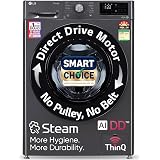
LG Smart Choice, 9 Kg, 5 Star, AI Direct Drive Technology, Steam, 6 Motion DD & Wi-Fi Fully-Automatic Front Load Washing Machine (FHP1209Z5M, Intelligent & Convenient Fabric Care, Middle Black)
₹41,990.00 (as of September 19, 2026 23:01 GMT +05:30 - More infoProduct prices and availability are accurate as of the date/time indicated and are subject to change. Any price and availability information displayed on [relevant Amazon Site(s), as applicable] at the time of purchase will apply to the purchase of this product.)
Portable Washing Machine, 16L Mini Washing Machine With Spin Basket, Small Portable Washer Machine Suitable for Underwear Small Clothes Dryer Deep Cleaning for Kids and Adults. A3
₹1,999.00 (as of September 19, 2026 23:01 GMT +05:30 - More infoProduct prices and availability are accurate as of the date/time indicated and are subject to change. Any price and availability information displayed on [relevant Amazon Site(s), as applicable] at the time of purchase will apply to the purchase of this product.)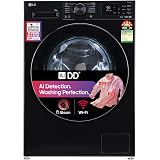
LG 12 Kg, 5 Star, AI DD Technology, Steam, Wi-Fi, Tempered glass door, Fully-Automatic Front Load Washing Machine (FX1412N3O, Reduce germs & allergens, Smart Fabric Care, 2026 Model, Onyx Black)
₹48,990.00 (as of September 19, 2026 23:01 GMT +05:30 - More infoProduct prices and availability are accurate as of the date/time indicated and are subject to change. Any price and availability information displayed on [relevant Amazon Site(s), as applicable] at the time of purchase will apply to the purchase of this product.)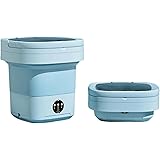
Portable Washing Machine, 16L Mini Washing Machine With Spin Basket, Small Portable Washer Machine Suitable for Underwear Small Clothes Dryer Deep Cleaning DC7
₹1,399.00 (as of September 19, 2026 23:01 GMT +05:30 - More infoProduct prices and availability are accurate as of the date/time indicated and are subject to change. Any price and availability information displayed on [relevant Amazon Site(s), as applicable] at the time of purchase will apply to the purchase of this product.)
Portable Washing Machine, 16L Mini Washing Machine With Spin Basket, Small Portable Washer Machine Suitable for Underwear Small Clothes Dryer Deep Cleaning (E2)
₹1,499.00 (as of September 19, 2026 23:01 GMT +05:30 - More infoProduct prices and availability are accurate as of the date/time indicated and are subject to change. Any price and availability information displayed on [relevant Amazon Site(s), as applicable] at the time of purchase will apply to the purchase of this product.)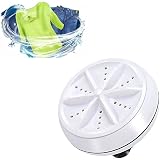
Avantara Creation Turbine Washer Washing Machine Magic Wash Automatic Cleaning for Cloth Mini Door Hinge Ultrasonic Lightweight Turbo Home Camping Dorms Business College Rooms (Pack of 1 Pcs)
₹599.00 (as of September 19, 2026 23:01 GMT +05:30 - More infoProduct prices and availability are accurate as of the date/time indicated and are subject to change. Any price and availability information displayed on [relevant Amazon Site(s), as applicable] at the time of purchase will apply to the purchase of this product.)
Whirlpool 8 Kg 5 MAGIC CLEAN PRO SW H Fully Automatic Top Load Washing Machine (MAGIC CLEAN PRO SW H KG GREY 10YMW with In-Built Heater)
₹20,990.00 (as of September 19, 2026 23:01 GMT +05:30 - More infoProduct prices and availability are accurate as of the date/time indicated and are subject to change. Any price and availability information displayed on [relevant Amazon Site(s), as applicable] at the time of purchase will apply to the purchase of this product.)
IFB 7 Kg 5 Star, DeepClean® Technology, AI Powered, WiFi, Fully Automatic Front Load Washing Machine (SERENA GXN 7012 CMS, PowerSteam®, 9 Swirl, Steam Refresh, Inbuilt Heater, Eco Inverter, Grey)
₹30,291.00 (as of September 19, 2026 23:01 GMT +05:30 - More infoProduct prices and availability are accurate as of the date/time indicated and are subject to change. Any price and availability information displayed on [relevant Amazon Site(s), as applicable] at the time of purchase will apply to the purchase of this product.)
Portable Washing Machine, 16L Mini Washing Machine With Spin Basket, Small Portable Washer Machine Suitable for Underwear Small Clothes Dryer Deep Cleaning DF6
₹1,299.00 (as of September 19, 2026 23:01 GMT +05:30 - More infoProduct prices and availability are accurate as of the date/time indicated and are subject to change. Any price and availability information displayed on [relevant Amazon Site(s), as applicable] at the time of purchase will apply to the purchase of this product.)
Portable Washing Machine, 16L Mini Washing Machine With Spin Basket, Small Portable Washer Machine Suitable for Underwear Small Clothes Dryer Deep Cleaning for Kids and Adults.A3
₹1,999.00 (as of September 19, 2026 23:01 GMT +05:30 - More infoProduct prices and availability are accurate as of the date/time indicated and are subject to change. Any price and availability information displayed on [relevant Amazon Site(s), as applicable] at the time of purchase will apply to the purchase of this product.)
Portable Washing Machine, 16L Mini Washing Machine With Spin Basket, Small Portable Washer Machine Suitable for Underwear Small Clothes Dryer Deep Cleaning A7
₹1,999.00 (as of September 19, 2026 23:01 GMT +05:30 - More infoProduct prices and availability are accurate as of the date/time indicated and are subject to change. Any price and availability information displayed on [relevant Amazon Site(s), as applicable] at the time of purchase will apply to the purchase of this product.)
Godrej 7 Kg 5 Star, AI Powered, Fabrisafe Steel Drum, Magic Lint Filter, Fills Tub At ~0 Water Pressure, Fully-Automatic Top Load Washing Machine (WTEON ALP 70 5.0 FDUN GPGR, Graphite Grey)
₹15,440.00 (as of September 19, 2026 23:01 GMT +05:30 - More infoProduct prices and availability are accurate as of the date/time indicated and are subject to change. Any price and availability information displayed on [relevant Amazon Site(s), as applicable] at the time of purchase will apply to the purchase of this product.)
LG 8 Kg, 5 Star, Wi-Fi, Direct Drive Technology, Steam Wash, 6 Motion DD, Fully-Automatic Front Load Washing Machine (FHB1208Z4M, Allergy Care, In-Built Heater, Touch Panel, Middle Black)
₹37,490.00 (as of September 19, 2026 23:01 GMT +05:30 - More infoProduct prices and availability are accurate as of the date/time indicated and are subject to change. Any price and availability information displayed on [relevant Amazon Site(s), as applicable] at the time of purchase will apply to the purchase of this product.)
LG 8.5 kg 5 Star Semi-Automatic Top Load Washing Machine (P8530SRAZ, Burgundy, Roller Jet Pulsator)
₹15,490.00 (as of September 19, 2026 23:01 GMT +05:30 - More infoProduct prices and availability are accurate as of the date/time indicated and are subject to change. Any price and availability information displayed on [relevant Amazon Site(s), as applicable] at the time of purchase will apply to the purchase of this product.)
Portable Washing Machine, 16L Mini Washing Machine With Spin Basket, Small Portable Washer Machine Suitable for Underwear Small Clothes Dryer Deep Cleaning A1
₹1,999.00 (as of September 19, 2026 23:01 GMT +05:30 - More infoProduct prices and availability are accurate as of the date/time indicated and are subject to change. Any price and availability information displayed on [relevant Amazon Site(s), as applicable] at the time of purchase will apply to the purchase of this product.)