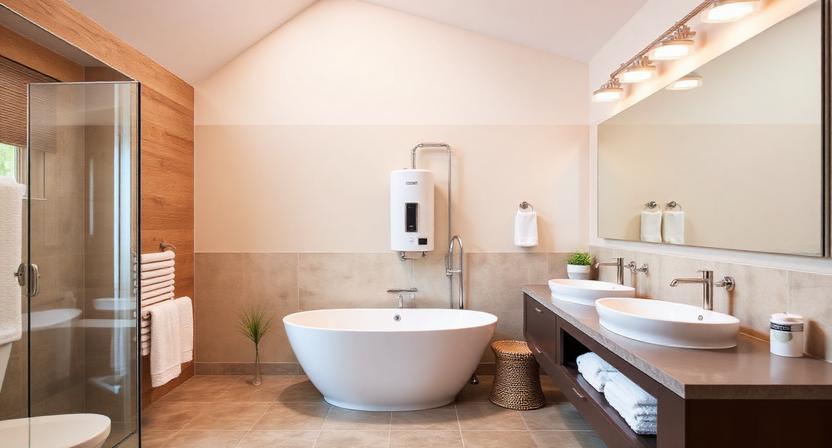
Description: An in-depth guide for Indian buyers on selecting the best geyser. Compare Instant vs. Storage models, understand BEE ratings, vital safety features, and the impact of hard water.
🇮🇳 Introduction: The Essential Comfort of a Reliable Geyser
For millions of households across India, especially during the harsh winter months, a geyser (electric water heater) is more than just an appliance—it is a fundamental necessity that promises daily comfort and hygiene. The Indian water heater market is experiencing robust growth, driven by rising disposable incomes, rapid urbanization, and an increased focus on energy conservation. With the market projected to reach approximately $2.11 Billion by 2033 (IMARC Group data), the choices for consumers are vast and often confusing.
Choosing the right geyser is a significant investment that impacts three critical areas: safety, electricity bills, and longevity. A poor choice can lead to high operational costs, frequent maintenance, or, worst of all, potential safety hazards.
This expert-curated guide is designed specifically for the discerning Indian reader, offering data-backed insights, practical advice, and a deep-dive into the technical specifications that genuinely matter. Our goal is to empower you to select a geyser that is not just powerful, but also intelligent, safe, and perfectly suited to the unique conditions of your Indian home, including high-rise living and hard water supply.
💧 Section 1: The Core Choice – Instant vs. Storage Geysers
The first and most critical decision a buyer must make is selecting the right type of water heater based on household size and usage patterns.
Storage Geysers: The Family and Comfort Choice
Storage geysers are the traditional, most common type in Indian homes. They consist of an insulated tank that heats and stores a specific volume of water, keeping it ready for use.
- Capacity Range: Typically 6 Litres (L) to 35 Litres (L). 15L to 25L models are the most popular for medium to large families.
- Ideal For: Families (3+ members), multiple back-to-back users, long showers, and bathtub usage.
- Key Pros:
- Consistent Supply: Provides a steady flow of hot water for extended periods.
- High-Pressure Compatibility: Most are rated for 6-8 Bar pressure, making them essential for high-rise apartments where water pressure is high.
- Energy Efficiency: Modern 5-Star rated models use thick Polyurethane Foam (PUF) insulation to significantly reduce standby heat loss, making them efficient over a full day.
- Key Cons:
- Heating Time: Takes 10-45 minutes to heat the entire tank initially.
- Space: Bulkier design requires more wall space.
Instant Geysers: The Speed and Efficiency Solution
Instant geysers, often called tankless water heaters, heat water only when the tap is turned on. They have a very small tank (1L to 6L) and a much higher wattage heating element (usually 3kW or more) to achieve rapid heating.
- Capacity Range: Usually 1 Litre (L) to 6 Litres (L).
- Ideal For: Kitchen use (washing dishes), small bathrooms, bachelors, or couples with minimal hot water needs.
- Key Pros:
- Instant Hot Water: Provides hot water within seconds.
- Maximum Space Saving: Extremely compact design, perfect for small urban bathrooms.
- Energy Saving: Only consumes power when actively running, eliminating standby heat loss entirely.
- Key Cons:
- Limited Flow: The flow rate is restricted; not suitable for continuous, long showers or bathtubs.
- Higher Power Demand: Requires a robust 15-20A electrical socket and wiring due to the high wattage.
| Feature | Instant Geyser (1-6L) | Storage Geyser (10-25L) | Optimal Use Case in India |
| Heating Speed | Instant (seconds) | Delayed (10-45 minutes) | Kitchen & Small Bathroom |
| Capacity | Low (On-demand supply) | High (Continuous supply) | Main Family Bathroom |
| Power Rating | High (Typically 3kW) | Moderate (Typically 2kW) | Power-stable areas |
| High-Rise Use | Limited | Excellent (8 Bar compatible) | All apartments 4+ floors high |
🛡️ Section 2: Safety First – Non-Negotiable Features for Indian Homes
Given that geysers involve high voltage electricity and water, safety features are paramount. The Indian government, through the Bureau of Indian Standards (BIS), mandates safety certifications. Never compromise on safety.
Mandatory Certifications: ISI Mark and BEE Rating
- ISI Mark (BIS Certification): This mark is a mandatory legal requirement and an absolute guarantee of safety, quality, and reliability, adhering to Indian Standard IS 368:2014. The ISI mark signifies that the product has undergone rigorous testing for electrical safety, protection against live parts, pressure resistance, and fire resistance. Do not purchase any electrical geyser without a visible ISI mark.
- BEE Star Rating: The Bureau of Energy Efficiency (BEE) assigns star ratings (from 1 to 5) to storage geysers. A 5-Star BEE rating is the industry gold standard, indicating maximum energy efficiency and the lowest annual electricity consumption. Investing in a 5-star model, though slightly pricier upfront, yields significant savings on your electricity bill—often recovering the extra cost within 2-3 years.
The Safety Trinity: Protection from Overheating, Pressure, and Shocks
The best geysers integrate multiple layers of protection to ensure maximum safety:
- Thermal Cut-Off: A secondary safety mechanism that automatically switches off the heating element if the primary thermostat fails and the water temperature exceeds a safe limit (e.g., 90°C). This is the primary defence against overheating.
- Multi-Function Safety Valve (Pressure Release Valve): Crucial for high-rise buildings. This valve automatically releases water when the internal pressure of the tank exceeds the set safety limit (usually 6-8 Bar), preventing the tank from rupturing due to excessive pressure build-up.
- Shock-Proof Body: A high-quality geyser will feature an ABS (Acrylonitrile Butadiene Styrene) or PP (Polypropylene) plastic outer body, which is rust-proof and shock-proof. This, coupled with proper earthing installation, ensures user safety.
Safety Actionable Insight: Ensure your geyser is installed by a certified technician and that the electrical circuit breaker (MCB) and earthing in your bathroom are in perfect working order. A geyser’s shock-proof feature is only effective if the home’s grounding is sound.
🧱 Section 3: Durability Against Indian Hard Water
The majority of homes in Tier-2 and Tier-3 cities and many urban areas rely on borewell water, which is rich in dissolved salts, commonly known as hard water. Hard water is the single greatest destroyer of a geyser’s heating element and tank.
The Battle Against Corrosion and Scaling
The following tank and element technologies are specifically designed to combat the damaging effects of hard water:
- Tank Coating (The Inner Shield):
- Blue Diamond/Vitreous Enamel Glass-Lined: Considered the best-in-class protection. This coating is fused to the inner steel tank at extremely high temperatures, creating a smooth, durable, and highly corrosion-resistant surface. Brands like AO Smith (Blue Diamond) and Racold/Havells (Titanium/Feroglas) specialize in this.
- Incoloy Heating Element: Unlike standard copper elements, Incoloy 800 heating elements are a super-alloy that offers superior resistance to oxidation, high temperatures, and scale formation from hard water minerals. This ensures faster, more efficient heating over the product’s lifespan.
- Magnesium Anode Rod: This is a sacrificial part found in all high-quality storage geysers. The magnesium rod attracts corrosive ions (like chloride) and hard water salts, corroding itself instead of the tank’s steel lining.
- Maintenance Note: The anode rod must be checked and replaced periodically (every 1-3 years depending on water hardness) to ensure the tank’s protection remains active. Ignoring this step dramatically shortens the geyser’s life.
Technology to Improve Water Flow
The internal design also plays a role in efficiency:
- Whirlflow Technology: Found in brands like Havells and Orient, this technology ensures that cold water entering the tank does not immediately mix with the hot water stored inside. This maintains a more stable hot water temperature and maximizes the heating efficiency of the water drawn, saving energy.
🌐 Section 4: The Future is Smart – Geyser Technology Trends in India
The Indian market is rapidly embracing smart home technology, and geysers are no exception. Modern water heaters offer connectivity features that enhance convenience and deliver tangible energy savings.
Smart Geysers: Convenience Meets Conservation
Smart features utilize Wi-Fi and IoT (Internet of Things) to give you unprecedented control, crucial for maximizing the efficiency of your Top Geysers.
- Wi-Fi and App Control (e.g., Racold Omnis DG, Panasonic Smart Series): Allows you to control the geyser remotely via a smartphone app.
- The Energy Saver: You can set a weekly schedule or turn the geyser on from your office right before you leave. This eliminates the need to keep the geyser on all day, drastically reducing standby heat loss and saving electricity.
- AI and Adaptive Heating: Advanced models are starting to integrate machine learning to understand user behavior (e.g., when you shower, for how long).
- Benefit: The geyser only heats the required amount of water to the set temperature just minutes before the anticipated usage time, optimizing energy use automatically.
- Digital Display and Control: Digital models allow you to set the temperature precisely (e.g., 55°C instead of 75°C), which not only saves energy but also enhances safety by preventing scalding.
Expert Recommendation: While smart geysers are a premium investment, their scheduling features offer one of the best real-world mechanisms to combat the high operating cost of a storage water heater. For the busy urban professional, the convenience is unparalleled.
🏆 Section 5: Handpicked Top Geysers (Representative Examples)
Based on safety ratings, durability against hard water, and energy efficiency, here are examples of the models consistently ranked among the best in India (for illustrative purposes and to define categories):
| Category | Recommended Model Example | Key Feature Differentiator | Ideal User Profile |
| Best All-Rounder (15L) | Crompton Arno Neo (5-Star) | 5-Star BEE, Advanced 3-Level Safety, Copper Element. | Mid-sized families, budget-conscious buyers seeking reliability. |
| Hard Water King (25L) | AO Smith HSE-SHS (5-Star) | Blue Diamond Glass-Lined Tank, 8 Bar Pressure, Long Tank Warranty. | High-rise apartments, areas with severe hard/borewell water. |
| Smart/IoT Choice (15L) | Racold Omnis DG Wi-Fi (5-Star) | Wi-Fi Control, Smart Bath Logic (auto-schedule/optimisation). | Tech-savvy users, those prioritizing maximum energy savings via scheduling. |
| Top Instant Geyser (3L/5L) | Havells Instanio Prime (3kW) | Color-changing LED indicator (safe temp), Corrosion-resistant body. | Kitchen use, bachelors, or small, space-constrained bathrooms. |
📝 Conclusion: Making Your Smart and Safe Choice
Selecting a geyser should not be a rushed, last-minute winter purchase. It is a decision that affects your safety, comfort, and long-term utility expenses. By prioritizing the 5-Star BEE rating for energy efficiency, the ISI mark for safety, and glass-lined tanks for hard water durability, you ensure a wise and future-proof investment.
The evolution of geyser technology—from basic heating to smart, app-controlled scheduling—now offers you the power to manage your energy consumption proactively. Choose a model that meets your family’s size and consumption patterns, and never compromise on the layers of safety protection.
✍️ Compelling Call to Action
Ready to enjoy a worry-free, perfectly warm shower this winter? Use our comprehensive guide to match your home’s unique requirements (family size, water quality, and apartment height) to the right features. Click here to compare the latest 5-Star rated, ISI-certified geysers and start saving on your electricity bill today!
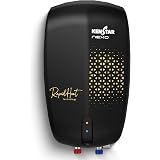
Kenstar NEXO 3L |3000W Instant Water Heater | Vertical Mounting | RapidHeat Technology | 2 Yr Product & 5 Yr Tank Warranty | Black
₹2,439.00 (as of September 20, 2026 12:01 GMT +05:30 - More infoProduct prices and availability are accurate as of the date/time indicated and are subject to change. Any price and availability information displayed on [relevant Amazon Site(s), as applicable] at the time of purchase will apply to the purchase of this product.)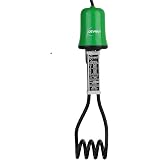
Devout distinct technology 1500 watts immersion water heater Rod/With Anti Rust Coating/100% shockproof ABS body/With Bucket Holder/2 year replacement warranty
₹549.00 (as of September 20, 2026 12:01 GMT +05:30 - More infoProduct prices and availability are accurate as of the date/time indicated and are subject to change. Any price and availability information displayed on [relevant Amazon Site(s), as applicable] at the time of purchase will apply to the purchase of this product.)
AO Smith Tankless Water Heater Zip Neo 5.5KW Instant Geyser with Smart Display (Black)
₹7,990.00 (as of September 20, 2026 12:01 GMT +05:30 - More infoProduct prices and availability are accurate as of the date/time indicated and are subject to change. Any price and availability information displayed on [relevant Amazon Site(s), as applicable] at the time of purchase will apply to the purchase of this product.)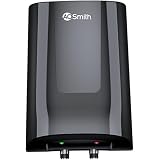
AO Smith Minibot 3 Ltr Black Vertical Geyser | Instant Water Geyser With Glass Coated Heating Element | Durable PVC Body | Warranty: 7 Yr Tank, 4 Yr Comprehensive
₹4,500.00 (as of September 20, 2026 12:01 GMT +05:30 - More infoProduct prices and availability are accurate as of the date/time indicated and are subject to change. Any price and availability information displayed on [relevant Amazon Site(s), as applicable] at the time of purchase will apply to the purchase of this product.)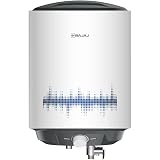
Bajaj Shield Series New Shakti 25L Storage Wall Mount Water Heater for Home, 5-Star Rated Geyser, Child Safety Mode, 7-Year Tank, 6-Year Element, 2-Year Product Warranty (White & Grey)
₹8,399.00 (as of September 20, 2026 12:01 GMT +05:30 - More infoProduct prices and availability are accurate as of the date/time indicated and are subject to change. Any price and availability information displayed on [relevant Amazon Site(s), as applicable] at the time of purchase will apply to the purchase of this product.)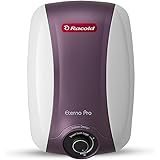
Racold Eterno Pro Storage Water Heater(Geyser)15L -ABS Body-Corrosion Prevention with Titanium Enameled Coating,7Yrs Tank Warranty,Energy Efficient, BEE 4 star rating
₹7,949.00 (as of September 20, 2026 12:01 GMT +05:30 - More infoProduct prices and availability are accurate as of the date/time indicated and are subject to change. Any price and availability information displayed on [relevant Amazon Site(s), as applicable] at the time of purchase will apply to the purchase of this product.)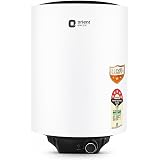
Orient Electric Enamour Classic Pro Geyser|15L Storage Water Heater| Faster Heating with Whirlflow Technology| HPE Coated Tank | BEE 5-star rated | High Rise Compatible |5 years tank warranty
₹6,099.00 (as of September 20, 2026 12:01 GMT +05:30 - More infoProduct prices and availability are accurate as of the date/time indicated and are subject to change. Any price and availability information displayed on [relevant Amazon Site(s), as applicable] at the time of purchase will apply to the purchase of this product.)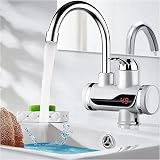
Instant Electric Water Heater Faucet Tap, 3000W | Home-Kitchen, Instantaneous, Tankless, LED Electric Head
₹799.00 (as of September 20, 2026 12:01 GMT +05:30 - More infoProduct prices and availability are accurate as of the date/time indicated and are subject to change. Any price and availability information displayed on [relevant Amazon Site(s), as applicable] at the time of purchase will apply to the purchase of this product.)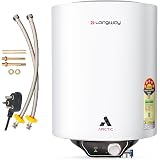
Longway Arctic 25L Storage Water Heater | Multi-Layered Safety System | 5 Star Rated | Glassline Coated Tank | Suitable for Hard Water & High-Rise Building | 5 Years Warranty on Tank | White
₹5,499.00 (as of September 20, 2026 12:01 GMT +05:30 - More infoProduct prices and availability are accurate as of the date/time indicated and are subject to change. Any price and availability information displayed on [relevant Amazon Site(s), as applicable] at the time of purchase will apply to the purchase of this product.)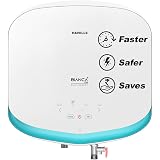
Havells Bianca DG+ 15L 5 Star 3-in-1 Convertible Storage Water Heater(Geyser)|Dual Element|33% Fast Heating|With Remote|Anti Rust Tank|7 Yr Tank & 5 Yr element Warranty|Free Installation & Flexi pipe
₹14,434.97 (as of September 20, 2026 12:01 GMT +05:30 - More infoProduct prices and availability are accurate as of the date/time indicated and are subject to change. Any price and availability information displayed on [relevant Amazon Site(s), as applicable] at the time of purchase will apply to the purchase of this product.)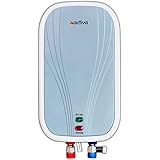
ACTIVA Volcano 3L Instant Water Heater Geyser | 3000W ISI Marked Copper Heating Element | 304L Stainless Steel Tank with Anti-Rust Coating | Auto Cut-Off Safety | ABS Body | 5 Years Warranty
₹2,047.00 (as of September 20, 2026 12:01 GMT +05:30 - More infoProduct prices and availability are accurate as of the date/time indicated and are subject to change. Any price and availability information displayed on [relevant Amazon Site(s), as applicable] at the time of purchase will apply to the purchase of this product.)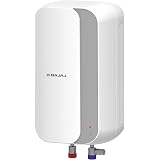
Bajaj Prohot 3 Litre Instant Water Heater | 3KW Vertical Geyser for Bathroom & Kitchen | Fast Heating Element | High Grade SS Tank | Multiple Safety Systems | 2-Yr Product Warranty | White
₹3,049.00 (as of September 20, 2026 12:01 GMT +05:30 - More infoProduct prices and availability are accurate as of the date/time indicated and are subject to change. Any price and availability information displayed on [relevant Amazon Site(s), as applicable] at the time of purchase will apply to the purchase of this product.)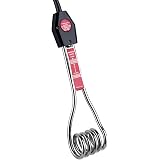
Bajaj Immersion 1500 Watts Water Heater Rod | Nickel Plated Heating| ISI Certified | 2 Years Warranty | Silver
₹599.00 (as of September 20, 2026 12:01 GMT +05:30 - More infoProduct prices and availability are accurate as of the date/time indicated and are subject to change. Any price and availability information displayed on [relevant Amazon Site(s), as applicable] at the time of purchase will apply to the purchase of this product.)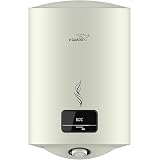
V-Guard Divino DG Geyser 15 Litre Water Heater with Digital Display | Suitable for Hard Water | High Energy Efficiency | Advanced 4 layered Safety | 5 Year Inner Tank Warranty by V-Guard
₹7,999.00 (as of September 20, 2026 12:01 GMT +05:30 - More infoProduct prices and availability are accurate as of the date/time indicated and are subject to change. Any price and availability information displayed on [relevant Amazon Site(s), as applicable] at the time of purchase will apply to the purchase of this product.)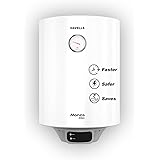
Havells Monza Pro 10L Storage Water Heater(Geyser)|Faster Heating|Safer to use|Saves electricity|Engineered for Hard Water|Endurashield Coated Anti Rust Tank|Whirlflow Technology|High Rise suitable
₹6,290.00 (as of September 20, 2026 12:01 GMT +05:30 - More infoProduct prices and availability are accurate as of the date/time indicated and are subject to change. Any price and availability information displayed on [relevant Amazon Site(s), as applicable] at the time of purchase will apply to the purchase of this product.)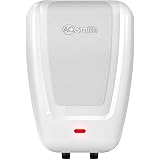
AO Smith EWS Plus Instant Water Heater 3 Litre with 3kW Incoloy Heating Element | 2X Corrosion Resistant Blue Diamond Glass Tank | Instant Geyser for Kitchen & Bathroom | 5-Year Tank Warranty
₹3,249.00 (as of September 20, 2026 12:01 GMT +05:30 - More infoProduct prices and availability are accurate as of the date/time indicated and are subject to change. Any price and availability information displayed on [relevant Amazon Site(s), as applicable] at the time of purchase will apply to the purchase of this product.)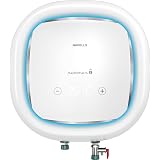
Havells Adonia-i 25L Storage Water Heater(Geyser)|With Remote|Wi-Fi Control|Faster Heating|Safe to use|Saves electricity|Glass Coated Anti Rust Tank|Color Changing LED Indicator|Mcoloy Heating Element
₹16,490.00 (as of September 20, 2026 12:01 GMT +05:30 - More infoProduct prices and availability are accurate as of the date/time indicated and are subject to change. Any price and availability information displayed on [relevant Amazon Site(s), as applicable] at the time of purchase will apply to the purchase of this product.)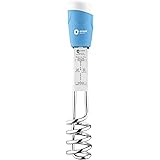
Orient Electric Arc Plus 1.5kw |Immersion water heater|100% shock proof body|Heavy copper element|With Bucket clip| ISI certified | 2 years replacement warranty
₹649.00 (as of September 20, 2026 12:01 GMT +05:30 - More infoProduct prices and availability are accurate as of the date/time indicated and are subject to change. Any price and availability information displayed on [relevant Amazon Site(s), as applicable] at the time of purchase will apply to the purchase of this product.)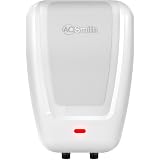
AO Smith 3L Instant Water Geyser | 3 kW Incoloy Heating Element | SS304L Stainless Steel Tank | 8 Bar Pressure Rating | 5-Level Safety Protection | White
₹2,999.00 (as of September 20, 2026 12:01 GMT +05:30 - More infoProduct prices and availability are accurate as of the date/time indicated and are subject to change. Any price and availability information displayed on [relevant Amazon Site(s), as applicable] at the time of purchase will apply to the purchase of this product.)