The battle for smartphone display supremacy has long been waged between two dominant technologies: Active-Matrix Organic Light-Emitting Diode (AMOLED) and Liquid Crystal Display (LCD). While both technologies have evolved significantly, their fundamental differences lead to distinct user experiences, impacting everything from visual vibrancy to battery life. Understanding these nuances is crucial for discerning consumers seeking the ultimate smartphone screen.
The Core Technology: A Fundamental Divide
At its heart, the distinction lies in how each display generates light and color. LCD technology relies on a backlight, typically an LED array, that shines through a layer of liquid crystals. These crystals twist and untwist to selectively block or allow light to pass through color filters, creating the pixels you see. In contrast, AMOLED displays are emissive; each individual pixel is an organic light-emitting diode that generates its own light. This fundamental difference underpins many of their contrasting characteristics.
Color Reproduction: The Vividness Factor
AMOLED displays are renowned for their exceptional color reproduction. Because each pixel emits its own light, they can achieve true blacks by completely switching off individual pixels. This results in an infinite contrast ratio, meaning the difference between the brightest white and the darkest black is theoretically limitless. This capability translates to incredibly vibrant and saturated colors, with deep blacks and dazzling whites that pop off the screen. Whites can appear warmer on some AMOLED panels due to the organic compounds used, but advancements have largely mitigated this.
LCDs, while capable of producing excellent color, face inherent limitations due to their reliance on a backlight. Even when liquid crystals are fully twisted to block light, a small amount of backlight can still leak through, preventing true black. This leads to a grayish-black and a lower overall contrast ratio compared to AMOLED. While some high-end LCDs employ local dimming techniques to improve black levels, they still cannot match the pixel-level control of AMOLED. The colors on LCDs, while often accurate, can appear less punchy and saturated, especially when compared side-by-side with an AMOLED display.
Brightness and Outdoor Visibility: Battling the Sun
Brightness is a critical factor for outdoor usability. AMOLED displays generally achieve excellent peak brightness, particularly for HDR content, allowing for stunning visual highlights. However, the sustained brightness of AMOLED panels can sometimes be a point of contention. In prolonged bright conditions, some AMOLED displays might reduce their overall brightness to manage heat and power consumption.
LCD displays, especially those with powerful LED backlights, can achieve very high sustained brightness levels. This often makes them excel in direct sunlight, where their consistent illumination can cut through glare more effectively. However, the backlight’s inherent nature means that even at maximum brightness, the contrast can be compromised, potentially making text and images appear washed out.
Power Efficiency: The Battery Life Debate
The power consumption of a display is a major contributor to a smartphone’s battery life. This is where AMOLED technology shines, particularly in scenarios with dark content. Because individual pixels can be turned off entirely, displaying a black image on an AMOLED screen consumes virtually no power. This translates to significant battery savings when using dark themes, watching videos with dark scenes, or simply navigating menus with a dark interface.
LCD displays, on the other hand, are less efficient. The backlight is always on, regardless of the image being displayed. Even when showing a black screen, the liquid crystals are actively blocking light, which still consumes power. This means that the power draw of an LCD is more consistent, regardless of the content. While modern LCDs have become more power-efficient, they generally cannot compete with AMOLED in scenarios where dark content is prevalent.
Viewing Angles: The Wider Perspective
Both technologies have made strides in improving viewing angles, but AMOLED generally holds an advantage. Due to the emissive nature of each pixel, colors and brightness remain remarkably consistent even when viewing the screen from extreme angles. This is particularly beneficial when sharing content with others or when using the phone in unconventional positions.
LCDs, while improved, can still exhibit color shifting and a decrease in brightness when viewed from off-angles. This is a consequence of the liquid crystals and the light diffusion properties of the panel. While many modern LCDs offer respectable viewing angles, they rarely reach the near-perfect uniformity of AMOLED.
Response Time and Motion Handling: The Smoothness Factor
Response time refers to how quickly a pixel can change from one color to another. This is crucial for smooth motion, especially in gaming and fast-paced videos. AMOLED displays boast incredibly fast response times, often measured in microseconds. This near-instantaneous pixel switching minimizes motion blur and ghosting, resulting in a fluid and responsive visual experience.
LCDs, due to the physical movement of liquid crystals, have slower response times, typically measured in milliseconds. While advancements have significantly reduced this latency, it can still be noticeable in very fast-moving content, leading to some degree of motion blur.
Durability and Lifespan: Longevity Concerns
Historically, AMOLED displays have faced concerns regarding “burn-in,” where static images displayed for extended periods can leave a permanent ghost image on the screen. This is due to the degradation of organic compounds over time. While manufacturers have implemented various mitigation techniques, including pixel shifting and software optimizations, burn-in remains a potential concern, especially for users who frequently display static elements like navigation bars or logos.
LCDs are generally more resistant to burn-in. Their inorganic nature means they are less susceptible to permanent image retention. However, LCDs can be more prone to physical damage, as the liquid crystal layer can be more fragile. The lifespan of both technologies is generally very good for typical smartphone usage, with advancements continually pushing the boundaries of longevity.
Cost and Manufacturing: The Economic Equation
AMOLED displays are generally more expensive to manufacture than LCDs. The complex organic materials and precise manufacturing processes contribute to higher production costs. This often translates to higher retail prices for smartphones equipped with AMOLED screens.
LCD technology, being more mature and widely adopted, benefits from economies of scale, making it a more cost-effective option for manufacturers. This is why many mid-range and budget-friendly smartphones still utilize LCD panels.
The Verdict: A Matter of Priorities
The question of which display technology reigns supreme is not a simple one. It depends entirely on individual priorities and usage patterns.
Choose AMOLED if:
- Vibrant colors and true blacks are paramount: You crave a visually stunning experience with unparalleled contrast and saturation, ideal for media consumption and photography.
- Power efficiency is a key concern: You frequently use dark themes or want to maximize battery life by leveraging the power-saving benefits of turning off pixels.
- Smooth motion and gaming are important: You demand a lag-free and responsive experience for gaming and fast-paced video.
- Wide viewing angles are a priority: You often share your screen or use your phone in various orientations.
Choose LCD if:
- Cost is a primary consideration: You are looking for a more budget-friendly smartphone without compromising too much on display quality.
- Sustained high brightness for outdoor use is essential: You spend a significant amount of time using your phone in bright, direct sunlight.
- Burn-in is a major concern: You are a heavy user of static elements on your screen and want to avoid the potential for permanent image retention.
- Color accuracy over vibrancy is preferred: You prioritize natural and true-to-life colors for tasks like photo editing, even if they are less saturated.
Ultimately, both AMOLED and LCD technologies offer compelling visual experiences. The “supreme” choice is subjective, a personalized decision based on what aspects of a smartphone display matter most to you. As technology continues to advance, the lines between these two display titans may blur further, offering consumers even more exceptional visual fidelity in the palm of their hands.
Premium 6.1" Screen Replacement for iPhone 12 Pro – Full HD LCD Display Digitizer Assembly with 3D Touch
₹2,799.00 (as of September 21, 2026 11:31 GMT +05:30 - More infoProduct prices and availability are accurate as of the date/time indicated and are subject to change. Any price and availability information displayed on [relevant Amazon Site(s), as applicable] at the time of purchase will apply to the purchase of this product.)
Premium 6.9" Screen Replacement for iPhone 16 Pro Max – Full HD LCD Display Digitizer Assembly with 3D Touch
Now retrieving the price.
(as of September 21, 2026 11:31 GMT +05:30 - More infoProduct prices and availability are accurate as of the date/time indicated and are subject to change. Any price and availability information displayed on [relevant Amazon Site(s), as applicable] at the time of purchase will apply to the purchase of this product.)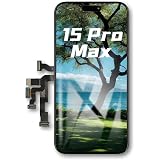
Premium 6.7" Screen Replacement for iPhone 15 Pro Max – Full HD LCD Display Digitizer Assembly with 3D Touch
₹4,299.00 (as of September 21, 2026 11:31 GMT +05:30 - More infoProduct prices and availability are accurate as of the date/time indicated and are subject to change. Any price and availability information displayed on [relevant Amazon Site(s), as applicable] at the time of purchase will apply to the purchase of this product.)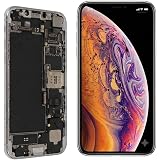
Compatible with iPhone Xs Max Screen Assembly with Clear Display, Responsive Touchscreen, Durable Replacement Digitizer and Easy Installation
₹1,999.00 (as of September 21, 2026 11:31 GMT +05:30 - More infoProduct prices and availability are accurate as of the date/time indicated and are subject to change. Any price and availability information displayed on [relevant Amazon Site(s), as applicable] at the time of purchase will apply to the purchase of this product.)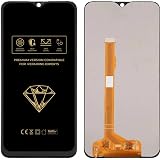
LCD Display Touch Screen Assembly for Vivo Y12, Y11, Y15, Y17, Y3, U3X, U10, Premium Display
Now retrieving the price.
(as of September 21, 2026 11:31 GMT +05:30 - More infoProduct prices and availability are accurate as of the date/time indicated and are subject to change. Any price and availability information displayed on [relevant Amazon Site(s), as applicable] at the time of purchase will apply to the purchase of this product.)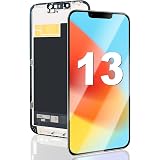
Compatible with iPhone 13 6.1 Inch, Screen Assembly with Clear HD Display, Responsive Touchscreen, Durable Replacement Digitizer and Easy Installation
₹2,399.00 (as of September 21, 2026 11:31 GMT +05:30 - More infoProduct prices and availability are accurate as of the date/time indicated and are subject to change. Any price and availability information displayed on [relevant Amazon Site(s), as applicable] at the time of purchase will apply to the purchase of this product.)
Premium 6.7" Screen Replacement for iPhone 12 Pro Max – Full HD LCD Display Digitizer Assembly with 3D Touch
₹2,599.00 (as of September 21, 2026 11:31 GMT +05:30 - More infoProduct prices and availability are accurate as of the date/time indicated and are subject to change. Any price and availability information displayed on [relevant Amazon Site(s), as applicable] at the time of purchase will apply to the purchase of this product.)
Compatible with iPhone XR Screen Assembly with Clear Display, Responsive Touchscreen, Durable Replacement Digitizer and Easy Installation
₹1,599.00 (as of September 21, 2026 11:31 GMT +05:30 - More infoProduct prices and availability are accurate as of the date/time indicated and are subject to change. Any price and availability information displayed on [relevant Amazon Site(s), as applicable] at the time of purchase will apply to the purchase of this product.)
Premium 6.1" Screen Replacement for iPhone 11 – Full HD LCD Display Digitizer Assembly with 3D Touch
₹1,799.00 (as of September 21, 2026 11:31 GMT +05:30 - More infoProduct prices and availability are accurate as of the date/time indicated and are subject to change. Any price and availability information displayed on [relevant Amazon Site(s), as applicable] at the time of purchase will apply to the purchase of this product.)
Premium 6.1" Screen Replacement for iPhone 12 – Full HD LCD Display Digitizer Assembly with 3D Touch
₹1,999.00 (as of September 21, 2026 11:31 GMT +05:30 - More infoProduct prices and availability are accurate as of the date/time indicated and are subject to change. Any price and availability information displayed on [relevant Amazon Site(s), as applicable] at the time of purchase will apply to the purchase of this product.)
Original Quality LCD Screen Replacement Display Combo Folder for Vivo Y20 | Original LCD, Display Combo, Replacement Part, Vivo Y20 Compatible, Original Display
Now retrieving the price.
(as of September 21, 2026 11:31 GMT +05:30 - More infoProduct prices and availability are accurate as of the date/time indicated and are subject to change. Any price and availability information displayed on [relevant Amazon Site(s), as applicable] at the time of purchase will apply to the purchase of this product.)
LCD Display Touch Screen Digitiser Assembly Compatible for Nothing CMF Phone 1 | Smartphone Display Replacement | Black
Now retrieving the price.
(as of September 21, 2026 11:31 GMT +05:30 - More infoProduct prices and availability are accurate as of the date/time indicated and are subject to change. Any price and availability information displayed on [relevant Amazon Site(s), as applicable] at the time of purchase will apply to the purchase of this product.)
OLED Display Folder for Samsung S22 5G, LCD Touch Screen Display (Folder) | OLED Display, Folder Design
₹8,899.00 (as of September 21, 2026 11:31 GMT +05:30 - More infoProduct prices and availability are accurate as of the date/time indicated and are subject to change. Any price and availability information displayed on [relevant Amazon Site(s), as applicable] at the time of purchase will apply to the purchase of this product.)
Premium OLED Compatible iPhone 12 Replacement Display Screen | Original Quality LCD Touchscreen
₹4,299.00 (as of September 21, 2026 11:31 GMT +05:30 - More infoProduct prices and availability are accurate as of the date/time indicated and are subject to change. Any price and availability information displayed on [relevant Amazon Site(s), as applicable] at the time of purchase will apply to the purchase of this product.)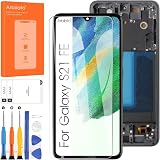
OLED Screen for Samsung Galaxy S21 FE 5G Screen Replacement for Samsung S21 FE 5G LCD Screen SM-G990B,SM-G990U Touch Display Digitizer Assembly Repair Parts With Frame(Black With Fingerprint Function)
₹14,455.00 (as of September 21, 2026 11:31 GMT +05:30 - More infoProduct prices and availability are accurate as of the date/time indicated and are subject to change. Any price and availability information displayed on [relevant Amazon Site(s), as applicable] at the time of purchase will apply to the purchase of this product.)
Premium 5.8" Screen Replacement for iPhone 11 Pro – Full HD LCD Display Digitizer Assembly with 3D Touch
₹2,699.00 (as of September 21, 2026 11:31 GMT +05:30 - More infoProduct prices and availability are accurate as of the date/time indicated and are subject to change. Any price and availability information displayed on [relevant Amazon Site(s), as applicable] at the time of purchase will apply to the purchase of this product.)
YSTAAR LCD Touch Screen Combo for Oppo F9 / A7 / Realme U1 | 500+ Nits Brightness, One by One Tested, RoHS Compliant, Flex Cable Included, F9 Pro / Realme 2 Pro
₹1,449.00 (as of September 21, 2026 11:31 GMT +05:30 - More infoProduct prices and availability are accurate as of the date/time indicated and are subject to change. Any price and availability information displayed on [relevant Amazon Site(s), as applicable] at the time of purchase will apply to the purchase of this product.)
MrSpares® LCD Display + Touch Screen Digitizer Combo for VIVO T3X 5G : Black
Now retrieving the price.
(as of September 21, 2026 11:31 GMT +05:30 - More infoProduct prices and availability are accurate as of the date/time indicated and are subject to change. Any price and availability information displayed on [relevant Amazon Site(s), as applicable] at the time of purchase will apply to the purchase of this product.)
HD Quality Display Screen Replacement Compatible with iPhone 6s, Full HD IPS, White
Now retrieving the price.
(as of September 21, 2026 11:31 GMT +05:30 - More infoProduct prices and availability are accurate as of the date/time indicated and are subject to change. Any price and availability information displayed on [relevant Amazon Site(s), as applicable] at the time of purchase will apply to the purchase of this product.)