The rollout of 5G technology has fundamentally reshaped the mobile landscape, promising unprecedented speeds, lower latency, and the potential for groundbreaking applications. However, for the average consumer, this evolution also brings a complex array of plan options, making the selection process a daunting task. Understanding the nuances of 5G plans is crucial to unlocking its full potential without overpaying or being locked into an unsuitable contract. This guide delves into the key considerations for navigating this dynamic market and choosing the 5G mobile plan that best fits your individual needs.
Understanding the 5G Tiers: Not All 5G is Created Equal
The first hurdle in choosing a 5G plan is recognizing that “5G” isn’t a monolithic entity. Carriers typically deploy 5G across different frequency bands, each offering distinct advantages and limitations:
- Low-band 5G: Operates on similar frequencies to 4G LTE, offering wide coverage comparable to existing cellular networks. While it provides a noticeable speed boost over 4G, it’s not the revolutionary leap in performance often advertised. Its strength lies in its reach, ensuring a 5G signal in more rural or less densely populated areas.
- Mid-band 5G: Falls between low-band and high-band frequencies, striking a balance between speed and coverage. This band offers significantly faster speeds than low-band 5G and 4G LTE, with improved latency. It’s often the sweet spot for many users, delivering a tangible improvement in everyday mobile experiences like streaming and browsing.
- High-band 5G (mmWave): Utilizes extremely high frequencies, delivering blazing-fast speeds and ultra-low latency. This is the “true” 5G experience, capable of supporting applications like augmented reality, virtual reality, and real-time gaming. However, mmWave signals have a very limited range and are easily obstructed by physical barriers like walls and even foliage. Consequently, it’s primarily found in dense urban areas, stadiums, and specific public venues.
When evaluating 5G plans, pay close attention to which 5G bands the carrier utilizes in your area. Many plans will offer access to all three, but the actual performance you experience will depend on the dominant band available. Websites and apps from carriers often provide coverage maps that detail 5G availability by band.
Data Needs: The Cornerstone of Your Plan Selection
The most significant factor influencing your 5G plan choice, beyond the network technology itself, is your data consumption. 5G’s enhanced speeds can encourage higher data usage, so accurately assessing your needs is paramount.
- Light Users (under 5GB/month): If you primarily use Wi-Fi for most of your data-intensive activities (streaming, downloading large files, gaming) and rely on cellular data for basic browsing, email, and social media, a smaller data allowance might suffice. However, be mindful that 5G speeds can make it tempting to use more cellular data.
- Moderate Users (5GB – 20GB/month): This category encompasses individuals who stream music and videos regularly, use social media extensively, and occasionally download apps or files. A plan with a mid-range data cap will likely be appropriate.
- Heavy Users (20GB+ / month): If you frequently stream high-definition video, play online games on your mobile device, download large files, or use your phone as a mobile hotspot for other devices, a plan with unlimited or a very substantial data allowance is essential.
Unlimited Data: A Closer Look at the Fine Print
The allure of “unlimited data” is undeniable, but it’s crucial to understand what this truly entails. Most unlimited plans are not truly unlimited in the sense of unthrottled speeds indefinitely. Carriers typically implement a “premium data” threshold. Once you exceed this threshold, your speeds may be deprioritized or throttled during times of network congestion.
- Premium Data Tiers: Unlimited plans often come with a specified amount of premium data (e.g., 50GB, 100GB). After this limit, your data speeds might be reduced to 3G or 4G levels, or simply slower than your typical 5G speeds.
- Throttling: Even if your data isn’t technically capped, your speeds can be significantly reduced after exceeding a certain usage point, especially during peak network hours.
- Hotspot Data: If you plan to use your phone as a mobile hotspot, check the specific data allowance allocated for this purpose within unlimited plans. This is often much lower than your on-device data allowance.
Consider your typical monthly data usage on 4G/LTE. If you consistently exceed 50-70GB, then a true unlimited plan with a high premium data threshold is advisable. If your usage is lower, you might find a tiered plan more cost-effective.
Beyond Data: Essential Plan Features to Consider
While data allowance and 5G speeds are primary concerns, several other features can significantly impact your overall mobile experience and value:
- Talk and Text: Most plans today offer unlimited talk and text domestically. However, if you frequently call or text internationally, investigate international calling and texting packages or plans that include these features.
- 5G Hotspot/Tethering: The ability to share your 5G connection with other devices (laptops, tablets) is a valuable feature. Check the data allowance and speeds specifically for hotspot usage. Some plans offer limited hotspot data, while others provide a substantial amount.
- Network Coverage: This is perhaps the most critical factor, regardless of the plan. A fast 5G signal is useless if you don’t have a signal where you need it most. Research carrier coverage maps for your home, workplace, and frequently traveled routes. Consider asking friends or family about their experiences with different carriers in your area.
- International Roaming: If you travel abroad frequently, investigate international roaming options. Some plans offer included international data and calling, while others require purchasing separate travel passes. Be aware of the costs and limitations of international roaming.
- Bundled Services: Some carriers offer bundled packages that include streaming services (e.g., Netflix, Disney+), cloud storage, or other perks. While these can offer perceived value, ensure the core mobile plan meets your needs and that you would actually use the bundled services.
- Device Compatibility and Promotions: Ensure your current or desired smartphone is 5G compatible. Carriers often offer device payment plans and promotions, which can be attractive but also lock you into a contract. Factor the cost of a new device into your overall plan comparison.
- Customer Service: While not directly tied to plan features, the quality of customer service can be a significant factor in your overall satisfaction. Read reviews and consider the carrier’s reputation for support.
Navigating Carrier Offerings: A Comparative Approach
The 5G mobile market is dominated by a few major carriers, each with its own unique plan structures and pricing. A direct comparison is essential:
- Major Carriers (e.g., Verizon, AT&T, T-Mobile): These carriers generally offer the most comprehensive 5G networks and a wide range of plans, from budget-friendly to premium unlimited options. They often have the most extensive coverage, particularly for mid-band and high-band 5G in urban areas.
- MVNOs (Mobile Virtual Network Operators): Companies like Mint Mobile, Visible, and Google Fi operate on the networks of the major carriers. They often offer more competitive pricing, particularly for data-centric plans, but may have limitations on premium 5G access or specific features. If you prioritize cost savings and have reliable coverage from a major carrier in your area, an MVNO can be an excellent choice.
When comparing plans, create a spreadsheet to track:
- Monthly cost
- Data allowance (including premium data and hotspot data)
- 5G band access
- Included features (talk, text, international, etc.)
- Contract length and early termination fees
- Device payment options and promotions
Making the Final Decision: Prioritizing Your Needs
The “best” 5G plan is subjective and depends entirely on your individual circumstances. Ask yourself these key questions:
- What is my typical monthly data usage? Be honest and review your current usage if possible.
- Where do I primarily use my phone? This will determine which carrier’s coverage is most important.
- Do I need a lot of hotspot data? If so, this will narrow down your options.
- What is my budget? Be realistic about what you can afford.
- Are there any specific features I absolutely need (e.g., international calling)?
By thoroughly understanding the different 5G tiers, accurately assessing your data needs, and carefully comparing the features and pricing of various plans, you can confidently navigate the evolving 5G mobile landscape and select the plan that truly empowers your digital life.
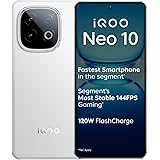
iQOO Neo 10 (Alpine White, 8GB RAM, 256GB Storage) | Segment's Fastest Processor* with Snapdragon 8s Gen 4 & Supercomputing chip Q1 | 120W FlashCharge | Segment's Brightest AMOLED Display*
₹43,999.00 (as of September 18, 2026 18:09 GMT +05:30 - More infoProduct prices and availability are accurate as of the date/time indicated and are subject to change. Any price and availability information displayed on [relevant Amazon Site(s), as applicable] at the time of purchase will apply to the purchase of this product.)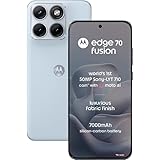
Motorola Edge 70 Fusion (Pantone Country Air, 8GB RAM, 128GB Storage) | 6.78" 1.5K 144Hz AMOLED Display | Snapdragon 7s Gen 4 | 50MP Sony LYTIA 710 OIS | 32MP Selfie | 7000mAh | 68W TurboPower |
₹29,660.00 (as of September 18, 2026 18:09 GMT +05:30 - More infoProduct prices and availability are accurate as of the date/time indicated and are subject to change. Any price and availability information displayed on [relevant Amazon Site(s), as applicable] at the time of purchase will apply to the purchase of this product.)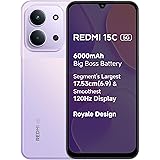
Redmi 15C 5G Prime Edition Dusk Purple 6GB + 128GB | Massive 6000mAh Battery | Segment's Largest 17.53cm Display Up to 120Hz | MediaTek Dimensity 6300 | 33W Fast Charging | 50MP AI Dual Camera
₹19,499.00 (as of September 18, 2026 18:09 GMT +05:30 - More infoProduct prices and availability are accurate as of the date/time indicated and are subject to change. Any price and availability information displayed on [relevant Amazon Site(s), as applicable] at the time of purchase will apply to the purchase of this product.)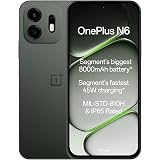
OnePlus N6 | 6GB+128GB | Midnight Green | Segment's Biggest 8000mAh Battery | Segment's Fastest 45W Charging | 60-Month Smoothness | Smooth 120Hz Display | 50MP Camera | Military-Grade Durability
₹26,999.00 (as of September 18, 2026 18:09 GMT +05:30 - More infoProduct prices and availability are accurate as of the date/time indicated and are subject to change. Any price and availability information displayed on [relevant Amazon Site(s), as applicable] at the time of purchase will apply to the purchase of this product.)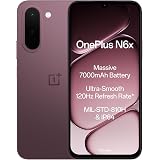
OnePlus N6x | 4GB+128GB | Burgundy Red | 7000mAh Battery | Power for Days | 48-Months Smoothness | Smooth 120Hz Display | Largest 5300mm2 Cooling System | Military-Grade Durability
₹22,999.00 (as of September 18, 2026 18:09 GMT +05:30 - More infoProduct prices and availability are accurate as of the date/time indicated and are subject to change. Any price and availability information displayed on [relevant Amazon Site(s), as applicable] at the time of purchase will apply to the purchase of this product.)
Motorola g37 Power (Pantone Impenetrable, 4GB RAM, 64GB Storage) | MediaTek Dimensity 6400 Octa-Core Processor | 50MP AI Rear Camera | 8MP Front Camera | 6.66-inch HD+ 120Hz Display | 7000mAh Battery
₹15,428.00 (as of September 18, 2026 18:09 GMT +05:30 - More infoProduct prices and availability are accurate as of the date/time indicated and are subject to change. Any price and availability information displayed on [relevant Amazon Site(s), as applicable] at the time of purchase will apply to the purchase of this product.)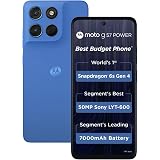
Motorola G57 Power 5G (Regatta, 8GB RAM, 128GB Storage) | Snapdragon 6s Gen 4 Processor | 6.72" FHD+ Display | 50MP LYT-600 + 8MP Ultrawide | 8MP Selfie Camera | 7000mAh Battery, 33W TurboPower | IP64
₹20,999.00 (as of September 18, 2026 18:09 GMT +05:30 - More infoProduct prices and availability are accurate as of the date/time indicated and are subject to change. Any price and availability information displayed on [relevant Amazon Site(s), as applicable] at the time of purchase will apply to the purchase of this product.)
OnePlus Nord CE6 | 8GB+128GB | Pitch Black | Snapdragon 7s Gen 4 | Segment's Fastest Touch Response | 8000mAh Battery | 144Hz 1.5K AMOLED Display | 50MP Main + 32MP Selfie 4K Cameras | IP66,68,69,69K
₹37,999.00 (as of September 18, 2026 18:09 GMT +05:30 - More infoProduct prices and availability are accurate as of the date/time indicated and are subject to change. Any price and availability information displayed on [relevant Amazon Site(s), as applicable] at the time of purchase will apply to the purchase of this product.)
Motorola All-New A300-2026 Dual Sim keypad Phone | 2 Years Replacement | Type C Charging Port |Long Lasting Battery | Loud Sound | Wireless FM | (Purple Elite)
₹1,370.00 (as of September 18, 2026 18:09 GMT +05:30 - More infoProduct prices and availability are accurate as of the date/time indicated and are subject to change. Any price and availability information displayed on [relevant Amazon Site(s), as applicable] at the time of purchase will apply to the purchase of this product.)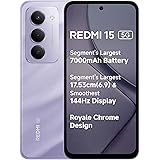
Redmi 15 5G Sandy Purple 8GB + 256GB | 7000mAh Battery, 17.53cm (6.9) Display Up to 144Hz, Snapdragon 6s Gen 3, 18W Reverse Charging, 50MP AI Dual Camera
₹25,499.00 (as of September 18, 2026 18:09 GMT +05:30 - More infoProduct prices and availability are accurate as of the date/time indicated and are subject to change. Any price and availability information displayed on [relevant Amazon Site(s), as applicable] at the time of purchase will apply to the purchase of this product.)
iQOO Z10 Lite 5G (Titanium Blue 2026, 4GB RAM, 64GB Storage) | Dimensity 6300 5G Processor | 50MP Sony AI Camera | 6000 mAh Battery | IP64 Rated & Military Grade Shock-Resistance*
₹16,999.00 (as of September 18, 2026 18:09 GMT +05:30 - More infoProduct prices and availability are accurate as of the date/time indicated and are subject to change. Any price and availability information displayed on [relevant Amazon Site(s), as applicable] at the time of purchase will apply to the purchase of this product.)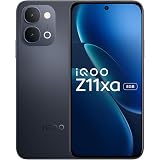
iQOO Z11xa 5G (Titan Black, 8GB RAM, 128 GB Storage) | Massive 7200mAh Battery | Dimensity 7400 Turbo Processor | OriginOS 6 with 4 Years of Security Updates*
₹28,999.00 (as of September 18, 2026 18:09 GMT +05:30 - More infoProduct prices and availability are accurate as of the date/time indicated and are subject to change. Any price and availability information displayed on [relevant Amazon Site(s), as applicable] at the time of purchase will apply to the purchase of this product.)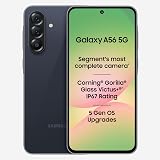
Samsung Galaxy A56 5G Mobile (Awesome Midnight Blue, 8GB, 128GB) | Segment Most Complete Triple Camera | 50MP | AI Editing | 4nm Processor | sAMOLED | 5000mAh | Gorilla Glass Victus+| Knox Security
₹36,999.00 (as of September 18, 2026 18:09 GMT +05:30 - More infoProduct prices and availability are accurate as of the date/time indicated and are subject to change. Any price and availability information displayed on [relevant Amazon Site(s), as applicable] at the time of purchase will apply to the purchase of this product.)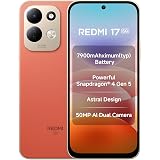
Redmi 17 5G (Eternal Orange, 6GB RAM, 128GB ROM) | 7900mAh Battery + 45W Fast Charging | 6.9" 120Hz Adaptive Display | Snapdragon 4 Gen 5 | 50MP Dual AI Camera | Corning® Gorilla® Glass 7i | IP64
₹23,999.00 (as of September 18, 2026 18:09 GMT +05:30 - More infoProduct prices and availability are accurate as of the date/time indicated and are subject to change. Any price and availability information displayed on [relevant Amazon Site(s), as applicable] at the time of purchase will apply to the purchase of this product.)
OnePlus 15R | 12GB+256GB | Charcoal Black | World's First Snapdragon® 8 Gen 5 | 7400mAh Battery | Personalised AI | Game-Changing 165Hz Display | IP68 IP69 IP66 & IP69K | 4K 120fps Video
₹59,999.00 (as of September 18, 2026 18:09 GMT +05:30 - More infoProduct prices and availability are accurate as of the date/time indicated and are subject to change. Any price and availability information displayed on [relevant Amazon Site(s), as applicable] at the time of purchase will apply to the purchase of this product.)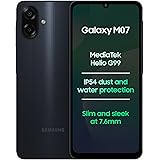
Samsung Galaxy M07 Mobile (Black, 4GB RAM, 64GB Storage) | MediaTek Helio G99 | AnTuTu 624K | IP54| 50MP Camera | 7.6mm Slim | 5000mAh Battery | 25W Fast Charging | 6 Gen OS Upgrades | Without Charger
₹11,999.00 (as of September 18, 2026 18:09 GMT +05:30 - More infoProduct prices and availability are accurate as of the date/time indicated and are subject to change. Any price and availability information displayed on [relevant Amazon Site(s), as applicable] at the time of purchase will apply to the purchase of this product.)
iPhone 18 Pro (256 GB) - Burgundy | 15.93 cm (6.3″) Super Retina XDR Display with ProMotion, A20 Pro Chip, 48MP Fusion Main Camera with Variable Aperture
Now retrieving the price.
(as of September 18, 2026 18:09 GMT +05:30 - More infoProduct prices and availability are accurate as of the date/time indicated and are subject to change. Any price and availability information displayed on [relevant Amazon Site(s), as applicable] at the time of purchase will apply to the purchase of this product.)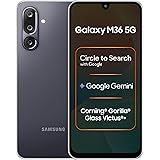
Samsung Galaxy M36 5G Mobile (Velvet Black, 6GB RAM, 128GB Storage) | Google Gemini| Gorilla Glass Victus+ | 7.7mm | AI Enhanced 50MP OIS Triple Camera| Nightography| Lag-free Gaming | Without Charger
₹21,999.00 (as of September 18, 2026 18:09 GMT +05:30 - More infoProduct prices and availability are accurate as of the date/time indicated and are subject to change. Any price and availability information displayed on [relevant Amazon Site(s), as applicable] at the time of purchase will apply to the purchase of this product.)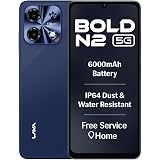
Lava Bold N2 5G (Billionaire Blue, 4GB RAM, 128GB Storage) | 6000 mAh Super Battery | Octacore Ultrafast Processor | Biggest 6.75 (HD+) 120Hz Display | IP64 Dust-Water Resistant | Free Service @ Home
₹14,499.00 (as of September 18, 2026 18:09 GMT +05:30 - More infoProduct prices and availability are accurate as of the date/time indicated and are subject to change. Any price and availability information displayed on [relevant Amazon Site(s), as applicable] at the time of purchase will apply to the purchase of this product.)