Description: Choose the ideal room heater for Indian homes! Compare OFR, fan, and radiant types based on health, safety (ISI mark), energy efficiency, and room size. Expert advice for a cozy winter.
🇮🇳 Introduction: The Critical Need for Smart Winter Warming Solutions
For many parts of India, winter brings a biting cold that permeates the walls, making the simple act of stepping out of bed a chilling experience. While the popular image of India is often one of relentless heat, regions from the northern plains (Delhi, Punjab) to the high-altitude areas (Himachal Pradesh, Uttarakhand) and even parts of central and eastern India experience severe, prolonged winter cold.
The choice of a room heater is therefore not merely about temporary comfort; it’s a vital decision that impacts your family’s health, safety, and monthly electricity bill. Cheap, inefficient, or unsafe heaters pose risks ranging from dry skin and breathing issues to serious electrical and fire hazards.
This comprehensive, expert-driven guide is tailored specifically for the Indian consumer. We will dive deep into the types of room heaters available, dissect their operational costs, and, most importantly, provide actionable insights on choosing a model that offers maximum safety and health benefits for your home, ensuring your winter is both warm and worry-free.
🧐 Section 1: The Three Main Types of Room Heaters – A Detailed Indian Comparison
Understanding the mechanism of a heater is the first step toward making a smart buying choice. The Indian market is dominated by three primary technologies, each suited for a different need and budget.
1. Convection Heaters (The Quick Fix – Fan/Blower Heaters)
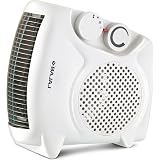
Convection heaters, commonly known as fan heaters or blowers, work by heating a coil (often metal or ceramic) and using a fan to rapidly push the warm air into the room.
- Mechanism: Heats the surrounding air and circulates it via a fan.
- Ideal Use Case: Small to medium-sized rooms (up to 250 sq. ft.) where instant warmth is required, such as a temporary setup, a bathroom (with caution), or a small bedroom for quick pre-heating.
- Pros (Power Words):
- Instant: Heats the area almost immediately.
- Affordable: Lowest initial cost among all types.
- Portable: Lightweight and very easy to move between rooms.
- Cons (Uncommon Words):
- Noisy: The fan operation can be disruptive for light sleepers.
- Drying: Tends to dry out the air and often causes the depletion of moisture, which can lead to dry eyes, dry skin, and throat irritation.
- Non-Retentive: The room cools down as quickly as it heats up once the unit is switched off.
2. Radiant Heaters (The Spot Warmer – Quartz/Halogen Heaters)
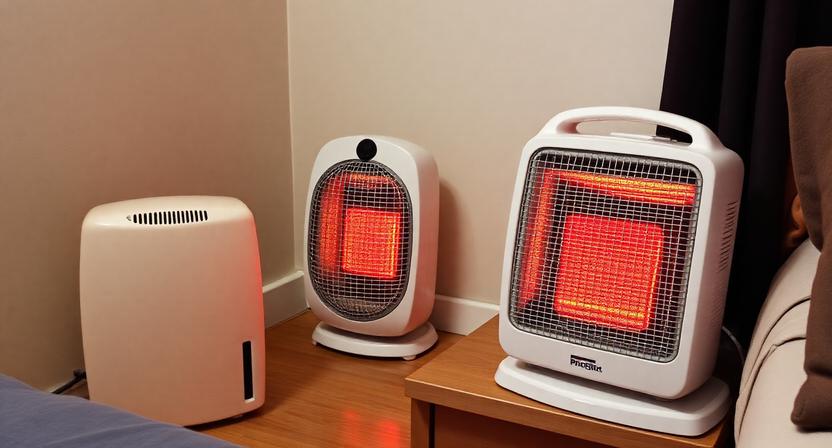
Radiant heaters, including Quartz and Halogen models, work on the principle of infrared radiation, directly heating the objects and people in front of them, much like the sun or a bonfire.
- Mechanism: Uses heated rods (quartz or halogen) to emit infrared waves that warm up surfaces directly.
- Ideal Use Case: Spot heating or personal use in very small rooms, near a study desk, or for quick morning relief. Not suitable for whole-room heating.
- Pros (Emotional Words):
- Focused: Provides immediate, directed heat for personal comfort.
- Silent: Operates without a fan, making them quiet.
- Low Wattage: Generally consume less power (400W–1200W) than fan heaters on average.
- Cons (Common Words):
- Limited Coverage: Only warms the area facing the unit.
- Intense Light: The glowing rods can be distracting in a dark room or bedroom.
- Safety Risk: The heating elements are exposed and can cause burns if touched accidentally.
3. Oil-Filled Radiator (OFR) Heaters (The Healthy Long-Term Solution)
OFRs are the gold standard for consistent, healthy, and prolonged heating. They contain a thermodynamic fluid (oil) sealed inside metal fins, which is heated by an electric element. The oil acts as a heat reservoir.
- Mechanism: The heated oil warms the fins, which in turn warm the surrounding air via convection, creating gentle, long-lasting warmth.
- Ideal Use Case: Medium to large rooms (300+ sq. ft.), especially bedrooms, nurseries, and living rooms where continuous, silent, and non-drying heat is essential.
- Pros (Power Words):
- Healthiest: Does not burn oxygen or significantly dry out the air, making it superior for individuals with respiratory issues, allergies, or asthma.
- Silent: Operates without a fan.
- Heat Retention: The oil continues to radiate heat for a long time even after the power is switched off, making it energy-efficient in the long run.
- Safe: Fins often have a cool-to-touch feature, and there are no exposed heating elements.
- Cons (Uncommon Words):
- Slow to Start: Takes a significant amount of time (20–30 minutes) to reach optimal heating capacity.
- Expensive: Highest initial purchase cost.
- Bulky: Heavy and less portable, though most models come with castor wheels.
🌡️ Section 2: Power, Performance, and Your Electricity Bill – Calculating Wattage Needs
For the Indian consumer, the most pressing question after safety is: How much will it cost to run? Understanding wattage and calculating consumption is crucial.
The 10-Watt Rule: Sizing Your Heater Correctly
Buying an oversized or undersized heater is a common, expensive mistake. The ideal wattage is determined by the size of your room.
The universally accepted thumb rule for heating well-insulated spaces is:
10 Watts of power per square foot (sq. ft.) of floor area.
- Measure Your Room: Calculate the area in square feet (Length x Width).
- Example: A standard Indian bedroom of 12 feet x 15 feet has an area of 180 sq. ft.
- Calculate Required Wattage: Multiply the area by 10 Watts.
- Example: 180 sq. ft. x 10 W/sq. ft. = 1800 Watts.
- Choose the Model: For this room, a heater with at least 1500W to 2000W capacity (ideally with multiple heat settings like 800W, 1200W, 2000W) is appropriate.
| Room Size (Approx.) | Area (Sq. Ft.) | Recommended Wattage | Ideal Heater Type |
| Small Room/Personal | 100 sq. ft. | 800 W – 1000 W | Radiant (Quartz/Halogen) or Small Fan Heater |
| Medium Bedroom | 150 sq. ft. | 1500 W | Fan Heater or Small OFR (9-11 Fins) |
| Large Living Room | 200 sq. ft. + | 2000 W – 2500 W | Large OFR (13-15 Fins) or High-Power Convector |
Decoding Electricity Consumption (The Money Math)
Your running cost depends entirely on your usage and local electricity tariff.
- Formula: Units Consumed (kWh) = Wattage x Hours Used / 1000
- Case Study Example: A 2000W Fan Heater run for 4 hours a day in Delhi.
- Units = 2000 W x 4 hours / 1000 = 8 units (kWh) per day.
- If your average tariff is ₹7 per unit, the daily cost is 8 x ₹7 = ₹56.
- Monthly Cost: ₹56 x 30 days = ₹1680.
Actionable Insight: While an OFR heater is slower, its thermostat control and heat retention mean it spends less time actively drawing 2000W of power, resulting in better energy efficiency over extended, continuous usage compared to a fan heater that might run non-stop.
🛡️ Section 3: Safety and Health – Non-Negotiable Factors for Indian Homes
Given the prevalence of children and elders in Indian joint families, and the general vulnerability of household wiring, safety features should be your primary concern.
BIS Certification and the ISI Mark: Your Guarantee
In India, electrical appliances are mandated to meet strict safety standards.
- Legal Mandate: Room heaters must comply with the Bureau of Indian Standards (BIS) norms, specifically IS 302 (Part 2 /Sec 30).
- The ISI Mark: Always look for the ISI mark prominently displayed on the heater’s body and packaging. This mark assures that the heater has been rigorously tested for electrical safety, thermal safety (overheating protection), and mechanical safety (structural integrity). Never purchase an uncertified heater.
Essential Safety Features to Look For
- Tip-Over Switch: This is critical. If the heater is accidentally knocked or falls over (common with children or pets), this sensor immediately cuts the power, preventing fire hazards.
- Overheat Protection (Thermal Cut-off): This feature automatically shuts off the heating element if the internal temperature exceeds a safe limit, preventing damage to the heater and the risk of fire.
- Cool-Touch Body: Essential, especially for OFR and high-end convection heaters, where the exterior remains safe to touch, preventing accidental burns.
- Proper Earthing (Grounding): Look for a three-pin plug and ensure your wall socket has proper earthing. This is a vital defense against electric shock.
The Health Divide: OFR vs. Fan Heaters
For users concerned about health, the choice is clear:
- For Allergies/Asthma: The fan in blower heaters can circulate dust, pollen, and pet dander, exacerbating allergies. OFR and Micathermic heaters are the best choice as they use quiet, radiant heat and do not blow air around.
- For Skin/Throat Dryness: Fan and radiant heaters significantly reduce air moisture. OFRs maintain humidity levels far better. Many doctors recommend using a small humidifier or simply placing a bowl of water near any fan/radiant heater to compensate for the lost moisture.
💡 Section 4: Advanced Features and Smart Usage Tips
The best room heaters in India now offer smart features that enhance both safety and energy saving.
Next-Generation Technologies
- PTC (Positive Temperature Coefficient) Ceramic Heaters: These are modern fan heaters that use ceramic elements instead of coils. They are safer and more energy-efficient than traditional coil fan heaters because they regulate their own temperature and cannot overheat to dangerous levels.
- Micathermic Heaters: A newer hybrid technology that combines the best of convection (heating the air) and radiant heat (heating objects). They heat up faster than OFRs, are often silent, and do not dry the air as much as traditional fans. They represent an excellent middle-ground.
- OFR with PTC Fan: Some high-end OFRs now include a small, optional PTC fan. This allows you to use the fan for quick initial warm-up, then switch it off to rely on the silent, retained heat from the oil fins, offering the best of both worlds.
Tips for Smart and Safe Heater Usage
- Use a Timer: A programmable timer is a game-changer. Set the heater to turn on 30 minutes before you wake up and turn off 30 minutes after you get into bed. This saves power and ensures comfort when you need it most.
- Maintain Clearance: Maintain a distance of at least 3 feet (1 meter) from any flammable objects, including curtains, beds, clothes, or furniture. This is the single most important fire safety rule.
- Avoid Extension Cords: Due to their high wattage (1500W–2500W), heaters should always be plugged directly into a wall socket. Extension cords can overheat, melt, and cause electrical fires.
- Seal the Room: Close doors and windows to prevent warm air from escaping. Using thick curtains (or pardas) over windows can also significantly improve heat retention.
🏁 Conclusion: Mastering Your Winter Comfort
Choosing a room heater in India requires a measured balance between the initial cost, long-term health implications, and absolute safety. For a large, quiet, and healthy bedroom solution, the Oil-Filled Radiator (OFR) remains the undisputed king. For quick, budget-friendly spot heating, a Quartz or Halogen heater is sufficient. For a mid-sized room needing fast, yet safe heat, a PTC Fan Heater is a robust modern option.
The smartest buying guide is the one that prioritizes your family’s safety above all else. Always verify the ISI mark, size the heater correctly for your room, and implement the safety tips outlined here.
✍️ Compelling Call to Action
Don’t compromise on safety or health this winter! Ready to choose a room heater that perfectly suits your family’s needs and budget? Use our Wattage Calculator and Safety Checklist to find BIS-certified models online and bring home the ideal companion for a cozy, secure Indian winter!
Havells 13 Fin Oil Filled Room Heater (OFR) | Advanced New U-Tech Fast Heating Fins with 10-Year Warranty | 2900W | ISI Approved | PTC Fan Heater | Inclined Control Panel | Black
₹13,990.00 (as of September 19, 2026 18:07 GMT +05:30 - More infoProduct prices and availability are accurate as of the date/time indicated and are subject to change. Any price and availability information displayed on [relevant Amazon Site(s), as applicable] at the time of purchase will apply to the purchase of this product.)
Havells Cozio Nuo Room Heater| Dual Heat Setting 400/800 Watt| Dual Quartz Heating Rods| Silent Operation| Tip Over Protection| Fire Retardant Material| Anti Rust Reflector| 2 Year Warranty(Grey)
₹999.00 (as of September 19, 2026 18:07 GMT +05:30 - More infoProduct prices and availability are accurate as of the date/time indicated and are subject to change. Any price and availability information displayed on [relevant Amazon Site(s), as applicable] at the time of purchase will apply to the purchase of this product.)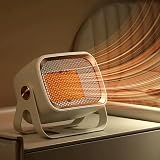
Drumstone (𝐒𝐩𝐞𝐜𝐢𝐚𝐥 𝟏𝟓 𝐘𝐞𝐚𝐫𝐬 𝐖𝐚𝐫𝐫𝐚𝐧𝐭𝐲) Portable 1200W Electric Heater Wall & Desk Mount Room Heater Instant Fast Heating Energy Efficient Safe Heater for Home Bedroom Office
₹2,849.00 (as of September 19, 2026 18:07 GMT +05:30 - More infoProduct prices and availability are accurate as of the date/time indicated and are subject to change. Any price and availability information displayed on [relevant Amazon Site(s), as applicable] at the time of purchase will apply to the purchase of this product.)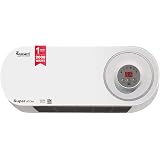
WARMEX HOME APPLIANCES Super Atom 2000W/1000W Wall Mount PTC Room Heater, 2 Heat Modes with Digital Display, ISI Certified With 1 Year Warranty, Overheat Protection Heater for Bedroom, White
₹5,499.00 (as of September 19, 2026 18:07 GMT +05:30 - More infoProduct prices and availability are accurate as of the date/time indicated and are subject to change. Any price and availability information displayed on [relevant Amazon Site(s), as applicable] at the time of purchase will apply to the purchase of this product.)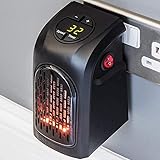
Handy Heater Wall Mounted Electric Convector Heater | 400W, Plug-in, Silent
₹699.00 (as of September 19, 2026 18:07 GMT +05:30 - More infoProduct prices and availability are accurate as of the date/time indicated and are subject to change. Any price and availability information displayed on [relevant Amazon Site(s), as applicable] at the time of purchase will apply to the purchase of this product.)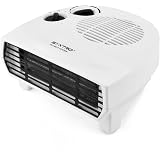
Syntro Aero Heat 1000W/2000W Fan Room Heater for Home | Dual Heat Settings, Adjustable Thermostat, Overheat Protection, Lightweight Portable Electric Heater for Bedroom & Office (White)
₹799.00 (as of September 19, 2026 18:07 GMT +05:30 - More infoProduct prices and availability are accurate as of the date/time indicated and are subject to change. Any price and availability information displayed on [relevant Amazon Site(s), as applicable] at the time of purchase will apply to the purchase of this product.)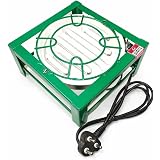
Electric Cooking Heater 1500W Single Burner | Portable Electric Stove with Fast Heating Coil | Heavy Duty Cooking Heater Model-03
₹1,145.00 (as of September 19, 2026 18:07 GMT +05:30 - More infoProduct prices and availability are accurate as of the date/time indicated and are subject to change. Any price and availability information displayed on [relevant Amazon Site(s), as applicable] at the time of purchase will apply to the purchase of this product.)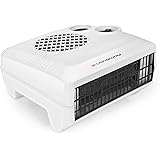
Longway Magma Fan Room Heater | 2 Heat Modes (1000W/2000W) | ISI Approved | Advanced Overheat Protection | PTC Ceramic Element | 1-Year Replacement Warranty | White
₹899.00 (as of September 19, 2026 18:07 GMT +05:30 - More infoProduct prices and availability are accurate as of the date/time indicated and are subject to change. Any price and availability information displayed on [relevant Amazon Site(s), as applicable] at the time of purchase will apply to the purchase of this product.)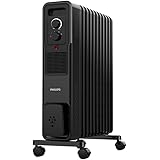
PHILIPS 11 Fin Oil Filled Room Heater (OFR) | M-Shaped fins for faster, uniform heating | Two Knob Controls for temperature & heat modes | Tilt & Auto Shut-Off Safety | PTC Fan Heater for quick warmth
₹13,495.00 (as of September 19, 2026 18:07 GMT +05:30 - More infoProduct prices and availability are accurate as of the date/time indicated and are subject to change. Any price and availability information displayed on [relevant Amazon Site(s), as applicable] at the time of purchase will apply to the purchase of this product.)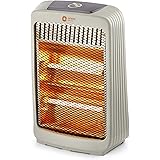
Orient Electric Stark Quartz Room Heater | 800 W Low Power Consumption | Tip-over Protection | 2 Heating Rods for Quick Heating | Cool Touch Body | 1 Year Warranty, White
₹1,579.00 (as of September 19, 2026 18:07 GMT +05:30 - More infoProduct prices and availability are accurate as of the date/time indicated and are subject to change. Any price and availability information displayed on [relevant Amazon Site(s), as applicable] at the time of purchase will apply to the purchase of this product.)
B&K Wall Mounted Electric Convector Heater | Silent Infrared Room Heater for Bathroom, Bedroom & Indoor Use
₹599.00 (as of September 19, 2026 18:07 GMT +05:30 - More infoProduct prices and availability are accurate as of the date/time indicated and are subject to change. Any price and availability information displayed on [relevant Amazon Site(s), as applicable] at the time of purchase will apply to the purchase of this product.)
LEDURE Room Heater with 1 Year Warranty | ISI Approved Compact & Powerful Space Heater | Energy Efficient, Low Noise & Durable Design for Bedroom, Living Room, and Office (800W (Black))
₹958.55 (as of September 19, 2026 18:07 GMT +05:30 - More infoProduct prices and availability are accurate as of the date/time indicated and are subject to change. Any price and availability information displayed on [relevant Amazon Site(s), as applicable] at the time of purchase will apply to the purchase of this product.)
IBELL Electric Portable Room Heater for Bed Room | 2200W | Dual Heating Modes | Advanced Overheat Protection | Automatic shut off | Quick Warming | 2-year Warranty | White
₹998.98 (as of September 19, 2026 18:07 GMT +05:30 - More infoProduct prices and availability are accurate as of the date/time indicated and are subject to change. Any price and availability information displayed on [relevant Amazon Site(s), as applicable] at the time of purchase will apply to the purchase of this product.)
Xtreme H1 Infrared Room Heater | 1800 watts, Covers 2000 cu. ft. | Remote Adjustable Temperature | Instant & Healthier Warmth | Thermostat with Heating Mode | 1- Year Warranty
₹36,999.00 (as of September 19, 2026 18:07 GMT +05:30 - More infoProduct prices and availability are accurate as of the date/time indicated and are subject to change. Any price and availability information displayed on [relevant Amazon Site(s), as applicable] at the time of purchase will apply to the purchase of this product.)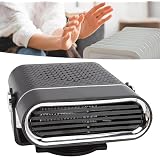
ARTEKNIX Car Heater Fan 12V Portable Auto Heater and Cooling Fan, Windshield Defroster Demister with 360 Degree Adjustable Base for Car, SUV, Van and Truck
Now retrieving the price.
(as of September 19, 2026 18:07 GMT +05:30 - More infoProduct prices and availability are accurate as of the date/time indicated and are subject to change. Any price and availability information displayed on [relevant Amazon Site(s), as applicable] at the time of purchase will apply to the purchase of this product.)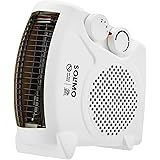
Amazon Brand - Solimo 2000/1000 Watts Room Heater with Adjustable Thermostat (ISI certified, White colour, Ideal for small to medium room/area)
₹1,299.00 (as of September 19, 2026 18:07 GMT +05:30 - More infoProduct prices and availability are accurate as of the date/time indicated and are subject to change. Any price and availability information displayed on [relevant Amazon Site(s), as applicable] at the time of purchase will apply to the purchase of this product.)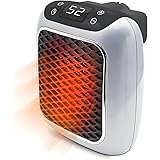
sadhguru volex 800W Electric Convector Room Heater for Home - Wall Mounted & Portable Silent Heater for Bedroom & Bathroom | Energy Saving Infrared Technology | Grey & White
Now retrieving the price.
(as of September 19, 2026 18:07 GMT +05:30 - More infoProduct prices and availability are accurate as of the date/time indicated and are subject to change. Any price and availability information displayed on [relevant Amazon Site(s), as applicable] at the time of purchase will apply to the purchase of this product.)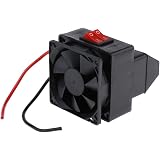
CALANDIS 12V 300W Car Heating Heater Hot Fan Driving Defroster Demister For Vehicle
Now retrieving the price.
(as of September 19, 2026 18:07 GMT +05:30 - More infoProduct prices and availability are accurate as of the date/time indicated and are subject to change. Any price and availability information displayed on [relevant Amazon Site(s), as applicable] at the time of purchase will apply to the purchase of this product.)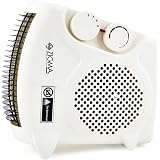
ZIGMA Z-30 Fan Room Heater | 1000W / 2000W Dual Heat Settings | Portable Electric Heat Convector with Blower for Home & Office (White)
₹1,399.00 (as of September 19, 2026 18:07 GMT +05:30 - More infoProduct prices and availability are accurate as of the date/time indicated and are subject to change. Any price and availability information displayed on [relevant Amazon Site(s), as applicable] at the time of purchase will apply to the purchase of this product.)